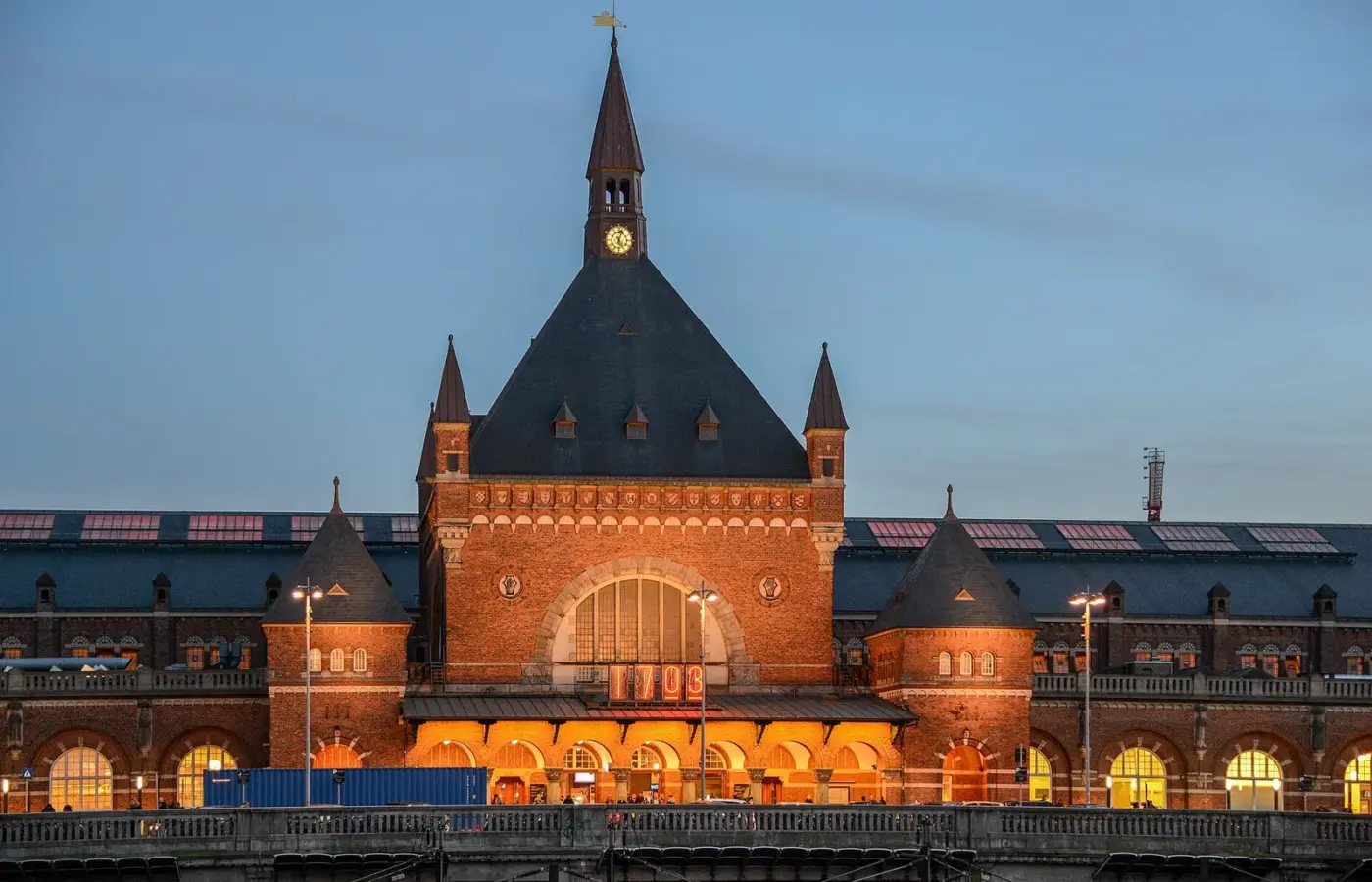
The train from Copenhagen Airport to the city centre takes about fifteen minutes, which is less time than many passengers spend waiting at the baggage carousel. The metro runs all night. The ticket costs 30 DKK. And the main railway station is across the road from Tivoli. Arriving in Copenhagen is straightforward, which is exactly why it is worth knowing the handful of things that do catch people out.
This guide is the hub for every way into the city: the airport, the central station, the three cruise terminals, and the coach, car and ferry routes, with what happens next and what it costs. Ticket prices come from the transport operators’ own 2026 fare table and were checked in October 2026; confirm times and prices before you travel.
Arriving in Copenhagen at a Glance
| Arriving at | Into the centre by | Time | Cost (adult, 2026) |
|---|---|---|---|
| Copenhagen Airport (CPH) | Metro M2 to Kongens Nytorv | About 13-14 minutes | 30 DKK (3 zones) |
| Copenhagen Airport (CPH) | Train to Central Station | About 15 minutes | 30 DKK (3 zones) |
| Copenhagen Airport (CPH) | Taxi | Depends on traffic | Metered fare, or a fixed quote in a taxi app |
| Central Station (København H) | You are in the centre | – | – |
| Oceankaj cruise terminals | Bus 25 to Orientkaj, then metro M4 | About 20 minutes to Kongens Nytorv | 24 DKK (2 zones) |
| Langelinie cruise quay | On foot along the harbour promenade | Depends on your pace | Free |
| Nordre Toldbod cruise quay | On foot | Close to the centre | Free |
Tickets First: What Every Arrival Needs to Know
Copenhagen’s buses, metro and trains share one ticket system, priced by zones. You buy before you board, from the operators’ app or a machine at the station, and the same ticket works across all of them for its validity period. Inspectors do check, and the fine is far more than the fare.
The fares that matter on arrival, for adults in 2026:
| Ticket | Price | What it covers |
|---|---|---|
| Single, 2 zones | 24 DKK | Most journeys within the central city |
| Single, 3 zones | 30 DKK | The airport to the city centre |
| Single, 4 zones | 40 DKK | Longer journeys out of the centre |
| City Pass Small | 100 DKK for 24 hours; 160 for 48; 220 for 72; 280 for 96; 340 for 120 | Unlimited travel in zones 1–4, including the airport |
| City Pass Large | 200 DKK for 24 hours; 320 for 48; 440 for 72 | Unlimited travel across Greater Copenhagen, including Helsingør and Roskilde |
Children pay half, and Rejsekort fares run a couple of kroner below the single-ticket price. The anonymous Rejsekort card closed after 29 June 2026; use the Rejsekort app, a Basiskort or the Rejsebillet app. The detail to get right is the airport fare: the trip into town is three zones, and a three-zone single costs 30 DKK in 2026.
Does a City Pass pay off?
Do the sum before you buy. A 24-hour City Pass Small at 100 DKK beats single tickets once you make about four journeys in a day, counting the airport trip as one: 30 DKK into town plus three central rides at 24 DKK comes to 102. The 72-hour pass at 220 DKK is roughly break-even for someone who takes the airport train both ways and two rides a day in between. If you mostly walk and cycle, which in Copenhagen is most people, single tickets are cheaper. If you plan a day trip to Helsingør or Roskilde, look at City Pass Large instead. Our guide to public transport tickets covers the rest of the options, and is the Copenhagen Card worth it? weighs the card that bundles transport with museum entry.
Arriving by Air: Copenhagen Airport (CPH)

Copenhagen Airport, at Kastrup on the island of Amager, is about eight kilometres south-east of the city centre. Arrivals from Schengen countries walk straight through to baggage reclaim; arrivals from outside the Schengen area queue for passport control first. Both the metro and the railway station are at Terminal 3, a short covered walk from arrivals, so there is no shuttle to find and no bus to wait for.
For the terminal itself, from check-in and the single security checkpoint to the non-Schengen piers, the lounges and how early to arrive for your flight home, see our Copenhagen Airport guide.
Metro or train?
Both cost the same, so choose by destination. The M2 metro runs every few minutes, 24 hours a day, to Christianshavn, Kongens Nytorv and Nørreport, and takes about thirteen minutes to Kongens Nytorv. It is the better choice for Nyhavn, the old town and anywhere north or east of the centre. The train reaches Central Station, København H, in about fifteen minutes and is better for Vesterbro, Tivoli and the hotels around the station.
One mistake catches visitors every day: trains from the airport station also run the other way, across the Øresund Bridge to Malmö in Sweden. Check that your train says København H before you board. Our dedicated guide to getting from Copenhagen Airport to the city centre has the timetables and platform tips, and our metro guide explains the lines.
Taxis, late arrivals and airport hotels
Taxis wait outside Terminal 3, and the journey time depends on traffic. The fare is metered or a fixed quote from a taxi app, and well above a metro ticket. Unless you have heavy luggage, small children or a destination far from a station, the metro is as quick and a fraction of the price. Our guide to taxis and ride apps in Copenhagen explains the options. Landing late is no problem, because the metro keeps running through the night. If you are only in town for a few hours between flights, see our Copenhagen layover guide; if your flight leaves at dawn, there are hotels near the airport.
Arriving by Train: Copenhagen Central Station
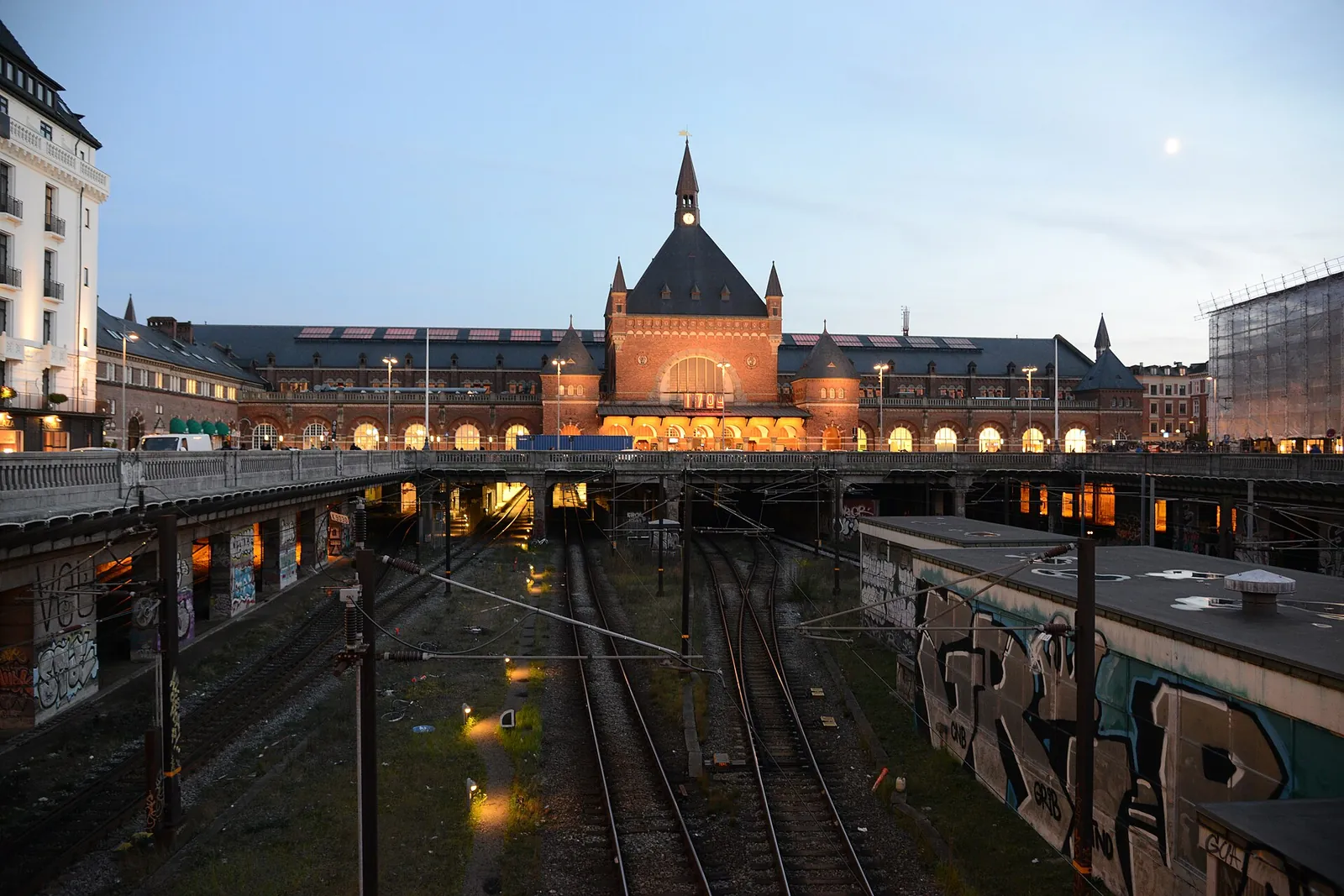
København H, Copenhagen Central Station, has been the city’s main gateway since 1911. Intercity trains from the rest of Denmark, regional trains, the Øresund trains from Malmö and Sweden and the suburban S-trains all stop here, and since the City Circle metro opened in 2019 it has had its own metro station too, on the M3 and M4 lines. Step out of the main entrance and Tivoli is directly across the road; Rådhuspladsen, the City Hall Square, is five minutes’ walk away.
The station has the practical basics: ticket machines and a travel centre, luggage lockers, cafés, convenience stores and plenty of places to buy a sandwich at any hour. The streets behind it, in Vesterbro, are full of hotels, from budget to boutique, which makes it the easiest base in the city if you are arriving with luggage. Our guide to hotels near Tivoli covers the area, and train travel from Copenhagen explains the onward routes. If you are coming from Sweden, our guide to getting between Copenhagen and Malmö covers the trains across the bridge.
Carry your passport or national ID card when you cross the Øresund, in either direction. Both Denmark and Sweden have run spot checks on the bridge and on the trains in recent years, and without ID you can be turned back at the border station, which is a miserable way to start a holiday.
Arriving by Sea: The Cruise Terminals
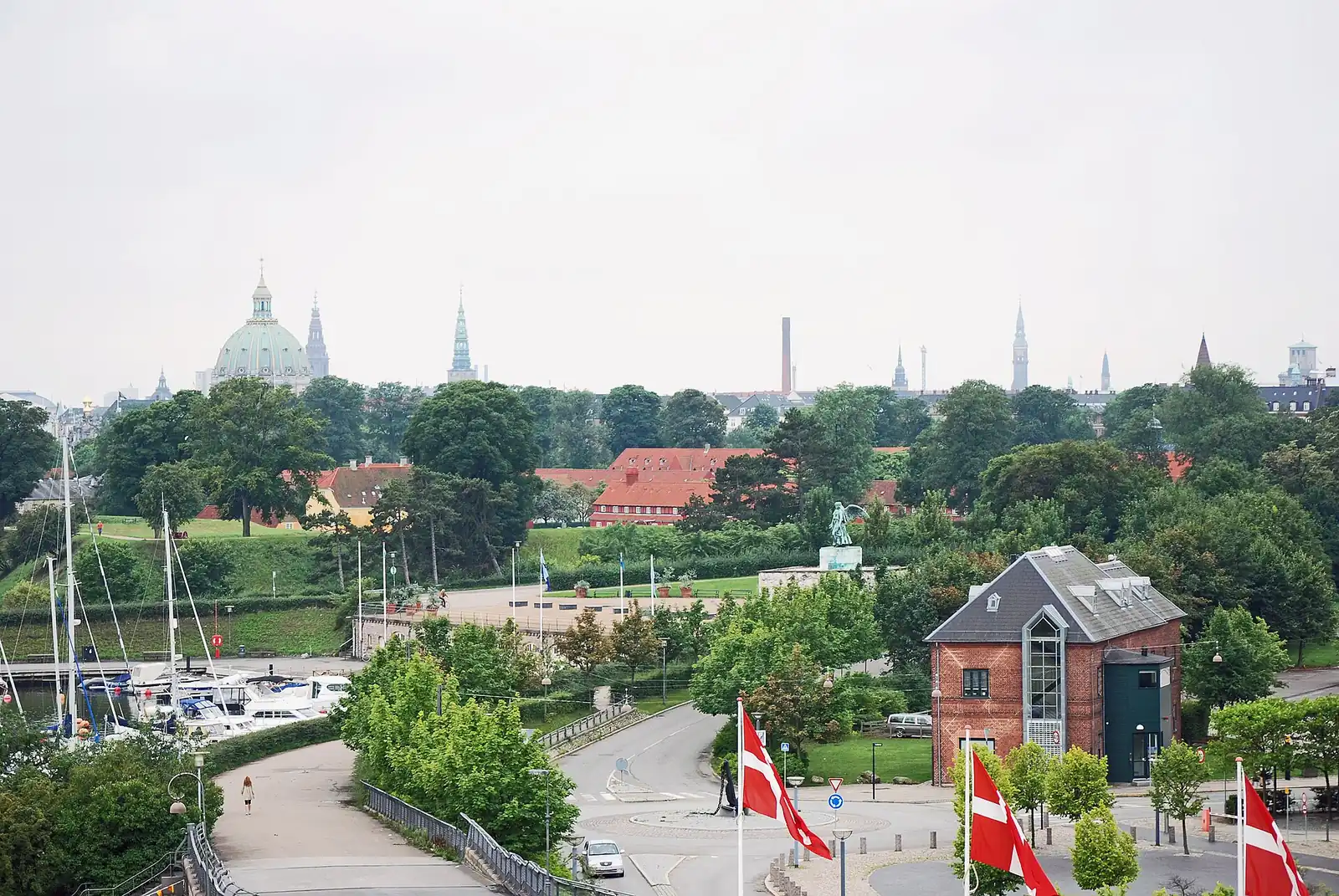
Copenhagen is one of northern Europe’s busiest cruise ports, and ships dock at three places. Which one yours uses makes a big difference to your day, so check before you plan anything.
The port operator, Copenhagen Malmö Port, lists cruise arrivals and departures on its live Ships in port page, which also shows how many other ships share your day. Our Copenhagen cruise port guide goes quay by quay, with taxi fares to the airport and a port-day plan for each.
Oceankaj (Ocean Quay)
The big modern terminals at Oceankaj, out in the Nordhavn docks, handle the largest ships and are the furthest from the sights. Do not walk it. The cheap and quick way in is bus 25 from the Oceankaj stop at Terminal 1 to Orientkaj metro station, then the M4 metro to Kongens Nytorv, about twenty minutes in total on a 24 DKK two-zone ticket. On days when ships are in, the bus runs every ten to twenty minutes from the first arrival until an hour before the last departure; bus 164 also links the area with Orientkaj all year. It costs a fraction of most cruise-line shuttle tickets and drops you right in the old town.
Langelinie
Langelinie is the classic quay, right by the Little Mermaid, and the best place to arrive by ship. You do not need transport at all: walk south along the harbour past the statue and Kastellet, through the Gefion Fountain and Amalienborg, and you reach Nyhavn in thirty-five to forty minutes, having seen half the city’s highlights on the way.
Nordre Toldbod
The smallest quay, used by smaller ships, is close to the centre, and you can walk into town along the waterfront. If your ship docks here, count yourself lucky.
Shuttles and hop-on hop-off buses
Most cruise lines sell a shuttle from Oceankaj into town, and the hop-on hop-off sightseeing buses stop at the terminals in season. The honest verdict: if you were going to buy a hop-on hop-off ticket anyway, it doubles as your transfer and is good value. If you were not, the public bus and metro do the same job for the price of a coffee, and run more often. From Langelinie and Nordre Toldbod, you need neither; walk.
However you arrive, a port day is long enough for a good look at the old town, and our one-day itinerary is a ready-made plan. Remember that Danish shops and cafés take cards almost everywhere, so you do not need to change money for a single day ashore.
Arriving by Coach, Car or Ferry
- Long-distance coaches, including the budget operators from Germany and the rest of Scandinavia, arrive on Ingerslevsgade, a few minutes’ walk behind Central Station.
- By car from Sweden you cross the tolled Øresund Bridge; from Jutland or northern Germany it is usually the tolled Great Belt Bridge, unless you take the ferry from Puttgarden to Rødby. Driving in Copenhagen itself is slow and parking is expensive, so most visitors leave the car at the hotel and use the metro and bikes.
- By ferry, the overnight boat from Oslo docks in Nordhavn, from where trains and buses connect to the centre. Ferries to Bornholm and other islands leave from elsewhere in the region rather than the city centre.
Your First Hour: A Checklist
- Money. Cards and phone payments work almost everywhere, even at hot dog stands, so you rarely need cash. Our money guide explains the kroner.
- Data. EU roaming applies, and eSIMs work well for everyone else; see our SIM card and Wi-Fi guide.
- Plugs. Denmark uses its own type K socket, which also accepts the standard two-pin European plug. Details are in our plug and voltage guide.
- Paperwork. Denmark is in the Schengen area; our visa guide covers who needs what.
- Language. Almost everyone speaks excellent English, as our guide to English in Copenhagen explains, but a tak, thank you, goes a long way.
- Water. Tap water is excellent. Refill a bottle rather than buying one.
- Getting around. After the first journey, you will probably walk or cycle most places. Our getting around guide and bike rental guide take it from there.

Late-Night and Early-Morning Arrivals
Copenhagen is one of the easiest cities in Europe to arrive in at an awkward hour. The metro runs 24 hours a day, every day, less frequently overnight but still regularly, so a flight landing at one in the morning is not a problem.
The city centre is generally safe at night, and our guide to whether Copenhagen is safe covers the few areas where it pays to keep your wits about you. If you are arriving very late, book a hotel near a metro station or Central Station rather than somewhere that needs a bus. Our guide to where to stay in Copenhagen compares the neighbourhoods, and the best area for first-time visitors makes the case for each.
Five Arrival Mistakes to Avoid
- Boarding the train to Sweden. Trains from the airport station run in both directions. The one you want says København H; the one that says Malmö will take you across the bridge to another country, and the return fare is on you.
- Buying the wrong number of zones. The airport is three zones from the centre. A two-zone ticket will not do, and the inspectors who board at the airport station hear that excuse every day.
- Getting on before you have a valid ticket. App tickets must be bought and activated before you board, not once you are sitting down. There are no conductors to sell you one on the metro.
- Changing money at the airport. The exchange counters give poor rates, and you will barely need cash. Pay by card and withdraw a small amount from a bank cash machine only if you really need it.
- Walking from Oceankaj. It looks close on a map, but it is a long, dull walk through working docks. Take bus 25 and the metro, and save your legs for the old town.
Arriving With Children, a Pram or a Bike
Copenhagen is an easy city to arrive in with a family. Every metro station has lifts, the trains have level boarding at most stations, and the metro and S-trains have space for prams and wheelchairs. Children pay half fare on single tickets and City Passes; the rules on younger children travelling free with an adult depend on age, so check the operator’s current conditions before you buy. Our guide to Copenhagen with a stroller covers the rest of the city on wheels.
If you are bringing a bike, the S-trains carry bikes free, and a bike ticket for the metro costs 15 DKK in 2026. The metro restricts bikes at the busiest commuting times on weekdays, so check before wheeling one on in the morning rush. Most visitors find it simpler to hire a bike once they arrive.
Arriving on a Sunday or a Public Holiday
Ordinary Sundays are no problem: public transport runs normally, if a little less often, and most supermarkets and many shops in the centre open. Public holidays are different. Danish law closes most shops all day on public holidays, on Constitution Day, 5 June, and on Christmas Eve, and from 15:00 on New Year’s Eve. Bakeries, small grocers and the shops at railway stations and the airport are exempt, so you can always buy food and a ticket, but plan your first evening’s supplies if you land on Christmas Eve. Our guide to public holidays in Denmark has the dates.
Leaving Again
The same routes work in reverse, and the same three-zone ticket covers the trip. Trains run from Central Station to the airport, and the M2 metro, which runs every four to six minutes by day, picks up at Nørreport, Kongens Nytorv and Christianshavn, so you can usually get to the airport station within half an hour of leaving your hotel. Allow more time than that for check-in and security, especially at peak travel times.
If you have a few hours between checking out and your flight, the luggage lockers at Central Station let you spend them sightseeing rather than sitting at the gate. Cruise passengers leaving from Oceankaj should allow for the bus connection as well as the metro, and should not cut it fine on a day when several ships are leaving at once.
Which Way In Is Best?
If you have a choice, fly. Copenhagen’s airport transfer is among the fastest and cheapest of any European capital, and you can be checking into a city-centre hotel within the hour of landing. Arriving by train is the most atmospheric, especially from Sweden across the Øresund Bridge, and leaves you in the middle of everything.
Cruise passengers have the widest range of experiences. Langelinie and Nordre Toldbod are a pleasure, with the city practically on the gangway. Oceankaj is a working container-port setting a long way from the sights, but bus 25 and the M4 metro make it painless as long as you do not try to walk. Whatever your arrival, the one thing not to do is pay over the odds for transport into town. Copenhagen’s public transport is quick, clean and cheap, and it goes almost everywhere you need.
Frequently Asked Questions
How do I get from Copenhagen Airport to the city centre?
Take the M2 metro from Terminal 3 to Kongens Nytorv, about thirteen minutes, or Nørreport, about fifteen, or the train to Central Station, about fifteen minutes. Both need a three-zone ticket, which costs 30 DKK for an adult in 2026.
How much is a ticket from Copenhagen Airport to the city?
A three-zone single ticket costs 30 DKK for an adult in 2026, and half that for children. A 24-hour City Pass Small, which includes the airport, costs 100 DKK.
Does the Copenhagen metro run 24 hours?
Yes. The metro runs around the clock every day, less frequently at night, which makes late arrivals at the airport easy.
Which Copenhagen cruise terminal is closest to the city centre?
Nordre Toldbod, which handles smaller ships, is about fifteen to twenty minutes’ walk from Nyhavn. Langelinie, by the Little Mermaid, is a pleasant walk of thirty-five to forty minutes. Oceankaj, the largest terminal, is too far to walk.
How do I get from Oceankaj to the city centre?
Take bus 25 from the Oceankaj stop at Terminal 1 to Orientkaj station, then the M4 metro to Kongens Nytorv. It takes about twenty minutes and needs a two-zone ticket, 24 DKK in 2026.
Is there luggage storage at Copenhagen Central Station?
Yes, there are luggage lockers in the station. They are useful if you arrive before check-in or have a late departure.
Is Uber available in Copenhagen?
Yes. Uber left Denmark in 2017 and returned in 2025, first through a partnership with Drivr and then by buying Dantaxi, and Bolt operates here too. You can also use the licensed taxis at the airport and Central Station, or book one through a taxi company’s app.
Do I need my passport to arrive from Sweden?
Take it, or a national ID card. Spot checks on the Øresund Bridge and the trains between Malmö and Copenhagen have come and gone in recent years, and you can be refused entry without valid ID.
Do I need cash when I arrive in Copenhagen?
Rarely. Cards and phone payments are accepted almost everywhere, including on public transport apps and at ticket machines.
Related Reading
- Copenhagen travel tips for everything else worth knowing before your first day.
- How many days in Copenhagen? to plan the stay that starts with your arrival.
- Copenhagen itineraries for ready-made plans from one day to a week.
- Tipping in Copenhagen so you know what to do at your first café.
Photo Credits
- The red-brick facade and clock tower of Copenhagen Central Station, Kobenhavns Hovedbanegard, lit up at dusk: photo by Jorge Láscar from Melbourne, Australia, Københavns Hovedbanegård – Copenhagen Central Station (37898356721).jpg, CC BY 2.0
- Copenhagen Central Station seen from above the railway tracks at dusk: photo by Jorge Láscar from Melbourne, Australia, Københavns Hovedbanegård – Copenhagen Central Station (37179760833).jpg, CC BY 2.0
- The view from a cruise ship at Langelinie over the marina, Kastellet’s red barracks and the dome of the Marble Church: photo by Harvey Barrison from Massapequa, NY, USA, Langelinie – cruise ship view.jpg, CC BY-SA 2.0
Final Thoughts
Arrival sets the tone for a trip, and Copenhagen’s is about as gentle as it gets: a short train ride, a metro that never sleeps, a station opposite an amusement park and a cruise quay a stroll from the Little Mermaid. The only real decisions are which ticket to buy and which line to take.
So buy the right ticket, check that your train is heading for København H rather than Sweden, and save the taxi fare for a good dinner. You will be at your hotel before you have finished deciding where to eat.
Last verified: October 2026. Ticket prices are from the transport operators’ 2026 fare table; bus routes to the cruise terminals and terminal allocations can change from season to season.