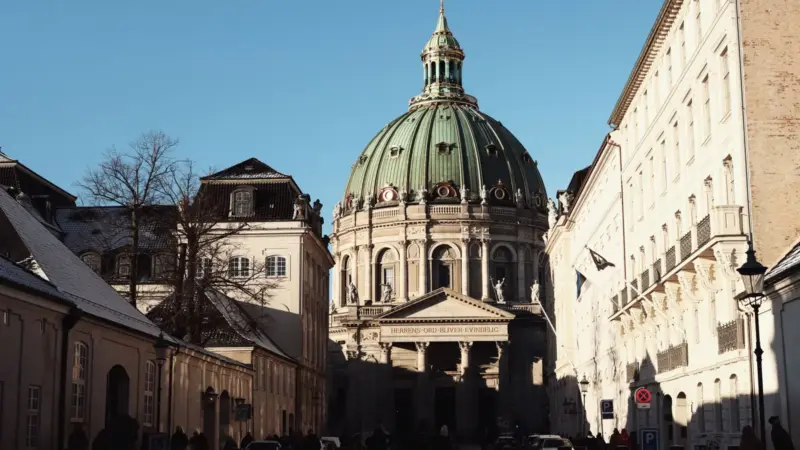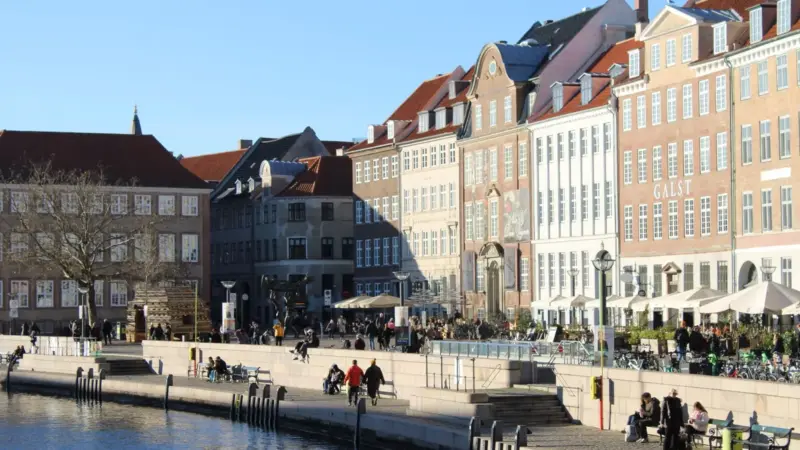
If there’s one worry you can cross off your Copenhagen packing list, it’s the language. “Do people speak English in Copenhagen?” is one of the most common questions I hear, and the answer is an emphatic yes — Danes are among the best non-native English speakers on the planet, and in Copenhagen you can do absolutely everything in English without a flicker of difficulty. You will not get lost, go hungry or be stuck because of language.
But that’s not the whole story, and it would be a thin article if I left it there. So I’ll explain why the English is so good (it’s genuinely interesting), give you a little Danish mini-phrasebook that locals appreciate, and — the bit no one else seems to cover — show you how to pronounce the place names you’ll actually be saying out loud, like Nyhavn and Strøget.
The quick answer
- Do they speak English? Yes — near-universally in Copenhagen, especially among anyone under 50.
- Official language: Danish.
- Do you need any Danish? No. You can travel entirely in English.
- Will locals mind? Not at all — Copenhageners switch to English instantly and happily.
- Nice to know: A simple “tak” (thanks) is always appreciated.
How widely is English spoken in Denmark?
Extremely widely. Denmark consistently ranks in the very top tier of the EF English Proficiency Index — in the 2025 edition it placed 7th out of more than 120 countries, in the “Very High” proficiency band, and it has often ranked even higher in past years. In practical terms, somewhere around 86% of Danes speak English comfortably, and among younger people and in Copenhagen it’s effectively universal. You’ll find shop staff, waiters, bus drivers, museum guides and random people on the street all speak fluent, easy English.
Why do Danes speak such good English?
This is the part I find genuinely fascinating, and it’s worth a moment because it explains why the proficiency is so deep rather than just polite-phrases-deep. Two reasons:
First, English is taught from the very first years of primary school, so Danes grow up bilingual in practice. Second — and this is the clever one — Danish television and film are subtitled, not dubbed. Danish kids and adults watch English-language movies and shows in the original English with Danish subtitles, hearing native English daily from childhood. Researchers have noted that “subtitling countries” like Denmark, the Netherlands and Sweden have dramatically higher English fluency than “dubbing countries.” So Danes aren’t just taught English; they’re immersed in it their whole lives.
There’s also a simple practical reason: Danish has only about six million speakers worldwide, so Danes have always needed a second language to connect with the wider world — and English is it.
English in practice: you’ll be fine
Let me reassure you task by task, because that’s what actually matters when you’re standing in a station with a backpack:
- Transport: Metro and train ticket machines have an English option; signage is bilingual; announcements are often in English too.
- Restaurants & cafés: English menus are standard, and staff switch to English without you even asking.
- Museums & attractions: English labelling, guidebooks and tours are the norm.
- Shops, hotels, pharmacies: All comfortably English-speaking.
- Emergencies: Operators on 112 speak English.
You really can arrive with zero Danish and never hit a wall. For getting around specifically, my getting around Copenhagen guide covers the ticketing in detail.
Is it rude to speak English in Copenhagen?
Not in the slightest. Nobody expects a short-stay visitor to speak Danish, and you won’t cause offence by opening in English. Copenhageners are completely used to English-speaking visitors and will often switch before you’ve finished your first sentence. A friendly “hej” (hi) to open and “tak” (thanks) to close is plenty — it’s appreciated, never required.
A handy Danish mini-phrasebook
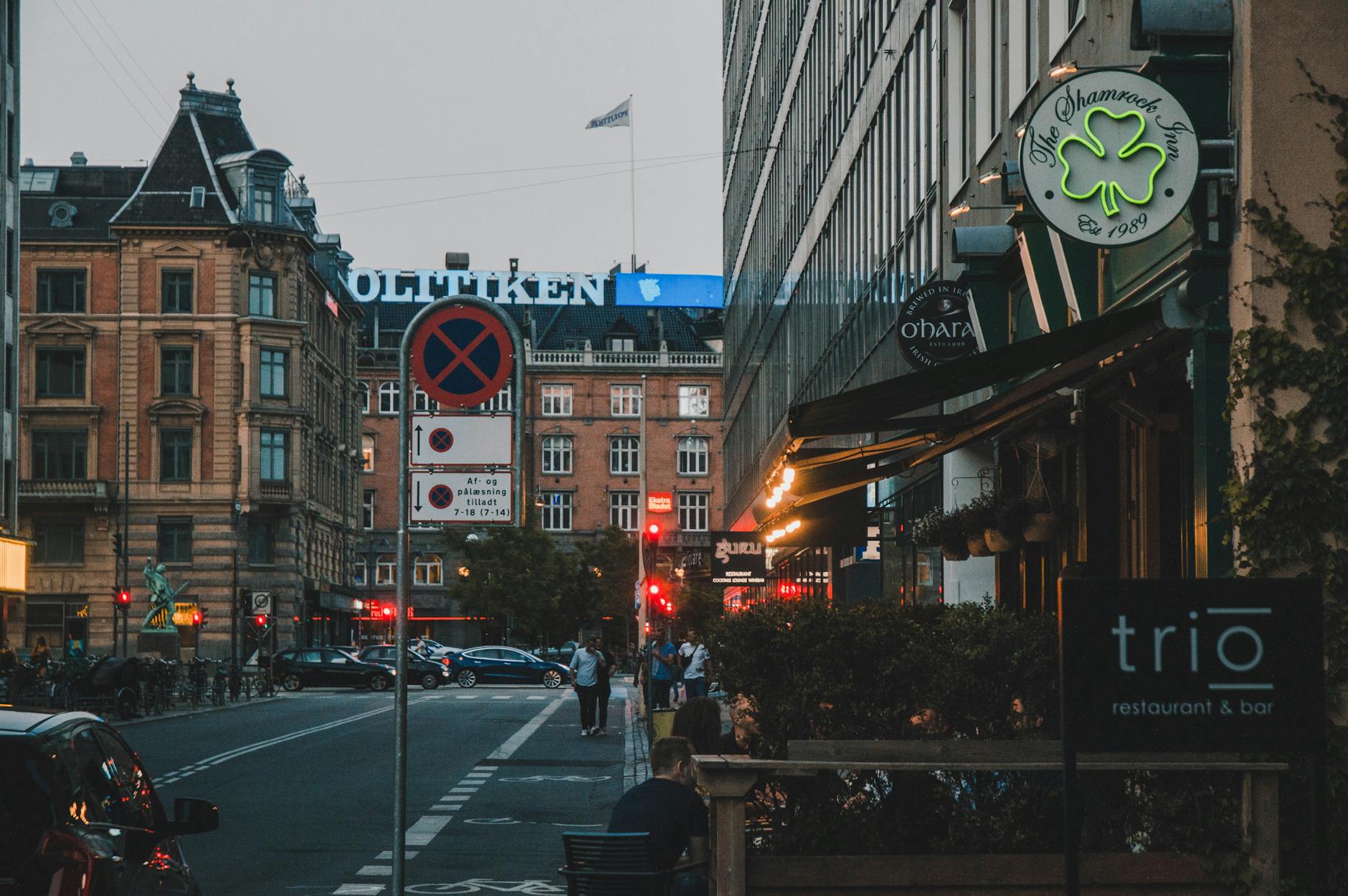
You don’t need these, but sprinkling a few in is a nice gesture (and fun). Pronunciations below are rough English approximations:
- Hej — hi (say “hi”). Hej hej — casual bye.
- Tak — thanks (like “tahk”). Mange tak — many thanks (“mang-uh tak”).
- Undskyld — sorry / excuse me (“on-skyl,” the d nearly silent).
- Farvel — goodbye (“fah-vel”).
- Skål — cheers (rhymes with “hole”) — and make eye contact when you toast.
- Tak for mad — “thanks for the food,” said after a meal.
- Velbekomme — “you’re welcome / enjoy your meal,” the reply.
A quirk worth knowing: Danish has no direct word for “please.” Politeness comes through tone and context, so don’t go hunting for one — a warm “tak” does the job.
How to pronounce Copenhagen’s place names
This is where even confident English speakers stumble, so here’s your cheat sheet for saying the big names without giving yourself away as totally new in town (approximate English respellings):
- København (Copenhagen) ≈ “kø-ben-HOWN” — Danes don’t say “co-pen-HAY-gen.”
- Nyhavn ≈ “NEW-haun” — the v sounds like a w; it’s not “nye-haven.”
- Strøget ≈ “STROY-eth” — guttural r, the ø like the “u” in “fur,” a silent-ish g and a soft d ending; not “stroh-get.”
- Rådhuspladsen (City Hall Square) ≈ “RAWD-hoos-pla-sen.”
- Vesterbro ≈ “VESS-ter-bro.” Nørrebro ≈ “NUR-uh-bro.”
- Christiansborg ≈ “kris-tyans-BOR” (soft g). Rosenborg ≈ “ROH-zen-bor.”
- Jægersborggade (the famous Nørrebro street) ≈ “YEH-gers-bor-gay-the” — the J is a Y sound.
Don’t stress about getting these perfect — a rough attempt is charming, and locals will know exactly where you mean.
A tiny bit about the Danish language
If you’re curious why Danish looks and sounds tricky: it has three extra vowels — æ, ø and å — and a famously soft, swallowed way with consonants. There’s also the stød, a little glottal catch in the voice (a bit like the break in “uh-oh”) that can change a word’s meaning. Spelling rarely maps neatly to sound, with silent letters and very soft d‘s. It’s a hard language to pronounce well — which is exactly why no one expects you to, and why everyone meets you in English.
The bottom line
Copenhagen is one of the easiest cities on Earth to visit speaking only English. The proficiency is deep and genuine, the locals are happy to switch, and the only Danish you truly need is “tak.” Learn to say Nyhavn and Strøget for fun, drop a “skål” at dinner, and you’re golden. For everything else, see my full Copenhagen travel tips — and rest assured that Copenhagen is very safe too.
Ordering food and drink in Danish
You absolutely don’t need these — every café and restaurant operates happily in English — but a few words add a little fun and goodwill. To order, a simple “Jeg vil gerne have…” (“yai vil GER-neh ha,” roughly “I’d like…”) followed by pointing works charmingly. “En kaffe, tak” (a coffee, please/thanks) and “en øl, tak” (a beer) will get you a long way. “Regningen, tak” (“RY-ning-en tak”) asks for the bill. And the lovely Danish ritual after eating: “tak for mad” — thanks for the food — which Danes say to whoever fed them. None of this is expected of a visitor, but drop a “tak” with a smile and you’ll get a warm one back.
Understanding the Danish communication style
Knowing how Danes communicate is more useful than vocabulary. A few things that surprise visitors: Danes can seem direct and reserved at first — they don’t go in for effusive small talk with strangers, and a shop interaction can feel businesslike rather than chatty. This isn’t rudeness; it’s cultural restraint, and it melts quickly once a conversation starts. There’s also little of the American-style “How are you today?” with strangers. Don’t mistake the initial cool for unfriendliness — ask a Dane for help or directions and you’ll usually find them genuinely warm and switching to flawless English to assist. Queuing is respected, personal space is valued, and a calm, low-key manner goes over better than loud enthusiasm.
Signs and words you’ll actually see
A handful of Danish words pop up on signage often enough to be worth recognising:
- Indgang = entrance; Udgang = exit (handy in stations and museums).
- Åben = open; Lukket = closed.
- Herrer = men; Damer = women (toilets).
- Tilbud = offer/sale; Udsalg = sale (useful when shopping).
- Toilet / WC = restroom; Forsigtig = caution.
- Cykel = bicycle (you’ll see cykler everywhere — and the bike lanes they belong in).
Recognising these makes navigating that bit smoother, even though most signs carry English too.
More place names, decoded
Beyond the headline sights, here are a few more you might need to say out loud (rough English approximations):
- Christianshavn ≈ “kris-tyan-SHOWN” — the canal district.
- Frederiksberg ≈ “FRED-riks-bairw” — the leafy enclave.
- Østerbro ≈ “UH-ster-bro”; Amager ≈ “AH-ma” (the g all but vanishes — locals say almost “ah-ma”).
- Tivoli ≈ “TEE-vo-lee” — easy one.
- Øresund ≈ “UH-ruh-soon” — the strait between Denmark and Sweden.
- Smørrebrød ≈ “SMUR-broth” — the open sandwiches you must try.
Amager catching you out is a rite of passage — don’t worry, even Danes find foreigners’ attempts endearing.
A few words that’ll make locals smile
Two cultural words are worth knowing not because you’ll need them, but because they unlock something about Denmark. Hygge (“HOO-gah”) — that famous sense of cosy, candlelit contentment — is real and everywhere; mention you’re after some hygge and a local will know exactly the café to send you to. And skål (“skoal”) — cheers — comes with a small ritual: make eye contact with each person as you clink. Use it at dinner and you’ll fit right in. For more on the concept, see how tipping works in Copenhagen and the city’s wider etiquette.
Want to learn a little before you go?
If you enjoy dabbling, a free app like Duolingo or a few YouTube pronunciation videos will teach you “hej,” “tak” and the numbers in an evening — plenty for a trip. Don’t set yourself the goal of “learning Danish,” though; the pronunciation is genuinely hard (those swallowed consonants and the stød defeat most learners), and the payoff is small when everyone speaks English anyway. Far better to learn ten friendly words well than to stress over grammar. The Danes will be quietly impressed by a confident “tak for mad,” and that’s really all the Danish a happy traveller needs.
A fuller mini-phrasebook
If you caught the bug and want a few more words, here’s a slightly expanded set (rough English pronunciations in brackets). Again — pure bonus, never needed:
- Numbers: en (1, “ein”), to (2, “toe”), tre (3, “treh”), fire (4, “fear-uh”), fem (5, “fem”), seks (6), syv (7, “syoo”), otte (8, “oh-deh”), ni (9, “nee”), ti (10, “tee”).
- Ja / Nej — yes (“ya”) / no (“nai”).
- Godmorgen — good morning (“go-MORN”); godaften — good evening.
- Taler du engelsk? — “Do you speak English?” (“TAY-lah doo ENG-elsk”) — though you’ll rarely need to ask.
- Hvor er…? — “Where is…?” (“vor air”).
- Hvad koster det? — “How much is it?” (“va KOS-ta deh”).
- Hjælp — help (“yelp”); politi — police; apotek — pharmacy.
Honestly, “hej,” “tak” and a smile will carry you through 99% of interactions — but it’s fun to recognise a few more.
Reading a Danish menu
Menus almost always have English, but it’s satisfying to decode the classics yourself. Look for smørrebrød (open rye sandwiches), sild (herring), frikadeller (pan-fried meatballs), stegt flæsk (crispy pork with parsley sauce, a national favourite), rugbrød (dense rye bread), wienerbrød (what the world calls “Danish” pastry), and kanelsnegl (a cinnamon “snail” bun). Drinks: øl (beer), kaffe (coffee), vand (water), rødvin/hvidvin (red/white wine), and snaps or akvavit (the potent caraway spirit you’ll be offered with herring — accompany it with a hearty “skål!”). Recognising these turns a menu from a wall of foreign words into an invitation.
Danish culture quirks beyond the language
A few cultural notes that smooth the way more than vocabulary ever could. Danes value punctuality, personal space and orderly queuing — in some shops and bakeries you take a number from a little dispenser, so look for one. They can seem reserved with strangers and don’t do effusive small talk, but this is restraint, not coldness; ask for help and the warmth appears instantly. Jaywalking is frowned upon — locals wait for the green man even on an empty street, and you’ll get disapproving looks if you don’t. And the famous concept of hygge — cosy, candlelit togetherness — is genuinely central to Danish life, especially in the dark months; lean into it with a long café sit or a candlelit dinner and you’re doing Copenhagen right. Understanding these rhythms helps you blend in far more than perfect pronunciation would.
If you do want to try a little Danish
For the keen, a free app like Duolingo or a handful of YouTube pronunciation clips will teach you greetings, numbers and a few pleasantries in an evening or two — more than enough to sprinkle into a trip and earn a warm smile. What I’d gently steer you away from is setting a goal of “learning Danish” for a short visit: the pronunciation is famously difficult (those swallowed consonants and the glottal stød defeat most beginners), and the practical payoff is minimal in a city where English is universal. Far better to nail ten friendly words — hej, tak, mange tak, skål, undskyld, farvel — and deliver them with confidence. The effort is appreciated precisely because it’s not expected, and it’s a lovely little bridge to the people whose city you’re enjoying.
The bottom line on language
To sum up: language is the least of your worries in Copenhagen. English is spoken to a near-native standard almost universally, every practical task can be done in English, and locals switch to it without a second thought. Learn a couple of Danish words for fun and goodwill, get a kick out of saying “Nyhavn” and “Strøget” properly, and otherwise relax. The city is one of the most effortless places on earth for an English speaker to visit — which frees you to focus entirely on enjoying it. For the rest of your planning, sort your money and cards and grab a SIM card or eSIM before you land.
Frequently asked questions
Do they speak English in Copenhagen?
Yes — almost universally. Around 86% of Danes speak English, and in Copenhagen it’s effectively everyone, especially under-50s. You can travel entirely in English.
What language do they speak in Copenhagen?
The official language is Danish. English is spoken as a near-universal second language.
Do I need to learn Danish to visit Copenhagen?
No. You don’t need any Danish at all. A few polite words like “tak” (thanks) are appreciated but never necessary.
Why do Danes speak English so well?
English is taught from the first years of school, and Danish TV and film are subtitled rather than dubbed, so Danes hear native English daily from childhood.
Is it rude to speak English in Copenhagen?
Not at all. Locals are used to English-speaking visitors and switch instantly. You won’t cause any offence.
How do you pronounce Nyhavn?
Roughly “NEW-haun” — the “v” sounds like a “w.” It’s not pronounced “nye-haven.”
Next, see why tipping in Copenhagen is wonderfully simple, sort your entry paperwork, and get the complete pre-trip checklist in my Copenhagen travel tips.
There is a reason Danes speaking English can sound abrupt: Danish has no word for “please”, and the politeness English carries in that one syllable is distributed elsewhere in the sentence. That, and seventeen other things worth knowing before you arrive, are in our guide to Danish etiquette and customs.
You will not need Danish, but a handful of words changes the texture of a trip: hej, tak, undskyld, and the two door labels, tryk and træk, that mean the opposite of what they look like. We list forty worth knowing in our guide to Danish phrases for travellers.
Last updated: July 2026.