Category: Food & Drink

Copenhagen restaurants, smørrebrød, New Nordic cuisine, coffee and bars.

  • Vegan Restaurants Copenhagen 2026: 15 Best Plant-Based Spots

    Vegan Restaurants Copenhagen 2026: 15 Best Plant-Based Spots

    Plant-based meal at vegan restaurant — Copenhagen has 80+ vegan and vegan-friendly restaurants, the highest concentration in Scandinavia
    Copenhagen vegan restaurants — 80+ entirely-vegan and vegan-friendly options, including Michelin-noted Ark and Souls flagship Vesterbro location.

    Vegan restaurants Copenhagen rank among Europe’s best — the city has 80+ entirely-vegan and vegan-friendly restaurants, more per capita than any other Scandinavian capital. From Michelin-recognized Ark to casual Souls, vegan burgers at Plantbox, raw food at 42 Raw, plant-based pizza, and dedicated vegan bakeries, Copenhagen treats vegan dining as serious cuisine, not afterthought. This guide covers the 15 best vegan restaurants Copenhagen, neighborhood-by-neighborhood, with prices, must-order dishes, and how to navigate the city as a plant-based traveler.

    Vegan Restaurants Copenhagen at a Glance

    RestaurantTypeNeighborhoodPrice
    ArkMichelin Bib Gourmand fine diningNorrebro595 DKK tasting menu
    SoulsCasual chain (3 locations)Vesterbro / Norrebro / city150-220 DKK
    42 RawRaw food pioneerFrederiksberg / Sankt Annæ120-180 DKK
    PlantboxVegan burgers + bowlsVesterbro115-175 DKK
    BeyondPlant-based bistroNorrebro165-245 DKK
    Mother VesterbroVegan-friendly pizzaVesterbro125-195 DKK
    Apollo BarVegan-forward bistroCharlottenborg/city275-395 DKK
    ManfredsVegan-friendly natural-wine bistroNorrebro375 DKK 5-course
    Plant Power BakeryVegan bakeryVesterbro35-95 DKK
    PomodoroVegan-friendly pizzaNorrebro115-165 DKK

    Top Vegan Restaurants Copenhagen — Detailed Reviews

    1. Ark — Michelin Bib Gourmand Vegan

    Roasted vegetable platter — Copenhagen vegan tasting menus include Ark's seasonal vegetable-focused approach
    Ark Restaurant (Michelin Bib Gourmand 2023) — Copenhagen’s first Michelin-recognized vegan restaurant with seasonal vegetable tasting menus.

    Ark is the most acclaimed of vegan restaurants Copenhagen — Bib Gourmand 2023, Copenhagen’s first Michelin-recognized vegan restaurant. Chef Brett Lavender (ex-Geranium pastry) leads the 7-course tasting menu (595 DKK) of seasonal Nordic vegetables: smoked beetroot tartare, fermented cabbage with sea buckthorn, birch-syrup glazed parsnips, juniper sorbet. Wine pairings 350 DKK. Reservations 4-6 weeks ahead. Address: Ravnsborggade 18, 2200 Copenhagen N. See our Michelin restaurants Copenhagen guide for context.

    2. Souls — Casual Vegan Chain

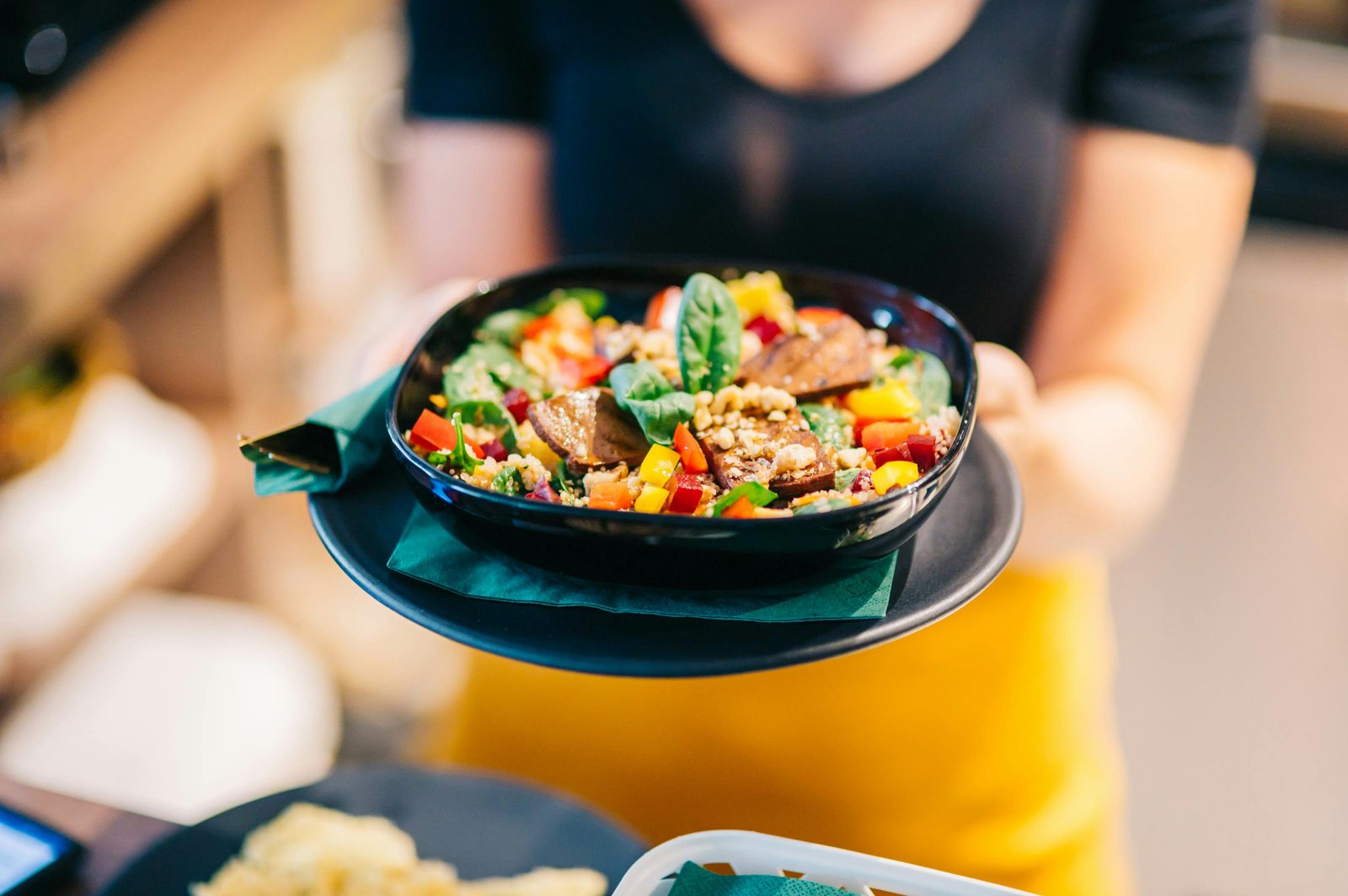
    Colorful vegan buddha bowl — many Copenhagen vegan restaurants center on grain bowls with seasonal Nordic vegetables
    Vegan grain bowls are Copenhagen vegan-restaurant staples — Souls, 42 Raw, and Beyond serve them with seasonal Nordic vegetables and house-made dressings.

    Souls is the most-visited of vegan restaurants Copenhagen — three locations (Vesterbro, Norrebro, city). All-day vegan menu: grain bowls (145 DKK), vegan burgers (165 DKK), vegan brunch on weekends (165 DKK), plant-based smoothies (75 DKK). The Souls Vesterbro flagship is the most popular Copenhagen vegan brunch spot. Walk-in friendly; reservations recommended weekends.

    3. 42 Raw — Raw Food Pioneer

    Fresh vegan salad with greens — Copenhagen vegan cafes include 42 Raw and Plantbox with cold-pressed juices and salads
    Copenhagen vegan cafes for casual dining — 42 Raw (raw food pioneer), Plantbox, Souls, and Smoothie Cafe serve salads and cold-pressed juices.

    42 Raw opened 2010 — Copenhagen’s first dedicated raw vegan restaurant. Two locations (Frederiksberg, Sankt Annæ Plads near Nyhavn). Cold-pressed juices (75 DKK), raw lasagna (165 DKK), buckwheat-crust pizzas (145 DKK), salads (95-145 DKK), raw cakes (75 DKK). The Sankt Annæ location is closest to tourist Nyhavn.

    4. Plantbox — Vegan Burgers + Bowls

    Plant-based vegan burger — Copenhagen vegan burger spots include Plantbox, Beyond, and Souls with house-made plant patties
    Vegan burgers in Copenhagen — Plantbox, Beyond, Souls and Halifax serve substantial plant-based burgers, typically 145-185 DKK.

    Plantbox is the casual vegan burger leader of vegan restaurants Copenhagen. Vesterbro location near Kødbyen meatpacking district. House-made plant patties (175 DKK with fries), vegan grain bowls (145 DKK), vegan loaded fries (95 DKK), plant-based shakes (65 DKK). Open until 22:00; good for late-night vegan.

    5. Beyond — Plant-Based Bistro

    Beyond is upscale-casual plant-based dining in Norrebro. Seasonal plant-based menu, à la carte mains 165-245 DKK, plant-based cocktails, natural wines. The 4-course Beyond tasting menu (445 DKK) is value-priced for fine-dining-level vegan. Reservations recommended.

    6. Manfreds — Natural Wine Bar with Vegan Tasting

    Manfreds is Christian Puglisi’s Norrebro natural-wine bistro — vegan-friendly with a 5-course plant-based tasting menu (375 DKK). Not entirely vegan (also serves meat), but every dish on the vegan menu is house-made and seasonal. Open dinner only; reservations essential.

    7. Apollo Bar — Vegan-Forward Bistro

    Plant-based restaurant meal — Copenhagen restaurants like Ark (Michelin) and Pony (vegan-friendly) integrate plant-based fine dining
    Plant-based fine dining in Copenhagen — Ark (Michelin-recognized) leads, with Apollo Bar, Pony, and Manfreds offering vegan-forward menus.

    Apollo Bar (Charlottenborg, central Copenhagen) is the vegan-friendly bistro with the strongest plant-based menu among Copenhagen new-Nordic restaurants. Vegan tasting (385 DKK) features locally-foraged Nordic vegetables, fermented preparations, and seasonal mushrooms. Reservations 2-3 weeks ahead.

    8. Mother Vesterbro — Vegan-Friendly Pizza

    Vegan pasta with tomato basil — Italian vegan options in Copenhagen include Mother Vesterbro and Pomodoro with vegan pizza menus
    Italian vegan options in Copenhagen — Mother Vesterbro, Pomodoro, and Bæst all offer vegan pizza and pasta. Vegan cheese and house-made pastas.

    Mother Vesterbro is sourdough pizza in Kødbyen meatpacking district. Vegan pizzas with house-made vegan cheese (Mother Vegan, 165 DKK), pesto vegan (155 DKK), vegan margarita (135 DKK). Industrial-chic warehouse with communal tables. Family-friendly; walk-in friendly.

    9. Pomodoro — Vegan-Friendly Italian

    Pomodoro (Norrebro) is family-run Italian with extensive vegan menu — vegan pasta dishes (125-165 DKK), vegan pizzas (115-165 DKK), vegan tiramisu (75 DKK). Good value, family-friendly. Walk-in usually feasible.

    10. Plant Power Bakery — Vegan Bakery

    Vegan dessert plant-based cake — Copenhagen vegan bakeries include Vegana Bakery and Plant Power Bakery for plant-based pastries
    Vegan bakeries Copenhagen — Vegana Bakery (Vesterbro), Plant Power Bakery, and dedicated vegan options at Hart Bageri serve plant-based pastries.

    Plant Power Bakery (Vesterbro) is Copenhagen’s flagship dedicated vegan bakery. Plant-based cinnamon rolls (35 DKK), vegan croissants (45 DKK), vegan kanelsnegle, vegan cakes whole or by slice (45-95 DKK). Closed Mondays. See our Danish pastries guide for context.

    Copenhagen Vegan Restaurants by Neighborhood

    Scandinavian vegan restaurant interior — Copenhagen vegan restaurants embrace minimalist Nordic design with raw materials and natural light
    Copenhagen vegan restaurant interiors — minimalist Nordic design with reclaimed wood, raw concrete, and abundant natural light. The aesthetic standard for new openings.

    Vesterbro — The Vegan Hub

    Vesterbro and adjacent Kødbyen have Copenhagen’s highest concentration of vegan restaurants Copenhagen. Souls Vesterbro, Plantbox, Mother Vesterbro, Plant Power Bakery, Vegana Bakery, Cafe N, 42 Raw all within 15-minute walk. The Sønder Boulevard corridor has the highest density.

    Norrebro — Fine Dining + Casual

    Norrebro hosts the highest-end vegan dining: Ark (Michelin Bib Gourmand), Beyond, Manfreds (vegan-friendly), Pomodoro. Jægersborggade and Ravnsborggade are Norrebro’s vegan corridors.

    Indre By (City Center) — Tourist-Convenient

    42 Raw Sankt Annæ (10-min walk from Nyhavn), Souls Strøget, Apollo Bar (Charlottenborg). Most-convenient for visitors based in central hotels. See our where to stay Copenhagen first time guide.

    Vegan-Friendly Mainstream Restaurants

    Beyond dedicated vegan restaurants Copenhagen, many mainstream restaurants offer strong vegan menus:

    • Restaurant Pony (Vesterbro) — vegan tasting menu by request, 4-course 425 DKK. Sister to Relæ.
    • Bæst (Norrebro) — vegan pizza menu, vegan cheese house-made.
    • Hija de Sanchez (Torvehallerne, Vesterbro) — vegan tacos available; entire menu can be made vegan.
    • Kødbyens Fiskebar — vegan menu by request (uncommon for fish bistro).
    • Restaurant Mes (Norrebro) — natural wine bistro with strong vegan tasting menu.
    • Geranium (3-Michelin) — vegan tasting available with 4-week notice; same 3,200 DKK price.

    Plant-Based Cafes and Coffee

    Vegan coffee shop interior — Copenhagen specialty coffee shops universally offer plant-milk options with no upcharge
    Copenhagen coffee shops are vegan-friendly by default — Coffee Collective, Prolog, La Cabra all offer oat, soy, and almond milk at no extra charge.

    Copenhagen specialty coffee is universally vegan-friendly — Coffee Collective, Prolog, La Cabra, Democratic Coffee, Coffee Lab, Hart Bageri all offer oat, soy, almond milk at no upcharge. Most also stock vegan pastries. See our best coffee shops Copenhagen guide.

    Vegan Brunch in Copenhagen

    Best vegan brunch options:

    • Souls Vesterbro — full vegan brunch menu (165 DKK), weekends 09:00-15:00.
    • Plant Power Plant — dedicated vegan brunch spot, weekend brunch 175 DKK.
    • Bevar’s (Norrebro) — vegan brunch menu; non-exclusively vegan but generous selection.
    • Mirabelle — partial vegan brunch options.
    • 42 Raw — raw vegan brunch alternative.

    See our best brunch Copenhagen guide for fuller context.

    Pricing Comparison — Vegan Restaurants Copenhagen

    TierCost per personExamples
    Casual lunch75-145 DKKSouls bowl, Plantbox, 42 Raw salad
    Casual dinner165-245 DKKPlantbox burger, Mother Vesterbro pizza
    Mid-range dinner275-395 DKKBeyond, Apollo Bar, Pony
    Fine dining vegan445-595 DKKBeyond tasting, Ark
    Luxury vegan1,200-3,200 DKKGeranium vegan menu, Noma vegetable season

    Practical Tips for Vegan Travelers

    1. Use HappyCow — Copenhagen has 80+ listings; filter by ‘entirely vegan’ for dedicated spots.
    2. Book Ark 4-6 weeks ahead — Michelin-recognized; tables go fast.
    3. Vesterbro is your hub — base near Sønder Boulevard for easiest vegan access.
    4. Plant milks free — every Copenhagen specialty coffee shop includes oat/soy at no charge.
    5. Vegan options at Tivoli — Promenaden has vegan pizza; main Tivoli food halls have plant-based bowls.
    6. Supermarkets stock vegan — Netto, Føtex, Irma all carry vegan cheese, plant milks, vegan ready meals.
    7. Communicate clearly — most Copenhagen waitstaff speak English; ‘vegan’ is universally understood.
    8. Watch for honey — some ‘vegan’ menus include honey-based desserts; clarify if strict vegan.
    9. Buy a market lunch — Torvehallerne has multiple vegan-friendly stalls.
    10. Late dinner — most Copenhagen vegan kitchens close by 22:00; book early.

    Vegan Restaurants Copenhagen FAQs

    Is Copenhagen vegan-friendly?

    Yes — Copenhagen is among Europe’s most vegan-friendly cities. 80+ entirely-vegan and vegan-friendly restaurants, every specialty coffee shop offers plant milk, supermarkets carry extensive vegan ranges, and waitstaff are uniformly accommodating to plant-based requests.

    What is the best vegan restaurant in Copenhagen?

    Ark (Norrebro) is the most acclaimed — Michelin Bib Gourmand 2023, Copenhagen’s first Michelin-recognized vegan restaurant. 595 DKK tasting menu with seasonal Nordic vegetables. Souls (Vesterbro flagship) is the most-popular casual choice.

    Are there cheap vegan restaurants in Copenhagen?

    Yes — Souls grain bowls (145 DKK), 42 Raw salads (95-145 DKK), Pomodoro vegan pasta (125-165 DKK), Plant Power Bakery (35-95 DKK). Combined with supermarket meals (40-80 DKK), vegan eating in Copenhagen need not be expensive. See our cheap eats Copenhagen guide.

    Where is the vegan area in Copenhagen?

    Vesterbro and adjacent Kødbyen meatpacking district are the vegan hub — highest concentration of dedicated vegan restaurants. Norrebro for high-end vegan. See our Copenhagen neighborhoods guide.

    Does Noma have a vegan menu?

    Noma’s vegetable season (March-September) is essentially vegan-forward but uses some animal products (butter, eggs). A fully-vegan tasting can be requested with 4-week notice. Same 3,200 DKK pricing. See our Noma booking guide.

    What about Geranium?

    Geranium (3-Michelin) offers a vegan tasting menu by request with 4-week advance notice. Same 3,200+ DKK pricing. Chef Rasmus Kofoed has expressed support for plant-based dining post-COVID; vegan menu is increasingly common.

    Is Copenhagen better than Berlin for vegans?

    Berlin has more dedicated vegan restaurants (200+ vs 80+) and lower prices. Copenhagen has higher overall quality, more Michelin-level vegan options, and more accommodating mainstream restaurants. Comparable experiences but different scales.

    Are there vegan tours in Copenhagen?

    Yes — Copenhagen Vegan Food Tour offers 3-hour walking tours through Vesterbro vegan spots (495 DKK). See our walking tours Copenhagen guide.

    The Verdict on Vegan Restaurants Copenhagen

    Vegan restaurants Copenhagen genuinely deserve their reputation. The combination of Michelin-recognized Ark, casual chain Souls, vegan burgers at Plantbox, dedicated vegan bakeries, plus accommodating mainstream restaurants like Pony and Geranium makes Copenhagen one of Europe’s best plant-based travel destinations. Base in Vesterbro for easiest access, book Ark four weeks ahead, and use HappyCow to discover beyond this guide. Copenhagen treats vegan dining as serious cuisine — exactly as it should be treated.

  • Torvehallerne Copenhagen 2026: Complete Food Market Guide

    Torvehallerne Copenhagen 2026: Complete Food Market Guide

    Covered food market with vendors in Europe — Torvehallerne is Copenhagen's flagship covered food market with 60+ specialty vendors at Israels Plads
    Torvehallerne (Israels Plads) opened 2011 — Copenhagen’s flagship covered food market with 60+ vendors across two glass-roofed halls.

    Torvehallerne Copenhagen is the city’s flagship covered food market — 60+ specialty vendors across two glass-roofed halls at Israels Plads, opened 2011. The market combines tourist destination with serious home-cook shopping ground, hosting Hija de Sanchez tacos (Rosio Sanchez, ex-Noma), Coffee Collective’s flagship satellite, Hallernes Smørrebrød (Copenhagen’s best casual smørrebrød), specialty cheese merchants, organic vegetables, fishmongers supplying Michelin restaurants, and seasonal produce. This complete Torvehallerne Copenhagen guide covers every essential vendor, opening hours, prices, food walks, and how to make the most of a 2-hour Torvehallerne visit.

    Torvehallerne Copenhagen at a Glance

    FactDetail
    AddressFrederiksborggade 21 / Israels Plads 1, 1361 Copenhagen K
    Opened2011 (replacing the 1889 outdoor Israels Plads market)
    ArchitectHans Peter Hagens (HPH Arkitekter)
    Halls2 glass-roofed indoor halls + outdoor pavilion
    Vendors60+ specialty food vendors
    HoursTue-Fri 10:00-19:00, Sat 10:00-18:00, Sun 11:00-17:00, Mon CLOSED
    Visitors per week60,000+
    Nearest metroNørreport (M1, M2, M3, M4) — 3 minutes walk
    Visit time1-2 hours for a full visit
    Free withNo entry fee — pay per vendor

    Top Vendors at Torvehallerne Copenhagen

    Hija de Sanchez — Mexican-Nordic Tacos

    Mexican tacos at street market — Hija de Sanchez (Rosio Sanchez ex-Noma) opened her flagship taqueria at Torvehallerne in 2015
    Hija de Sanchez (chef Rosio Sanchez) — Torvehallerne flagship taqueria opened 2015. Mexican-Nordic tacos at 80-110 DKK; the most-celebrated Torvehallerne vendor.

    Chef Rosio Sanchez (former Noma head pastry chef, opened her flagship Hija de Sanchez taqueria at Torvehallerne in 2015) serves Copenhagen’s most-celebrated Mexican food. Mexican-Nordic fusion using Danish ingredients (smoked Faroese salmon, pickled vegetables, foraged herbs). Three tacos with horchata: 145 DKK. The Torvehallerne flagship; sister locations in Vesterbro (Sanchez Cantina) and Reffen.

    Hallernes Smørrebrød — Best Casual Smørrebrød

    Bread bakery market display — Hallernes Smørrebrød serves Copenhagen's best casual smørrebrød at Torvehallerne
    Hallernes Smørrebrød (Israels Plads 1) serves Copenhagen’s best casual smørrebrød — 15-20 daily varieties at 75-145 DKK. The market’s most-popular Danish vendor.

    Hallernes Smørrebrød is Copenhagen’s best casual smørrebrød — 15-20 daily varieties of Danish open sandwiches on rugbrød. 75-145 DKK per piece. No reservations needed; eat at communal tables or take away. See our best smørrebrød Copenhagen guide for broader smørrebrød context.

    Coffee Collective — Specialty Coffee Satellite

    Coffee bar at specialty market — Coffee Collective operates a satellite location at Torvehallerne, brewing direct-trade specialty coffee
    Coffee Collective Torvehallerne — flagship Copenhagen specialty roaster’s market location. Pour-over and espresso from Klaus Thomsen’s beans.

    Coffee Collective Torvehallerne — Copenhagen’s flagship third-wave roaster’s market location. Pour-over and espresso from direct-trade beans roasted in Frederiksberg HQ. Espresso 40 DKK; pour-over 50 DKK. See our best coffee shops Copenhagen.

    Cheese Specialists

    Cheese counter at specialty market — Torvehallerne hosts multiple cheese specialists including Arla, Unika, and Osteriet sourcing from small Danish dairies
    Torvehallerne cheese specialists — Unika, Osteriet, Arla — source raw-milk cheeses from small Danish dairies, including aged Vesterhavsost and havarti.

    Torvehallerne hosts Copenhagen’s best curated cheese selection: Unika (raw-milk Danish), Arla Unika (specialty), Osteriet (specialty European). Aged Vesterhavsost (Danish hard cheese), Danish blue, havarti varieties. Cheese tastings 65-95 DKK per flight. Whole wheels available for travelers.

    Fishmongers — Restaurant-Grade Seafood

    Fish market with fresh seafood counter — Torvehallerne's fishmongers sell whole fish, smoked salmon, oysters, and Danish seafood specialties
    Torvehallerne fishmongers — Hav (Limfjord oysters), Fiskerikajen (whole fish), Munkebjerg Røgeri (smoked fish) — supply both home cooks and Michelin restaurants.

    Multiple Torvehallerne fishmongers supply Copenhagen Michelin restaurants: Hav (Limfjord oysters), Fiskerikajen (whole fish), Munkebjerg Røgeri (cold-smoked salmon), Aars Røgeri (fjord shrimp). Same quality as Geranium and Jordnær use; 30-50% retail of restaurant prices.

    Specialty Pantry Vendors

    Colorful spice jars at market — Torvehallerne specialty vendors include spice merchants, organic produce, and chocolatiers
    Specialty Torvehallerne vendors — Mira’s Spice Shop, Chocolate Cph, organic vegetables, Danish honey, sea buckthorn syrup. The full Nordic pantry.

    The full Nordic pantry: Mira’s Spice Shop, Chocolate Cph, Honey World (Danish honey), Sea Buckthorn specialists, sourdough starter sellers, Danish aquavit, organic vegetables, charcuterie. Wieder Charcuterie’s Faroese smoked lamb is exceptional.

    Torvehallerne Outdoor Section

    Flower market stall with fresh flowers — Torvehallerne's outdoor pavilion hosts seasonal flower vendors and herb specialists
    Torvehallerne outdoor section — fresh flowers, seasonal herbs, fruits, vegetables in summer. Open Tuesday-Sunday alongside the indoor halls.

    Beyond the two indoor halls, Torvehallerne includes an outdoor section with seasonal vendors: fresh flowers (year-round), summer herb stalls, seasonal fruits and vegetables (April-October), Christmas market additions (November-December). Open same hours as the indoor halls.

    Torvehallerne Architecture

    Glass roof market hall architecture — Torvehallerne's two glass-roofed halls were designed by Hans Peter Hagens Architects, opened 2011
    Torvehallerne’s two glass-roofed halls were designed by Hans Peter Hagens Architects (HPH Arkitekter), opened 2011 on the historic Israels Plads.

    Torvehallerne replaced the 1889 outdoor Israels Plads market in 2011. Hans Peter Hagens (HPH Arkitekter) designed the two glass-roofed halls plus outdoor pavilion. The architectural concept: glass roofs maximize natural light during dark Copenhagen winter; raw concrete walls echo industrial food-market heritage; oak counters bring warmth. The market is now a Copenhagen architectural landmark, awarded the Royal Society of Architects’ annual prize 2012.

    How to Spend 2 Hours at Torvehallerne

    Shoppers at indoor food market — Torvehallerne attracts 60,000+ visitors weekly mixing tourists with serious Copenhagen home cooks
    Torvehallerne attracts 60,000+ weekly visitors — both tourists and serious Copenhagen home cooks shopping for specialty ingredients.
    1. Start with Coffee Collective (Hall 2) — pour-over to drink as you wander.
    2. Walk through Hall 1 — cheese specialists, wine, charcuterie. Sample cheese (free).
    3. Walk through Hall 2 — Hija de Sanchez (lunch), Hallernes Smørrebrød, fishmongers, fresh produce.
    4. Lunch break — pick: Hija de Sanchez tacos (145 DKK), Hallernes Smørrebrød (4 pieces, 290 DKK), or Sushi at Pure Sushi.
    5. Outdoor section — flowers, seasonal vegetables, herb walk.
    6. Buy Souvenirs — vacuum-packed cheese, smoked salmon, aquavit, sea buckthorn syrup all travel home well.
    7. Total time: 90-120 minutes for a thorough visit.

    What to Buy at Torvehallerne for Travelers

    Best Torvehallerne purchases for travelers (travel-friendly):

    • Vacuum-packed cheese: Vesterhavsost, Havarti, Danish blue. 95-145 DKK per 250g; lasts 3+ weeks.
    • Cold-smoked salmon (sealed pack): 145-195 DKK per 200g; lasts 2 weeks refrigerated.
    • Aquavit miniatures: Aalborg, Linie, Brøndum 50ml shots — 40-65 DKK each.
    • Sea buckthorn syrup: 65-95 DKK; iconic Nordic flavor; airtight bottle.
    • Danish honey: 75-115 DKK; Honey World stall.
    • Mira’s spices: Custom blends 45-95 DKK per jar; check liquid restrictions.
    • Chocolate Cph chocolates: 60-145 DKK gift box.
    • Royal Copenhagen miniature: Available at Royal Copenhagen pop-up; 200-450 DKK.

    Torvehallerne vs Other Copenhagen Markets

    MarketTypeBest for
    TorvehallerneIndoor specialty marketSpecialty groceries, casual lunch, tourist + locals
    ReffenOutdoor street foodCasual evening dining, atmosphere, April-October
    Broens GadekøkkenIndoor street foodYear-round casual dining, Nyhavn-adjacent
    Tivoli Food HallInside TivoliTivoli visitors only
    Frederiksberg Have flea marketSundaysVintage Danish design, browsing

    Torvehallerne Practical Tips

    1. Closed Mondays — Torvehallerne is closed every Monday. Plan around this.
    2. Saturday is busiest — 12:00-15:00 most crowded. Aim for Tuesday-Thursday or early Saturday.
    3. Cards everywhere — all vendors accept cards. Cash optional.
    4. Free public toilets — restrooms in both halls.
    5. Combined with Nørreport — Metro Nørreport is 3 min walk; combine with Rosenborg Castle (10 min walk).
    6. Take samples — cheese vendors typically offer samples; just ask.
    7. Outdoor seating in summer — outdoor pavilion has tables for warm-weather lunches.
    8. Bring a tote — for groceries; vendors supply paper bags but tote helps.
    9. Christmas markets in December — Torvehallerne adds Christmas vendors for gløgg, æbleskiver and seasonal gifts.

    Torvehallerne Copenhagen FAQs

    Is Torvehallerne free to enter?

    Yes — completely free entry. You only pay for what you buy. Cheese samples often free.

    When is Torvehallerne open?

    Tuesday-Friday 10:00-19:00, Saturday 10:00-18:00, Sunday 11:00-17:00. CLOSED MONDAYS.

    How long should I spend at Torvehallerne?

    90-120 minutes for a thorough visit. 30-45 minutes for a quick lunch. Combine with Rosenborg Castle (10 min walk) for a 4-hour outing. See our Rosenborg Castle guide.

    What’s the best vendor at Torvehallerne?

    Hija de Sanchez (Rosio Sanchez Mexican-Nordic tacos) is the most-celebrated. Hallernes Smørrebrød is best for traditional Danish. Coffee Collective is best for specialty coffee. Pick by what you want.

    Can I take Torvehallerne food home?

    Yes — vacuum-packed cheese, smoked salmon, aquavit, sea buckthorn syrup all travel home well. Cheese shops will vacuum-pack on request.

    Is Torvehallerne family-friendly?

    Yes — kids welcome; communal seating; lots of variety for picky eaters. Hija de Sanchez tacos and Hallernes Smørrebrød are kid-friendly. See our Copenhagen with kids.

    Is Torvehallerne too touristy?

    Mixed — Torvehallerne attracts both tourists and serious Copenhagen home cooks. Less aggressive tourist-targeting than Nyhavn restaurants. Vendors are still dedicated specialists; quality is genuine.

    Where is Torvehallerne located?

    Frederiksborggade 21 / Israels Plads 1, 1361 Copenhagen K. 3-minute walk from Nørreport Metro (M1, M2, M3, M4 + S-tog). See our Copenhagen transportation guide.

    The Verdict on Torvehallerne Copenhagen

    Torvehallerne Copenhagen earns its reputation as the city’s flagship covered food market. The combination of Hija de Sanchez tacos, Hallernes Smørrebrød, Coffee Collective satellite, restaurant-grade fishmongers, and specialty cheese vendors makes it the best 2-hour food destination in central Copenhagen. Closed Mondays; Saturday 12:00-15:00 is peak; combine with Rosenborg Castle (10 min walk) for a substantial day. Buy vacuum-packed cheese and smoked salmon to take home. Torvehallerne is essential to any Copenhagen food trip.

  • Best Brunch Copenhagen 2026: 15 Top Spots Reviewed

    Best Brunch Copenhagen 2026: 15 Top Spots Reviewed

    Brunch table spread at cafe in morning — Copenhagen has a vibrant brunch culture led by Mad & Kaffe's iconic 7-bowl format
    Best brunch Copenhagen — 15+ top spots including Mad & Kaffe’s iconic 7-bowl format, Atelier September, Møller, Granola, Bevar’s, Brunch Cph and more.

    Best brunch Copenhagen — the Danish capital has one of Europe’s most distinctive brunch cultures, pioneered by the iconic 7-bowl format at Mad & Kaffe (Sønder Boulevard, Vesterbro) and elaborated across 40+ specialty brunch cafes citywide. Copenhagen brunch combines Scandinavian design aesthetics, third-wave specialty coffee, sourdough bread from Hart Bageri, and a Saturday-morning culture that locals genuinely practice every weekend. This best brunch Copenhagen guide ranks the top 15 brunch spots for 2026, with current prices, signature menu items, and which cafe suits which type of brunch experience — from the Instagram-famous 7-bowl format to bottomless mimosa weekends to plant-forward vegan brunches.

    Best Brunch Copenhagen at a Glance

    CafeNeighborhoodSignaturePrice (DKK)
    Mad & Kaffe (multiple)Vesterbro / Indre By7-bowl format165
    Atelier SeptemberIndre ByAvocado on rye120-185
    MøllerVesterbroPancakes + brunch plates145-215
    Brunch CphIndre ByBrunch buffet245
    GranolaVesterbroPancakes + bowls145-195
    Bevar’sNørrebroVegan-friendly bowls125-185
    Mirabelle BakeryNørrebroBakery + brunch85-145
    Andersen & MaillardNørrebroCoffee + pastry brunch85-145
    Coco Hotel restaurantVesterbroHotel brunch295-395
    Restaurant Kontrast (Villa)CentralHotel brunch395-475
    Atelier September SisterVariousSister cafe120-180
    Café AtelierVesterbrogadeStylish brunch125-175
    Plant Power PlantMultipleFully vegan115-165
    Bryggeriet ApolloIndre ByBeer + brunch245 bottomless
    War Pigs BrewpubVesterbroBBQ + craft beer brunch215+

    The 7-Bowl Brunch — Mad & Kaffe Phenomenon

    Brunch bowls with portion variety — Mad & Kaffe pioneered the 7-bowl brunch format that has become the Copenhagen brunch standard
    Mad & Kaffe (Sønder Boulevard, Vesterbro) invented the 7-bowl brunch — pick 7 small portions from a 30-item menu for 165 DKK. The Copenhagen brunch icon.

    Mad & Kaffe (Sønder Boulevard 68, Vesterbro, founded 2014) invented the now-iconic “7-bowl brunch” format. You pick 7 small portions from a 30-item menu — combinations like avocado, scrambled eggs, smoked salmon, yogurt-with-granola, sourdough toast, hummus, fresh fruit, cheese, paté, mushrooms, pesto chicken, etc. — served on small individual plates around a central coffee. 165 DKK per person. The format spread to other Copenhagen cafes and now defines the “Copenhagen brunch” image internationally.

    Don’t miss: Mad & Kaffe original Sønder Boulevard, but the Indre By branch (Halmtorvet 5) is more central. Hours: Mon-Fri 09:00-15:00, weekends 09:00-16:00. Booking: No reservations on weekends — 30-min queue typical 11:00-13:00. Sit-down brunch tradition.

    Top 15 Best Brunch Copenhagen Cafes

    1. Mad & Kaffe — The 7-Bowl Original

    The flagship Vesterbro Sønder Boulevard location plus the central Indre By Halmtorvet branch. 30-item choose-your-7 menu format. Specialty coffee program. The benchmark Copenhagen brunch experience.

    2. Atelier September — Hipster Indre By Brunch

    Avocado toast on sourdough — avocado on Hart Bageri sourdough is a Copenhagen brunch standard at most modern cafes
    Copenhagen avocado toast — typically on Hart Bageri sourdough, with chilli, lime, sometimes feta or salmon. 95-145 DKK at most modern cafes.

    Atelier September (Gothersgade 30, Indre By) is the smaller sister to Andersen & Maillard. Iconic avocado-on-Hart-Bageri-sourdough; specialty coffee; Scandinavian-design space. The most-Instagrammed Copenhagen brunch cafe.

    Don’t miss: Avocado toast (95 DKK), poached egg + bacon plate (165 DKK), filter coffee (45 DKK). Booking: No; weekend queues 30-45 min at 11:00-13:00.

    3. Møller Kaffe & Køkken — Pancakes Champion

    Pancakes with berries and fluffy stack — Møller and other Copenhagen brunch spots serve fluffy American-style or thin Danish pancakes
    Copenhagen brunch pancakes — Møller (American-style fluffy), Bevar’s (thin Danish), Granola (sourdough). 95-145 DKK with berries, syrup, butter.

    Møller (Sankt Hans Torv 30, Nørrebro) is the Copenhagen pancake destination. American-style fluffy pancakes with berries and maple syrup; full brunch menu; specialty coffee. Larger space than most Copenhagen brunch cafes — easier to get a table without 30-min waits.

    4. Brunch Cph — Buffet-Style Brunch

    Brunch Cph (Skindergade 36, Indre By) is Copenhagen’s biggest brunch buffet. 245 DKK all-you-can-eat with eggs benedict, pancakes, smoked salmon, smørrebrød toppings, fresh fruit, pastries, juices, and specialty coffee. Reservations essential for weekend brunch.

    5. Granola — Vesterbro Sourdough Brunch

    Granola (Værnedamsvej 5, Vesterbro) is the design-conscious sourdough-bread-focused brunch. Sourdough pancakes, sourdough toast, and an extensive brunch menu. Long communal table seating. The Vesterbro creative class’ favorite weekend brunch.

    6. Bevar’s — Nørrebro Vegan-Friendly

    Vegan brunch bowl plant-based — Copenhagen brunch spots universally offer vegan options, with Mirabelle and Bevar's leading on plant-forward menus
    Vegan brunch Copenhagen — Mirabelle (Nørrebro), Bevar’s, Granola, Mad & Kaffe all offer multiple vegan options. The Plant Power Plant café is fully vegan.

    Bevar’s (Ravnsborggade 10B, Nørrebro) is the most-vegan-friendly Copenhagen brunch destination. 50% of menu is plant-based; specialty coffee program; communal bar atmosphere. Pairs well with Nørrebro flea market browsing.

    7. Mirabelle Bakery — Manfreds Sister

    Mirabelle (Guldbergsgade 29, Nørrebro), sister cafe to Christian Puglisi’s Manfreds restaurant. Excellent sourdough sandwiches and brunch plates. 85-145 DKK per dish. Casual atmosphere, less brunch-tourist-heavy.

    8. Andersen & Maillard — Coffee + Pastry Brunch

    Andersen & Maillard (Refsnæsgade 28, Nørrebro). Best for coffee-and-pastry-style brunch rather than sit-down meal. In-house croissants and morning buns; world-class flat whites. 85-145 DKK per combo.

    9. Coco Hotel Restaurant — Hotel Brunch

    Coco Hotel restaurant (Vesterbrogade 41) — the Copenhagen creative class’ favorite hotel brunch. Saturday and Sunday brunch in the tropical-lobby courtyard. 295-395 DKK including bottomless coffee/juice. Reservations essential 2+ weeks ahead. See our best boutique hotels.

    10. Restaurant Kontrast (Villa Copenhagen) — Luxury Brunch

    Kontrast at Villa Copenhagen (Tietgensgade 35) — the most upscale Copenhagen brunch. Sunday brunch in the historic central post office building, with extensive Danish-Nordic spread. 395-475 DKK per person. Reservations required. See our best luxury hotels.

    11-15. Quick Picks

    • Café Atelier (Vesterbrogade): Stylish corner cafe, brunch + specialty coffee, 125-175 DKK.
    • Plant Power Plant (multiple): Fully vegan/vegetarian; 115-165 DKK; one of the best vegan brunches.
    • Bryggeriet Apollo (Indre By): Beer brunch with bottomless craft beer; 245 DKK Saturdays.
    • War Pigs Brewpub (Kødbyen): American BBQ + craft beer brunch Saturday; 215+ DKK.
    • Atelier September Sister (Gothersgade): Sister cafe to flagship; same menu, smaller space.

    Bottomless Brunch Copenhagen

    Mimosa with champagne and orange — Copenhagen brunch with bubbles is increasingly popular at weekend bottomless brunches
    Bottomless brunch Copenhagen — Bryggeriet Apollo (Saturday), War Pigs Brewpub, Sticks’n’Sushi (Sunday) all offer bottomless mimosa or beer brunches at 295-395 DKK.

    Bottomless brunch is increasingly popular in Copenhagen, particularly Saturday weekends. Best options:

    • Bryggeriet Apollo (Skoubogade 1): Saturday craft beer bottomless brunch; 245 DKK with food.
    • War Pigs Brewpub (Flæsketorvet 25): Saturday BBQ + bottomless craft beer; 215+ DKK.
    • Sticks’n’Sushi (multiple): Sunday bottomless mimosa with sushi brunch; 295 DKK.
    • Hotel Royal Lobby Bar: Saturday bottomless prosecco + brunch; 395 DKK.
    • The Standard Verandah Bar: Summer Saturday bottomless harbour-side; 425 DKK.

    Reservations required for all bottomless brunches; book 1-2 weeks ahead. Time limit: typically 1.5-2 hours bottomless. Drink responsibly — Danish hospitality is generous.

    Vegan Brunch Copenhagen

    Copenhagen has one of Europe’s strongest vegan brunch scenes. Best plant-forward options:

    • Plant Power Plant (multiple locations): Fully plant-based menu; 115-165 DKK per dish.
    • Bevar’s (Nørrebro): 50%+ vegan menu; specialty coffee; sociable atmosphere.
    • Mirabelle (Nørrebro): Vegan options on full menu; chef Christian Puglisi’s bakery sister.
    • Granola (Vesterbro): Multiple vegan brunch plates; sourdough-focused.
    • Atelier September: Vegan options on weekday menu; weekend brunch mostly omnivore.
    • Mad & Kaffe: Several vegan bowl options within the 7-bowl format.
    • Goldfynger (Vesterbro): 100% vegan brunch; dedicated plant-based cafe.

    Best Brunch Copenhagen by Day

    Bright cafe with natural morning light — Copenhagen brunch cafes prioritize design and natural light, especially during dark winter months
    Copenhagen brunch cafes maximize natural light during dark Danish winters — large windows, white walls, natural materials. The aesthetic is part of the appeal.

    Saturday Brunch (the peak)

    Peak Copenhagen brunch day. 11:00-13:00 is queue hour at all popular spots. Mad & Kaffe regularly has 45-60 min wait. Atelier September: 30-45 min. Møller: 30 min. Reservations help at Brunch Cph, Coco Hotel, Villa Copenhagen Kontrast, and bottomless brunches.

    Sunday Brunch

    Slightly quieter than Saturday but similar pricing. Best Sunday options: Bevar’s (Nørrebro), Mirabelle (Nørrebro), Coco Hotel, Møller. Some shops close Sunday-Monday — verify before going.

    Weekday Brunch

    Quieter, easier to walk in, often discounted. Cafes serve brunch through 14:00-15:00 on weekdays. Mad & Kaffe weekday brunch is the city’s easiest brunch experience. Atelier September weekday is similarly accessible.

    Hotel Brunches (Reservations Required)

    Coco Hotel, Villa Copenhagen, Hotel Sanders all serve elevated weekend brunch. 295-475 DKK per person. Reservations 2-4 weeks ahead. Adults-only at most hotels.

    Brunch Etiquette and Practical Tips

    Communal brunch share plate — Copenhagen brunch culture leans communal with share plates and family-style serving
    Communal brunch Copenhagen — Brunch Cph, Mad & Kaffe and bottomless brunches all encourage sharing. Long communal tables are common.
    1. Show up early — 09:30-10:30 means no queue at most cafes. By 11:00 the wait starts.
    2. Solo brunch is normal — Copenhagen brunch is welcoming to solo diners; communal tables common.
    3. Sit-down only at most — most brunch cafes don’t do takeaway brunch.
    4. Tipping not expected — service charge included.
    5. Vegan options universal — every cafe has at least 2-3 vegan brunch options.
    6. Specialty coffee included — most brunch cafes use Coffee Collective beans or similar third-wave roasters.
    7. Plan for 1.5-2 hours — Copenhagen brunch is leisurely; not a quick meal.
    8. Photography welcome — Copenhagen brunch culture embraces photography; just be mindful of others.
    9. Reservations help at hotel and bottomless brunches — book 2-4 weeks ahead.
    10. Rainy day brunch — Hotel Sanders, Coco Hotel, and Brunch Cph have spacious indoor seating; perfect for Copenhagen rain days.

    Best Brunch Copenhagen Pricing Reality Check

    Brunch with coffee and juice — Copenhagen brunch spots typically pair specialty coffee with fresh-pressed juices
    Brunch drinks at Copenhagen cafes — specialty coffee from Coffee Collective beans, fresh-pressed juices (45-65 DKK), kombucha, cold brew. Quality coffee program is universal.
    StylePrice per person (DKK)
    Casual brunch (Mad & Kaffe, Atelier September)165-200
    Mid-range brunch (Granola, Bevar’s, Møller)180-265
    Buffet brunch (Brunch Cph)245-275
    Hotel brunch (Coco, Villa)295-475
    Bottomless brunch (Bryggeriet Apollo, War Pigs)215-395
    Hotel luxury brunch (Hotel d’Angleterre)595-895

    Add: 45-65 DKK per coffee (or included in some), 60-95 DKK per fresh juice, 95-145 DKK per cocktail.

    Best Brunch Copenhagen — FAQs

    What is the best brunch in Copenhagen?

    Mad & Kaffe is the iconic Copenhagen brunch experience — the 7-bowl format invented at Sønder Boulevard in 2014. Atelier September is the design-conscious alternative. For buffet, Brunch Cph. For hotel brunch, Coco Hotel. Pick based on style preference; all serve excellent brunch.

    How much does brunch cost in Copenhagen?

    Casual brunch: 165-265 DKK per person. Buffet brunch: 245-275. Hotel brunch: 295-475. Bottomless brunch: 215-395. Add 45-65 DKK per specialty coffee.

    Do Copenhagen cafes accept reservations for brunch?

    Most casual brunch cafes (Mad & Kaffe, Atelier September, Møller) don’t accept reservations. Buffet and hotel brunches (Brunch Cph, Coco Hotel, Villa Copenhagen) do require reservations. Book 2-4 weeks ahead for hotel brunches.

    Are Copenhagen brunch spots vegan-friendly?

    Yes — universally. Plant Power Plant is fully vegan. Bevar’s, Mirabelle, Granola all have multiple plant-forward options. Mad & Kaffe’s 7-bowl format includes 4-6 vegan bowls.

    How early should I arrive for brunch?

    Saturday/Sunday: 09:30-10:30 means no queue at most cafes. By 11:00, expect 30-45 min waits at popular spots. Weekdays: any time before 13:00.

    Is brunch unique to Copenhagen?

    No — but Copenhagen brunch is distinctive. The 7-bowl format invented by Mad & Kaffe is uniquely Danish. The combination of specialty coffee + Hart Bageri sourdough + Nordic ingredients on small composed plates has become a recognizable “Copenhagen brunch style.”

    What time does brunch end in Copenhagen?

    Most cafes serve brunch through 14:00-15:00 on weekends and weekdays. Hotel brunches typically end 14:00. Brunch Cph buffet last seating 13:30. Plan to arrive by 13:30 for full brunch service.

    Can I bring kids to Copenhagen brunch?

    Yes — most cafes welcome kids. Mad & Kaffe, Møller, Granola, and Mirabelle all have kid-friendly menus. Hotel brunches (Coco, Villa) typically charge 50-75% of adult price for kids 6-12. Avoid bottomless-alcohol brunches with young children. See our Copenhagen with kids.

    The Verdict on Best Brunch Copenhagen

    Best brunch Copenhagen is one of Europe’s most distinctive brunch experiences. Mad & Kaffe’s 7-bowl format is the icon; Atelier September is the design-conscious alternative; Møller wins for pancakes; Brunch Cph for buffet; Coco Hotel and Villa Copenhagen for elevated hotel brunches; Bevar’s and Plant Power Plant for vegan; Bryggeriet Apollo and War Pigs for bottomless. Budget 165-275 DKK for casual brunch, 295-475 for hotel brunch. Arrive by 10:30 to avoid queues; book 2+ weeks ahead for hotel and bottomless options. Saturday brunch is a Copenhagen weekend ritual — embrace the leisurely 1.5-2 hour pace and you’ll understand why Copenhageners eat this way every weekend.

  • Danish Pastries Copenhagen 2026: 10 Must-Try Treats Guide

    Danish Pastries Copenhagen 2026: 10 Must-Try Treats Guide

    Danish pastries display variety — Copenhagen has 30+ specialty bakeries serving traditional and modern Danish pastries (wienerbrød)
    Danish pastries Copenhagen — 10+ traditional varieties served at specialty bakeries including Hart Bageri, Juno, Andersen & Maillard, Sankt Peders Bageri (1652), Conditori La Glace.

    Danish pastries Copenhagen — what Americans call “Danish” is actually a vast tradition of laminated, cardamom-spiced, custard-filled, glaze-topped sweet treats rooted in Vienna 1840 and refined in Copenhagen over 180 years. Wienerbrød (literally “Vienna bread”) is the umbrella Danish term for what visitors recognize as Danish pastries. This complete Danish pastries Copenhagen guide explains 10 must-try varieties — kanelsnegle, spandauer, tebirkes, kardemommesnurre, frøsnapper, hindbærsnitter, kringle, romkugler, klejner, and Danish rugbrød variants — with where to buy each, current prices, the cardinal pairing with strong coffee, and the surprising 1840 Vienna-strike origin story behind the world’s most-named pastry tradition.

    Danish Pastries Copenhagen at a Glance

    PastryDescriptionBest Copenhagen bakeryPrice (DKK)
    KanelsnegleCinnamon snail (laminated)Hart Bageri (Wed)20-45
    SpandauerCustard or jam in laminated doughAndersen & Maillard30-50
    TebirkesMarzipan + poppy seedSankt Peders Bageri25-45
    KardemommesnurreCardamom bunJuno the Bakery40-50
    FrøsnapperTwisted seed breadAll bakeries25-45
    HindbærsnitterRaspberry sandwich cookieConditori La Glace35-55
    KringlePretzel-shaped almondReinh. van Hauen45-95
    RomkuglerRum-truffle ballsMost bakeries25-45
    KlejnerDeep-fried Christmas cookiesConditori La Glace (Christmas)40-65
    Wienerbrød (general)Umbrella termUniversalVariable

    The Surprising Vienna Origin of Danish Pastries

    Laminated pastry layers — wienerbrød (Danish for Vienna bread) is the umbrella term for all laminated Danish pastries
    Wienerbrød (literally Vienna bread) — the umbrella Danish term for laminated pastries. The Danish pastry tradition arrived from Austria via Vienna in the 1840s.

    Danish pastries are NOT originally Danish. The tradition arrived in Copenhagen in 1840 during a Danish baker’s strike. Copenhagen bakery owners brought in Austrian “Wiener” bakers as strike replacements; the Austrian bakers brought their laminated-dough techniques (Plundergebäck) with them. After the strike ended, the Danish bakers absorbed the Austrian techniques. The pastries became known as “wienerbrød” (Vienna bread). Over 180 years, Danish bakers refined and modified the techniques — adding more butter lamination, distinctive cardamom and almond flavorings, and the elaborate glazes — until “Danish pastry” became the international identity it is today.

    The historical irony: in Austria today, what we call “Danish pastry” is still called “Plundergebäck” — the Danes turned the Austrian technique into a global brand.

    The 10 Essential Danish Pastries Copenhagen

    1. Kanelsnegle (Cinnamon Snail)

    Cinnamon roll pastry — kanelsnegle (Danish cinnamon snail) is the most-iconic Danish pastry, available at every Copenhagen bakery
    Kanelsnegle — Danish cinnamon snails. Laminated dough rolled with cinnamon-sugar filling. Wednesday-only specialty at Hart Bageri (35 DKK) and Sankt Peders Bageri (20 DKK).

    Kanelsnegle (singular: kanelsnegl, “cinnamon snail”) is THE iconic Danish pastry. Laminated dough rolled with cinnamon-sugar filling, baked to a glossy golden crust, sometimes finished with glaze. Round spiral shape (“snail”). The most-recognized Danish pastry internationally.

    Best places to try: Hart Bageri Wednesdays (35 DKK, sells out by 11:00); Sankt Peders Bageri Wednesdays (20 DKK, sells out by 09:30); Brød citywide chain. Variations: Some bakeries add cardamom; Sankt Peders does the traditional version. See our best bakeries Copenhagen.

    2. Spandauer (Custard Pastry)

    Almond pastry with vanilla custard — spandauer is the laminated Danish pastry with a custard or jam center
    Spandauer — round laminated pastry with custard, jam, or marzipan center. Typically dusted with icing sugar. Available at every Copenhagen bakery for 30-50 DKK.

    Spandauer is round laminated pastry with a custard, jam, or marzipan center. Named after the Berlin district Spandau (more Vienna heritage). Typically dusted with icing sugar. The “Danish” you grew up eating in supermarkets in America is mostly a flat version of spandauer.

    Best places to try: Andersen & Maillard (Nørrebro), Hart Bageri, Conditori La Glace. Variations: custard (vanilla cream), apricot jam, raspberry jam, or marzipan + chocolate. Most popular at 35-50 DKK each.

    3. Tebirkes (Poppy-Seed Pastry)

    Poppy seed pastry roll — tebirkes is the laminated Danish breakfast pastry topped with poppy seeds
    Tebirkes — laminated Danish pastry filled with marzipan and topped with poppy seeds. Quintessential Danish breakfast. Best at Sankt Peders Bageri.

    Tebirkes is laminated Danish pastry filled with marzipan and topped with poppy seeds. The most-traditional Danish breakfast pastry. Rectangular, with a distinctive crisscross top. Less internationally famous than kanelsnegle but more beloved in Denmark.

    Best places to try: Sankt Peders Bageri (1652, the traditional standard, 25 DKK); Reinh. van Hauen (1850, traditional); Andersen & Maillard. Why marzipan: Danish almond paste tradition is robust; marzipan fillings are common.

    4. Kardemommesnurre (Cardamom Bun)

    Cardamom bun spiced pastry — kardemommesnurre (cardamom roll) was made world-famous by Copenhagen's Juno the Bakery
    Kardemommesnurre — Danish cardamom bun. Juno the Bakery’s version (45 DKK) is widely considered the world’s best, producing 800-1000 daily.

    Kardemommesnurre — Danish cardamom bun. Juno the Bakery (Østerbro) made cardamom buns world-famous, producing 800-1000 daily of chef Emil Glaser’s celebrated version. Spiral pattern of laminated dough with crushed-cardamom-and-sugar filling, crystalline pearl sugar topping. Distinctive cardamom aroma.

    Best place to try: Juno the Bakery (Århusgade 48, 45 DKK each — order 2). Other good sources: Lille Bakery (Refshaleøen), Hart Bageri, Andersen & Maillard. Why famous: Juno was profiled by The New York Times, Eater, and BBC for elevating the simple cardamom bun to world-class pastry status.

    5. Frøsnapper (Seed Twist)

    Twisted braided pastry — Frøsnapper (seed twist) is the long twisted Danish pastry topped with sesame and poppy seeds
    Frøsnapper — long twisted Danish pastry topped with sesame and poppy seeds. A breakfast staple at all Copenhagen bakeries; 25-45 DKK each.

    Frøsnapper is the long twisted laminated Danish pastry topped with sesame and poppy seeds. Rectangular twist shape. Often eaten as a savory-leaning breakfast bread alongside butter and cheese.

    Best places to try: Universal — every Copenhagen bakery serves it. Sankt Peders Bageri (traditional), Hart Bageri (artisan), Brød (chain). Pricing: 25-45 DKK.

    Hindbærsnitter (“raspberry slice”) — two layers of shortbread sandwiched around raspberry jam, topped with pink icing and rainbow sprinkles. A childhood-nostalgia Danish pastry. Less laminated, more cookie-like, but firmly part of the Danish bakery tradition.

    Best places to try: Conditori La Glace (1870 specialist), Reinh. van Hauen, traditional Brød chain. Pricing: 35-55 DKK each.

    7. Kringle (Pretzel-Shaped Almond Pastry)

    Kringle is a large pretzel-shaped pastry with almond paste filling and topped with sliced almonds and sometimes glaze. Traditional weekend or special-occasion pastry; meant for sharing. Less commonly available than smaller pastries.

    Best places to try: Reinh. van Hauen (Mikkel Bryggers Gade) for the traditional version, Conditori La Glace for cake-style. Pricing: 45-95 DKK; serves 4-6 people.

    8. Romkugler (Rum Truffle Balls)

    Romkugler (“rum balls”) — chocolate-covered cake balls flavored with rum, soaked breadcrumbs, raspberry jam. Traditional way for Danish bakeries to use day-old cake. Found at every traditional Danish bakery.

    Best places to try: Universal traditional. Rare at modern artisan bakeries. Pricing: 25-45 DKK each.

    9. Klejner (Christmas Cookies)

    Klejner — deep-fried Christmas cookies. Strips of cardamom-flavored dough twisted and deep-fried, dusted with sugar. Traditional Christmas-only pastry; available November-December. Conditori La Glace makes the definitive Copenhagen klejner.

    Best places to try: Conditori La Glace November-December (40-65 DKK per package), Reinh. van Hauen Christmas season. Tradition: Often served at Christmas evening with gløgg (mulled wine).

    10. Wienerbrød (Umbrella Term)

    Wienerbrød literally means “Vienna bread” — the Danish umbrella term for all laminated pastries. When you see “wienerbrød” on a Danish menu, it can mean kanelsnegle, spandauer, tebirkes, or any other laminated pastry. Don’t be confused; it’s the catch-all term.

    Where to Buy Danish Pastries Copenhagen

    Bakery window with pastries display — traditional Copenhagen bakery windows feature 15-20 daily Danish pastries
    Traditional Copenhagen bakery windows display 15-20 Danish pastry varieties — kanelsnegle, spandauer, tebirkes, frøsnapper, kringle, romkugler, hindbærsnitter, klejner.

    Copenhagen has 3 distinct bakery tiers serving Danish pastries:

    Specialty Artisan Bakeries

    Hart Bageri (Vesterbro), Juno the Bakery (Østerbro), Lille Bakery (Refshaleøen), Andersen & Maillard (Nørrebro). Premium quality (40-60 DKK per pastry); 24-hour fermented sourdough doughs; direct-trade butter from Lurpak. See our best bakeries Copenhagen.

    Traditional Heritage Bakeries

    Sankt Peders Bageri (1652), Reinh. van Hauen (1850), Conditori La Glace (1870). Lower prices (20-55 DKK per pastry); centuries of tradition; less Instagram-friendly but more authentic. Sankt Peders’ Wednesday-only kanelsnegle at 20 DKK is the city’s best budget pastry.

    Chain Bakeries

    Brød (multiple locations), Det Rene Brød (organic), Detail (smaller). Reliable mid-range pricing (20-45 DKK); convenient citywide; quality decent if not spectacular. Useful for breakfast pastries when specialty bakeries are too far or too queued.

    Coffee Pairings for Danish Pastries

    Coffee with pastry breakfast — Danish pastries pair traditionally with strong filter coffee or specialty espresso
    Best Danish pastries-and-coffee pairings: Andersen & Maillard, Coffee Collective + Hart Bageri walking circuit, Democratic Coffee Bar (croissant + espresso 80 DKK combo).

    The traditional Danish pastry pairing is strong filter coffee — espresso is more recent. Best pairings:

    • Kanelsnegle + flat white — the cinnamon-sugar cuts the coffee bitterness; specialty cafes everywhere.
    • Spandauer + filter coffee — single-origin Ethiopian filter at Coffee Collective is a perfect match.
    • Tebirkes + dark roast espresso — the marzipan complements deeper roasts.
    • Kardemommesnurre + V60 pour-over — Juno’s cardamom buns + La Cabra V60 at Hauser Plads.
    • Hindbærsnitter + filter coffee — sweet pastry needs lighter coffee.
    • For full coffee guide see: best coffee shops Copenhagen.

    How to Eat Danish Pastries (Traditions)

    Iced pastry with sugar glaze — many Danish pastries finish with a sugar glaze or icing dusted with crushed nuts
    Sugar glazes finish Copenhagen pastries — light icing on spandauer, sticky honey glaze on kanelsnegle, sometimes hazelnut crumble. The visual signature of Danish pastry.
    1. Hands or fork: Traditional pastries (kanelsnegle, spandauer) are eaten by hand. Cake-style (klejner, hindbærsnitter) by fork.
    2. Fresh same-day: Danish pastries should be eaten the day they’re baked. Don’t refrigerate.
    3. Re-warm if needed: 30 seconds in oven or microwave brings yesterday’s pastry back to life.
    4. Weekday morning ritual: Most Danish pastries are eaten as breakfast, with coffee. Sit-down at a bakery cafe is the traditional way.
    5. Saturday eftermiddag (afternoon): Family pastry-and-coffee tradition; weekend treat.
    6. Christmas pastries: Klejner, æbleskiver, julekager — November-December only.
    7. Aquavit pairing: Some Danes drink small aquavit shot with rich pastries (rare at breakfast).

    Taking Danish Pastries Home (Travel Tips)

    Want to bring Danish pastries back home? Travel-friendliness varies dramatically:

    • Best for travel: Vacuum-packed rugbrød (lasts 3 weeks), klejner (Christmas, lasts 2 weeks), unfilled spandauer (1 day in cool conditions).
    • Don’t travel: Cardamom buns (lose freshness within 12 hours), kanelsnegle (best same-day), custard-filled spandauer (need refrigeration).
    • Vacuum-pack at Hart Bageri — staff will vacuum-pack rugbrød on request for travelers. Lasts 3 weeks at room temperature.
    • Carry-on or checked: Vacuum-packed pastries fly fine in checked baggage; carry-on is fine for under 12-hour flights.
    • Airport bakery: Lagkagehuset at CPH airport offers cardamom buns and spandauer for last-minute purchase, but quality is dramatically below central Copenhagen.

    Danish Pastries Copenhagen — FAQs

    What is the most famous Danish pastry?

    Kanelsnegle (cinnamon snail) is the most-internationally-famous Danish pastry. Spandauer is the most-common variant of what Americans call “Danish.” Kardemommesnurre (cardamom bun) is increasingly famous thanks to Juno the Bakery.

    Are Danish pastries actually Danish?

    No — they’re Austrian! The tradition arrived in Copenhagen in 1840 when Austrian bakers replaced striking Danish bakers. Danish bakers adopted and refined the techniques over 180 years. The Danish term “wienerbrød” literally means “Vienna bread.”

    How much do Danish pastries cost in Copenhagen?

    Specialty bakeries (Hart Bageri, Juno): 35-55 DKK per pastry. Traditional bakeries (Sankt Peders, Reinh. van Hauen): 20-45 DKK. Chain bakeries (Brød): 20-40 DKK. Conditori La Glace cakes: 60-95 DKK per slice.

    What’s the best Copenhagen bakery for Danish pastries?

    Hart Bageri (overall best, especially Wednesday kanelsnegle), Juno the Bakery (cardamom buns), Andersen & Maillard (croissants and breakfast pairing), Sankt Peders Bageri (1652, budget). See our best bakeries Copenhagen.

    When is the best time to buy Danish pastries?

    Morning 07:30-09:30. Hart Bageri Wednesday kanelsnegle: arrive 07:30 sharp; sells out by 11:00. Juno cardamom buns: arrive at 07:00 opening for shortest queue. Most pastries are best fresh; same-day eating.

    Are Danish pastries vegetarian?

    Most yes — kanelsnegle, spandauer, tebirkes, kardemommesnurre, frøsnapper are all vegetarian. Romkugler are typically vegetarian. Klejner sometimes use lard. Always verify with the bakery.

    Can I take Danish pastries on a plane?

    Yes — vacuum-packed rugbrød and klejner travel best (2-3 weeks). Fresh kanelsnegle, spandauer travel fine for 24-hour flights but lose 30% of their fresh quality. Ask Hart Bageri to vacuum-pack rugbrød.

    How are Danish pastries different from croissants?

    Both use laminated butter dough; Danish pastries (wienerbrød) are richer with more butter and egg, sweeter, and typically have fillings. Croissants are leaner, less sweet, no fillings. Andersen & Maillard does outstanding both styles.

    The Verdict on Danish Pastries Copenhagen

    Danish pastries Copenhagen are not actually Danish — they’re refined Austrian wienerbrød after 180 years of evolution. But Copenhagen’s 30+ specialty and traditional bakeries make Danish pastries Copenhagen a defining culinary experience. Hart Bageri Wednesday kanelsnegle is the artisan-tier benchmark; Juno owns world cardamom-bun supremacy; Sankt Peders Bageri (1652) keeps the budget tradition alive at 20 DKK kanelsnegle; Conditori La Glace (1870) handles the cake-and-occasion category. Pair with strong filter coffee, eat same-day, and vacuum-pack rugbrød to take home. Budget 75-110 DKK for a proper pastry-and-coffee breakfast at any Copenhagen specialty bakery.

  • Best Coffee Copenhagen 2026: 12 Specialty Coffee Shops

    Best Coffee Copenhagen 2026: 12 Specialty Coffee Shops

    Specialty coffee cafe with espresso — Copenhagen has Northern Europe's leading specialty coffee scene with 30+ third-wave roasters and cafes
    Best coffee Copenhagen — 30+ specialty third-wave coffee shops, including The Coffee Collective (founder Klaus Thomsen, 3x World Barista Champion finalist), Original Coffee, La Cabra, Prolog, Andersen & Maillard.

    Best coffee Copenhagen — the Danish capital is one of Europe’s leading third-wave specialty coffee cities. Founded by The Coffee Collective in 2007 (founders Klaus Thomsen, Casper Engel Rasmussen, Peter Dupont — three former Danish Barista Champions and World Barista Championship finalists), Copenhagen specialty coffee culture has grown to 30+ third-wave roasters and cafes serving direct-trade single-origin beans, pour-over filter coffee, championship-level latte art, and barista training programs that supply chefs and baristas worldwide. This best coffee Copenhagen guide ranks the 12 best specialty coffee shops for 2026, with current prices, signature beans, and which cafe suits which type of coffee enthusiast.

    Best Coffee Copenhagen at a Glance

    CafeNeighborhoodSpecialtyEspresso (DKK)
    The Coffee CollectiveMultiple (Frederiksberg HQ)Direct-trade pour-over40
    Original CoffeeMultipleStylish workplace cafes45
    Andersen & MaillardNørrebroCoffee + pastries45
    Democratic Coffee BarKrystalgade (library)In-library bar40
    La CabraHauser PladsAarhus roaster’s CPH outlet45
    PrologVesterbroRoaster + cafe45
    April CoffeeVesterbroYounger roaster45
    SonnyIndre ByTiny espresso bar40
    Atelier SeptemberGothersgadeCafe + brunch45
    Copenhagen Coffee LabMultipleLong-running specialty40
    Bevar’sNørrebroCoffee + small bites40
    Café AtelierVesterbrogadeBrunch + coffee45

    Top 12 Best Coffee Copenhagen Shops

    1. The Coffee Collective — Copenhagen’s Specialty Coffee Pioneer

    Pour over filter coffee brewing — Coffee Collective made Copenhagen famous for pour-over filter coffee, served at all 4 locations
    Coffee Collective — Copenhagen’s flagship specialty coffee roaster founded 2007 by 3 World Barista Champion finalists. Direct-trade beans, pour-over and espresso, multiple central locations.

    The Coffee Collective is Copenhagen’s specialty coffee institution. Founded 2007 by Klaus Thomsen, Casper Engel Rasmussen, and Peter Dupont — three former Danish Barista Champions including a World Barista Championship finalist. Direct-trade single-origin beans (Ethiopia, Colombia, Kenya); 4 Copenhagen locations (Frederiksberg HQ + Torvehallerne, Jægersborggade Nørrebro, Godthåbsvej Frederiksberg). The benchmark for Copenhagen specialty coffee.

    Don’t miss: Espresso (40 DKK), filter pour-over (45 DKK), beans for home (110-180 DKK for 250g). Hours: 07:30-17:00 weekdays, 08:30-16:00 weekends.

    2. Original Coffee — Stylish Workplace Cafes

    Laptop on cafe table with coffee — many Copenhagen specialty cafes are work-friendly, popular with digital nomads and remote workers
    Work-friendly Copenhagen cafes — Original Coffee, Democratic Coffee Bar, La Cabra, Coffee Collective Frederiksberg all welcome laptop work with fast Wi-Fi and power outlets.

    Original Coffee is Copenhagen’s most-recognizable specialty coffee chain — 8+ locations across the city in beautifully-designed spaces. Strong work-friendly atmosphere; fast Wi-Fi; power outlets at most tables. Sources beans from Coffee Collective and external roasters. The mid-tier specialty option that scales reliably.

    Don’t miss: Flat white (50 DKK), espresso (45 DKK), oat-milk lattes. Locations: Strøget, Vesterbro, Indre By, Frederiksberg.

    3. Andersen & Maillard — Coffee + Pastry Specialist

    Coffee with pastry breakfast — Copenhagen specialty cafes typically pair coffee with Danish pastries from Hart Bageri or Juno
    Best coffee-and-pastry pairings: Andersen & Maillard (in-house pastries), Coffee Collective (Hart Bageri pastries), Democratic Coffee Bar (Sankt Peders pastries).

    Andersen & Maillard (Refsnæsgade 28, Nørrebro) is Copenhagen’s flagship pastry-and-coffee specialist. Coffee program rivals dedicated specialty cafes; chef Christian Maillard’s in-house croissants and morning buns are the perfect pairing. Sister cafe Atelier September on Gothersgade extends the brand.

    Don’t miss: Flat white + croissant (95 DKK combo). Hours: Tue-Sun 08:00-16:00.

    4. Democratic Coffee Bar — Inside the Public Library

    Democratic Coffee Bar (Krystalgade 15) is inside Copenhagen’s Hovedbiblioteket (main public library). The location alone is unique. Coffee program is genuinely excellent (40 DKK espresso); the croissant is famous as one of Copenhagen’s best.

    Don’t miss: Croissant (38 DKK), filter coffee (40 DKK). Hours: Mon-Sat 08:00-19:00; library hours.

    5. La Cabra — Aarhus Roaster’s Copenhagen Outlet

    Coffee roaster with beans roasting — Copenhagen's third-wave roasters including Coffee Collective, La Cabra, Prolog and April source direct from origin farms
    Copenhagen specialty roasters: Coffee Collective (Frederiksberg HQ), La Cabra (Aarhus + Copenhagen), Prolog (multiple), April (Vesterbro). Direct-trade origin sourcing standard.

    La Cabra is the Copenhagen outlet of the celebrated Aarhus-based specialty roaster (founded 2012 by Esben Piper). Hauser Plads location opened 2019. Direct-trade single-origin beans roasted in Aarhus, shipped daily. Modern industrial-design space; popular with the design-and-creative class.

    Don’t miss: Single-origin Ethiopian filter coffee (50 DKK), espresso (45 DKK). Hours: 08:00-17:00 weekdays, 09:00-16:00 weekends.

    6. Prolog Coffee Bar — Vesterbro Roaster

    Prolog (Vesterbro location at Høkerboderne 16) — small-batch specialty coffee with strong filter focus. In-house roastery. The Vesterbro creative class’ favorite for serious filter coffee. Less famous than Coffee Collective but quality-equivalent.

    Don’t miss: Pour-over (45 DKK), espresso (45 DKK), beans for home (140-200 DKK). Hours: Mon-Fri 07:30-17:00, weekends 09:00-17:00.

    7-12. Quick Picks

    • April Coffee (Vesterbro): Younger roaster (founded 2018); experimental light roasts.
    • Sonny (Indre By): Tiny standing-bar espresso; 6 m² space; Italian aesthetic.
    • Atelier September (Gothersgade): Sister to Andersen & Maillard; brunch + specialty coffee.
    • Copenhagen Coffee Lab (multiple): Long-running specialty chain; reliable.
    • Bevar’s (Nørrebro): Coffee + small natural-wine plates; sociable bar atmosphere.
    • Café Atelier (Vesterbrogade): Brunch + specialty coffee in a stylish corner cafe.

    Copenhagen Specialty Coffee Vocabulary

    Cafe counter modern ordering — Copenhagen specialty cafes are typically counter-service with detailed menu boards explaining bean origins
    Copenhagen specialty cafe counters typically display detailed bean origins (farm, country, processing method), brewing methods (espresso/V60/AeroPress), and roast dates.
    • Filter coffee / Pour-over: Ground coffee dripped through a paper filter (V60, Chemex, AeroPress). The Copenhagen specialty signature.
    • Single-origin: Beans from one farm or cooperative — origin transparency over blends.
    • Direct-trade: Roaster sources directly from origin farms, paying above Fair Trade prices.
    • Light roast: Lighter, more acidic, fruit-forward roasting style — Nordic specialty standard.
    • Espresso: Concentrated 25-30ml shot pulled in 25-30 seconds.
    • Flat white: Espresso + steamed milk; 1:1 milk to espresso ratio; Australian origin.
    • Cortado: Espresso + small steamed milk (1:1.5).
    • Filter brew bar: Cafe section dedicated to single-origin filter coffees with detailed origin info.
    • Sourdough latte: Trend started 2022; sourdough-fermented oat milk lattes. Try at La Cabra.
    • Cold brew: Cold-extracted coffee; popular summer order.

    Best Coffee Copenhagen by Activity

    Cafe window with natural morning light — Copenhagen specialty cafes peak 08:00-11:00 with morning regulars and breakfast
    Copenhagen specialty cafes peak morning hours 08:00-11:00 with regulars and tourists. Most open 07:30-08:00; Sundays generally open 09:00.

    For Working / Digital Nomads

    Best work-friendly: Original Coffee (multiple locations, fast Wi-Fi, power outlets), Democratic Coffee Bar (library setting), La Cabra (modern industrial space), Coffee Collective Frederiksberg (HQ has work tables). Andersen & Maillard discourages laptops at peak times.

    For Filter Coffee Connoisseurs

    Best filter / pour-over: Coffee Collective (4 locations), Prolog (Vesterbro), April Coffee (Vesterbro), La Cabra (Hauser Plads). Each offers 5-10 single-origin filter options daily.

    For Quick Espresso Standing

    Best Italian-style standing espresso: Sonny (Indre By, 6 m² standing-only), Coffee Collective Torvehallerne, Original Coffee at Strøget. Quick 35-45 DKK espresso shots.

    For Coffee + Pastry Breakfast

    Best pairings: Andersen & Maillard (in-house pastries), Democratic Coffee Bar (croissant), Coffee Collective + Hart Bageri stop. See best bakeries Copenhagen.

    For Coffee + Brunch

    Best brunch + coffee: Atelier September (Gothersgade), Café Atelier (Vesterbrogade), Bevar’s (Nørrebro), Original Coffee weekend brunches. See our best brunch Copenhagen.

    Copenhagen Specialty Coffee — How to Order

    Barista pulling espresso shot — Copenhagen's specialty coffee scene includes 5+ World Barista Championship finalists and winners
    Copenhagen’s specialty coffee scene includes Klaus Thomsen (Coffee Collective, WBC finalist), Søren Stiller Markussen (La Cabra) and other championship-level baristas.
    1. Ask the barista about today’s beans — Copenhagen specialty cafes proudly explain origin, processing method, roast date.
    2. Espresso first, then milk drink — try the espresso solo to taste the bean; then progress to flat white if desired.
    3. Order pour-over for single-origin — filter brewing showcases bean character better than espresso.
    4. Skip the syrup — Copenhagen specialty cafes generally don’t offer caramel/vanilla/hazelnut syrups; ask for honey if you want sweet.
    5. Oat milk is standard — Oatly is the default plant milk; better options like Minor Figures available at most cafes.
    6. Cold brew in summer — most cafes offer cold brew May-September; refreshing alternative.
    7. Buy beans for home — 250g bags 110-200 DKK; Copenhagen Coffee Collective beans travel well.
    8. Specialty cafes don’t have decaf typically — verify before ordering if needed.

    Best Coffee Copenhagen Tips

    Minimalist Scandinavian cafe interior — Copenhagen specialty cafes share a recognizable aesthetic of natural light, raw wood, and minimal decoration
    Copenhagen specialty cafe aesthetics — natural light, raw oak counters, ceramic tiles, hand-thrown coffee mugs from Danish potters. Form follows the third-wave philosophy.
    1. Coffee prices — espresso 35-50 DKK, flat white 50-65 DKK, filter pour-over 45-65 DKK. Higher than supermarket coffee but reasonable for the quality.
    2. Sit-in vs takeaway — same price; takeaway in real ceramic cups by request.
    3. Cafe hours — most open 07:30-08:00, close 16:00-17:00 weekdays. Sunday hours typically 09:00-15:00.
    4. Tipping not expected — service included.
    5. Wi-Fi password universally available — ask at counter; sometimes posted.
    6. Pair with a Copenhagen Card transport pass — easy multi-cafe coffee tour by Metro/walking.
    7. Multiple locations within walking distance — try Coffee Collective Torvehallerne + Original Coffee Strøget + Democratic Coffee Bar all within 10 min walk.
    8. Beans for home — Coffee Collective travel-pack vacuum bags last 6+ months. Excellent souvenir.

    Best Coffee Copenhagen — FAQs

    What is the best coffee in Copenhagen?

    The Coffee Collective is Copenhagen’s consensus #1 specialty coffee. Founded by 3 former Danish Barista Champions; 4 locations; direct-trade single-origin beans. Original Coffee is the best mid-tier chain. La Cabra and Prolog offer competing top-tier roasting quality.

    How much does specialty coffee cost in Copenhagen?

    Espresso 35-50 DKK, flat white 50-65, pour-over filter 45-65. Beans for home 110-200 DKK per 250g. Higher than supermarket but reasonable for third-wave specialty quality.

    Where do digital nomads work in Copenhagen cafes?

    Original Coffee (multiple locations), Democratic Coffee Bar (library setting), La Cabra (modern space), Coffee Collective Frederiksberg HQ. Avoid Andersen & Maillard at peak hours (08:00-11:00). Most cafes expect 1-drink-per-2-hours minimum for laptop work.

    Are Copenhagen cafes open Sunday?

    Yes — most specialty cafes open Sunday 09:00-15:00. Coffee Collective, Original Coffee, Andersen & Maillard, La Cabra all open Sunday. A few smaller cafes close Sunday-Monday.

    Can I order decaf at Copenhagen specialty cafes?

    Often no — many specialty cafes don’t offer decaffeinated as a third-wave purist position. Ask before ordering. Original Coffee chain typically does have decaf.

    Is plant milk available at Copenhagen cafes?

    Yes — universally. Oat milk (Oatly) is the default plant milk. Soy, almond, coconut also widely available. Copenhagen has been particularly progressive on plant milk adoption.

    Can I buy Copenhagen specialty coffee beans to take home?

    Yes — almost all specialty cafes sell 250-500g bags of their beans. Coffee Collective vacuum-packed bags last 6+ months and travel well. 110-200 DKK per 250g.

    What time do Copenhagen cafes get busy?

    Peak hours: 08:00-11:00 (morning regulars + tourists). Quietest: 14:00-16:00. Saturday brunch hours (11:00-13:00) at Andersen & Maillard, Atelier September can have 30-min waits.

    The Verdict on Best Coffee Copenhagen

    Copenhagen is a serious specialty coffee city — Northern Europe’s leading third-wave market. The Coffee Collective is the consensus #1 since 2007; Original Coffee is the reliable scalable option; Andersen & Maillard owns coffee-and-pastry; Democratic Coffee Bar offers the most-unique library setting; La Cabra represents Aarhus roasters in Copenhagen; Prolog and April are the Vesterbro craft roasters. Espresso 35-50 DKK; flat white 50-65; pour-over 45-65. Buy beans to take home — Coffee Collective vacuum packs travel anywhere. Best coffee Copenhagen earns its reputation: visit 3+ specialty cafes during your Copenhagen stay to understand why.

  • Copenhagen Street Food Guide 2026: Reffen, Broens & Beyond

    Copenhagen Street Food Guide 2026: Reffen, Broens & Beyond

    Outdoor street food market with festival atmosphere — Copenhagen street food culture is anchored by Reffen on Refshaleøen and Broens Gadekøkken on the harbour
    Copenhagen street food guide — Reffen on Refshaleøen, Broens Gadekøkken on Inderhavnsbroen, and neighborhood spots define the city’s open-air food market culture.

    Copenhagen street food guide — the city has one of Europe’s most vibrant open-air food market scenes, anchored by Reffen on Refshaleøen (50+ vendors, harbour-front, April-October), Broens Gadekøkken on Inderhavnsbroen near Nyhavn (year-round, smaller curated lineup), and seasonal pop-up markets across Nørrebro, Vesterbro, and Frederiksberg. Born from the now-closed Papirøen (Paper Island, 2014-2017) and transformed by the post-Noma “everyone is a chef” democratization of Copenhagen food culture, the city’s street food scene combines world cuisines with Danish ingredients, communal long tables, craft beer, harbour-side seating, and prices that finally make Copenhagen affordable. This Copenhagen street food guide covers every market, the standout vendors at each, prices, hours, and how to get there.

    Copenhagen Street Food Guide at a Glance

    MarketLocationHoursVendorsAvg meal (DKK)
    ReffenRefshaleøenApr-Oct, 12:00-22:0050+85-155
    Broens GadekøkkenInderhavnsbroen (Nyhavn)Year-round, 11:00-22:001095-145
    Tivoli Food HallInside Tivoli Gardens11:00-23:00 (Tivoli season)1295-155
    TorvehallerneIsraels Plads (Indre By)Year-round, 10:00-19:0060+75-145
    Hallernes SmørrebrødInside Torvehallerne10:00-19:00175-145
    Reffen Pop-UpsVariousSeasonalVariesVaries
    WestMarket FrederiksbergVesterbrogade 9711:00-22:0015+85-145

    Reffen — Copenhagen’s Flagship Street Food Market

    Food vendor at outdoor stall — Reffen has 50+ vendors covering every world cuisine
    Reffen’s 50+ vendors cover Mexican, Vietnamese, Thai, Indian, Italian, Greek, Korean, Lebanese, Caribbean, American BBQ, and authentic Danish street food.

    Reffen is the spiritual successor to the legendary Papirøen (Paper Island, 2014-2017) and Copenhagen’s current flagship street food market. Located on Refshaleøen — the former Burmeister & Wain shipyard island — Reffen opened in 2018 with 50+ vendors in repurposed shipping containers along a quay-side boardwalk facing central Copenhagen. April-October only, daily 12:00-22:00.

    Best vendors: Hija de Sanchez (Mexican-Nordic tacos), Bronut (burgers and donuts), Crepes a la Cart, Senor Burger, Korean BBQ Pop, Ramen to Bíiru, Goodfellas pizza. Get there: Harbour bus 991 from Nyhavn (15-min ride; 40 DKK) is the most scenic; or 9A bus to Refshalevej. See our Copenhagen transportation guide.

    Broens Gadekøkken — Year-Round Bridge Market

    Waterfront food market with harbor views — Reffen sits directly on Copenhagen's Inner Harbour with views to the Opera House
    Reffen’s waterfront location on Refshaleøen offers harbor views toward the Opera House and central Copenhagen — among the best-located street food markets in Europe.

    Broens Gadekøkken (“Bridge Street Kitchen”) on Inderhavnsbroen at the Nyhavn end is Copenhagen’s smaller year-round street food destination. 10 carefully curated vendors, year-round hours (11:00-22:00), prime Nyhavn-adjacent location making it the easiest street food access for tourists. The smaller scale and curation makes the lineup more food-forward than Reffen’s sprawling market.

    Best vendors: Hija de Sanchez (smaller location), War Pigs Pulled Pork, Halifax Burgers, Rico’s Mexican, Den Grønne Vinkælder. Get there: 5-min walk from Nyhavn over the Inderhavnsbroen bridge.

    Tivoli Food Hall — Indoor Year-Round Street Food

    Tivoli Food Hall is the indoor version of Copenhagen street food culture, inside Tivoli Gardens. 12 independent stalls under one architecturally-designed roof: smørrebrød, sushi, falafel, ramen, pizza, burgers, and Danish classics. 95-155 DKK per main. Requires Tivoli entry (195 DKK adult, free with Copenhagen Card). See our Tivoli Gardens guide for broader Tivoli planning.

    Torvehallerne — Indoor Food Hall + Smaller Street Vendors

    Torvehallerne (Israels Plads, opened 2011) is Copenhagen’s flagship covered food market with 60+ permanent vendors. Less “street food” and more “specialty food market,” but Hallernes Smørrebrød, Hija de Sanchez (the original location), and Coffee Collective satellite all serve street-food-style lunches at 75-145 DKK. See our Torvehallerne guide.

    Standout Copenhagen Street Food Vendors

    Street tacos at Mexican market — Hija de Sanchez (Rosio Sanchez ex-Noma) leads Copenhagen's Mexican-Nordic taco scene
    Hija de Sanchez (Rosio Sanchez) at Torvehallerne and Reffen serves Mexican-Nordic tacos — Copenhagen’s most-celebrated street food collaboration.

    Hija de Sanchez — Rosio Sanchez Mexican-Nordic

    Rosio Sanchez (former Noma head pastry chef) opened Hija de Sanchez in 2015 as Copenhagen’s first genuine Mexican taqueria. Three locations: Torvehallerne (original), Vesterbro (Sanchez Cantina), Reffen (seasonal). Mexican-Nordic fusion using Danish ingredients (pickled herring tacos, smoked Faroese salmon tostadas). 80-110 DKK per taco / 145 DKK per 3-taco plate.

    Bronut — Reffen Burger Standard

    Artisan burger street food — Copenhagen's burger scene at Reffen includes Bronut, Gasoline Grill, Tommi's Burger Joint
    Copenhagen burger street food: Bronut (Reffen), Gasoline Grill (multiple), Tommi’s Burger Joint, Halifax Burgers — top contenders for Copenhagen’s best burger.

    Bronut at Reffen is widely considered Copenhagen’s best smash-burger. Brioche buns from Hart Bageri, aged Danish beef, special “Bronut sauce.” Often 30+ minute queues at peak. 145 DKK per burger.

    Gasoline Grill — Best Reliable Burger

    Gasoline Grill (multiple locations: Vesterbro, Indre By, harbour-front) is Copenhagen’s reliable burger destination. Founded by an ex-Noma chef. Grass-fed Danish beef, aged 28+ days, simple buns, no fuss. 95-125 DKK per burger.

    War Pigs — American BBQ

    War Pigs (Flæsketorvet 25-37, Meatpacking District / Kødbyen) is the American BBQ collaboration between Mikkeller (Copenhagen craft beer pioneer) and 3 Floyds (Indiana brewery). Brisket, ribs, pulled pork, cornbread; 24+ tap craft beer pairings. 145-195 DKK per main.

    Mother Pizza Slice — Best Late-Night

    Mother (Halmtorvet 19, Vesterbro) — wood-fired Neapolitan pizza in the Meatpacking District. The slice menu (50 DKK per slice at lunch) is Copenhagen’s best cheap pizza. Whole pizzas 95-145 DKK. Open until 24:00 weekends.

    Craft Beer at Copenhagen Street Food Markets

    Craft beer bar with tap glasses — Mikkeller, Brus, and Empirical Spirits anchor Copenhagen's craft beer street food pairing scene
    Craft beer at Copenhagen street food — Mikkeller (multiple locations), Brus (Nørrebro), Empirical Spirits (Refshaleøen), War Pigs (Vesterbro) all pair with street food.

    Copenhagen’s craft beer scene is among Europe’s strongest, and pairs naturally with street food. Where to drink:

    • Mikkeller (multiple): Copenhagen craft beer pioneer; multiple bars including Mikkeller Bar Vesterbro and War Pigs.
    • Brus (Nørrebro): Larger craft beer bar with food; harbour views from rooftop.
    • Empirical Spirits (Refshaleøen): Founded by Lars Williams (ex-Noma); experimental spirits and beer.
    • Reffen Beer Garden: 24+ tap rotating selection; pair with any food at Reffen.
    • Warpigs Brewpub (Vesterbro): Mikkeller × 3 Floyds collab; American BBQ + craft beer.
    • To Øl (multiple): Brewery and bars; experimental sours and IPAs.

    Copenhagen Street Food by Time of Day

    Evening market with festoon lights and crowds — Copenhagen street food markets shine at sunset (April-October), with extended hours until 22:00
    Reffen and Broens Gadekøkken at sunset — extended hours until 22:00 from May to September, festoon lights, harbour views, and live music on weekends.

    Lunch (12:00-15:00)

    Best for: Reffen (less crowded), Broens Gadekøkken, Hija de Sanchez at Torvehallerne, Tivoli Food Hall. Many street food vendors offer 95-115 DKK lunch sets that drop to dinner pricing of 145-185 DKK. Lunch is the budget-traveler timing.

    Afternoon (15:00-18:00)

    Quietest time at Reffen and Broens Gadekøkken. Some vendors close 15:00-17:00 for prep. Beer gardens open. Good for slow afternoon eating.

    Dinner (18:00-21:00)

    Peak time. Reffen at 19:00 in summer is the best Copenhagen dining atmosphere — sunset over the harbour, live music, packed communal tables. Booking impossible (walk-in only); arrive 18:30 for tables.

    Late Evening (21:00-22:00)

    Markets close 22:00. Last orders typically 21:30. Quieter; some vendor specials on remaining inventory. Good for solo travelers or quieter vibe.

    Copenhagen Street Food Guide — By Cuisine

    Asian street food noodles wok — Copenhagen street food includes excellent Vietnamese pho, Thai pad thai, Korean BBQ at most markets
    Asian street food at Copenhagen markets — Vietnamese pho, Thai pad thai, Korean BBQ, Chinese dumplings, Indonesian rendang, Malaysian laksa — diverse and well-priced.

    Mexican

    Hija de Sanchez (3 locations), Sanchez Cantina (Vesterbro), Rico’s Mexican (Broens Gadekøkken), El Camino (Reffen). Generally 80-145 DKK per dish.

    American BBQ

    War Pigs (Vesterbro), Pulled Pork at Reffen, Halifax Burgers (Broens Gadekøkken). 145-195 DKK per main.

    Asian

    Korean BBQ Pop (Reffen), Ramen to Bíiru (Reffen), Slurp Ramen Joint (Indre By), Pho 3 Brothers (Nørrebro), Sticks’n’Sushi (multiple), Tao Burger Taiwanese (multiple). 75-155 DKK per dish.

    Middle Eastern

    Falafel Babba (Reffen), Hummus Bar (multiple), Marrakech (Vesterbro), Habibi (Nørrebro). 65-115 DKK per dish.

    Italian

    Mother (Vesterbro), Goodfellas pizza (Reffen), Bæst (Nørrebro), L’Altro lunch (Indre By). 95-145 DKK per pizza.

    Danish-Nordic Street Food

    Hallernes Smørrebrød (Torvehallerne), Aamanns Take Away, pølsevogns citywide, Reffen’s “Fritzelske” Danish classics stand. 75-145 DKK per dish.

    Copenhagen Street Food Practical Tips

    Communal long table dining outdoor — Copenhagen street food encourages communal seating and shared meals
    Communal seating defines Copenhagen street food culture — long shared tables at Reffen, Broens Gadekøkken, and pop-up markets foster the social atmosphere.
    1. Bring cash and card — most vendors accept cards but a few cash-only stalls remain at Reffen.
    2. Communal seating is normal — share long tables; ask before sitting if there’s gear on benches.
    3. No table service — order at the vendor counter; pick up when called; no waitstaff.
    4. Tipping not expected — service is included in pricing.
    5. Reffen weather depends — outdoor mostly; bring layers in spring/autumn; covered shipping containers protect from rain.
    6. No reservations possible — walk-in only; arrive early for peak Saturday evenings.
    7. Check vendor closure days — individual stalls take days off; don’t expect every stall every day.
    8. Pair with craft beer — Reffen Beer Garden, Warpigs, Mikkeller for full Copenhagen experience.
    9. Photography welcome — most vendors plate beautifully and welcome instagram photos.
    10. Dietary needs accommodated — vegan and gluten-free options at most stalls; just ask.

    Papirøen — The Original Copenhagen Street Food (Closed)

    Shipping container restaurant industrial setting — Reffen's vendor stalls are housed in repurposed shipping containers
    Reffen’s repurposed shipping containers create the markets distinctive industrial-creative aesthetic — sustainable construction, unique vendor identities, weather-protected cooking.

    Papirøen (“Paper Island”) was Copenhagen’s original street food market, opened 2014 in the former Christianshavn paper warehouses across from Nyhavn. With 30+ vendors and a famously raucous atmosphere, Papirøen invented Copenhagen street food culture before closing in December 2017 for redevelopment. Reffen carries the spirit forward; Papirøen exists now only as a Christianshavn redevelopment site (housing and the new Papirøen 2.0 culture-and-food complex opened 2024). The original Papirøen vendors now operate at Reffen, Broens Gadekøkken, Tivoli Food Hall, and elsewhere.

    Seasonal Copenhagen Street Food Pop-Ups

    Beyond the year-round markets, seasonal pop-ups and food festivals enrich the Copenhagen street food scene:

    • CPH Cooking Class festival — early summer street food festival; multiple locations.
    • Copenhagen Cooking & Food Festival — late August; 250+ events including street food specials.
    • Distortion Festival — June Friday parties spawn street food clusters in Nørrebro and Vesterbro.
    • Christmas markets — Tivoli, Nyhavn, Højbro Plads November-January feature Christmas-themed street food.
    • Visit Copenhagen Streets festival — early September weekend with multi-neighborhood food.

    Copenhagen Street Food Guide — FAQs

    What is the best street food in Copenhagen?

    Reffen on Refshaleøen — Copenhagen’s flagship 50-vendor open-air market. April-October only. The best example of Copenhagen street food culture; though Broens Gadekøkken offers year-round access in a smaller curated format.

    How much does Copenhagen street food cost?

    Typical meals 85-155 DKK per main. Tacos 80-110 DKK. Burgers 95-145 DKK. Pizza slice 50 DKK / whole 95-145 DKK. Asian noodles 75-115 DKK. Add craft beer 65-85 DKK per glass. Full meal with beer: 150-240 DKK per person.

    Is Reffen open year-round?

    No — Reffen is open April-October only (outdoor market). Broens Gadekøkken is year-round indoor/covered. Tivoli Food Hall is open during Tivoli season (April-Sept, mid-Oct, mid-Nov to early Jan). Torvehallerne is year-round.

    How do I get to Reffen?

    Harbour bus 991 from Nyhavn — 15 minutes scenic harbour ride for 40 DKK on a transport pass. Or bus 9A to Refshalevej. Walking from central is 30+ minutes. Bicycle is 15 minutes. See our Copenhagen transportation guide.

    Are Copenhagen street food markets family-friendly?

    Yes — particularly Reffen and Tivoli Food Hall. Communal seating, multiple kid-friendly vendors (burgers, pizza, ice cream), open spaces for kids to move. Avoid late evening (after 21:00) when beer gardens get busier. See our Copenhagen with kids.

    Do Copenhagen street food markets accept cards?

    Almost all vendors accept Apple/Google Pay and cards. A handful of older Reffen vendors are cash-only — bring 200 DKK in cash as backup.

    What’s the difference between Reffen and Broens Gadekøkken?

    Reffen: 50+ vendors, outdoor, harbour-front, April-October only, larger more chaotic, requires harbour-bus. Broens Gadekøkken: 10 vendors, smaller covered market, year-round, walking distance from Nyhavn, more curated. Both excellent; Reffen is the experience, Broens Gadekøkken is the convenience.

    Does Copenhagen still have Papirøen?

    No — original Papirøen closed December 2017 for redevelopment. The new Papirøen 2.0 cultural complex opened 2024 in the same location, but it’s residential housing + culture, not the legendary street food market. Reffen carries the original spirit forward.

    The Verdict on Copenhagen Street Food Guide

    Copenhagen street food guide takes you from the chaos of Reffen’s 50-vendor harbour-front market in summer to the curated 10-vendor Broens Gadekøkken at the Inderhavnsbroen, plus indoor options at Tivoli Food Hall and Torvehallerne. Hija de Sanchez for Mexican-Nordic, Bronut for burgers, War Pigs for BBQ, Mother for pizza. 85-155 DKK per main; communal seating; outstanding craft beer pairings; harbour views at sunset that justify the entire trip. Reffen at 19:00 on a summer Friday is the best dining atmosphere in Copenhagen — period.

  • Cheap Eats Copenhagen 2026: 25+ Best Meals Under 100 DKK

    Cheap Eats Copenhagen 2026: 25+ Best Meals Under 100 DKK

    Street food market casual eating — cheap eats Copenhagen under 100 DKK fill an entire affordable parallel food economy
    Cheap eats Copenhagen under 100 DKK — kebabs, falafel, ramen, pizza, supermarket lunches, hot dogs, street food. The full budget Copenhagen food economy.

    Cheap eats Copenhagen — the Danish capital is famously expensive, but a vibrant parallel food economy serves under-100-DKK meals across the city. From the iconic 1921-tradition pølsevogn (red sausage cart), to Lebanese falafel houses in Nørrebro, Vietnamese pho in Vesterbro, Bib Gourmand ramen at Slurp, and Netto supermarket hot food counters at 35-65 DKK per meal, you can eat genuinely well in Copenhagen for 50-100 DKK. This guide ranks 25+ best cheap eats Copenhagen restaurants, hot dogs stands, supermarkets, and street food spots — with current prices, locations, and honest assessment of what each style does best.

    Cheap Eats Copenhagen at a Glance

    TypeBest examplePrice (DKK)
    Pølsevogn (hot dog cart)DØP, Steff Houlberg35-50
    Falafel pitaFalafel House (Nørrebro)60-85
    Durum kebabMirza Kebab, Habibi65-95
    Pizza sliceMother (Vesterbro)50-95 slice
    Pizza wholeBæst, Gorms95-145
    RamenSlurp Ramen Joint85-115
    Pho/AsianPho 3 Brothers75-110
    SandwichHart Bageri, Mirabelle65-95
    Supermarket hot lunchNetto, Føtex35-65
    Reffen street foodVarious stalls85-155
    Tivoli Food Hall12 stalls95-155
    Counter cafe brunchGranola, Mirabelle80-145

    The Pølsevogn — Copenhagen’s Original Cheap Eat

    Hot dog street stand sausage — Pølsevogn (red sausage cart) hot dogs are Copenhagen's most-traditional street food at 35-50 DKK
    Pølsevogn (red Danish sausage cart) — the original Copenhagen street food since 1921. Røde pølser (red sausage) with mustard, ketchup, pickles in a bun for 35-50 DKK.

    Pølsevogn (literally “sausage cart”) is Copenhagen’s original cheap eat, dating to 1921 when Danish Crown Prince Frederik (later Frederik IX) gave 16 unemployed butchers permits to operate sausage carts on city streets. The tradition continues today with red-painted carts dotted across the city. The classic order: rød pølse (red sausage) in a bun with sennep (mustard), ketchup, ristede løg (fried onions), remoulade and pickled cucumbers — for 35-50 DKK.

    Best pølsevogn: DØP (Den Økologiske Pølsemand, organic) at the Round Tower; Steff Houlberg carts citywide; the Lille Strandstræde cart near Nyhavn (60+ years same operator).

    Top Cheap Eats Copenhagen Restaurants

    Slurp Ramen Joint — Bib Gourmand Ramen at 95 DKK

    Ramen bowl noodles asian food — Slurp Ramen Joint (Nansensgade) is Copenhagen's best cheap ramen at 95 DKK and Bib Gourmand-rated
    Slurp Ramen Joint (Nansensgade 90) — Copenhagen’s best ramen at 95 DKK. Bib Gourmand-rated. Tonkotsu, shoyu, miso, vegetarian. Often 30-min queue at peak.

    Slurp Ramen Joint (Nansensgade 90, Indre By) is Copenhagen’s best cheap eat by quality-to-price ratio. Michelin Bib Gourmand-rated, 95 DKK for a full ramen bowl. Four base options: tonkotsu, shoyu, miso, vegetarian. 30-minute queues at peak times. The benchmark for Copenhagen affordable dining.

    Falafel House Nørrebro — Best Falafel

    Falafel pita middle eastern food — Copenhagen has a thriving Lebanese-Palestinian falafel scene with quality at 60-85 DKK
    Cheap falafel Copenhagen — Falafel House (Nørrebro), Hummus Bar (Vesterbro), Restaurant Habibi all serve quality Lebanese falafel for 60-85 DKK.

    Falafel House (Nørrebrogade 218) is the Lebanese standard for Copenhagen falafel. 70 DKK for falafel pita, 95 DKK for full plate with hummus, salads, pickles. Family-owned 20+ years. Open until 23:00 — reliable late dinner for budget travelers.

    Mirza Kebab — Vesterbro Durum

    Kebab durum shawarma — Durum (rolled kebab in flatbread) is Copenhagen's most popular cheap dinner at 60-95 DKK
    Durum (kebab in lavash bread) is Copenhagen’s quintessential cheap dinner — 65-95 DKK at any kebab shop. Best ones: Mirza Kebab (Vesterbrogade), Habibi (Nørrebro).

    Mirza Kebab (Vesterbrogade 35) is the Vesterbro durum standard. 75 DKK for chicken or lamb durum (kebab rolled in lavash bread with vegetables and yogurt sauce). Open until 03:00 weekends. Late-night stalwart.

    Mother — Vesterbro Pizza

    Pizza slice cheese casual — Mother (Vesterbro) and Bæst (Nørrebro) serve Copenhagen's best Neapolitan pizza at 95-145 DKK
    Cheap pizza Copenhagen — Mother (Vesterbro), Bæst (Nørrebro), Gorms Pizza. Wood-fired Neapolitan pizza at 95-145 DKK. Mother’s slice menu starts at 50 DKK.

    Mother (Halmtorvet 19, Vesterbro) is Copenhagen’s best Neapolitan pizza institution. Wood-fired ovens; 95-145 DKK per pizza; slice menu from 50 DKK at lunch. Located in the Meatpacking District (Kødbyen) — pair with a craft beer at neighboring War Pigs.

    Pho 3 Brothers — Vietnamese Cheap Eat

    Asian noodle bowl with rice — Pho 3 Brothers (Nørrebro) and Tao Burger (multiple) bring quality cheap Asian eats at 75-110 DKK
    Pho 3 Brothers (Nørrebro), Tao Burger, and Yokama all serve quality Asian comfort food for 75-110 DKK. Pho 3 Brothers’ beef pho is among Copenhagen’s best.

    Pho 3 Brothers (Borgmestervangen, Nørrebro) serves Copenhagen’s best beef pho at 95 DKK. Rich 12-hour broth, generous noodles, Vietnamese herbs. The neighborhood Vietnamese restaurants of Copenhagen are consistently excellent value.

    Reffen Street Food — Open-Air Cheap Eats

    Reffen on Refshaleøen is Copenhagen’s flagship open-air street food market. April-October, open daily 12:00-22:00. 50+ vendors covering every world cuisine. Prices 85-155 DKK per meal. Take harbor bus 991 from Nyhavn (15 min). See our Copenhagen street food guide.

    Tivoli Food Hall — Indoor Cheap Eats

    Tivoli Food Hall (inside Tivoli Gardens) gathers 12 independent stalls under one roof. Smørrebrød, sushi, falafel, ramen, pizza, burgers — 95-155 DKK per main. Requires Tivoli entry (195 DKK adult, free with Copenhagen Card). See our Tivoli Gardens guide.

    Supermarket Cheap Eats Copenhagen — Best-Kept Secret

    Supermarket aisle groceries — Netto, Føtex and Irma supermarkets sell hot lunch counter meals from 35-65 DKK
    Netto and Føtex hot food counters serve Danish meatballs (frikadeller), schnitzel, salads, smørrebrød — 35-65 DKK per meal. Genuine local cheap-eats option.

    Danish supermarket hot food counters serve genuine Danish home cooking at remarkably low prices. The tradition is locals stopping for “varm mad” (hot food) on the way home from work. Excellent for travelers on tightest budgets.

    • Netto: Cheapest. Frikadeller (Danish meatballs) with potatoes 35 DKK, schnitzel 65 DKK.
    • Føtex: Larger selection. Salads 45 DKK; full hot meals 55-75 DKK.
    • Irma: Premium organic. 70-95 DKK; better quality than Netto/Føtex.
    • 7-Eleven: Open 24/7. Hot dogs 35 DKK; sandwiches 50-65 DKK; quick option only.

    Cheap Eats Copenhagen by Cuisine

    Casual cafe counter ordering — Copenhagen has 30+ counter-service casual cafes serving brunch and lunch for 80-145 DKK
    Counter-service casual cafes — Granola, Atelier September, Brunch Cph, Mirabelle — serve filling brunches and lunches at 80-145 DKK.

    Asian

    • Slurp Ramen Joint: Bib Gourmand ramen 85-115 DKK.
    • Pho 3 Brothers: Pho 95 DKK.
    • Tao Burger (multiple): Taiwanese-Japanese 75-110 DKK.
    • Yokama: Casual sushi 95-155 DKK.
    • Sticks’n’Sushi (multiple): Mid-tier sushi from 145 DKK.

    Middle Eastern / North African

    • Falafel House (Nørrebro): 70 DKK.
    • Hummus Bar (Vesterbro): 75 DKK.
    • Habibi (multiple): 85 DKK.
    • Marrakech (Vesterbro): Moroccan tagine 95 DKK.

    Italian

    • Mother (Vesterbro): Pizza 50 (slice) – 145 DKK.
    • Bæst (Nørrebro): Pizza + craft beer 105-145 DKK.
    • Gorms Pizza (multiple): Reliable mid-tier 85-125 DKK.
    • L’Altro (Indre By): Pasta 95-145 DKK lunch.

    Danish Traditional

    • Sankt Peders Bageri Wednesday: Kanelsnegl breakfast 25 DKK.
    • DØP organic pølsevogn (Round Tower): Sausage 45 DKK.
    • Hallernes Smørrebrød (Torvehallerne): Open sandwich 75-145 DKK.
    • Café Halvvejen (Krystalgade): Working-class smørrebrød 75-135 DKK.

    Mexican

    • Hija de Sanchez (Torvehallerne / Vesterbro): Tacos 80-110 DKK.
    • La Banchina: Mexican-Nordic 95-150 DKK.
    • Sanchez Cantina (Vesterbro): Full sit-down 145+ DKK.

    Cheap Eats Copenhagen Tips

    Sandwich bakery casual eating — Copenhagen bakeries serve sandwich and lunch options for 65-95 DKK
    Mirabelle (Nørrebro), Andersen & Maillard, and Hart Bageri all serve sandwiches and salads for 65-95 DKK alongside their pastries.
    1. Buy from supermarkets — Netto, Føtex hot food counters serve 35-65 DKK meals (hottest tip in Copenhagen).
    2. Eat lunch out, dinner in — most cheap eats are casual lunch spots; pick up supermarket dinner ingredients to save 100+ DKK/day.
    3. Drink tap water — Copenhagen tap water is among Europe’s cleanest. Free everywhere.
    4. Use the harbour bus for Reffen — 40 DKK on a transport pass; cheaper than taxi.
    5. Avoid Nyhavn restaurants for budget meals — view-tax inflates 100% over equivalents 2 minutes inland.
    6. Check happy hour menus — many cocktail bars discount 5-7 PM by 30-50%.
    7. Pølsevogns are cash-friendly — but most accept cards too.
    8. Bring your own thermos — supermarkets sell coffee for 18 DKK; cafe coffee is 45-65.

    Cheap Eats Copenhagen — FAQs

    How cheap can you eat in Copenhagen?

    You can eat well for 35-50 DKK at supermarket hot counters or pølsevogns. Sit-down restaurant cheap eats start at 65-95 DKK. Full daily food budget on tight cheap-eats Copenhagen plan: 200-300 DKK/day. Compare to 600-1,000 DKK/day for sit-down restaurant lunches and dinners.

    What’s the cheapest meal in Copenhagen?

    Pølsevogn (red sausage) at 35 DKK or supermarket frikadeller at 35 DKK at Netto. The 7-Eleven hot dog is the closest thing to a sub-30 DKK meal at 30 DKK.

    Can I get cheap fine dining in Copenhagen?

    Yes — Bib Gourmand restaurants (“good food, good price” Michelin tier) start at 600-800 DKK for 4-5 courses. Slurp Ramen, Restaurant Geist, Pluto, Restaurant Brace, Mêlée. Less expensive than Michelin-starred but excellent quality. See our Michelin restaurants Copenhagen guide.

    Are Copenhagen supermarkets really that cheap?

    Yes — Netto and Føtex hot food counters serve genuinely good Danish home cooking at 35-65 DKK per meal. Locals use them daily. The biggest savings opportunity for budget travelers in expensive Copenhagen.

    What time does cheap eats Copenhagen open until?

    Most casual restaurants close 22:00-23:00. Late-night options: Mirza Kebab (03:00 weekends), 7-Eleven (24/7), McDonald’s (24/7 Vesterbrogade). Joe & The Juice has 24-hour airport-area locations.

    Are tips expected at Copenhagen cheap eats?

    No — service charge is included in Danish restaurant prices. Round up the bill 5-10 DKK if service was excellent. Pølsevogns and counter-service spots don’t expect tips at all.

    Where do locals eat cheap in Copenhagen?

    Supermarket hot counters (most common), pølsevogns (snack), kebab shops (late-night dinner), pizza places (weekday casual), and Reffen (weekend treat). Locals avoid most Indre By tourist restaurants.

    Is Copenhagen affordable on a tight budget?

    Yes with planning. 200-300 DKK/day on cheap eats covers 3 meals. Combined with a 240 DKK 7-day transport pass and free attractions (see our free things to do), a 5-day Copenhagen visit can run 1,500-2,500 DKK total ex-accommodation.

    The Verdict on Cheap Eats Copenhagen

    Cheap eats Copenhagen are abundant, varied, and surprisingly excellent. Slurp Ramen for Bib Gourmand-tier 95 DKK ramen; Falafel House for the Lebanese standard; Mother for wood-fired Neapolitan pizza; Mirza Kebab for late-night durum; pølsevogns for the original 1921 Copenhagen tradition; supermarket hot counters for the locals’ secret. Budget 200-300 DKK/day for full eating coverage; mix supermarket lunches with sit-down dinners; avoid Nyhavn for budget meals. Copenhagen is genuinely affordable to eat in if you know where to look.

  • Noma Copenhagen Booking 2026: How to Get a Table (Honestly)

    Noma Copenhagen Booking 2026: How to Get a Table (Honestly)

    Fine dining nordic restaurant interior — Noma Copenhagen booking has been the most-difficult restaurant reservation in the world for 20 years
    Noma Copenhagen booking — historically the most-difficult reservation in the world. Currently in transformed format as Noma Projects test kitchen.

    Noma Copenhagen booking has been the most-difficult restaurant reservation in the world for two decades. Founded in 2003 by chef Rene Redzepi and entrepreneur Claus Meyer, Noma was named #1 in The World’s 50 Best Restaurants five times (2010, 2011, 2012, 2014, 2021), held 3 Michelin stars, and trained 800+ chefs who now lead kitchens worldwide. In 2024 Noma transformed: the traditional restaurant closed; the Refshaleøen compound now operates as a “test kitchen” with periodic Noma Projects events. This complete guide to Noma Copenhagen booking covers the historical booking system, current Noma Projects access, pricing, what to expect, and Noma alumni alternatives where you can still get a taste of the philosophy.

    Noma Copenhagen Booking — 2026 Reality Check

    QuestionAnswer
    Is Noma open in 2026?Yes, but in transformed format — not a regular restaurant
    Can I book a regular dinner?No — traditional restaurant closed February 2024
    What replaced the restaurant?Noma Projects: pop-ups, special events, occasional dinners
    How do I find current events?noma.dk newsletter, @nomacph Instagram
    Typical Noma Projects formatMulti-week residency dinners, holiday menus, anniversary events
    Approximate pricingVariable — 4,000-8,000 DKK depending on event
    Booking lead timeSold out within minutes of release
    Where to dine for similar styleGeranium, Alchemist, Jordnær, Iluka — all New Nordic descendants
    Tour the building?No public tours; Refshaleøen exterior is publicly accessible
    Alumni restaurants in CopenhagenManfreds, Hija de Sanchez, Iluka, several Bib Gourmands

    Why Noma Copenhagen Booking Matters Historically

    Chef portrait kitchen serious — Rene Redzepi has led Noma since 2003, transforming global fine dining and earning 5x World's Best Restaurant
    Rene Redzepi (born 1977, Macedonian-Albanian-Danish) co-founded Noma 2003 with Claus Meyer. Has led the kitchen 20+ years; 5x World’s Best Restaurant; reshaped global dining.

    For 20 years (2003-2024), Noma was the most-discussed restaurant in the world. The 2010 win at The World’s 50 Best Restaurants set off the “New Nordic” global revolution. Noma trained 800+ chefs who now lead kitchens in NYC, London, Tokyo, Mexico City, and beyond. The fermentation techniques pioneered at Noma are now standard at Michelin-tier restaurants worldwide. Even in transformed format, Noma remains the most culturally significant restaurant in contemporary fine dining.

    How Noma Booking Used to Work (2018-2024)

    Greenhouse restaurant glass building — Noma 2.0 (2018-2024) at Refshaleøen featured 11 buildings around a central greenhouse with foraging gardens
    Noma 2.0 (2018-2024) was a 7,000 m² complex on Refshaleøen with 11 buildings, central greenhouse, foraging gardens, fermentation lab, and a 50-seat dining room.

    Until February 2024, Noma 2.0 (Refshaleøen, opened 2018) operated three seasonal chapters per year. Each chapter ran 12-16 weeks with a single dedicated tasting menu. Tickets were released quarterly and sold out within minutes. The booking system:

    1. Newsletter signup at noma.dk — first access to ticket releases.
    2. Quarterly release schedule — typically mid-month, 6-12 weeks ahead of the season.
    3. Credit-card prepayment required — full menu price (3,500-5,000 DKK) charged at booking.
    4. Limited availability — 50-seat dining room × 2 services × 5 days per week × 12-16 weeks.
    5. Cancellation list — reduced waitlist via email; rare prime dates available 48 hours ahead.
    6. No walk-ins ever — Noma never accepted walk-in bookings.
    7. Diet accommodations — vegetarian, vegan, gluten-free with 7+ days notice.
    8. 4-5 hour duration — guests blocked the full evening (and often the next morning) for the experience.

    The Three Noma Seasonal Chapters

    Vegetable Chapter (Late Spring–Summer)

    Vegetable plate gourmet plating — Noma's late-spring-summer Vegetable chapter featured 100% plant-based dishes
    Noma’s Vegetable chapter (late spring/summer): 100% plant-based 22-course tasting featuring foraged herbs, garden vegetables, and fermented plant proteins. Pioneered vegetable-focused fine dining.

    The Vegetable chapter (late May to early August) was Noma’s 100% plant-based 22-course tasting. Featured extensive use of garden-grown vegetables (Noma maintained a 1-hectare farm partnership), foraged herbs, lacto-fermented preparations, and fermented plant proteins. Pioneered vegetable-focused fine dining; directly influenced Geranium’s 2022 vegetarian transition.

    Seafood Chapter (Winter–Spring)

    Shellfish oyster plate gourmet — Noma's winter-spring Seafood chapter featured Faroese fish, Greenlandic langoustines, Limfjord oysters, and ant-cured shrimp
    Noma’s winter-spring Seafood chapter: Faroese fish, Greenlandic langoustines, Limfjord oysters, Læsø sea urchins, and the famous ant-cured shrimp dish.

    The Seafood chapter (January-April) featured Danish, Faroese, and Greenlandic seafood — Faroese fish, Greenlandic langoustines, Limfjord oysters, Læsø sea urchins, fermented North Sea cod. The famous “ant-cured shrimp” dish (live ants providing citrus acidity) was a signature.

    Game-and-Forest Chapter (Autumn-Early Winter)

    Game meat venison gourmet plate — Noma's autumn-winter Game-and-Forest chapter featured wild Danish venison, hare, woodcock, and pheasant
    Noma’s autumn-winter Game-and-Forest chapter featured wild Danish venison, hare, woodcock, pheasant, and forest mushrooms — the most masculine and umami-rich of three seasonal chapters.

    The Game-and-Forest chapter (September-December) was the most umami-rich and meat-focused of the three. Wild Danish venison, hare, woodcock, pheasant, forest mushrooms (chanterelles, ceps), and aged-on-the-bone preparations. The autumn berry presentations (sea buckthorn, lingonberries) were highlights.

    Noma Projects — Current 2026 Access

    Kitchen lab with jars and science — Noma's fermentation lab (founded 2014 under chef David Zilber) revolutionized contemporary fine dining
    Noma’s fermentation lab (founded 2014, led by David Zilber) produces 200+ ferments — koji, miso, garum, kombucha, lacto-fermented vegetables. Spawned the bestseller Noma Guide to Fermentation.

    In February 2024 Noma announced its transformation: the traditional restaurant closed; the Refshaleøen compound now operates as Noma Projects, a research kitchen producing seasonal events, pop-ups, and commercial products. Current 2026 access pathways:

    • Noma Projects pop-up dinners: Periodic multi-week residencies announced via newsletter; book within minutes of release.
    • Noma Holiday Menus: Christmas and New Year events, occasionally available for booking.
    • Noma Alumni Special Dinners: Collaborative events with former Noma chefs.
    • Noma Projects retail products: Garums, vinegars, miso, peanut sauces — available at Noma Projects shop and online.
    • MAD Symposium attendance: Annual chef gathering in Copenhagen hosted by Noma’s MAD organization.
    • Visit the building exterior: Refshaleøen is publicly accessible by harbour bus 991/992; building is visible from outside.

    How to Stay Updated on Noma Booking Opportunities

    1. Subscribe to noma.dk newsletter — primary booking notification channel.
    2. Follow @nomacph on Instagram — visual + secondary booking announcement.
    3. Set Google Alerts for “Noma Copenhagen booking” — third-party news coverage.
    4. Follow chef Rene Redzepi on Instagram (@reneredzepinoma) — early hints at events.
    5. MAD Symposium newsletter (madsymposium.org) — adjacent Noma events.
    6. Tablet Hotels and Mr & Mrs Smith — sometimes feature Noma-adjacent dining packages.
    7. Reddit r/finedining — passionate community shares booking news within minutes.

    Where to Dine Instead in Copenhagen

    Team foraging forest herbs — Noma's foraging team (Roland Rittman, dedicated foragers) sourced 200+ wild ingredients per season
    Noma’s foraging team led by Roland Rittman (Sweden) sourced 200+ wild ingredients per season — sea buckthorn, ramsons, wood sorrel, beach mustard, oyster leaf, juniper.

    Noma alumni restaurants in Copenhagen offer the closest experience to the traditional Noma philosophy:

    Geranium (3 Michelin stars)

    Chef Rasmus Kofoed leads Copenhagen’s 3-star benchmark. Vegetable-leaning since 2022. Named World’s 50 Best #1 in 2022 and 2023. Bookings released quarterly via geranium.dk; same difficulty as Noma. See Michelin restaurants Copenhagen.

    Alchemist (2 Michelin stars)

    Chef Rasmus Munk’s 6-hour 50-act immersive experience. The most innovative and theatrical Copenhagen fine dining. Different style from Noma but equal ambition. 5,000 DKK / 8,000 with wine.

    Jordnær (2 Michelin stars)

    Chef Eric Vildgaard’s 14-seat seafood-focused tasting in Gentofte. The most intimate Noma-philosophy experience available. 2,800 DKK menu / 4,500 with wine.

    Manfreds (Bistro, Christian Puglisi ex-Noma)

    Christian Puglisi’s casual bistro on Jægersborggade, Nørrebro. Natural-wine focused. Sister to former Relae (closed 2020). Around 350-450 DKK per person — accessible Noma-philosophy dining.

    Hija de Sanchez (Rosio Sanchez ex-Noma)

    Chef Rosio Sanchez (former Noma head pastry chef) brings Mexican-Nordic fusion. Multiple Copenhagen locations including Torvehallerne. Genuine taqueria + tasting menus. 80-300 DKK per dish.

    Iluka (1 Michelin star)

    Chef Beau Clugston (Australian, ex-Noma) leads vegetable-focused Nordic. New 1-star (2024 guide). 1,400 DKK menu. The cheapest Noma-philosophy Michelin restaurant.

    Refshaleøen — The Noma Compound Today

    Modern restaurant exterior wood building — Noma 2.0's wood-and-glass complex on Refshaleøen was designed by BIG architects
    Noma 2.0’s Refshaleøen complex was designed by BIG (Bjarke Ingels Group). 11 buildings clustered around a glass greenhouse — the most architecturally significant restaurant building of the 21st century.

    Refshaleøen, the former Burmeister & Wain shipyard island, became Copenhagen’s most progressive food destination thanks largely to Noma 2.0’s 2018 opening. Even without Noma dining, the area is worth visiting:

    • Reffen street food: Open-air food market on the Refshaleøen waterfront with 50+ vendors.
    • Alchemist (2-star Michelin): Chef Rasmus Munk’s 6-hour immersive — the only currently-bookable Refshaleøen Michelin star.
    • La Banchina sauna: Floating sauna with cold harbor plunges, 250 DKK/2 hours.
    • CopenHot: Hot tubs heated by wood-fire on a floating dock.
    • Empirical Spirits: Founded by Lars Williams (ex-Noma) — specialty distillery and bar.
    • Haven (Empirical’s restaurant): Casual bar and tasting bites.
    • Ground access: Harbour bus 991/992 from Nyhavn (15-minute trip).

    Noma Books and Documentaries to Read

    1. “Noma” (Phaidon, 2010): The cookbook that introduced the world to New Nordic.
    2. “A Work in Progress” (Phaidon, 2013): Year-in-the-life of Rene Redzepi and the kitchen.
    3. “Noma’s Guide to Fermentation” (Artisan, 2018): By David Zilber and Rene Redzepi — fermentation lab techniques. International bestseller.
    4. “The Noma Guide to Plant-Based Cuisine” (2024): Vegetarian-leaning techniques.
    5. Documentary “Noma: My Perfect Storm” (2015): Feature-length film about Rene Redzepi and the journey.
    6. “Chef’s Table: Rene Redzepi” (Netflix, 2017): 50-minute episode focused on Noma’s philosophy.
    7. Anthony Bourdain Copenhagen episode (No Reservations, 2008): Pre-fame Noma profile.

    Noma Copenhagen Booking — FAQs

    Is Noma still open?

    Yes but in transformed format. Traditional restaurant closed February 2024. Now operates as Noma Projects with periodic events, pop-ups, holiday menus. Not a regular dining experience in 2026.

    Can I book Noma Copenhagen for 2026?

    Not for regular dinners. You can book occasional Noma Projects events when they’re announced via newsletter. Sign up at noma.dk and follow @nomacph for booking openings.

    Why did Noma close?

    Rene Redzepi cited the unsustainable economics and human cost of running a 3-Michelin-star restaurant. “This is unsustainable. Financially and emotionally, as an employer and as a human being, it just doesn’t work.” (NYT, January 2023). The transformation to Noma Projects allows continued food research without the 24/7 restaurant pressure.

    How much did Noma cost?

    3,500-5,000 DKK per person for the 22-course tasting. Wine pairing additional 2,500-4,000 DKK. Full evening with wine: 6,000-9,000 DKK per person. Noma Projects events vary 4,000-8,000 DKK depending on format.

    Where can I get a taste of Noma’s philosophy now?

    Geranium (3 stars, similar Nordic philosophy), Alchemist (2 stars, immersive), Jordnær (2 stars, intimate seafood), Iluka (1 star, vegetable-focused), Manfreds (casual bistro by ex-Noma chef Christian Puglisi). See Michelin restaurants Copenhagen.

    Can I tour the Noma building?

    No public tours of the interior. The Refshaleøen exterior is freely accessible — take harbour bus 991/992 from Nyhavn to Refshaleøen (15 minutes). The BIG-designed wood-and-glass building is visible from outside.

    What is MAD Symposium?

    MAD (“food” in Danish) Symposium is the annual chef-philosophy gathering founded by Rene Redzepi in 2011. Held in Copenhagen each August; 600 international chefs gather for talks, workshops, sustainability discussions. Free videos at madsymposium.org. Often called “the TED Talks of food.”

    Are there Noma Projects products I can buy?

    Yes — Noma Projects retail line includes garums, vinegars, miso, fermented peanut sauces. Available at noma-projects.com (international shipping) and at the Refshaleøen Noma Projects shop. The Mushroom Garum and Smoked Mushroom Garum are particular hits.

    The Verdict on Noma Copenhagen Booking

    Noma Copenhagen booking in 2026 is mostly aspirational — the traditional restaurant closed in 2024 and current Noma Projects events are sporadic and difficult to access. For an authentic Noma-philosophy experience, Geranium (3 stars), Alchemist, Jordnær, and Iluka are the best alternatives. Subscribe to the noma.dk newsletter for the rare booking opportunities, follow @nomacph on Instagram, and read the Noma cookbooks before booking any New Nordic Copenhagen dining experience. The philosophy lives on at every Copenhagen Michelin restaurant — Noma’s influence is now too big to be contained in one building.

  • New Nordic Cuisine Copenhagen: Complete 2026 Beginner Guide

    New Nordic Cuisine Copenhagen: Complete 2026 Beginner Guide

    Nordic cuisine plate with foraged herbs and minimal plating — New Nordic cuisine Copenhagen is the global culinary movement that emerged from the 2004 New Nordic Manifesto, defined by chefs Rene Redzepi (Noma) and Claus Meyer
    New Nordic cuisine Copenhagen — born 2004 with the New Nordic Manifesto by Rene Redzepi (Noma), Claus Meyer, and 10 other Nordic chefs.

    New Nordic cuisine Copenhagen is the most influential global culinary movement of the 21st century. Born from a single 2004 manifesto signed in Copenhagen by chefs Rene Redzepi (Noma), Claus Meyer, and 10 other Nordic chefs, New Nordic cuisine Copenhagen reshaped how chefs everywhere think about local ingredients, fermentation, foraging, and the relationship between place and plate. This complete guide to New Nordic cuisine Copenhagen explains the manifesto, the founding chefs, the signature techniques (fermentation, foraging, lacto-pickling, beach-plant gathering), the most influential restaurants past and present, and where to taste authentic New Nordic cuisine Copenhagen in 2026.

    New Nordic Cuisine Copenhagen at a Glance

    FactDetail
    Manifesto signedNovember 2004 in Copenhagen
    AuthorClaus Meyer (entrepreneur), Rene Redzepi (Noma), 10 co-signers
    Founding restaurantNoma (Christianshavn 2003 → Refshaleøen 2018 → closed traditional 2024)
    Manifesto principlesLocality, seasonality, purity, sustainability, animal welfare
    Signature techniquesFermentation, foraging, lacto-pickling, pickling, smoking, charring
    Signature ingredientsSea buckthorn, beach mustard, lacto-fermented vegetables, ramsons, juniper
    Geographic boundary5 Nordic countries: Denmark, Norway, Sweden, Finland, Iceland
    Awards earnedNoma 5x World’s Best Restaurant; Geranium 2x #1; multiple Michelin stars
    Books publishedNoma cookbook (2010), Noma’s Guide to Fermentation (2018), more
    SymposiumMAD Symposium founded 2011 by Redzepi — annual chef gathering

    The 2004 New Nordic Manifesto

    Wild herbs foraging in forest — foraging is central to New Nordic cuisine, with chefs harvesting 50-200 wild ingredients per season
    Foraging is central to New Nordic cuisine — Copenhagen restaurants harvest wild herbs, mushrooms, sea buckthorn, beach plants and 50-200 ingredients per season.

    In November 2004, 12 Nordic chefs and food entrepreneurs gathered in Copenhagen and signed the New Nordic Manifesto — a 10-point statement of culinary principles. The signing chefs included Rene Redzepi (Noma), Claus Meyer (food entrepreneur and Noma co-founder), and chefs from Norway, Sweden, Finland and Iceland. The manifesto fundamentally rejected the dominant French culinary tradition that had dominated fine dining for 200 years.

    The 10 principles in summary:

    1. Express purity, freshness, simplicity, ethics in Nordic cooking.
    2. Reflect changing seasons in the menu.
    3. Base cooking on ingredients with characteristics that fit the climate, water, soil, terrain of Nordic regions.
    4. Combine demands for good taste with modern knowledge of health and well-being.
    5. Promote Nordic products and producers.
    6. Promote animal welfare and a sound production process in our seas, on our farmland and in the wild.
    7. Develop new applications of traditional Nordic food products.
    8. Combine the best in Nordic cookery and culinary traditions with impulses from abroad.
    9. Combine local self-sufficiency with regional sharing of high-quality products.
    10. Join forces with consumer representatives, other chefs, agriculture, fisheries, food, retail and wholesale industries, researchers, teachers, politicians, and authorities.

    Rene Redzepi and Noma — The Movement’s Center

    Chef plating gourmet Nordic dish — Rene Redzepi (Noma), Rasmus Kofoed (Geranium) and Christian Puglisi (Manfreds) are the most influential New Nordic chefs
    New Nordic cuisine pioneers: Rene Redzepi (Noma 2003-), Claus Meyer (Manifesto co-author), Rasmus Kofoed (Geranium 2007-), Christian Puglisi (Relae 2010-2020).

    Noma — opened in 2003 in Christianshavn by Rene Redzepi and Claus Meyer — became the global flagship of New Nordic cuisine Copenhagen. Named #1 in The World’s 50 Best Restaurants in 2010, 2011, 2012, 2014, and 2021. Noma reopened in 2018 on Refshaleøen as Noma 2.0 with garden-greenhouse-foraging-lab architecture; closed its traditional restaurant format in 2024 and now operates as a “test kitchen” with periodic Noma Projects events.

    For Noma’s current dining situation see our Noma Copenhagen booking guide.

    Raw seafood plate gourmet — Danish seafood (langoustines, sea urchin, oysters) is the cornerstone of New Nordic cuisine
    Danish seafood — Limfjord oysters, Bornholm langoustines, North Sea cod, Faroese salmon — defines the protein base of New Nordic cuisine.

    Signature New Nordic Cuisine Techniques

    Fermentation

    Fermented vegetables in jars — fermentation, lacto-fermenting and pickling are signature New Nordic techniques pioneered at Noma
    Fermentation defines New Nordic cuisine — lacto-fermented vegetables, miso, koji, beach pea aquafaba — pioneered at Noma’s fermentation lab and now standard at Copenhagen Michelin restaurants.

    Fermentation is the most distinctive New Nordic cuisine technique. Noma opened a dedicated fermentation lab in 2014 (chef David Zilber) and published the bestseller “Noma’s Guide to Fermentation” (2018). Techniques include: lacto-fermented vegetables (peas, asparagus, gooseberries), garum (fish-and-grain fermented sauces), miso (chickpea, beef, lobster), koji-cured proteins, fermented honey (“black honey”), and vinegars distilled from foraged fruits.

    Foraging

    New Nordic chefs forage 50-200 wild ingredients per season. Common Copenhagen-area finds: ramsons (wild garlic, March-May), sea buckthorn berries (autumn), wood sorrel, beach mustard, sea kale, dulse seaweed, spruce tips (spring), elderflower (May-June), beach roses, oyster leaf. Most Michelin-tier New Nordic restaurants employ a dedicated forager.

    Lacto-Pickling and Preservation

    Quick lacto-fermenting (5-21 days at room temperature in salt brine) preserves summer vegetables for winter use. Snow peas, asparagus, gooseberries, plums, ramsons all become lacto-pickled at New Nordic restaurants. The technique is rooted in pre-refrigeration Nordic food preservation.

    Smoking, Charring, and Open Fire

    Hot- and cold-smoking, wood-fire grilling, charring of vegetables — all signature New Nordic preparations. Noma’s 2018 reopening built dedicated smokehouses; Geranium uses charred vegetables across the menu; Alchemist’s “burnt” courses reference the technique.

    Pickling and Aged Vinegars

    Pickled and aged vinegars provide acidity replacing wine in many New Nordic dishes. Sea buckthorn vinegar, gooseberry vinegar, lingonberry vinegar are all standard at New Nordic restaurants. Aging vinegars (3-7 years) is increasingly common.

    Where to Eat New Nordic Cuisine Copenhagen

    Modern minimalist restaurant interior with wood — New Nordic restaurant interiors share a recognizable aesthetic of natural light, raw materials, minimal decoration
    New Nordic restaurant design — abundant natural light, raw oak and concrete, hand-thrown ceramics, minimal art, exposed kitchens. Form follows ingredient philosophy.

    Three Stars (3 Michelin Stars)

    Geranium — chef Rasmus Kofoed. Vegetable-leaning since 2022. World’s 50 Best #1 in 2022 and 2023. 5,000 DKK menu. See Michelin restaurants Copenhagen.

    Two Stars

    Alchemist (Rasmus Munk) — multi-sensory immersive 50-act experience.
    Jordnær (Eric Vildgaard) — 14-seat seafood-focused.
    Kadeau Copenhagen (Magnus Kofoed) — Bornholm-island-focused tasting.
    Noma (Rene Redzepi) — currently in transformed format.

    One Star and Bib Gourmand

    Iluka (Beau Clugston, ex-Noma) — vegetable-focused 1 star.
    Restaurant Geist — Bib Gourmand modern Nordic.
    Pluto — Bib Gourmand innovative casual Nordic.
    Mêlée — Wine bar with full Nordic menu.
    Apollo Bar — Charlottenborg modern Nordic.

    Casual New Nordic

    Manfreds (Christian Puglisi, ex-Noma) — bistro-style natural-wine Nordic.
    Hija de Sanchez (Rosio Sanchez, ex-Noma) — Mexican-Nordic fusion.
    Restaurant Pony — casual fine dining Vesterbro.
    Restaurant Mes — Vesterbro casual.

    Rustic wood table set for Nordic dining — New Nordic restaurants emphasize natural materials, raw wood, ceramic plates from Danish potters
    New Nordic restaurant aesthetics — raw oak tables, hand-thrown Danish ceramics, woven textiles, no white tablecloths. Material honesty matches the food philosophy.

    New Nordic Ingredients to Recognize

    Coastal seaweed and beach ingredients — Danish coastal foraging produces seaweed, sea kale, beach mustard, sea buckthorn for New Nordic kitchens
    Danish coastal foraging — sea buckthorn, kelp, beach mustard, dulse, oyster leaf — provide the marine vocabulary of New Nordic cuisine.
    • Sea buckthorn (havtorn): Bright orange Nordic berries; exceptional vitamin C; signature New Nordic flavor.
    • Lingonberries (tyttebær): Wild forest berries; Sweden/Denmark; tart-sweet; classic with game.
    • Ramsons / wild garlic (ramsløg): Spring forager favorite; widely used by Copenhagen chefs.
    • Beach mustard / sea rocket: Wild brassica; coastal forage staple.
    • Spruce tips: Bright lemony notes; available 1-2 weeks in May; pickled or made into syrup.
    • Sea kale: Beach foraged; mild and crunchy.
    • Elderflower: May-June flowers; signature of Nordic spring.
    • Black currants and gooseberries: Garden classics in Nordic kitchens.
    • Oyster leaf: Coastal plant tasting like oyster; rare and prized.
    • Juniper berries: Wild Nordic spice; almost universally used at New Nordic restaurants.
    Edible flowers garnishing a plate — wild flowers, herbs, and seasonal botanicals are New Nordic signatures
    Edible flowers — wood sorrel, beach roses, elderflower, viola — are quintessential New Nordic garnishes, harvested seasonally from forests, beaches and meadows.

    New Nordic Influence — Beyond Copenhagen

    Kitchen brigade team of chefs — Noma trained 800+ chefs since 2003, many of whom now lead Copenhagen New Nordic restaurants
    Noma alumni include Rosio Sanchez (Hija de Sanchez), Christian Puglisi (Relae), Lars Williams (Empirical Spirits) and many other Copenhagen chefs.

    New Nordic cuisine Copenhagen has reshaped global fine dining since 2004:

    • Maaemo (Oslo): 3 Michelin stars; New Nordic principles applied to Norwegian terroir.
    • Frantzén (Stockholm): 3 Michelin stars; Swedish New Nordic.
    • The Inn at Little Washington (USA): Strong New Nordic influence; chef Patrick O’Connell.
    • Pujol (Mexico City): Native ingredients, fermentation; New Nordic-influenced philosophy.
    • Atomix (NYC): Korean-American New Nordic-style tasting.
    • Den (Tokyo): Japanese New Nordic influence — local ingredients, casual fine dining.

    Read and Watch — New Nordic Cuisine Resources

    • Books: “Noma” (2010), “A Work in Progress” (2013), “Noma’s Guide to Fermentation” (2018), “Geranium” (Rasmus Kofoed, 2020).
    • Documentary: “Noma: My Perfect Storm” (2015) — feature documentary about Rene Redzepi.
    • Mini-series: “Chef’s Table: Rene Redzepi” (Netflix, 2017).
    • MAD Symposium videos: 100+ chef talks free at madsymposium.org.
    • Episode: “Anthony Bourdain: No Reservations: Copenhagen” (2008) — early Noma profile.

    New Nordic Cuisine Copenhagen FAQs

    What is New Nordic cuisine?

    New Nordic cuisine is a culinary movement defined by the 2004 New Nordic Manifesto. It emphasizes locally-sourced ingredients, seasonality, purity, fermentation, foraging, sustainability, and animal welfare. Born in Copenhagen primarily through Noma and the chefs surrounding Rene Redzepi.

    Where can I eat New Nordic cuisine in Copenhagen?

    At every Michelin-starred restaurant in Copenhagen (14 in 2026). Geranium, Alchemist, Jordnær, Kadeau, Iluka and Restaurant Geist are the most-recognized. Casual New Nordic at Manfreds, Hija de Sanchez, Pluto, Mêlée. See our Michelin restaurants guide.

    Who started New Nordic cuisine?

    Rene Redzepi (Noma) and Claus Meyer co-founded the New Nordic movement, signing the 2004 Manifesto with 10 other Nordic chefs. Redzepi at Noma became the public face; Meyer was the entrepreneur and ideologue.

    Is New Nordic cuisine all foraged?

    No — but foraging is a recognizable signature. Most New Nordic restaurants use 30-60% locally-sourced cultivated ingredients (Bornholm farms, Limfjord shellfish, Faroese fish), 20-40% foraged wild ingredients, and 10-20% imported (citrus, spices, certain grains).

    How is New Nordic different from traditional Danish food?

    Traditional Danish food (smørrebrød, frikadeller, flæskesteg, røget sild) emphasizes pickled fish, pork-and-rye dishes, dairy. New Nordic cuisine takes the same ingredient base but applies modernist techniques (fermentation labs, immersion circulators), focuses on plant-forward presentation, and rejects butter-cream-based French sauces.

    Is New Nordic cuisine vegetarian-friendly?

    Increasingly yes. Geranium removed all meat in 2022, becoming the world’s first vegetable-leaning 3-star. Iluka is vegetable-focused. Most New Nordic restaurants offer dedicated vegetarian and vegan tasting menus on request with 7+ days advance notice.

    How much does New Nordic cuisine cost?

    3-star Geranium: 5,000 DKK. 2-stars: 2,400-2,800 DKK. 1-stars: 1,200-1,800 DKK. Bib Gourmand: 600-800 DKK. Casual New Nordic (Manfreds): 350-500 DKK. See our Michelin restaurants guide.

    What is MAD Symposium?

    MAD (“food” in Danish) Symposium — annual chef gathering founded 2011 by Rene Redzepi. Held in Copenhagen every August; 600 international chefs gather for talks, workshops, sustainability discussions. Nicknamed “the TED Talks of food.” Free videos at madsymposium.org.

    The Verdict on New Nordic Cuisine Copenhagen

    New Nordic cuisine Copenhagen is the city’s most internationally significant cultural export of the past 30 years. The 2004 Manifesto reshaped global fine dining; Noma trained 800+ chefs who now lead kitchens worldwide; the techniques (fermentation, foraging, lacto-pickling) are now standard in Michelin restaurants across continents. To taste authentic New Nordic cuisine Copenhagen, book Geranium, Jordnær, Kadeau or Alchemist for the high-end experience; Iluka or Manfreds for casual versions; or visit Restaurant Geist, Pluto, or Mêlée for Bib Gourmand-tier accessibility. Read Noma’s books before going — the philosophy and techniques deepen the dining experience.

  • 12 Best Bakeries Copenhagen 2026: Hart, Juno, Andersen & More

    12 Best Bakeries Copenhagen 2026: Hart, Juno, Andersen & More

    Artisan bakery shop window with pastries — Copenhagen has 30+ specialty bakeries setting the global standard for sourdough, viennoiserie and Danish pastries
    Best bakeries Copenhagen — 12 specialty bakeries setting the global pastry standard, including Hart Bageri, Juno, Lille Bakery, Andersen & Maillard.

    Best bakeries Copenhagen — the Danish capital is one of the world’s top cities for artisan baking. Copenhagen has 30+ specialty bakeries, with Hart Bageri (founded 2018 by Richard Hart, ex-Tartine SF), Juno the Bakery (Emil Glaser, who made cardamom buns world-famous), Lille Bakery, Andersen & Maillard, and Sankt Peders Bageri (1652) all setting the global standard for sourdough, kanelsnegle (cinnamon snails), tebirkes (poppy-seed pastries) and rugbrød (Danish rye bread). This guide ranks the 12 best bakeries Copenhagen for 2026 by what they do best, with current prices, queue strategies, and signature pastries to seek out at each one.

    Best Bakeries Copenhagen at a Glance

    BakeryNeighborhoodSpecialtyPrice (per pastry)
    Hart BageriVesterbroSourdough, kanelsnegle30-55 DKK
    Juno the BakeryØsterbroCardamom bun, laminated pastries35-60 DKK
    Andersen & MaillardNørrebroCroissants, coffee, pastries35-55 DKK
    Lille BakeryRefshaleøenSourdough, micro-batch35-55 DKK
    Sankt Peders BageriIndre By1652 institution, Wednesday cinnamon snails20-35 DKK
    Conditori La GlaceIndre By1870 cake institution60-95 DKK (cake)
    Mirabelle BakeryVesterbroSourdough, sandwiches30-50 DKK
    Brød (multiple)Citywide chainSolid mid-range20-45 DKK
    Reinh. van HauenIndre By1850 traditional25-45 DKK
    Bageriet BrodflovVesterbroNewer artisan, brunch-friendly35-60 DKK
    Møller Kafe & BageriFrederiksbergNeighborhood favorite25-45 DKK
    Det Rene BrødMultipleOrganic chain25-50 DKK

    Top 12 Best Bakeries Copenhagen — Reviewed

    1. Hart Bageri — The Sourdough Standard

    Sourdough bread loaves at bakery — Hart Bageri's sourdough is among the best-rated in Northern Europe
    Hart Bageri (Vesterbro) sets Copenhagen’s sourdough standard — six 24-hour-fermented varieties, sourced from the Nordic Restaurant Group.

    Hart Bageri (Gl. Kongevej 109, Vesterbro) is Copenhagen’s leading artisan bakery. Founded 2018 by American Richard Hart (ex-Tartine SF, where he was head baker for 8 years) in partnership with the Noma group. Six 24-hour-fermented sourdough varieties; legendary kanelsnegle (Wednesday-only, sells out by 11:00); rugbrød supplied to most Copenhagen Michelin restaurants. The single most-celebrated Copenhagen bakery internationally.

    Don’t miss: Wednesday kanelsnegle (35 DKK), country sourdough loaf (75 DKK), olive sourdough (95 DKK). Hours: Tue-Fri 07:30-17:00, Sat-Sun 08:00-15:00. Queue tip: Arrive at 07:30 sharp on Wednesdays for kanelsnegle; otherwise 8:30 for normal flow.

    2. Juno the Bakery — Cardamom Bun World Capital

    Laminated pastry layers viennoiserie — Juno the Bakery's laminated pastries set the Copenhagen standard for buttery layers
    Juno the Bakery (Århusgade, Østerbro) made cardamom buns famous; chef Emil Glaser’s laminated pastries (croissants, kouign-amann) rival Paris.

    Juno the Bakery (Århusgade 48, Østerbro) made cardamom buns world-famous. Chef Emil Glaser’s small Østerbro bakery produces 800-1000 cardamom buns per day, plus 5-6 other laminated pastries. Featured in countless international food publications. Juno’s croissants and kouign-amann rival the best Paris has to offer.

    Don’t miss: Cardamom bun (45 DKK — order 2, you’ll regret only ordering 1), kouign-amann (50 DKK), croissant (38 DKK). Hours: Wed-Fri 07:00-15:00, Sat-Sun 08:00-15:00. Queue tip: 30+ minute queue most weekends; arrive at opening for shortest wait.

    3. Andersen & Maillard — Pastry-and-Coffee Specialist

    Coffee with croissant breakfast — many Copenhagen bakeries are also specialty coffee shops, with Andersen & Maillard the most-celebrated
    Andersen & Maillard (Refsnæsgade 28, Nørrebro) is Copenhagen’s flagship pastry-and-coffee specialist — chef Christian Maillard’s croissants are among Europe’s finest.

    Andersen & Maillard (Refsnæsgade 28, Nørrebro) is Copenhagen’s flagship pastry-and-coffee specialist. Chef Christian Maillard (French-trained) leads a viennoiserie-focused kitchen; the croissants and pain-au-chocolat are universally recommended. Coffee program is among Copenhagen’s top three. Sister café Atelier September is also worth visiting.

    Don’t miss: Croissant (38 DKK), pain au chocolat (42 DKK), morning bun (45 DKK), flat white (50 DKK). Hours: Tue-Fri 08:00-16:00, Sat-Sun 08:00-15:00.

    4. Lille Bakery — Refshaleøen Micro-Batch

    Small artisan bakery cafe interior — Copenhagen specialty bakeries like Lille Bakery emphasize tiny, focused production with limited daily output
    Lille Bakery on Refshaleøen produces only 200-300 of each item daily; sourdough and 5-6 daily pastries; sells out by 13:00.

    Lille Bakery (Refshaleøen) is the architect-built tiny bakery on the harbor-front Refshaleøen industrial island. Daily production: 200-300 sourdough loaves, 5-6 pastry varieties, all sold out by 13:00. The minimalist interior matches the focused production. Worth the harbor-bus ride.

    Don’t miss: Sourdough country loaf (80 DKK), kardemommesnurre (cardamom roll, 45 DKK). Hours: Tue-Sun 09:00-13:00 (or sold out, whichever comes first).

    5. Sankt Peders Bageri — 1652 Institution

    Cinnamon roll pastry close up — kanelsnegle (Danish cinnamon snail) is the breakfast staple at every Copenhagen bakery
    Kanelsnegle (Danish cinnamon snails) — every Copenhagen bakery offers them, but Hart Bageri’s are widely considered the best in the city at 30 DKK each.

    Sankt Peders Bageri (Sankt Peders Stræde 29, Indre By) is Copenhagen’s oldest continuously-operating bakery — established 1652. Famous for Wednesday-only kanelsnegle (“onsdagssnegl”) that sell out by 10:00. Traditional, no-frills, no coffee bar — it’s a working bakery, not a café. The kanelsnegle are widely considered the city’s best at half the price of Hart’s.

    Don’t miss: Wednesday kanelsnegle (20 DKK), tebirkes (25 DKK), rugbrød (40 DKK/loaf). Queue tip: Arrive 06:30 Wednesday for the cinnamon snails — the queue starts at 07:00.

    6. Conditori La Glace — 1870 Cake Heaven

    Conditori La Glace (Skoubogade 3, Indre By) is Copenhagen’s oldest pâtisserie, founded 1870. Famous for sportskager (sport cake) — meringue, cream and chocolate; layered cakes; klejner (deep-fried Christmas cookies). More elaborate cakes-and-sit-down-coffee than artisan bakery. The dining room is a 1870s time-capsule.

    Don’t miss: Sportskage (60 DKK slice), nougat-cake, traditional Danish cakes. Hours: Mon-Sat 10:00-17:00. Often sit-down only.

    7-12. Quick Picks

    • Mirabelle Bakery (Guldbergsgade, Nørrebro): Sister to restaurant Manfreds; sandwiches and sourdough.
    • Brød (chain, multiple locations): Solid mid-range Danish bakery; reliable for kanelsnegle and rugbrød.
    • Reinh. van Hauen (Mikkel Bryggers Gade): 1850 traditional Indre By bakery, classic Danish pastries.
    • Bageriet Brodflov (Vesterbro): Newer artisan; strong brunch and sourdough.
    • Møller Kafe & Bageri (Frederiksberg): Neighborhood favorite for Frederiksberg residents.
    • Det Rene Brød (multiple): Organic Copenhagen chain; particularly good rugbrød.

    Danish Pastries to Try at Best Bakeries Copenhagen

    Pastry display case at bakery — Copenhagen specialty bakeries display 15-25 daily pastry varieties
    Copenhagen specialty bakeries typically display 15-25 daily pastry varieties: tebirkes, spandauer, kanelsnegle, frøsnapper, rugbrødssnitter and seasonal specials.
    • Kanelsnegle (cinnamon snail): Iconic Danish pastry; cinnamon-sugar swirl in laminated dough. Best at Hart Bageri (Wed) and Sankt Peders Bageri (Wed).
    • Spandauer (custard pastry): Cardamom-laced laminated dough with custard center. Best at Andersen & Maillard, Hart Bageri.
    • Tebirkes (poppy-seed pastry): Laminated dough with poppy seeds; classic Danish breakfast. Best at Sankt Peders Bageri.
    • Cardamom bun (kardemommesnurre): Juno’s specialty — best in the world.
    • Rugbrød (Danish rye bread): Dense, sour, the foundation of smørrebrød. Hart Bageri’s is widely considered Copenhagen’s best.
    • Frøsnapper (seed twist): Sesame-and-poppy seed twisted bread. Available at most Copenhagen bakeries.
    • Wienerbrød: The general Danish term for laminated pastries — what Americans call “Danish.”
    • Kouign-amann: French laminated pastry that Copenhagen bakeries have adopted; best at Juno.

    Best Bakeries Copenhagen by Time of Day

    Baker hands working dough — Copenhagen bakeries source local Danish flour from heritage grain producers like Aurion
    Copenhagen artisan bakeries source heritage Danish flour from Aurion, Skærtoft Mølle and other small mills — a renaissance of pre-industrial Danish grain.

    Early Morning (07:00-09:00)

    Best for fresh croissants, the day’s sourdough loaves out of the oven, and avoiding queues. Hart, Juno, Andersen & Maillard, and Lille Bakery all open between 07:00-08:00 — arrive within 15 minutes for shortest queue. Coffee programs are at their freshest at this time.

    Mid-Morning (09:00-11:00)

    Peak queue time. Wednesday Hart Bageri kanelsnegle queues stretch into the street. Juno regularly has 30-minute waits. Andersen & Maillard often has tables full inside. Plan accordingly.

    Lunch (11:00-13:00)

    Most pastries sold out at micro-batch bakeries (Lille, Sankt Peders Wednesday cinnamon snails). Sandwiches become available at Mirabelle, Brød, and Andersen & Maillard. Sit-down lunch becomes the focus over takeaway.

    Afternoon (13:00-17:00)

    Quieter at all bakeries. Most pastries restocked at chain bakeries (Brød). Specialty bakeries close 13:00-15:00. Conditori La Glace serves cakes-and-coffee through afternoon.

    Best Bakeries Copenhagen by Neighborhood

    Dark rye bread Danish loaf — rugbrød is Denmark's national bread, dense and sour-leavened, served with smørrebrød
    Rugbrød (Danish rye bread) is the foundation of Danish cuisine — dense, sour-leavened, packed with whole grains. Hart Bageri’s is widely considered the city’s best.

    Vesterbro

    Vesterbro has the highest concentration of artisan bakeries: Hart Bageri, Mirabelle, Bageriet Brodflov. Combine with a Vesterbro neighborhood walk.

    Indre By

    Sankt Peders Bageri (1652), Conditori La Glace (1870), Reinh. van Hauen (1850) — Copenhagen’s historic bakeries cluster in the Old City. Best for traditional pastries.

    Nørrebro

    Andersen & Maillard, Mirabelle (Manfreds sister) — Nørrebro’s creative-class bakeries. Best for coffee-and-pastry.

    Østerbro

    Juno the Bakery and Conditori la Glace location. Quieter, more residential.

    Refshaleøen

    Lille Bakery only — but worth the harbor-bus trip. Combine with Reffen street food and Alchemist restaurant for a full Refshaleøen day.

    Best Bakeries Copenhagen — Practical Tips

    Queue outside bakery in the morning — Hart Bageri and Juno the Bakery both regularly have 30-minute morning queues
    Hart Bageri opens at 07:30 weekends; Juno opens at 07:00 weekdays. Both regularly have 30-minute queues by 08:00 — arrive early or expect to wait.
    1. Cash or card universal — Danish bakeries accept all major cards including Apple/Google Pay.
    2. Wednesday is kanelsnegle day at Hart and Sankt Peders Bageri — both make special quantities only on Wednesdays.
    3. Arrive at opening for shortest queues — 30-45 minute waits at Hart and Juno are common by 09:30.
    4. Pastries sell out by 13:00 at micro-batch bakeries (Lille, sometimes Hart’s specials).
    5. Take rugbrød home — vacuum-packed rugbrød (Hart, Det Rene Brød) lasts 3 weeks at room temperature, perfect for travel.
    6. Many close Mondays — Hart Bageri, Juno the Bakery and Lille Bakery all closed Monday.
    7. Coffee at bakeries — most specialty bakeries have proper coffee bars; expect 45-65 DKK per drink.
    8. Photograph your pastries — Copenhagen bakery culture welcomes photography, but be mindful of others queueing behind you.

    Best Bakeries Copenhagen FAQs

    What is the best bakery in Copenhagen?

    Hart Bageri is widely considered the city’s best for sourdough and rugbrød. Juno the Bakery is best for cardamom buns and laminated pastries. Andersen & Maillard is best for croissants and coffee. Sankt Peders Bageri (1652) is best for traditional, budget-friendly Danish pastries. Pick based on what you want.

    How much do Copenhagen pastries cost?

    Specialty bakeries: 30-60 DKK per pastry. Traditional bakeries (Sankt Peders, Reinh. van Hauen): 20-35 DKK. Conditori La Glace cakes: 60-95 DKK. Coffee: 45-65 DKK at specialty shops, 35-45 at chains. A typical pastry-and-coffee breakfast: 75-110 DKK.

    Do I need to queue at Copenhagen bakeries?

    Yes at the top spots. Hart Bageri (Wednesday kanelsnegle: 30-60 min queue), Juno the Bakery (regular 20-30 min queue), Andersen & Maillard (often 15-20 min queue). Arrive 15 minutes before opening for shortest waits.

    What is a kanelsnegl?

    Kanelsnegle (singular: kanelsnegl) means “cinnamon snail” — Denmark’s iconic cinnamon roll. Laminated dough rolled with cinnamon-sugar filling, baked to a golden glaze. Hart Bageri’s Wednesday version is the city’s most-celebrated; Sankt Peders Bageri’s is the budget alternative.

    Are Copenhagen bakeries open Sunday?

    Most yes. Hart, Juno, Andersen & Maillard, Sankt Peders all open Sunday 08:00-15:00. Lille Bakery is open. Several smaller bakeries close Sunday-Monday. Always check before visiting.

    Where can I eat sourdough in Copenhagen?

    Hart Bageri (best variety), Lille Bakery (smallest batch), Andersen & Maillard (paired with coffee), Mirabelle (good sandwiches). Most specialty bakeries sell whole loaves to take home (60-95 DKK per loaf).

    Can I take Copenhagen pastries home (international travel)?

    Yes — pastries travel reasonably well 24-48 hours. Vacuum-packed rugbrød and dense sourdough loaves travel best (Hart Bageri vacuum-packs on request). Light laminated pastries (croissants, cardamom buns) are best eaten same-day.

    Are Copenhagen bakeries vegan-friendly?

    Limited but improving. Mirabelle has vegan sourdough and 2-3 vegan pastries. Lille Bakery offers vegan options. Most specialty bakeries don’t have dedicated vegan menus but their plain sourdough breads are often vegan. Check ingredients.

    The Verdict on Best Bakeries Copenhagen

    Copenhagen is one of the world’s top three artisan-baking cities. Hart Bageri sets the sourdough standard; Juno the Bakery owns cardamom-bun supremacy; Andersen & Maillard delivers Paris-quality croissants; Lille Bakery represents focused micro-production; Sankt Peders Bageri (1652) anchors traditional Danish baking at affordable prices; Conditori La Glace (1870) carries the cake torch. Visit early, queue patiently, take rugbrød home vacuum-packed, and budget 75-110 DKK for a proper pastry-and-coffee breakfast at the city’s top bakeries.