“Do I need a visa for Copenhagen?” is one of those questions where the answer is usually a reassuring “no” — but the details have changed more in the last year than in the previous decade, and a lot of what you’ll read online is already out of date. Two big EU border systems have come into play, fees have changed, and dates have shifted. So let me give you a clear, current rundown of Copenhagen visa requirements for 2026, in plain English, without the bureaucratic fog.
I’ll flag exactly what’s confirmed, what’s still pending, and what most other guides get wrong (looking at you, articles still quoting the old ETIAS fee). One quick note up front: this is practical travel guidance, not legal advice — for anything borderline, always confirm with the official EU and Danish government sources I link below.
Copenhagen visa requirements: the 2026 status check
Here’s the short version, current as of mid-2026:
- Visa: Not required for short stays for citizens of the US, UK, Canada, Australia, New Zealand, Japan and dozens of other countries.
- How long: Up to 90 days in any 180-day period across the whole Schengen Area.
- EES (Entry/Exit System): Live. Expect to give fingerprints and a photo at the border instead of a passport stamp.
- ETIAS travel authorisation: Not yet required. Expected to launch around late 2026, costing €20. Don’t pay anyone for it yet.
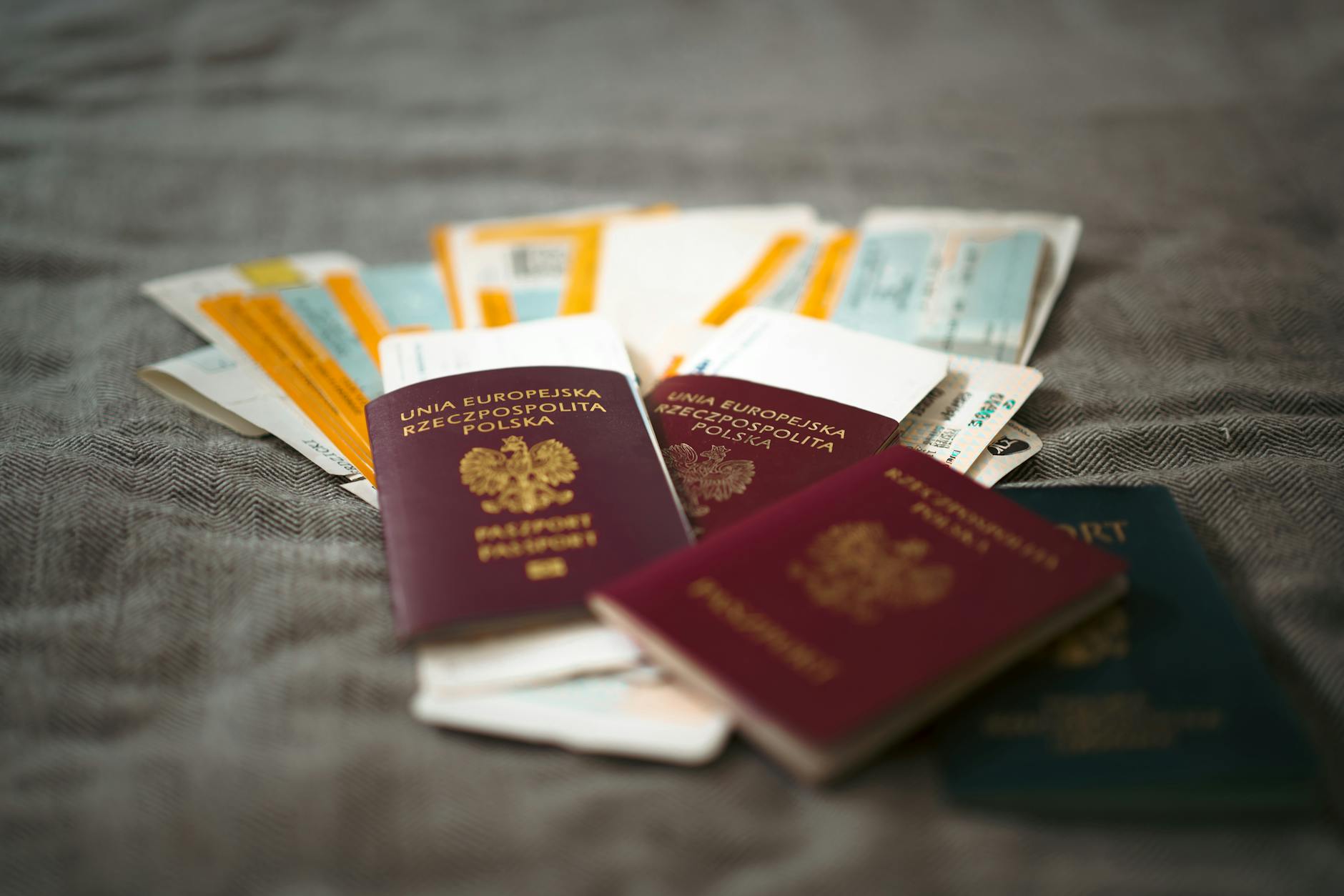
- Passport: Must be valid at least 3 months beyond departure and issued within the last 10 years.
If you’re from a visa-exempt country, you essentially just need a valid passport — but read on, because the EES and ETIAS changes are the part people are getting wrong.
Denmark, Schengen and the 90/180-day rule
Denmark is part of the European Union and the Schengen Area — the zone of European countries that share a common external border and no internal passport checks. That’s the key to understanding your entry rights.
If you’re a visa-exempt visitor, you can stay in the Schengen Area for up to 90 days within any rolling 180-day period. The crucial, often-misunderstood detail: those 90 days are shared across all Schengen countries combined, not per country. A week in Germany, a few days in France and two weeks in Denmark all draw from the same 90-day allowance. The 180-day window “rolls” — on any given day, look back 180 days and you must have used no more than 90 of them. For a normal holiday this is a non-issue; it only matters if you’re doing a long European tour or repeat visits.
Do you actually need a visa? (by nationality)
For tourism or business stays under 90 days, citizens of these countries do not need a visa for Denmark: the United States, United Kingdom, Canada, Australia, New Zealand, Japan, South Korea, Brazil and around 60 others on the EU’s visa-exempt list.
Citizens of some countries — including India and China (on ordinary passports) — do need a Schengen visa to visit. If that’s you, see the application section below. If you’re not sure which list you’re on, check the official Danish immigration site at nyidanmark.dk, which keeps the authoritative list.
One reassuring point for the visa-exempt crowd: being visa-exempt doesn’t mean you’ll never be asked anything. Border officers can still ask to see proof of onward travel, accommodation and sufficient funds — so keep those handy (more on that below).
ETIAS: what it is, and why it’s not required yet
This is the single most confused topic online, so let me be precise. ETIAS (the European Travel Information and Authorisation System) is a new travel authorisation — not a visa — that visa-exempt travellers will need to apply for online before visiting Schengen countries, including Denmark.
Here’s the current reality: as of mid-2026, ETIAS is not yet in force. The EU’s expected timeline points to a launch around late 2026, followed by a transitional grace period before it becomes mandatory. When it does go live, it will:
- Cost €20 per application (note: this was raised from the originally announced €7 — ignore older guides quoting €7).
- Be free for applicants under 18 and over 70.
- Be valid for three years, or until your passport expires, whichever comes first.
- Apply to short stays (under 90 days) and be obtained quickly online, usually within minutes to a few days.
Two warnings. First, do not pay any website for ETIAS right now — it isn’t operational, and sites taking “applications” are at best premature and at worst scams. When it launches, apply only through the official EU site. Second, the launch date has slipped repeatedly, so treat “late 2026” as provisional and verify the live status at the official EU ETIAS page close to your trip.
EES: the new biometric border (this one is live)
While ETIAS is still pending, the Entry/Exit System (EES) is already here — it became fully operational across the Schengen countries in April 2026. This is the change you’ll actually notice at the airport.
EES replaces the old passport stamp for non-EU short-stay visitors with a digital record. On your first entry under the system, you’ll register at a kiosk or booth by giving four fingerprints and a facial photo — it takes a few minutes. On subsequent trips, the border reuses your stored biometrics, so it’s quicker. The system automatically tracks your 90/180 days, which means overstaying is now much harder to do by accident (and harder to get away with).
Practically: allow a little extra time at the border on your first post-EES arrival, especially at busy periods, and don’t be surprised when you don’t get a stamp in your passport — that’s normal now. You can read the official details on the EU EES page.

Passport validity rules
Don’t let this catch you out — it’s the most common reason travellers get turned away. To enter Denmark (and Schengen) your passport must be:
- Valid for at least 3 months beyond your planned departure date from the Schengen Area, and
- Issued within the previous 10 years.
That second rule trips up people whose passports were issued with extra months tacked on beyond ten years — those extra months don’t count. The EES now checks both digitally, so an old or nearly-expired passport will flag immediately. If yours is close to either limit, renew before you travel.
If you do need a Schengen visa
If your nationality requires a visa, here’s the essentials. You apply for a short-stay Schengen visa (Type C) at the embassy, consulate or visa centre of your main destination — the country where you’ll spend the most time. So if Denmark is just one stop on a multi-country trip, you might actually apply through another country’s consulate, not Denmark’s. If Denmark is your main or first destination, apply via the Danish mission or its visa partner (often VFS Global).
The basics: the consular fee is around €90 for adults (€45 for children 6–12, free under 6), plus a service-centre charge if you use one. You’ll need an application form, a passport photo, a passport with two blank pages valid as above, travel medical insurance, a confirmed itinerary, proof of accommodation, proof of sufficient funds and a return ticket. Apply no earlier than six months and no later than about 15 working days before travel; processing typically takes up to 15 days but can extend to 45, so don’t leave it late.
Staying longer, working or studying
The 90-day rule and ETIAS cover tourism and short business trips. If you want to stay longer than 90 days, work, or study in Denmark, that’s a different process entirely — you’ll need a residence and/or work permit through SIRI (the Danish Agency for International Recruitment and Integration), again via nyidanmark.dk. UK citizens, post-Brexit, now fall under these rules for anything beyond a short visit. This is well beyond a normal holiday, so I’ll just point you to the official source rather than oversimplify it.
At the border: what to have ready
Even as a visa-exempt visitor, it pays to have a few things accessible when you arrive:
- Your passport (meeting the validity rules above).
- Proof of onward or return travel (a flight booking).
- Proof of accommodation (hotel booking or host’s address).
- Evidence of sufficient funds for your stay (rarely checked, but possible).
- Once it’s live, your ETIAS authorisation — though this is checked electronically, not as a printout.
If you’re flying to Copenhagen via another Schengen country (say, connecting through Frankfurt or Amsterdam), your EES registration and passport check happen at that first Schengen entry point, not in Copenhagen.
Mistakes to avoid
- Paying for ETIAS now. It isn’t operational yet — don’t hand money to any “ETIAS” site.
- Trusting the old €7 figure. When ETIAS launches, it’s €20.
- Forgetting the 10-year passport rule. Issued-within-10-years matters as much as the expiry date.
- Assuming the 90 days are per country. They’re shared across all of Schengen.
- Expecting a passport stamp. Under EES you get a digital record instead.
The bottom line
For the vast majority of visitors — Americans, Brits, Canadians, Australians and the rest of the visa-exempt world — a trip to Copenhagen still needs nothing more than a valid passport and an awareness of the 90/180 rule. The new wrinkles are the EES biometric checks (already happening) and ETIAS (coming, €20, not yet required). Get those two straight and you’re ahead of most travellers. Once your entry’s sorted, dive into the rest of my complete pre-trip guide, and read up on Copenhagen currency and money, whether Copenhagen is safe, and how much English is spoken in Copenhagen before you go.
The 90/180 rule, with real examples
The 90/180 rule confuses almost everyone, so let me make it concrete. You’re allowed 90 days of presence inside the Schengen Area within any 180-day window, and that window slides forward every single day. The trick is that it’s not a neat “90 days then a 90-day ban” — on any given day, you look back over the previous 180 days and count how many you spent in Schengen; that total must not exceed 90.
A couple of worked examples: if you spend a continuous 90 days from March to June, you’ve used your full allowance and must leave, then wait until enough days “age out” of the rolling 180-day window before you can return for a longer stay. But if you visit in short bursts — say two weeks in spring, two weeks in summer, two weeks in autumn — you’re nowhere near the limit and can keep coming and going freely. For a normal one- or two-week Copenhagen holiday, you will never get close to 90 days, so this rule is really only a concern for long-term travellers, digital nomads and people doing extended European tours. The EES now tracks this automatically, so there’s no more guessing.
Common scenarios: layovers, cruises and multi-country trips
A few situations come up again and again. Airport layovers: if you’re merely transiting through Copenhagen Airport to a non-Schengen destination and stay airside, you generally don’t formally “enter” — but if you leave the airport or your onward flight is within Schengen, normal entry rules apply. Cruises: Copenhagen is a major Baltic cruise hub; days spent ashore in Schengen ports count toward your 90 days, though cruise itineraries rarely come close. Multi-country trips: remember the 90 days are shared, so a grand tour of Denmark, Sweden, Germany and the Netherlands all draws from the same allowance — plan accordingly if you’re stringing several countries together. And if Denmark isn’t your main destination, that affects where you’d apply for a visa (if you need one) — it should be the country of your longest stay.
Proof of funds, insurance and onward travel
Even visa-exempt visitors are technically expected to meet the same conditions a visa holder would: enough money for the trip, somewhere to stay, and a way out of the country. In practice, border officers at Copenhagen rarely grill tourists, but it’s smart to have a return or onward flight booking, your hotel reservation, and access to funds (a card is fine) ready on your phone. Travel insurance isn’t a formal entry requirement for visa-exempt visitors, but it’s strongly advisable — and it is mandatory if you apply for a Schengen visa. If you’re driving or cruising in, the same basic principles apply.
Thinking of staying longer?
If Copenhagen charms you into wanting more than a holiday — to work, study, or live there — that’s a separate legal track entirely, handled by SIRI (the Danish Agency for International Recruitment and Integration). There are routes for skilled workers, students, working-holiday schemes for some nationalities, and family reunification, each with its own criteria and processing times. It’s well beyond a tourist visa and changes frequently, so rather than risk out-of-date specifics, I’d point you straight to the official portal at nyidanmark.dk and, if your situation is complex, a qualified immigration adviser. For a normal visit, though, none of this applies — your passport and an awareness of the 90-day rule are all you need.
What the EES means for your arrival, in practice
Since the Entry/Exit System is the change you’ll actually feel, here’s what to expect on the ground. On your first arrival under EES, you’ll be directed to a self-service kiosk or a booth where you scan your passport, give four fingerprints and have a photo taken. It takes a few minutes, and staff are on hand to help. That biometric record is then stored, so on future trips the process is much quicker — often just a passport scan and a facial match. The upside for honest travellers is real: there’s no more relying on a border guard’s stamp to prove when you came and went, and your 90/180 days are tracked accurately and automatically. The one practical tip is to allow a little extra time at the border on a first post-EES arrival, especially during summer peaks, and not to panic when you leave the airport without a stamp in your passport — that’s simply how it works now.
Arriving by cruise, train or car
Most visitors fly in, but Copenhagen is also a huge cruise port and a rail and road gateway, and the entry rules apply slightly differently depending on how you arrive. By air from outside Schengen, your checks happen at the airport. By air via another Schengen country (say, connecting through Amsterdam), your entry formalities and EES registration happen at that first Schengen airport, not Copenhagen. By train or car from Sweden or Germany, you’re crossing within Schengen, so there are no routine border checks — though spot checks do happen, and you should still carry your passport. By cruise, your entry is processed at your first Schengen port of call, and time ashore counts toward your 90 days. Whichever way you come, the same core rule holds: a valid passport, within the 90/180 allowance, and (once it launches) an ETIAS authorisation for visa-exempt travellers.
A final reassurance
It’s easy to read all this and feel that visiting Copenhagen has become complicated. It hasn’t. For the overwhelming majority of visitors, the entire “visa” question boils down to three simple things: carry a valid passport (issued within ten years, valid three months past your trip), stay within 90 days, and — when it eventually goes live — get your €20 ETIAS online a few days before you travel. The EES biometrics are quick and one-time-ish, and there’s no visa, no embassy queue and no paperwork for the typical tourist. Sort those basics and you can turn your attention to the fun part: sorting a SIM card or eSIM, checking the plug type and voltage for your chargers, and planning what to actually do once you land.

Frequently asked questions
Do US citizens need a visa for Copenhagen?
No. US citizens can visit Denmark visa-free for up to 90 days in any 180-day period. Once ETIAS launches (expected late 2026), they’ll need that €20 authorisation, but a visa isn’t required.
Do UK citizens need a visa for Denmark after Brexit?
No visa for short stays — UK citizens can visit for up to 90 days in any 180-day period. ETIAS will apply once it’s live, and longer stays or work require a permit.
How long can I stay in Copenhagen without a visa?
Up to 90 days within any rolling 180-day period, and that allowance is shared across the entire Schengen Area, not just Denmark.
Do I need ETIAS to visit Copenhagen right now?
Not yet. As of mid-2026 ETIAS is not in force; it’s expected around late 2026 at €20 per application. Don’t pay any site for it before the official launch.
Will I get my passport stamped in Denmark?
No — the EES system, live since April 2026, replaces stamps with a digital entry/exit record, including fingerprints and a photo on your first entry.
How long does my passport need to be valid?
At least three months beyond your departure from the Schengen Area, and it must have been issued within the previous 10 years.
Sorted on entry? Next, see whether you need cash with my Copenhagen money guide, brush up on tipping in Copenhagen, and plan the trip itself with the full guide to what to know before you go.
Last updated: July 2026. Entry rules (Schengen, EES, ETIAS) and fees change — always confirm current official information at nyidanmark.dk and the EU travel pages before you go.