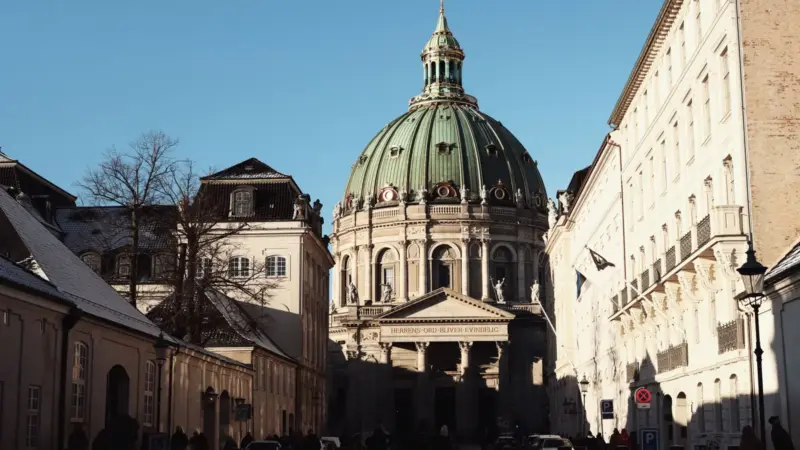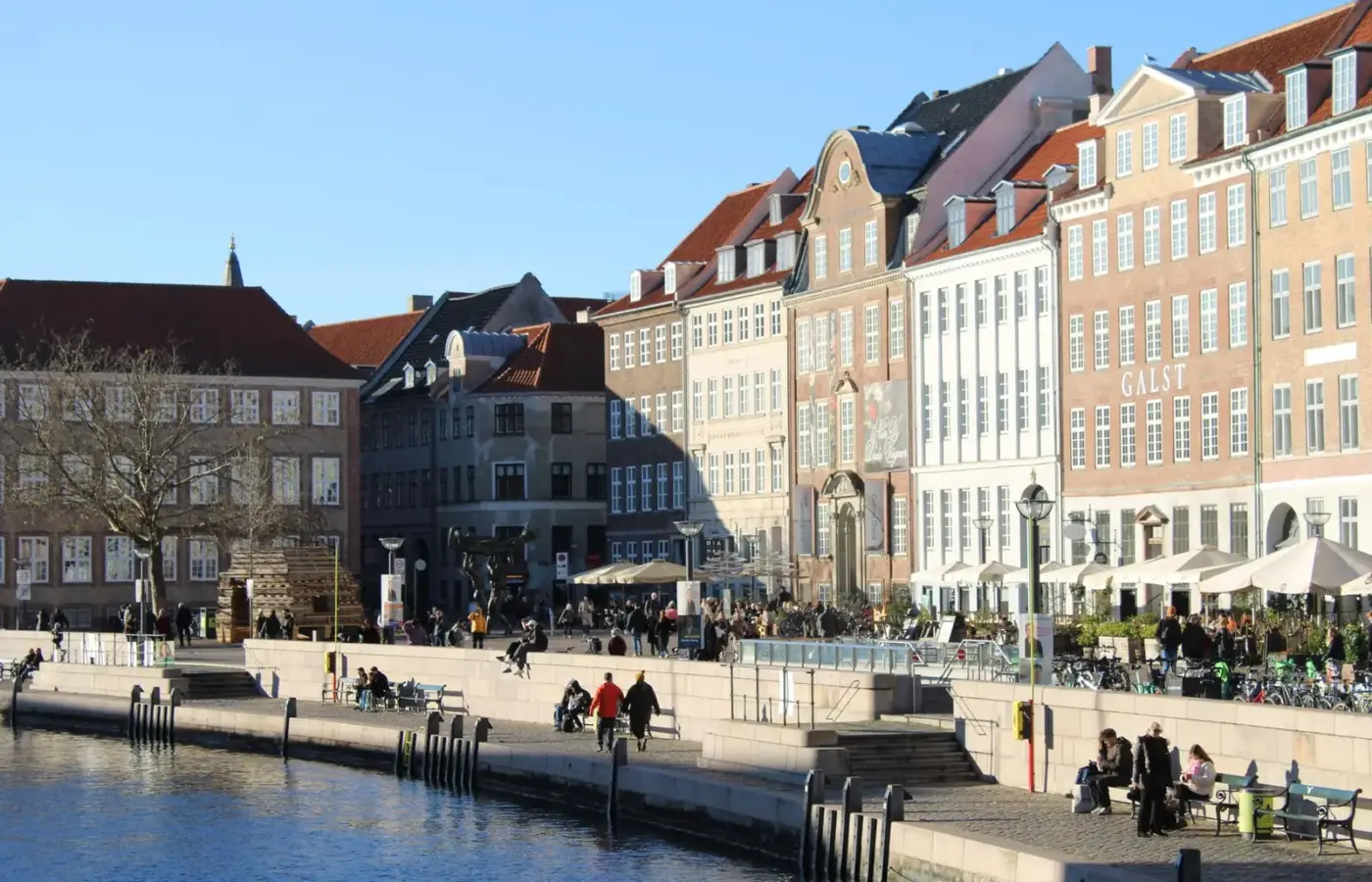
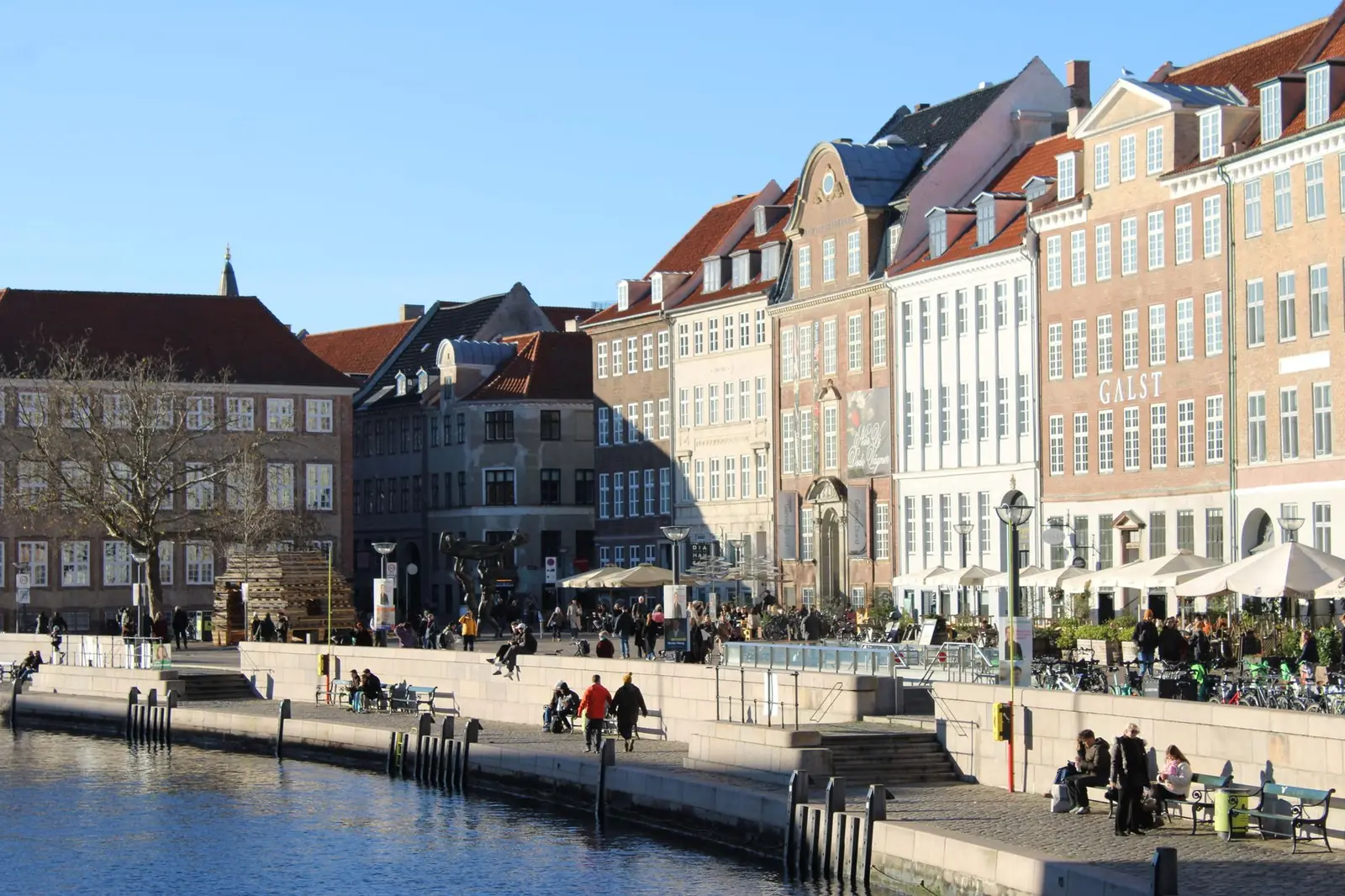
January is the cheapest month to visit Copenhagen and, from the 29th, one of the most interesting. Both the Copenhagen Light Festival and Vinterjazz open on Friday 29 January 2027, which makes the last weekend of the month the best-value weekend of the Copenhagen year. The rest of January is dark, quiet and very cheap, with Tivoli shut from the 4th. Whether that appeals depends entirely on what you want from a city break.
It is the quietest stop on our guide to choosing when to come, and the coldest stretch of the Copenhagen winter.
Copenhagen in January at a Glance
| Fact | Detail |
|---|---|
| Average high | 3.4°C / 38°F |
| Average low | -0.7°C / 31°F |
| Monthly mean | 1.4°C |
| Rainfall | ~55 mm across about 11 days |
| Sunshine | About 1.5 hours a day |
| Daylight | 7h 14m on 1 January, 8h 40m on 31 January |
| Wind | ~22 km/h, and the reason it feels colder than it is |
| Sea temperature | 3°C |
| Tivoli | Closes 3 January, shut for the rest of the month |
| Light Festival & Vinterjazz | Both open Friday 29 January 2027 |
| Hotel prices | The cheapest of the year, low season per Wonderful Copenhagen |
| Crowds | None |
The Best Weekend in January Is the Last One
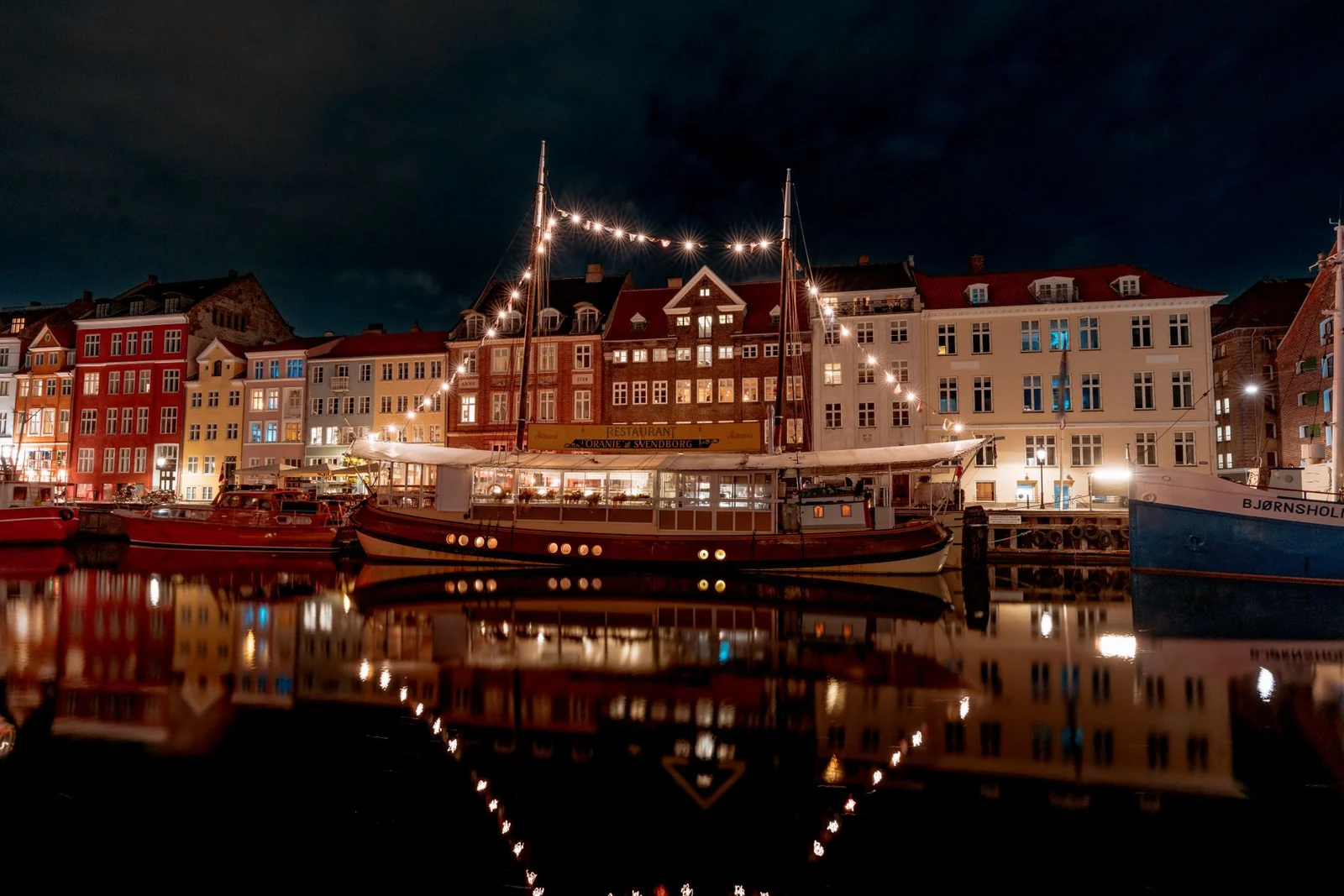
Two city-wide festivals open on the same day, Friday 29 January 2027, and every guide we checked treats both as February events.
Vinterjazz runs 29 January to 28 February 2027, confirmed on the festival’s own site. It is explicitly a club festival rather than a stadium one, about 600 concerts across more than 120 venues nationwide, from Skagen to Svaneke, with Copenhagen as the centre of gravity. Crucially, some concerts are free. The programme uses three labels worth learning: fri entré means free entry, køb billet means buy a ticket, and dørsalg means tickets on the door. There is no festival-wide ticket price because each venue sets its own, so browse the programme and book through the individual concert page.
The Copenhagen Light Festival is announced for 29 January to 21 February 2027 by VisitCopenhagen. It is mostly free, spans the city from Nordhavn to Ørestad, and the 2026 edition ran to 94 installations. Most works are lit from around 17:00. Because the sun sets at 16:43 on 31 January, you can do a full evening light walk and still be at dinner by half seven. Note that the festival’s own site had not published its 2027 programme when this was written, and VisitCopenhagen’s page carries a second, conflicting date range, so check before booking flights around it.
The walkable cluster is the inner city and harbour: Højbro Plads, Gammel Strand, Marmorbroen and the National Museum, then across to Christianshavn. Refshaleøen is a separate trip and pairs well with a sauna booking.
Tivoli Is Shut, and That Catches People Out
Tivoli’s Christmas season ends on 3 January 2027. After that the gates close and stay closed for the rest of the month. It reopens for a short winter season around the Danish February school holiday, then properly for summer on 7 April.
Anyone who booked Copenhagen in January because of Tivoli and did not check the calendar is going to be disappointed, so build your trip around something else. The Tivoli guide has the full season calendar.
One more January closure worth knowing: the spire of the Church of Our Saviour is closed for the whole of January. That is the best view in Copenhagen and it is unavailable. The Round Tower, happily, is not only open but better in winter (see below).
Winter Bathing: How It Actually Works
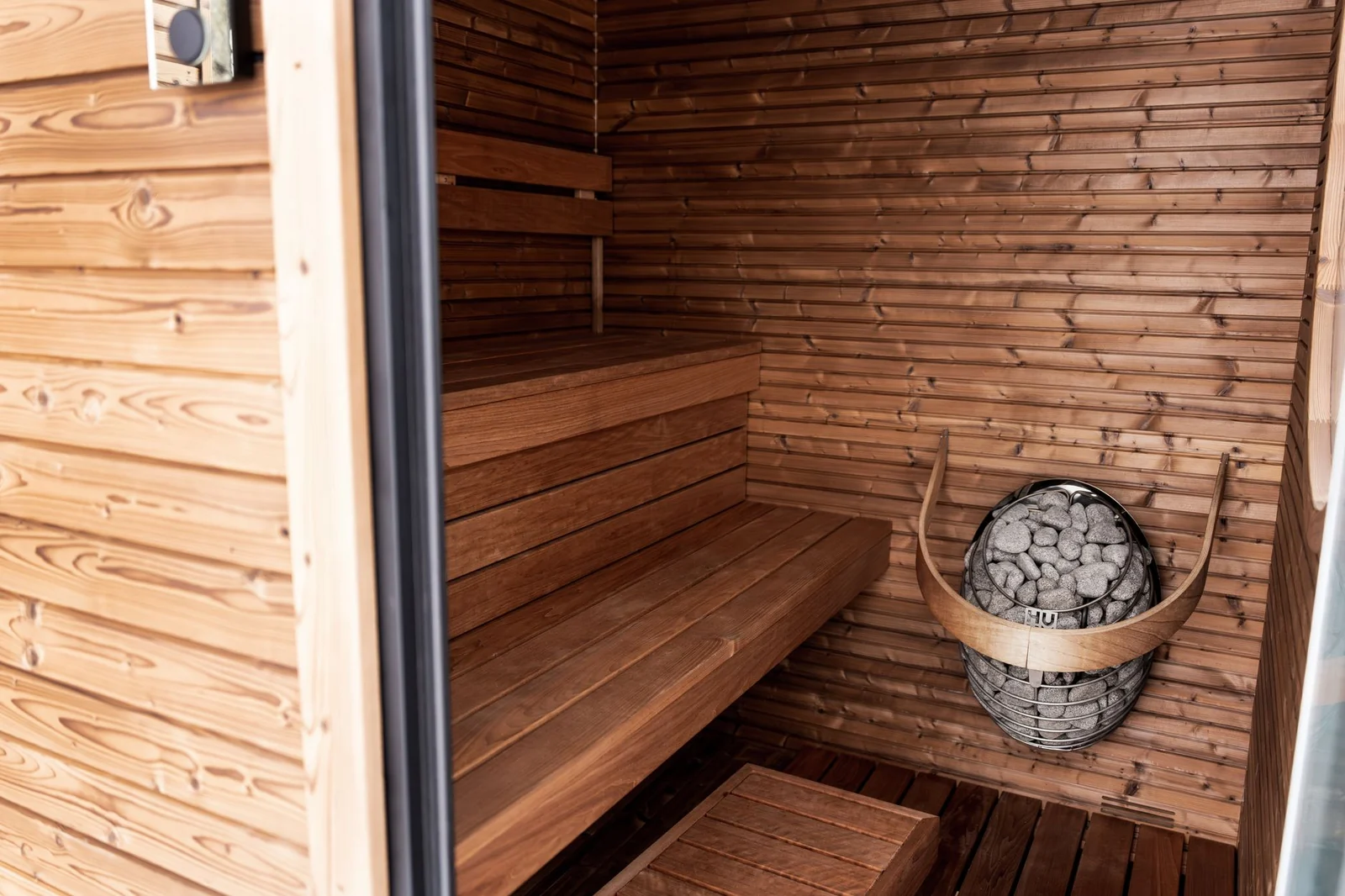
Every guide mentions winter bathing as a novelty. None of them explains the system, which splits into three tiers and costs anywhere from nothing to 950 DKK.
Free public bathing zones
These are open, unstaffed, cost nothing and need no booking. Wonderful Copenhagen’s own winter list includes Islands Brygge (part of it is reserved for club members in winter, but there is a delimited public area), Kalvebod Bølge opposite, the Havnegade zone by the Inner Harbour Bridge, Sandkaj in Nordhavn, Fisketorvet, Søndre Refshalebassin and Svanemøllen beach. For a short city break, Havnegade is the one, because it is a two-minute walk from Nyhavn.
Bookable saunas
La Banchina on Refshaleøen is the well-known one. A private sauna session is 800 DKK Monday to Thursday and 950 DKK Friday to Sunday, flat regardless of group size, running 1 hour 45 minutes for a maximum of eight people. Towel hire is 35 DKK. Bookings open up to eight weeks ahead. Their Soup and Sauna Club runs every Sunday from October to April with no booking, first come first served, at a discounted rate they do not publish. Other options include CopenHot and Hottub Copenhagen on Refshaleøen, and floating saunas at Kalvebod Bølge and Fisketorvet with visitor days at around 100 DKK per person.
The cheap public baths nobody writes about
Sjællandsgade Bad in Nørrebro is a 1917 municipal bathhouse where a sauna and shower costs somewhere around 40 DKK, no booking, year-round. Badehuset in Christiania is similar. Prices at both come from secondary sources rather than the venues, so treat them as indicative, but the tier is real and it is where locals go.
The water sits at about 3°C in January. Never swim alone, check the wind and current, and skip it entirely if you have a heart condition or high blood pressure. A dip is measured in seconds, not minutes.
The Museums Do Not Cut Their Hours
A widely repeated claim about Copenhagen in winter is that museums run reduced hours. Mostly they do not.
| Venue | January hours | Adult price |
|---|---|---|
| Ny Carlsberg Glyptotek | Tue–Sun 10–17, Thu to 21:00, closed Mon | 150 DKK, 135 online |
| National Museum of Denmark | Tue–Sun 10–17, closed Mon in winter | 150 DKK, 135 online |
| The David Collection | Tue–Sun 10–17, Wed to 21:00 | Free, always |
| Round Tower | Mon–Tue 10–21, Wed–Sun 10–18 | 60 DKK |
| Church of Our Saviour spire | Closed all January | — |
Two things worth pulling out. The Glyptotek is free on the last Wednesday of every month, which for January 2027 is the 27th. And the David Collection, which holds the finest Islamic art collection in northern Europe, is free every day it is open, guided tours included. It is the best free hour in the city and almost nobody puts it at the top of a list.
The Round Tower is the January specialist. From October to March it stays open until 21:00 on Mondays and Tuesdays, and the observatory at the top opens 18:00 to 21:00 with a staffed telescope on those two nights. That is a genuinely January-only experience for 60 DKK, and it exists precisely because the sky is dark by five.
The trap is Monday. The Glyptotek, SMK, Designmuseum, Thorvaldsens, Louisiana and the David Collection all close on Mondays. In a month with seven hours of daylight, losing a day to closures hurts.
How Dark It Actually Gets
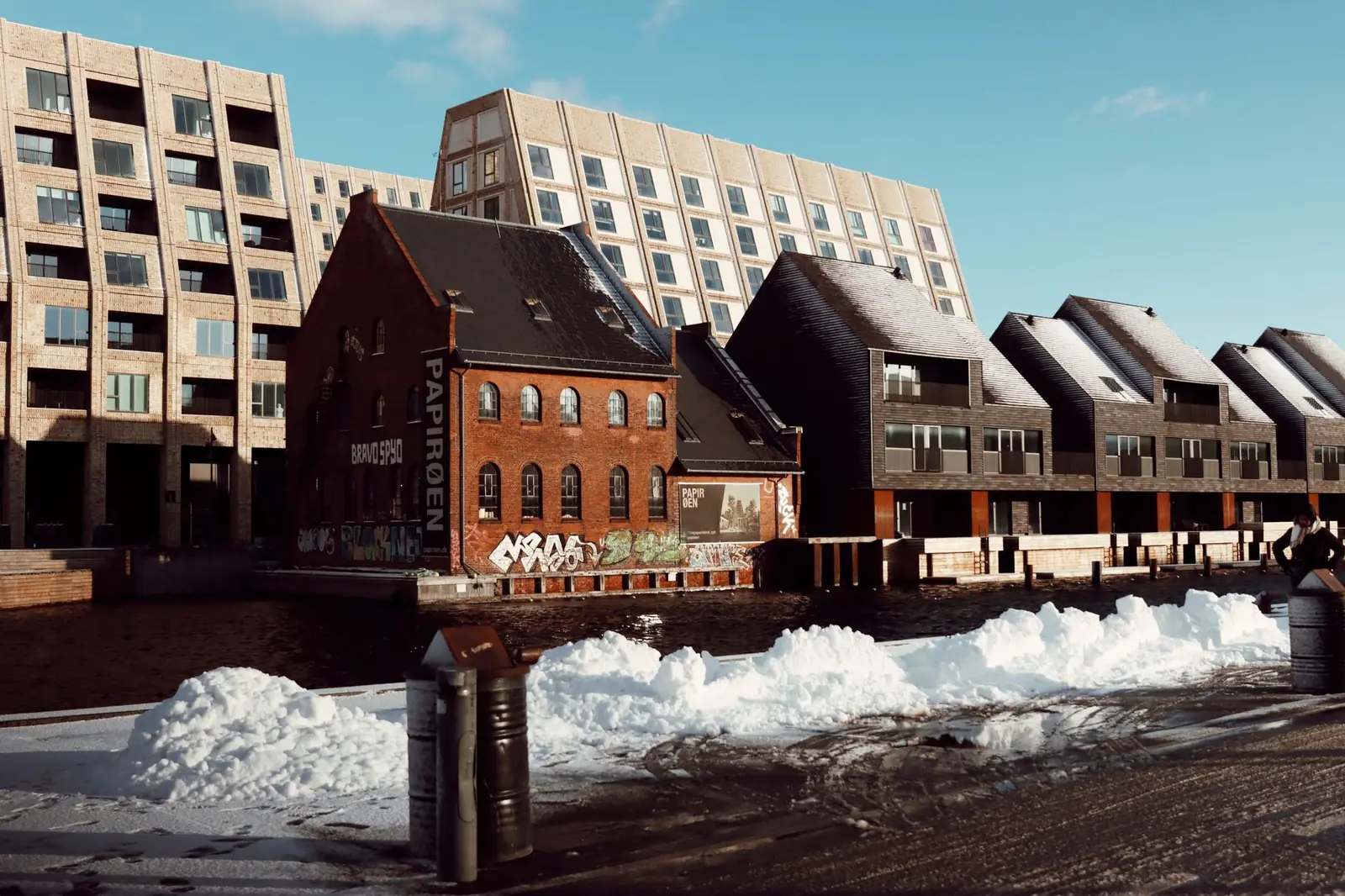
Be specific rather than gloomy about this, because the numbers are better than the reputation:
| Date | Sunrise | Sunset | Daylight |
|---|---|---|---|
| 1 January | 08:36 | 15:50 | 7h 14m |
| 15 January | 08:27 | 16:11 | 7h 44m |
| 31 January | 08:03 | 16:43 | 8h 40m |
January gains one hour and twenty-six minutes of daylight. A trip in the last week of the month is a measurably brighter trip than one in the first. You wake in the dark, but you get a full working day of light.
What people actually find hard is not the length but the quality. About 1.5 hours of sunshine a day against seven to eight hours of daylight means roughly 80 per cent of your daylight is flat grey. Plan outdoor sightseeing for 10:00 to 15:00 and treat everything after 16:00 as indoor or illuminated.
Does It Snow?
Sometimes, and it rarely stays. Copenhagen averages around twenty days with snow across the whole year, and January is one of the likelier months, but the postcard scene of a snow-covered city is a lucky break rather than the norm. Precipitation more often arrives as cold rain or sleet, and what you walk on is grey slush. The city grits well; ice grips are overkill in the centre.
What It Costs
Wonderful Copenhagen, the official tourist board, calls January and February low season with rates up to a third cheaper than peak summer. That is the conservative, authoritative figure and the one to plan against. Aggregator data suggests a wider gap still, with city-centre averages around a third of June’s, but those numbers move constantly and are not auditable, so treat them as illustrative.
The other January saving is access rather than price. Restaurants that are impossible in June take bookings in January. If there is a Copenhagen restaurant you have wanted to eat at, this is the month you get in.
The winter sales, vinterudsalg, run from around 27 December into February. Sale dates are not regulated in Denmark, so shops set their own, and the deepest markdowns land in the second half of January as retailers clear for spring. Strøget, Købmagergade and the Illum and Magasin du Nord department stores are the concentration points, and Danish design is the category worth crossing a city for. There is more in our shopping guide.
The First Week Is Dead
1 January is Denmark’s only public holiday in the month. Expect most shops, many museums and a good number of restaurants to be closed that day, with a reduced transport timetable. Things normalise from roughly the first full working week, but 2 to 5 January is the deadest stretch of the Copenhagen year: the Christmas decorations are coming down, Tivoli has just shut and the city is having its own hangover.
If you can choose, the last week of January beats the first by a wide margin. More daylight, both festivals running, and the city back at work.
What to Pack
It is only around freezing. The problem is wind-driven damp, so windproof and waterproof beats thick.
- A merino or wool base layer. Cotton holds sweat and then chills you, which is the classic mistake here.
- A genuinely windproof and waterproof outer shell. A wool coat looks right and soaks through.
- Thin thermal leggings under trousers. This is the single item that makes a full walking day comfortable.
- Waterproof boots with grip, for slush rather than ice.
- Hat, gloves and scarf, because the wind is the whole argument.
- Swimwear and a quick-dry towel if you intend to get in the harbour.
- Heavy moisturiser and lip balm. Wind plus hard indoor heating is brutal on skin.
- Bike lights if you hire a bike. Riding unlit carries a fine of around 700 DKK.
Hygge, Without the Cliche
Every January article reaches for candles and blankets and the word untranslatable. Here is the more useful version: hygge in January is infrastructural, not decorative.
Copenhagen is a city that has organised its physical fabric around four dark, wet months. That is why there are eight winter bathing clubs and twenty-odd public saunas, why the city schedules a light-art festival for its darkest weeks, why there is a municipal bathhouse in Nørrebro charging forty kroner, and why cafes are built for sitting still for two hours. The move is not to endure January indoors. It is to use the things the city built specifically for January: a cold harbour plunge, a hot sauna, out into the light festival at five, then dinner somewhere you could never book in June. That sequence is not available in any other month, and it costs less.
Frequently Asked Questions
Is Copenhagen worth visiting in January?
If you want museums, restaurants, saunas and low prices without crowds, yes, and the last week is genuinely good because both the Light Festival and Vinterjazz are running. If you want Tivoli, terraces or daylight, come at another time of year.
Is Tivoli open in January?
Only until 3 January 2027, when the Christmas season ends. It is closed for the rest of the month and reopens briefly around the February school holiday.
When is the Copenhagen Light Festival?
It is announced for 29 January to 21 February 2027 and it is mostly free. Most installations are lit from around 17:00. The festival had not published its own 2027 programme at the time of writing, so confirm the dates before you book.
How many hours of daylight does Copenhagen get in January?
Seven hours fourteen minutes on 1 January, rising to eight hours forty by the 31st. The city gains about four minutes of daylight a day through the month.
How cold is Copenhagen in January?
Average high 3.4°C and low -0.7°C, so around freezing rather than genuinely arctic. The 22 km/h average wind is what makes it feel colder.
Can you go winter swimming in Copenhagen in January?
Yes, and a lot of locals do. Several harbour bathing zones are free and open with no booking, including Havnegade near Nyhavn. The water is about 3°C, so keep it to seconds and never go alone.
Is January the cheapest time to visit Copenhagen?
It is one of the two cheapest months along with February. The official tourist board describes low-season rates as up to a third below peak summer.
Related Reading
- How February compares adds nearly two hours of daylight and keeps January prices.
- The weather month by month sets out temperature, rainfall and daylight across the year.
- What to do when the weather turns matters more in January than in any other month.
- The free side of the city goes a long way when daylight is short and budgets are tight.
Final Thoughts
January is Copenhagen at its emptiest and cheapest, and for three weeks of it that is all it is: a quiet, grey, inexpensive city with excellent museums and no queues. Then on 29 January two festivals open at once and the month changes character completely. If you have any flexibility at all, arrive for that last weekend. You get more daylight, both festivals, and the same low-season prices as the dead fortnight that came before it.
Last verified: September 2026. The Copenhagen Light Festival had not published its own 2027 dates when this was written; check before booking around it.