No stairs — that’s the twist. To reach the top of the Round Tower you walk up a wide cobbled spiral ramp, the same one Tsar Peter the Great supposedly rode a horse up in 1716. It’s one of the most charming stops on any list of things to do in Copenhagen, and easily the best-value rooftop view in the Old City.
The Round Tower (Rundetårn in Danish) is a 35-metre observatory tower from 1642, built by King Christian IV — the oldest still-working observatory in Europe. Entry is a bargain at around 40 kr, and you’re at the top in about ten minutes of gentle climbing. This Round Tower Copenhagen (Rundetaarn) guide covers tickets, hours, the view, the observatory and what to pair it with. Locals just call it Rundetårn.
Round Tower Copenhagen at a Glance
Everything you need on the Round Tower Copenhagen (Rundetaarn) in one snapshot before you go:
| Fact | Detail |
|---|---|
| Danish name | Rundetaarn (rounded tower) |
| Built | 1637–1642 by Christian IV |
| Height | 35 metres (about 11 storeys) |
| Top observation deck | 34.8 metres above street level |
| Way up | 209-metre cobbled spiral ramp (no stairs except a final 25-step spiral staircase to the deck) |
| Original purpose | Astronomical observatory + church tower for Trinitatis Church + university library |
| Still in use as observatory | Yes — Tuesdays and Wednesdays October–March, 19:00–22:00 |
| Address | Købmagergade 52A, 1150 Copenhagen K |
| Nearest Metro | Nørreport (M1, M2, M3, M4) — 5 min walk |
| Visit time | 30–45 min (longer if there is an art exhibition) |
| Adult ticket | 40 DKK |
| Free with | Copenhagen Card |
A Brief History of Rundetårn
King Christian IV — Denmark’s most prolific royal builder — wanted to give Copenhagen a major astronomical observatory after the death of Tycho Brahe in 1601. Brahe was the king’s astronomer, and his observatory at Uraniborg on the island of Hven (now Swedish) was Europe’s leading astronomical centre at the turn of the 17th century. After Brahe’s exile and death, the king commissioned a replacement in central Copenhagen.
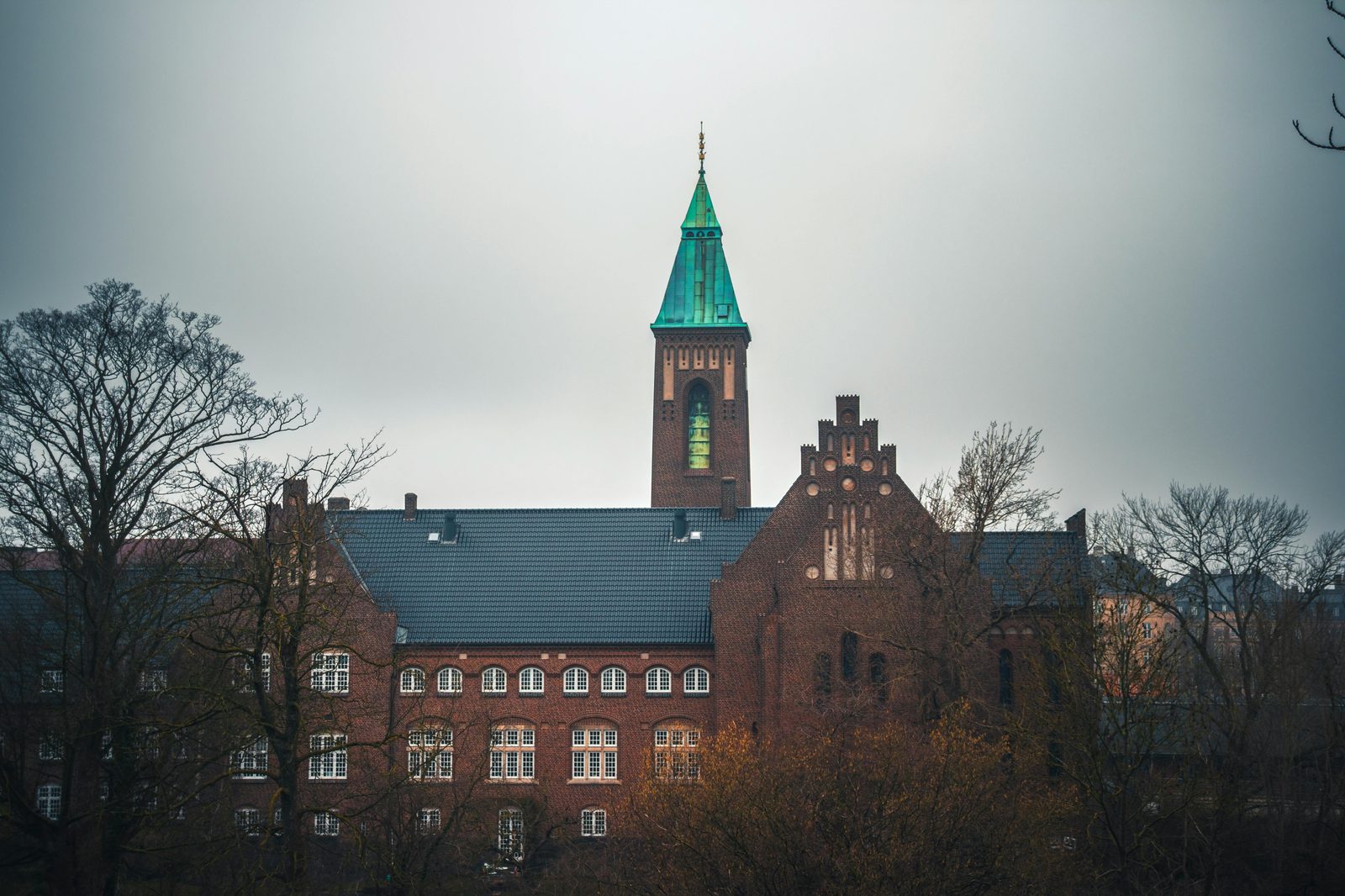
The Round Tower was part of a three-building complex: the tower, the Trinitatis Church (1656) for the University of Copenhagen students, and a library hall halfway up the tower. The whole complex was designed by architect Hans Steenwinkel the Younger and completed across two decades from 1637.
The first university astronomer was Christian Sørensen Longomontanus (1562–1647) — Tycho Brahe’s former assistant. He worked at the Round Tower from 1642 until his death in 1647. The observatory was used continuously by the University of Copenhagen until 1861, when it was moved to a new site at Østervold. The tower has been used since 1929 by amateur astronomers and educational programmes.
Famous visits to the Round Tower: Tsar Peter the Great rode his horse to the top in 1716; his wife Tsarina Catherine I (yes, that one) was driven up in a four-horse carriage. Hans Christian Andersen mentioned the tower in his diaries multiple times. Charlie Chaplin visited in 1931.
The 209-Metre Spiral Ramp
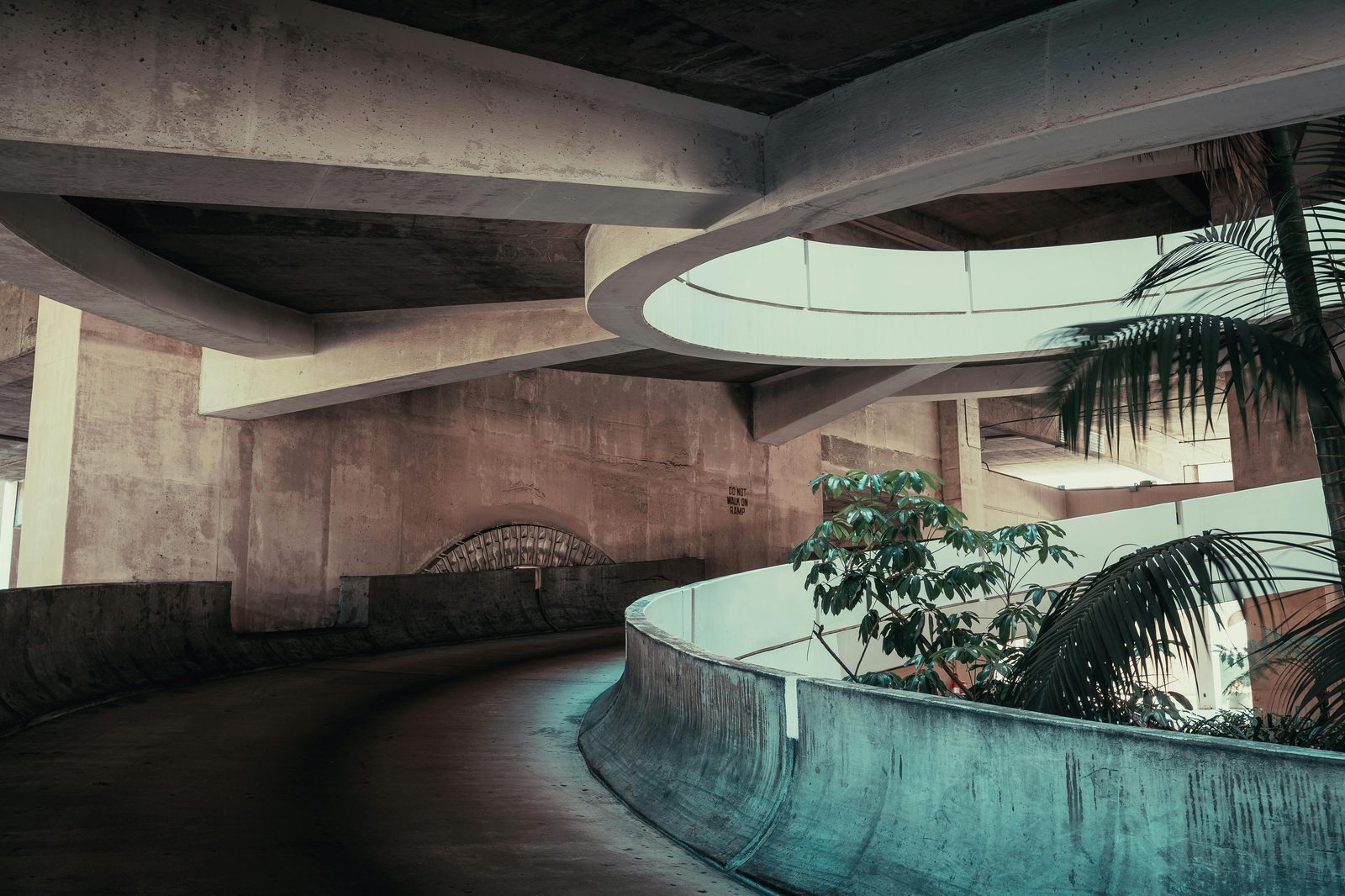
The Round Tower’s defining feature is its spiral ramp inside — 209 metres of cobbled spiral path, gently sloping (about 7° gradient), winding 7.5 turns from the entrance to the observation deck. There are no stairs until the final 25-step staircase to the dome at the top.
Why a ramp? Two reasons. First, the original purpose included transporting heavy astronomical equipment (telescopes, books, scientific instruments) up to the observatory — a ramp was easier than stairs. Second, the Trinitatis Church congregation included elderly worshippers, and the ramp made the tower accessible. The Round Tower is one of the few major European 17th-century towers that is wheelchair-accessible to within 25 steps of the top.
The 1716 horse-ride of Tsar Peter the Great is documented in the King’s diary; Catherine I’s carriage ascent was witnessed by hundreds and is commemorated by a small bronze plaque halfway up the ramp. There is a modern annual unicycle race up the ramp every February — and a barefoot run on opening day in spring.
Visiting Rundetårn — Practical Guide
Opening Hours
| Period | Hours |
|---|---|
| April–September daily | 10:00–20:00 |
| October–March daily | 10:00–18:00 |
| Tuesdays Oct–Mar (observatory open) | 10:00–22:00 |
| Christmas closure | 24, 25 December and 1 January |
| Last admission | 30 minutes before closing |
Tickets and Pricing
| Ticket | Price (DKK) |
|---|---|
| Adult | 40 |
| Child (5–15) | 10 |
| Children under 5 | Free |
| Student | Free with valid ID |
| Family ticket (2 adults + 2 children) | 85 |
| Annual pass | 150 |
| Copenhagen Card | Included |
Tickets are sold at the entrance only — no online booking required, no advance reservations. Cards accepted; cash also fine. Quick entry: queue is rarely longer than 5 minutes except on rainy summer Saturdays. The Copenhagen Card covers entry; if you have one, just walk in and show it at the gate.
How to Get There
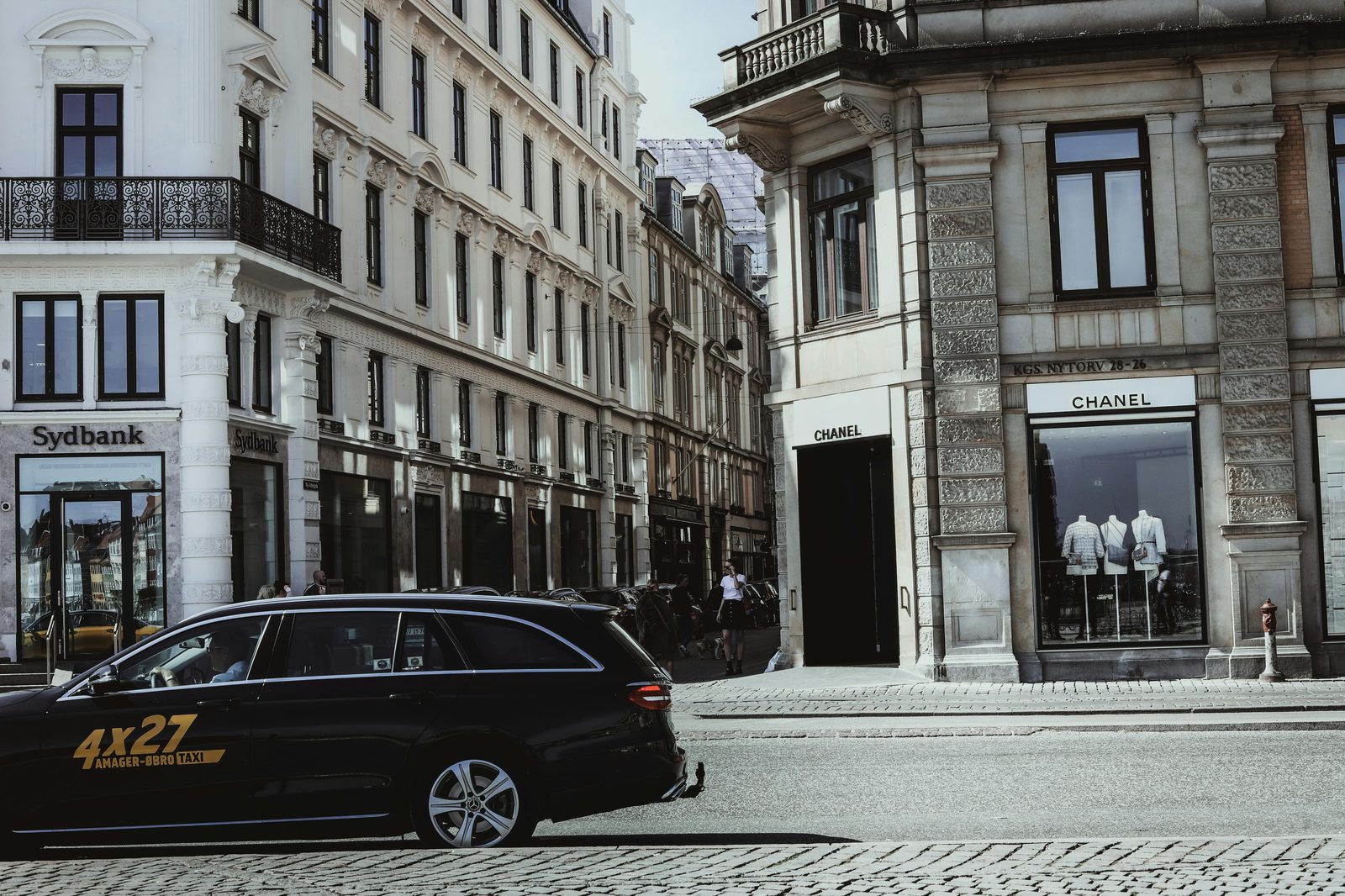
The Round Tower is on Købmagergade — a pedestrianised side-street off Strøget, in the absolute centre of the Old City. Multiple Metro stations are within 5 minutes walk.
- Nørreport (M1/M2/M3/M4 + S-tog): 5-minute walk south along Købmagergade.
- Kongens Nytorv (M1/M2/M3/M4): 7-minute walk west along Strøget.
- Gammel Strand (M3/M4): 7-minute walk north.
- Central Station: 15-minute walk via Strøget — pleasant for shoppers.
- From Tivoli: 12-minute walk north up Strøget.
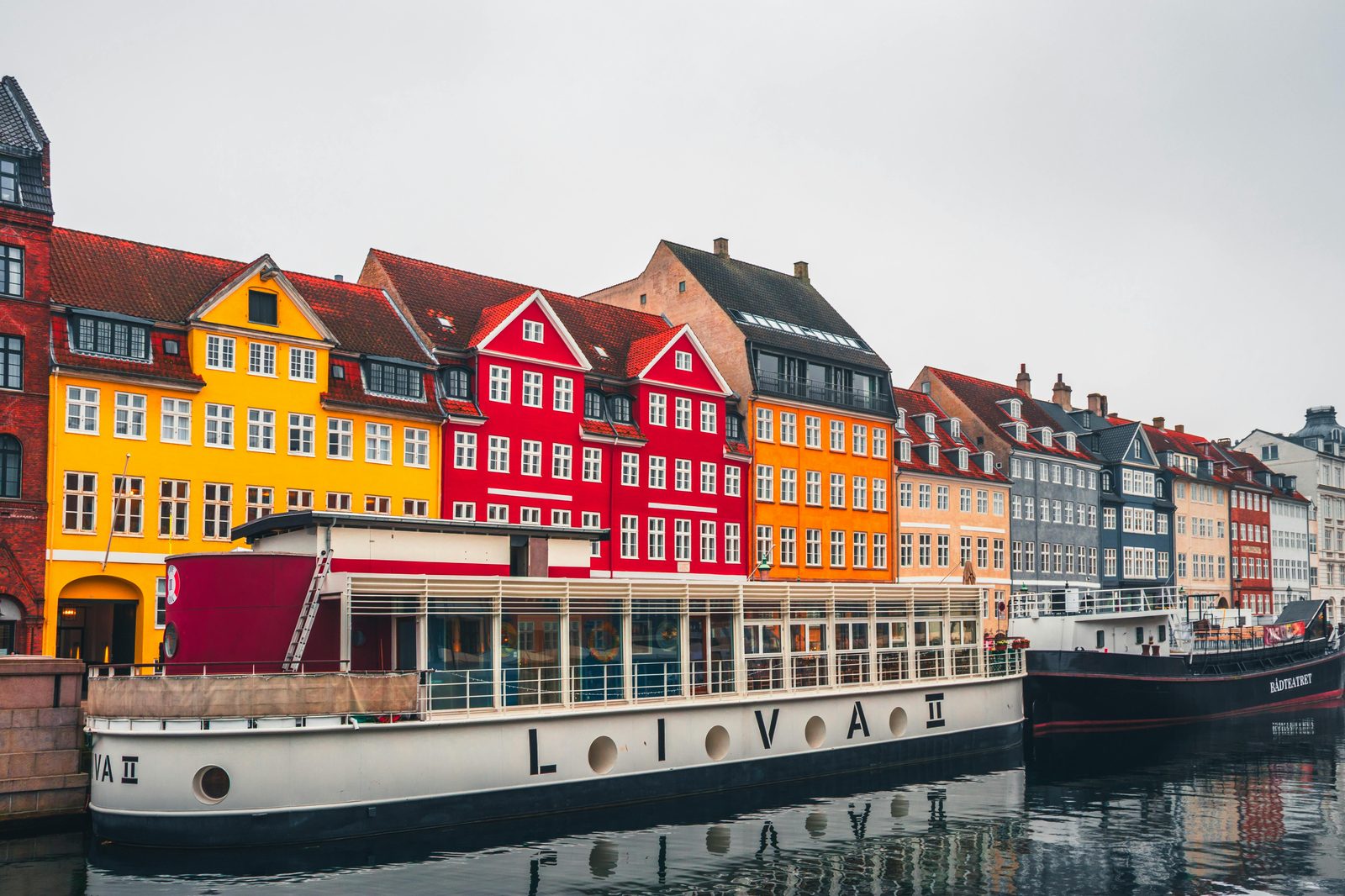
- From Nyhavn: 10-minute walk west along Strøget.
The View from the Top
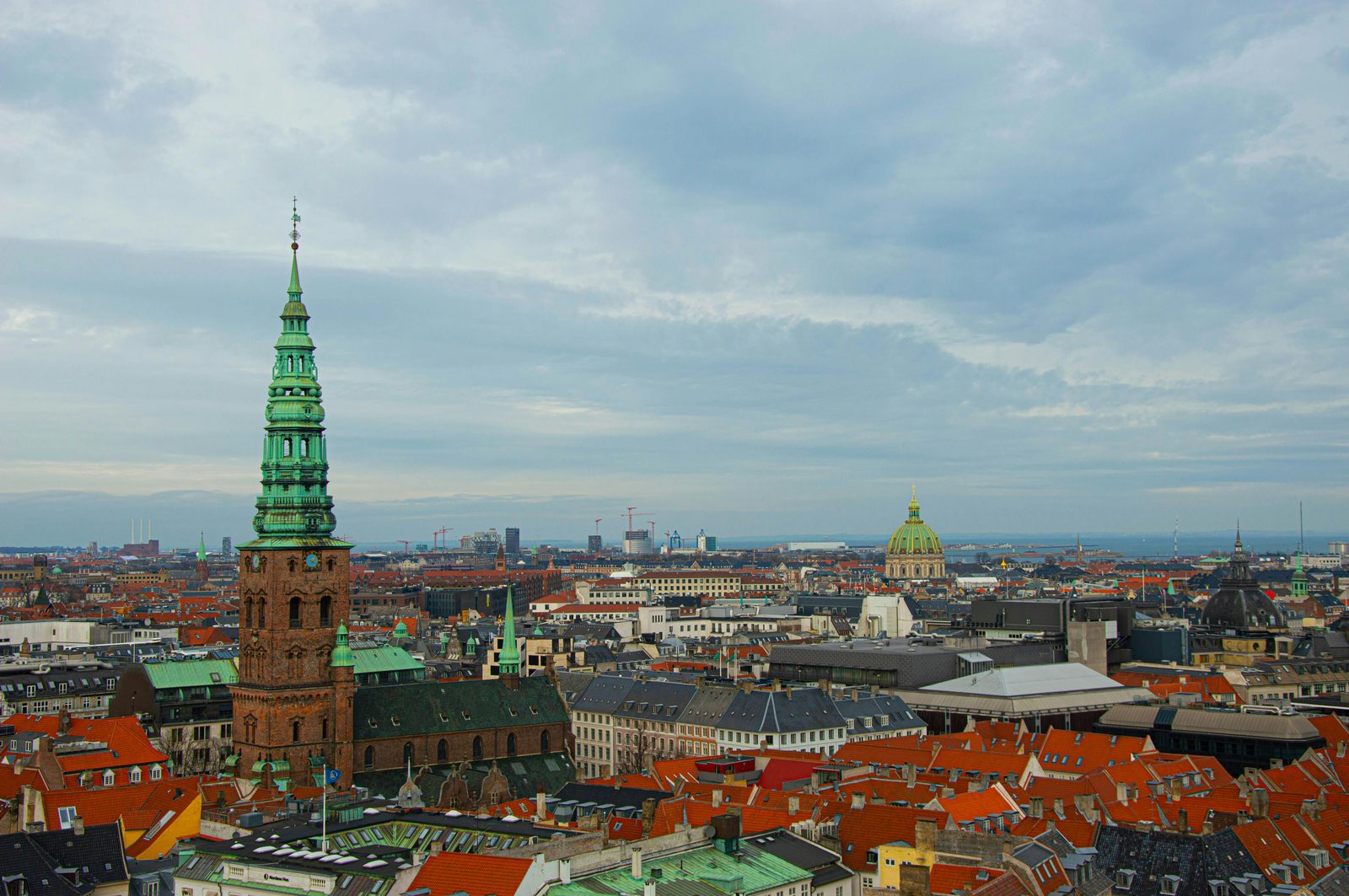
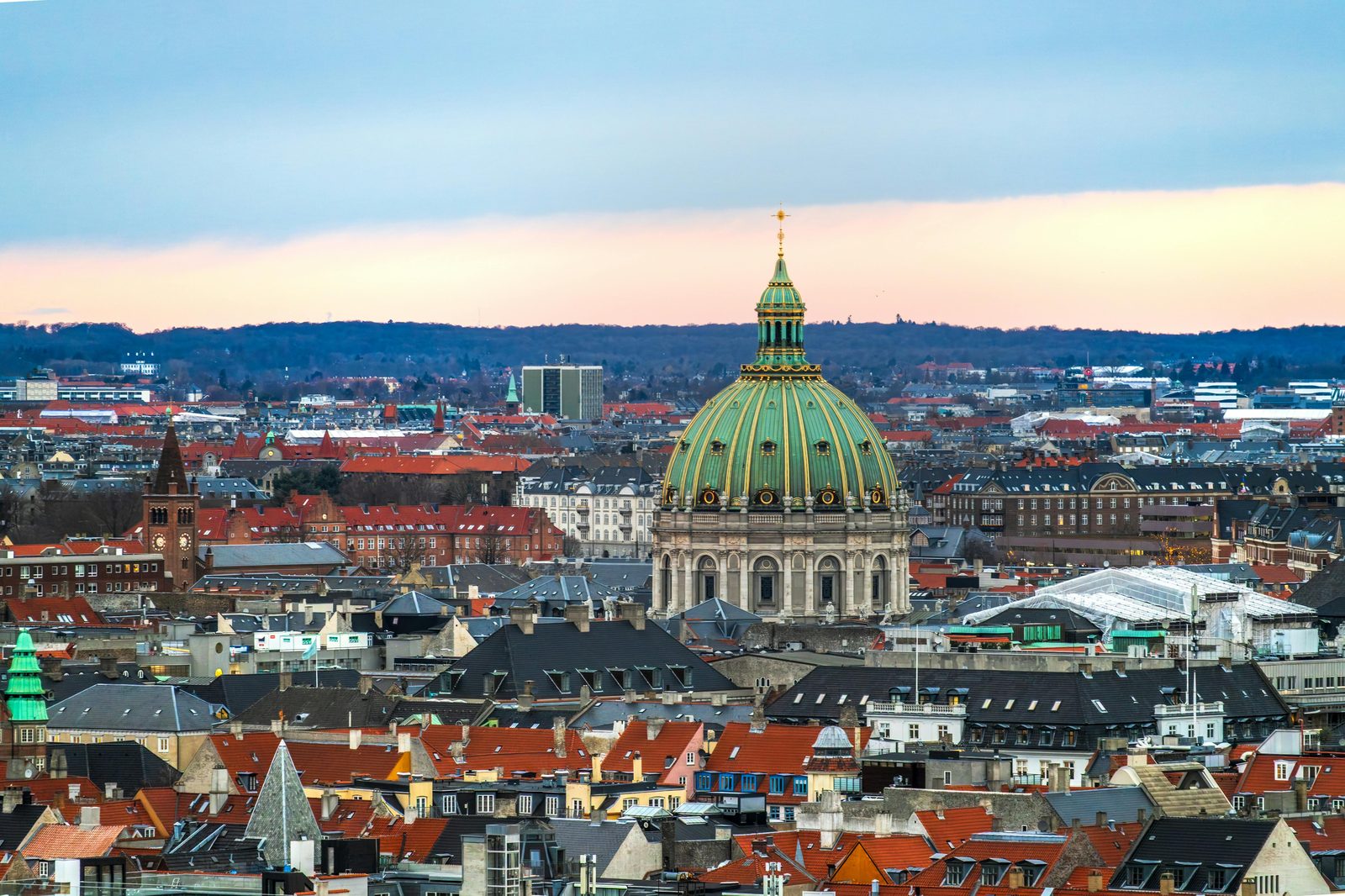
The Round Tower’s 34.8-metre observation deck offers what many guidebooks call “Copenhagen’s most charming rooftop view.” It is not the highest viewpoint in the city — Christiansborg’s 106-metre tower wins on altitude — but the Round Tower is in the densest, most photogenic part of the Old City, and the view across red-tile rooftops, copper-spired church towers and Renaissance gables is the iconic Copenhagen rooftop view.

Compass points from the deck:
- North: Rosenborg Castle, Botanic Garden, Nørrebro.
- East: Marble Church (Frederik’s Church), Amalienborg, Inner Harbour.
- South: Nyhavn, Christiansborg’s spire, the Royal Library.
- West: Tivoli’s Star Flyer, City Hall, Vesterbro.
- Far horizon: Sweden across the Øresund on clear days; the Øresund Bridge is visible at the south-east.
Photography tip: the rooftops glow at golden hour. Mid-July sunset is around 21:45 — by 21:00 the warm light across the tile roofs is at its best. Winter sunsets (mid-December at 15:30) give a moody dusky version that is equally photogenic.
The Observatory
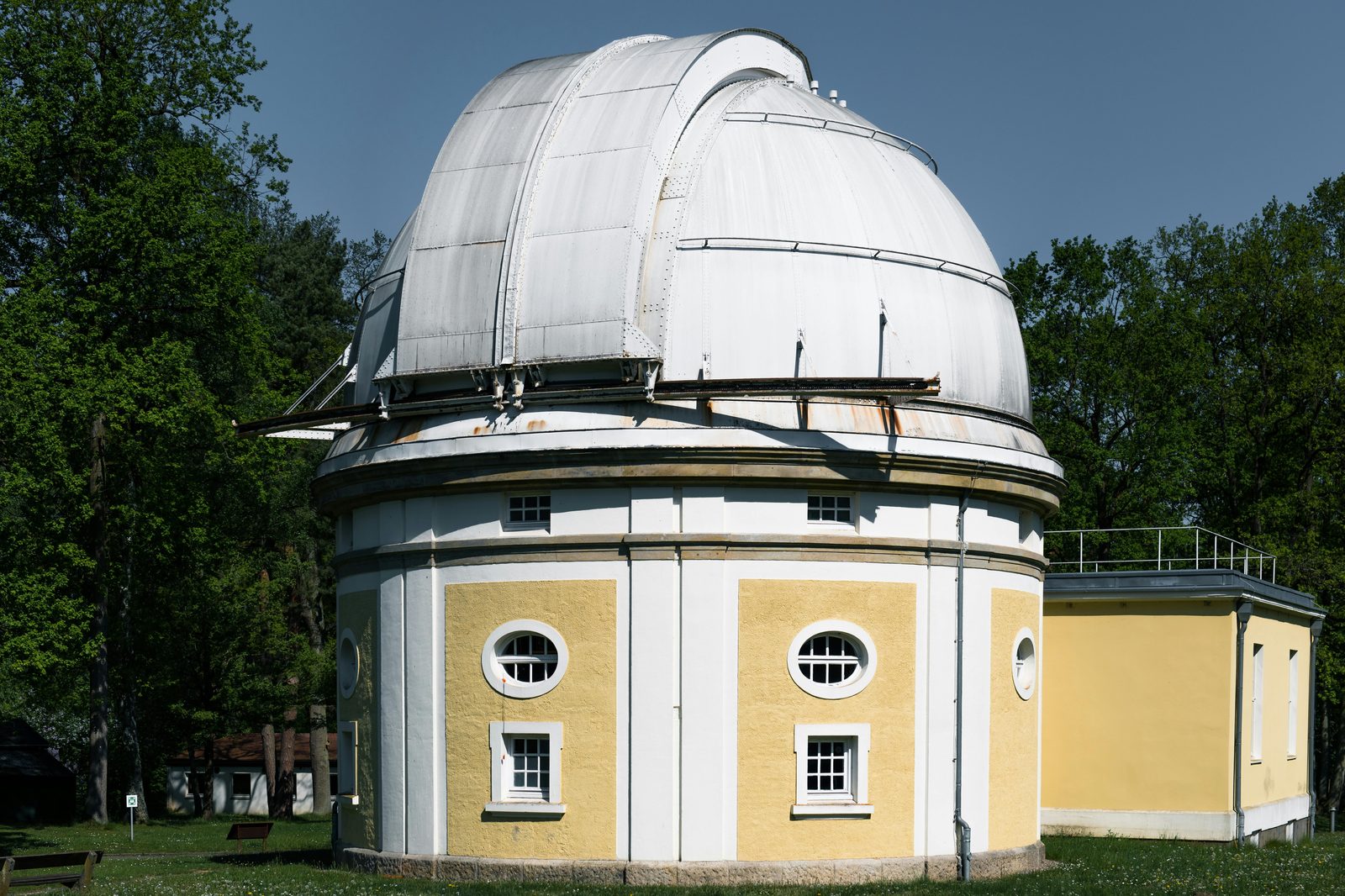
The original 17th-century observatory at the top of the Round Tower is open to amateur astronomers in winter — a tradition revived in 1929. From October to March on Tuesdays and Wednesdays, 19:00–22:00, the dome opens and members of the Astronomical Society of Copenhagen run free public stargazing nights. The telescopes are modern (a 50cm Cassegrain reflector and several smaller refractors) but the dome is original.
No booking required for stargazing nights — entry is included with the regular tower ticket. Best months: October–November and February–March (long, dark evenings). Bring a warm coat — the dome is unheated.
The Library Hall and Art Exhibitions
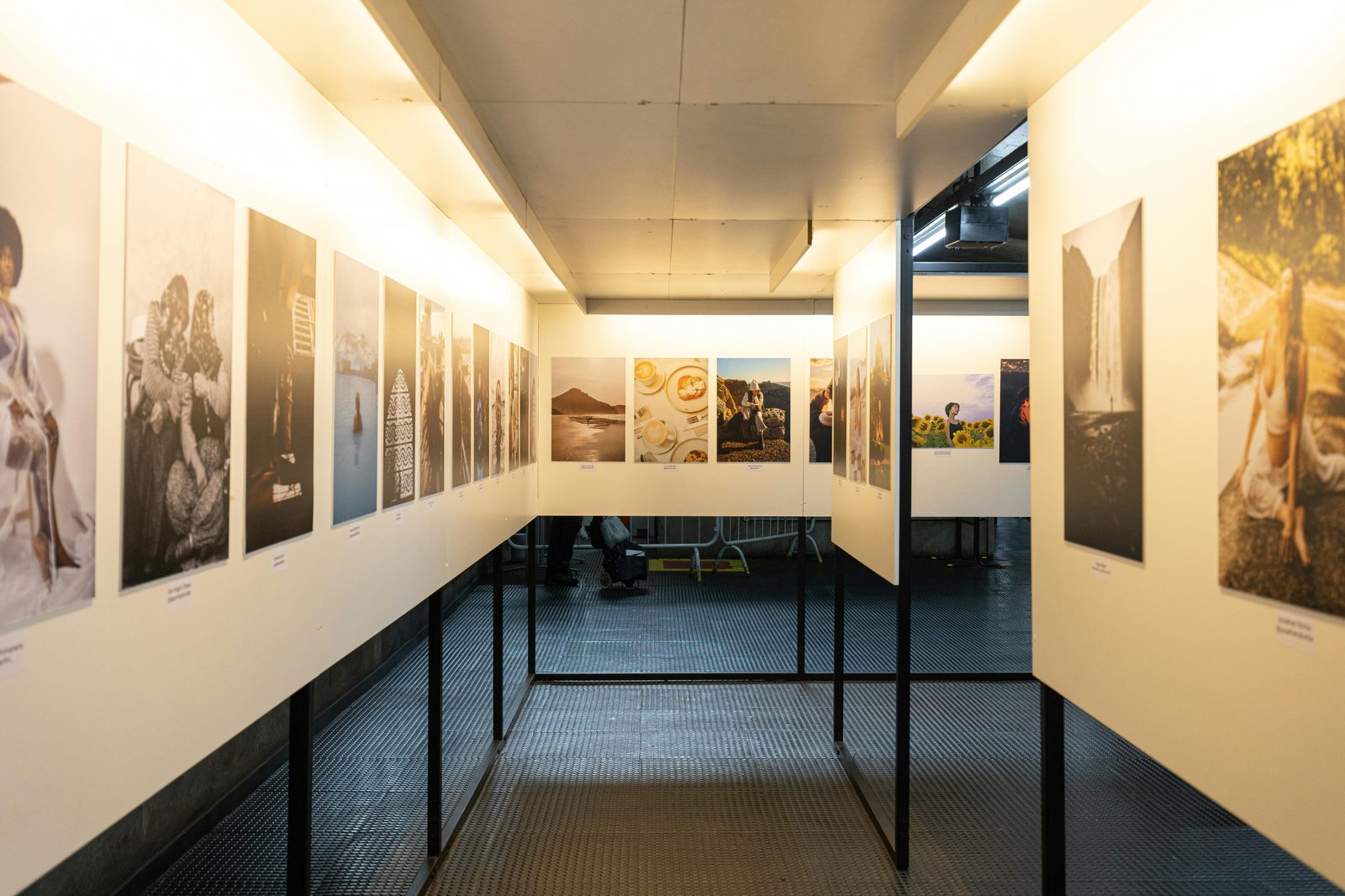
Halfway up the spiral ramp, a door opens into the Library Hall (Bibliotekssalen) — a 600-square-metre vaulted hall built in the 1640s as the University of Copenhagen’s main library. The library moved out in 1861, but the hall has hosted contemporary art exhibitions since 1987. Six to eight rotating shows per year — sculpture, photography, painting, installation art — all included in the regular tower ticket.
Recent exhibitors have included Bjørn Nørgaard (designer of the Queen’s Tapestries at Christiansborg), Olafur Eliasson, John Kørner and visiting international artists. The Library Hall is also a working concert venue — chamber music, a cappella and choral concerts run several evenings a month. Programme at rundetaarn.dk.
Trinitatis Church
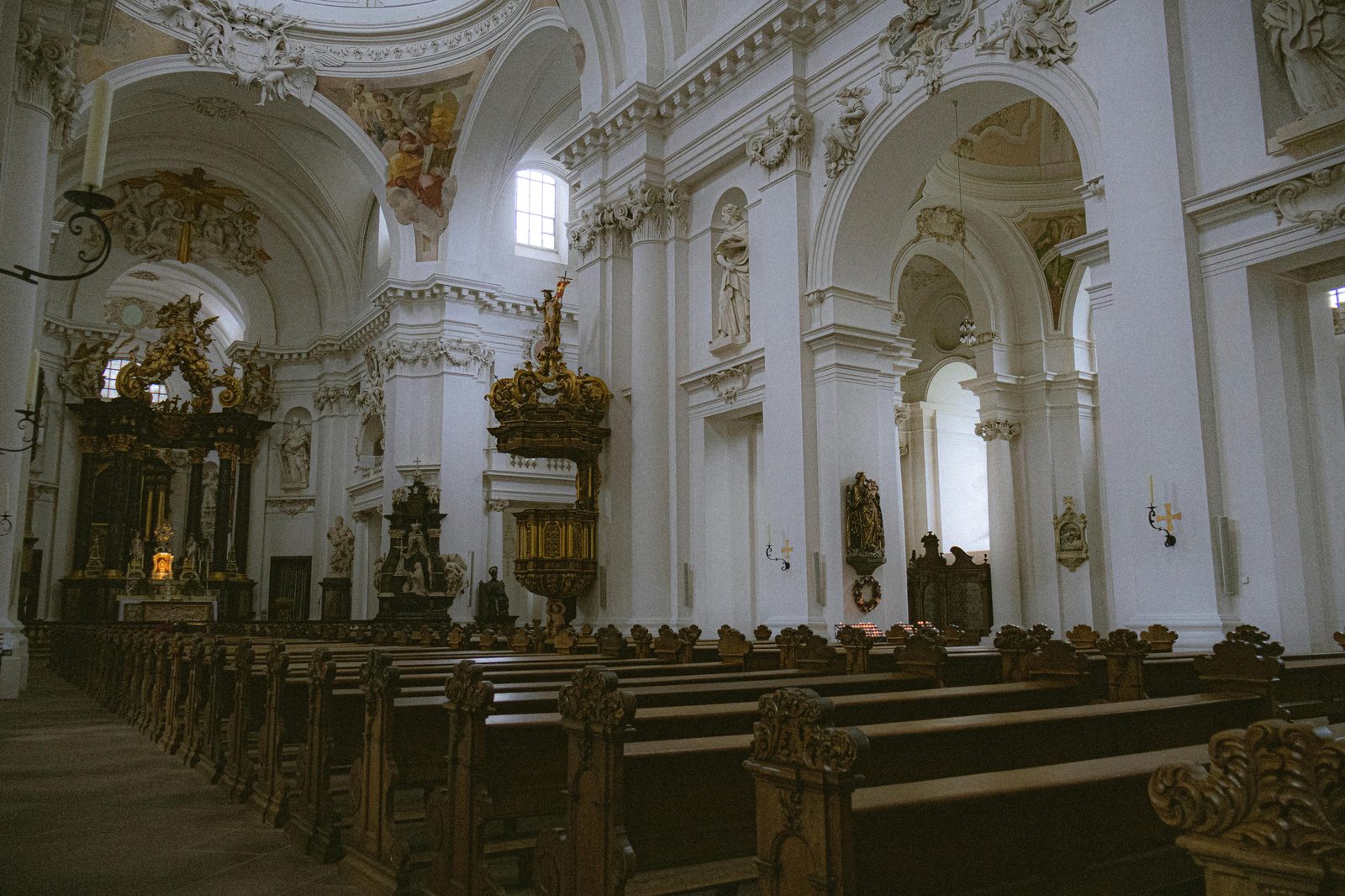
The Round Tower forms part of Trinitatis Kirke — a working Lutheran church that stands directly beside the tower base. Built 1656, the church served as the University of Copenhagen’s student church for 250 years. The interior is more restrained than the Marble Church (Frederiks Kirke) but no less beautiful — a bright three-aisled hall with a Baroque altar, organ pipes from 1656 and 17th-century pew carvings.
Free entry; opening hours vary with services (typically 11:00–17:00). Sunday services in Danish at 11:00. Free organ concerts most Tuesdays at 20:00 — historically performed on the 1656 organ. Allow 10–15 minutes for the church.
The Round Tower at Night
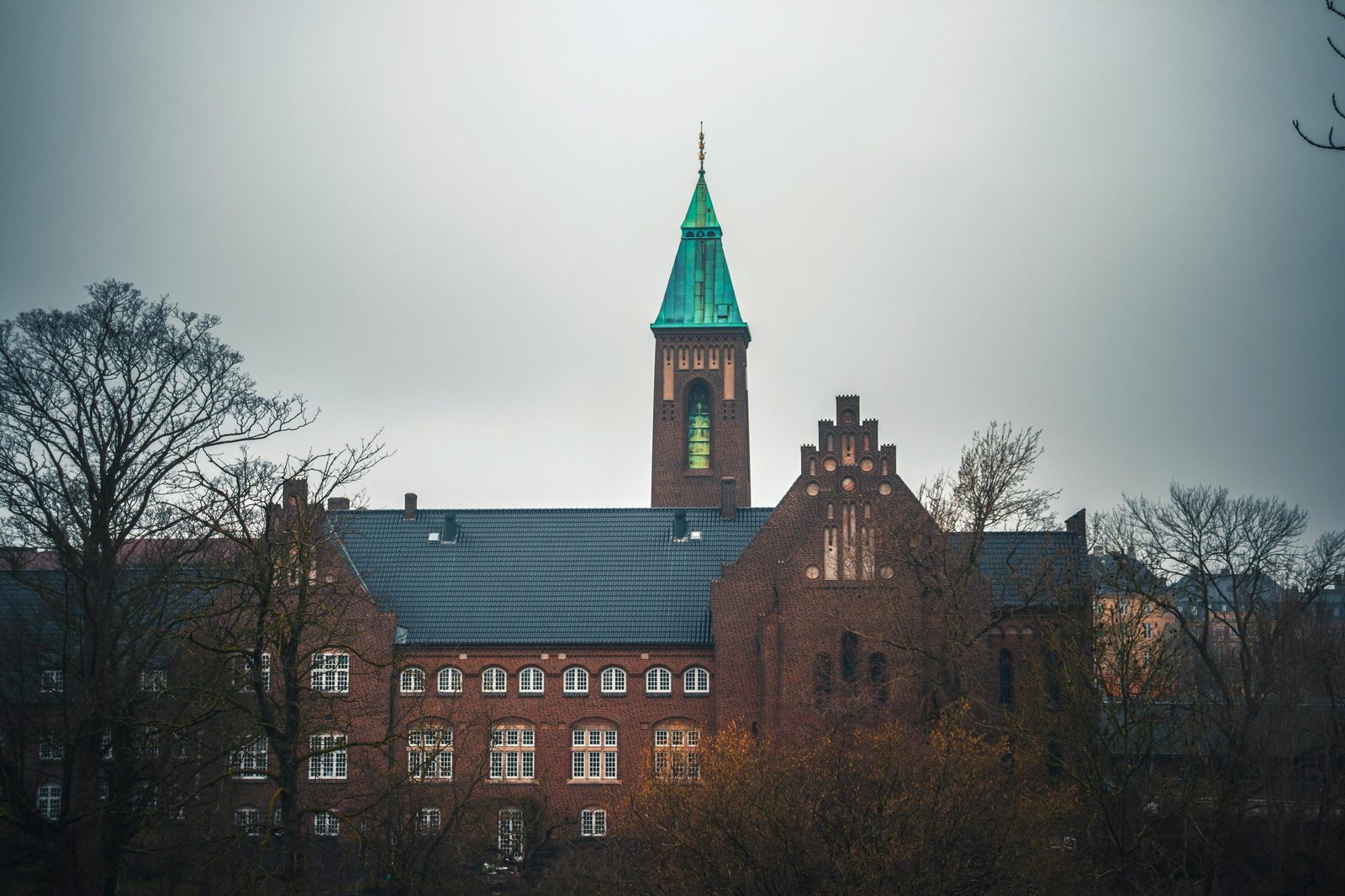
In summer (April–September) the Round Tower stays open until 20:00, which means you can climb for the long Nordic dusk and the sunset view over rooftops. The cobbled ramp is lit by warm wall lanterns that recreate the original 17th-century atmosphere — the experience genuinely feels Renaissance.
The deck at sunset (approx 21:00 in mid-summer) is one of Copenhagen’s most-recommended things to do — and you can come down through the ramp in time for dinner in Nyhavn or at any of the restaurants on Strøget. See our full guide to eating in Copenhagen for nearby restaurant recommendations.
Round Tower for Families and Kids
The Round Tower is one of Copenhagen’s most genuinely kid-friendly indoor attractions. The cobbled ramp is easy enough for toddlers in strollers (though you do need to push) and a fun discovery for older kids — they can run, scoot or take it slowly. Highlights for kids:
- The Hollow Core: A glass-floored disc halfway up the ramp lets you look down 25 metres into the tower interior. Adventurous kids love it; nervous adults can avoid it by using the wall side.
- The horse story: Tell them about Peter the Great riding his horse up. Most kids try to imagine it the rest of the climb.
- The unicycle race: If you visit early February, the annual unicycle race up the ramp is genuinely entertaining — fast, chaotic, free to watch.
- The dome at the top: Kids 7+ can usually handle the final 25-step spiral staircase to the observation deck.
- Telescopes: On Tuesday/Wednesday October–March stargazing nights — kids 5+ can look through the eyepiece (children must be supervised).
For more on visiting Copenhagen with kids, see our Copenhagen with kids guide.
Combining the Round Tower with Other Copenhagen Sites
The Round Tower is in the dead centre of the Old City — half of central Copenhagen is within a 10-minute walk.
| Combination | Time | Why pair them |
|---|---|---|
| Round Tower + Strøget shopping | Half-day | Strøget runs past the door — combine with shopping on Købmagergade and Strøget. |
| Round Tower + Rosenborg Castle | 3.5 hours | Both Christian IV. 8-min walk apart. |
| Round Tower + Christiansborg Tower | 3.5 hours | Both involve climbing for views; complementary perspectives. |
| Round Tower + Trinitatis Church + Library Hall art | 75 minutes | All in one complex, single ticket. |
| Round Tower + Nyhavn | Full afternoon | Climb at sunset, dinner at Nyhavn. |
| Round Tower + Tivoli | Full evening | Tower at golden hour, then Tivoli for the evening lights. |
Two more nearby pairings worth knowing: the free National Museum of Denmark is a short walk south, and the Ny Carlsberg Glyptotek makes a lovely rainy-afternoon follow-on near Tivoli. If you’re stacking several paid sights in a day, weigh up the Copenhagen Card.
Round Tower Practical Tips
- Visit at golden hour: 60–90 minutes before sunset for warm light on rooftops. In mid-summer that’s 20:30; in winter, 14:30.
- Visit on a clear day for the Sweden view: Check the forecast — the Øresund Bridge is invisible on hazy days.
- Pace the climb: The ramp is gentle but 209 metres long. Stop at the Library Hall halfway up — most people are surprised at the climb length.
- Bring layers: The dome at the top is unheated; the ramp inside is cooler than the street. Even summer evenings can be chilly at the top.
- Stargazing nights: October–March, Tuesdays and Wednesdays only, 19:00–22:00. Free with regular ticket. Bring a warm coat.
- Photography: No tripods on the deck except for organised photo workshops. Hand-held with a 24-70mm lens covers most shots.
- Accessibility: The ramp is wheelchair-accessible up to within 25 steps of the deck. The Library Hall is fully accessible.
- Cafés nearby: Conditori La Glace (Skoubogade 3) for cake; Aamanns Etablissement (Niels Hemmingsens Gade 19) for smørrebrød — both 5 min away.
- Bring water: No water fountains inside; the gift shop at the bottom sells water but it’s a 10-minute round trip.
Round Tower FAQs
How long does it take to climb the Round Tower?
A leisurely climb up the spiral ramp takes 8–10 minutes; allow another 15–20 minutes at the top, plus the descent (5 minutes downhill, easy). Add 15 minutes if you stop in the Library Hall. Total visit: 30–45 minutes.
Is the Round Tower wheelchair accessible?
The 209-metre spiral ramp inside is wheelchair-accessible. The final 25 stairs to the observation deck are not — but staff can assist with a small platform lift on request (call ahead). The Library Hall halfway up is fully accessible. This is one of the few 17th-century European towers genuinely accessible to wheelchair users.
Is the Round Tower worth visiting?
Yes — at 40 DKK adult, the Round Tower is the best-value rooftop view in the city. The 209-metre spiral ramp is unique in Europe, the rooftops view is the postcard Copenhagen, and the rotating Library Hall art exhibitions are usually excellent. If you have a Copenhagen Card, entry is free.
Can you really ride a horse up the Round Tower?
Tsar Peter the Great did it in 1716 — but it is not allowed today. Catherine I was driven up in a four-horse carriage in 1716 (different woman from Catherine the Great, who came to power 1762). The annual unicycle race up the ramp every February is the modern equivalent.
Is the Round Tower’s observatory still working?
Yes — but only as a recreational/educational facility. From October to March, the Astronomical Society of Copenhagen runs public stargazing nights every Tuesday and Wednesday 19:00–22:00, free with the regular tower ticket. The original 17th-century observatory was the working University of Copenhagen astronomy centre from 1642 to 1861.
Is the Round Tower scary at the top?
No — the observation deck has a chest-high railing and is wider than most cathedral viewing platforms. The one slightly nerve-inducing feature is the glass-floored “Hollow Core” disc halfway up the ramp; you can avoid it by walking on the wall side.
How does the Round Tower compare to Christiansborg Tower?
Christiansborg is taller (106m vs 35m) and free — but the Round Tower has more character (the ramp), more history (1642 vs 1928), and a more central Old City view. Many visitors do both — they’re an 8-minute walk apart. See our Christiansborg Palace tickets guide.
Is the Round Tower kid-friendly?
Yes — children love the spiral ramp, the glass floor, and the Tsar Peter horse story. Strollers are allowed (though you do push them up the gentle 7° gradient). The final 25-step staircase to the dome is the only limitation for very young children.
How do I get to the Round Tower from Tivoli?
12-minute walk via Strøget. From Tivoli’s main entrance, head north up Vesterbrogade and Strøget to Amagertorv, then turn left onto Købmagergade. The tower is 200m up the street on your right.
If Rundetårn’s gentle ramp leaves you wanting something with more nerve to it, the obvious next climb is across the harbour: the Church of Our Saviour, where the final 150 steps spiral round the outside of the spire at 86 metres. It is the opposite experience in every respect — see our guide to climbing the Church of Our Saviour.
The Round Tower is also the obvious fallback when the Marble Church dome tour is off. That climb runs only at 13:30 on Saturdays and Sundays, for fifteen people, with no advance booking and a weather rule — the details are in our guide to the Marble Church.
Related Reading
- The Little Mermaid statue — the story behind it, how to get there and when the crowds thin.
- Copenhagen itinerary — Royal Trio + Old City day plans.
- Rosenborg Castle — Christian IV’s other masterpiece.
- What you can do for free — 25 genuinely free sights, museums and walks.
- Tivoli Gardens — combine for an evening.
- Nyhavn — 10-minute walk east.
- Shopping in Copenhagen — Strøget and Købmagergade.
- Copenhagen after dark — canal cruises after sunset, jazz clubs and the Meatpacking bars.
- Copenhagen transportation — Nørreport metro.
Final Thoughts: Is the Round Tower Worth It?
The Round Tower is one of the city’s most charming and best-value attractions. At 40 DKK adult (or free with a Copenhagen Card), you get a 209-metre spiral ramp, 384 years of European astronomical history, a rotating contemporary art exhibition, a working Lutheran church and the postcard rooftops view — all in a 45-minute visit. Combine it with Strøget shopping in the morning, Rosenborg Castle in the afternoon, and dinner in Nyhavn, and you have one of the best central Copenhagen days possible. Don’t skip Rundetårn — it is the kind of small, dense, atmospheric attraction that bigger European cities have lost.
Last updated: July 2026. Ticket prices, observatory evenings and exhibition dates change — check rundetaarn.dk before you go.