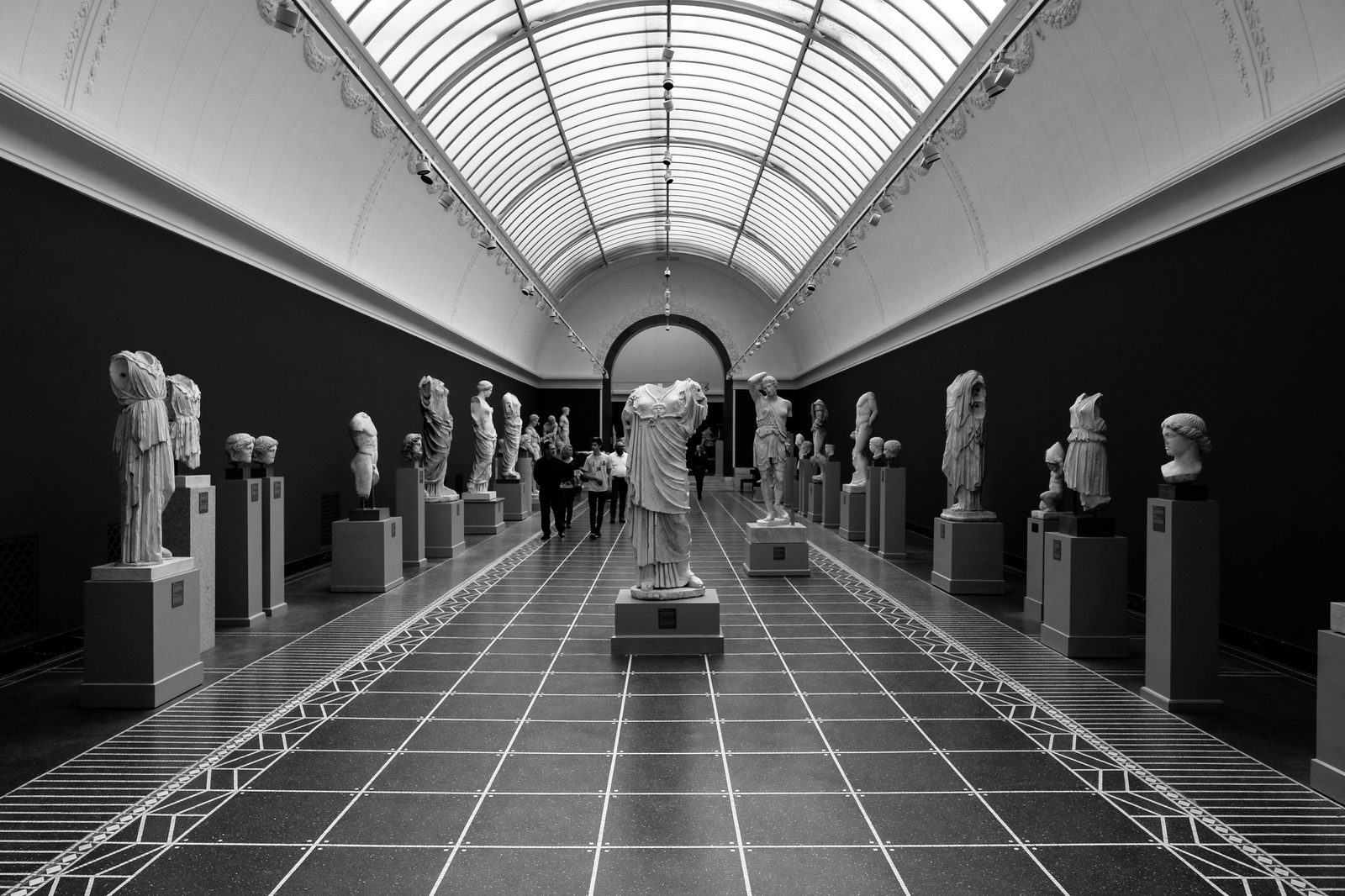
If you see one art museum in Copenhagen and you care even a little about beautiful buildings, make it this one. The Ny Carlsberg Glyptotek pairs world-class antiquities and French Impressionists with a palm-filled glass conservatory that’s reason enough to visit on its own. It’s one of the quiet stars among the city’s things to do, a few minutes from Tivoli.
Founded in 1888 by Carlsberg brewer Carl Jacobsen, the museum holds Mediterranean antiquities, Danish Golden Age painting and the largest Rodin collection outside Paris. Adult entry is around 125 kr, and it’s free every Tuesday. Budget two to three hours, and don’t rush the Winter Garden. Here’s what to see and how to plan it.
Ny Carlsberg Glyptotek at a Glance
| Fact | Detail |
|---|---|
| Danish name | Ny Carlsberg Glyptotek (“glyptotek” = sculpture museum) |
| Founded | 1888 by Carl Jacobsen |
| Building opened | 1897 (Vilhelm Dahlerup), expanded 1906 (Hack Kampmann), 1996 (Henning Larsen) |
| Collection | 10,000+ Mediterranean antiquities + French Impressionists + Danish Golden Age + Rodin + modern Danish |
| Most famous holdings | Rodin’s ‘The Thinker’, Degas’s ‘Little Dancer Aged 14’, Gauguin’s largest collection outside Paris |
| Architectural signature | The Winter Garden (Vinterhaven) — glass-domed tropical conservatory at the centre |
| Address | Dantes Plads 7, 1556 Copenhagen V |
| Visit time | 2.5–4 hours |
| Adult ticket | 125 DKK (free Tuesdays) |
| Free with | Copenhagen Card |
| Open | Tuesday–Sunday 10:00–17:00 (Thursday until 21:00) |
| Nearest transport | Central Station 5 min walk; Rådhuspladsen 4 min |
A Brief History — Carl Jacobsen and a Brewery’s Cultural Gift
Carl Jacobsen (1842–1914) was the son of J.C. Jacobsen, founder of Carlsberg. Carl built his own brewery, Ny Carlsberg (“New Carlsberg”), in Valby in 1882. He was an obsessive art collector, particularly of Mediterranean sculpture and 19th-century French art. His personal collection grew so large that by the 1880s he was donating works to the Danish state with the condition that they be displayed publicly. The Ny Carlsberg Glyptotek opened on 1 November 1897 to house the donated collections.
You can still walk through the gate Carl built for his brewery: the Elephant Gate in Carlsberg Byen is a public street and free to visit. The old brewery next to it now houses Home of Carlsberg, which tells the family story, father-and-son feud included. Our review of Home of Carlsberg says whether the 215 DKK ticket is worth it.
Jacobsen was also responsible for commissioning two of Copenhagen’s most photographed landmarks — the Little Mermaid statue (1913, sculptor Edvard Eriksen) and the Gefion Fountain (1908). Both were funded by his Carlsberg Foundation, which is still the largest cultural patron in Denmark today and continues to oversee the Glyptotek.
The original Vilhelm Dahlerup building (1897) housed the Mediterranean antiquities; Hack Kampmann’s expansion (1906) added the Winter Garden and the Modern Danish wing; Henning Larsen’s late-1990s addition gave the museum a new four-storey wing for the French Impressionists. The result is a single museum where three architectural periods meet — and where the visitor’s walking route deliberately crosses between antiquity, the Belle Époque, and modern Denmark.
What to See — The Permanent Collections
The Mediterranean Antiquities

The Glyptotek’s Mediterranean wing — 10,000+ artefacts — is one of the largest classical antiquity collections in Northern Europe. Highlights include 80+ Roman portrait busts (the most varied collection outside Italy), Greek and Cycladic marble sculpture, Etruscan terracotta, Phoenician glass and the Pompeian Hall — a faithful reconstruction of a Roman atrium with deep red walls, marble columns and ancient sculpture.
The Greek collection includes Archaic kouroi (6th-century BC standing figures), the famous Vase Room with 500+ Attic black-figure and red-figure vases, and several Hellenistic pieces. Allow 60 minutes for the Mediterranean wing alone.
The Egyptian Collection
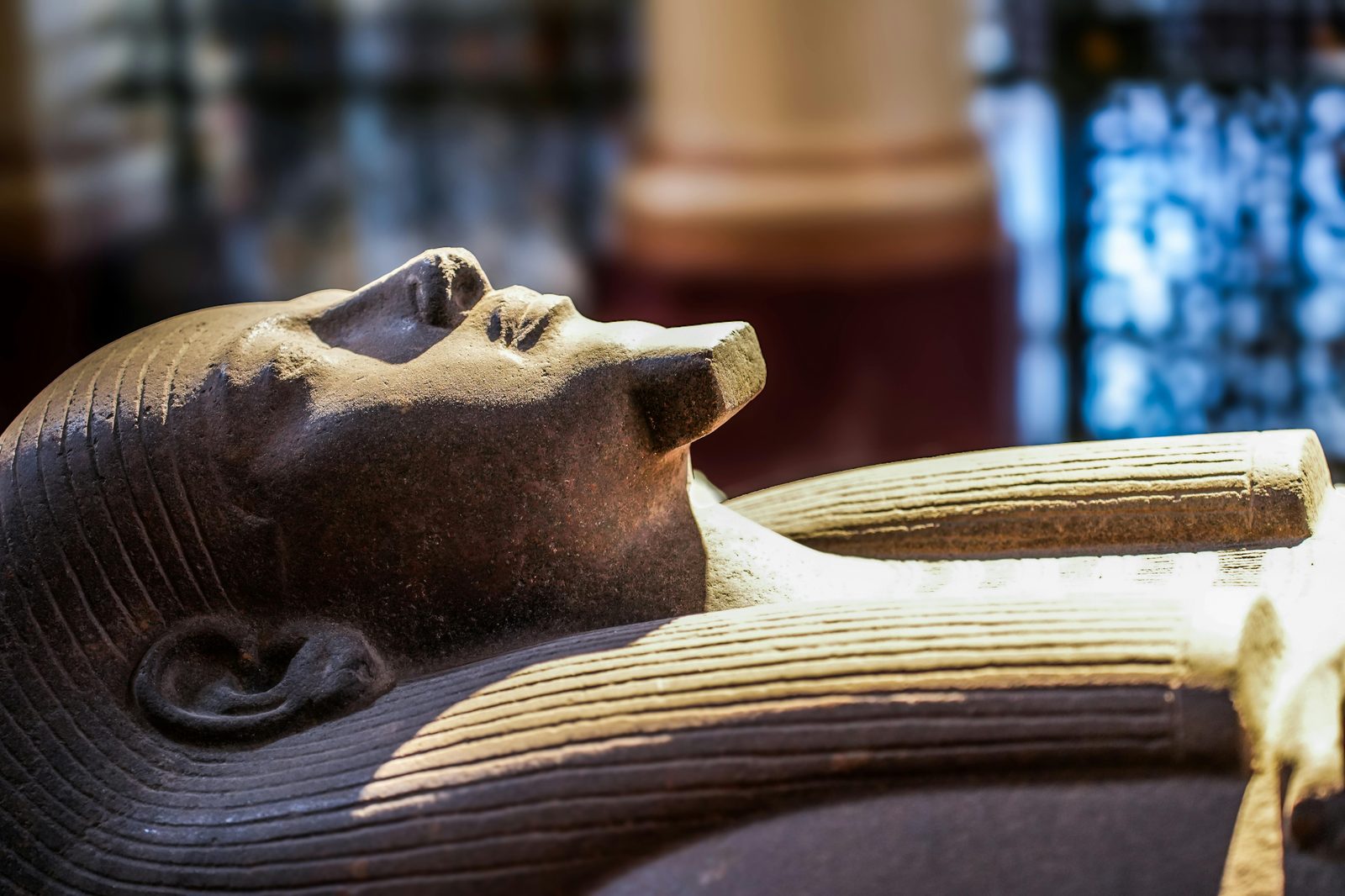
The Glyptotek’s Egyptian wing has 1,800+ artefacts including the 4,000-year-old sarcophagus of Tjehnefer, 12 mummies, hundreds of tomb-stelae, the head of Pharaoh Akhenaten, and a complete reconstructed funerary chamber. It is the second-largest Egyptian collection in Denmark (after the National Museum). Allow 30 minutes.
The French Impressionists
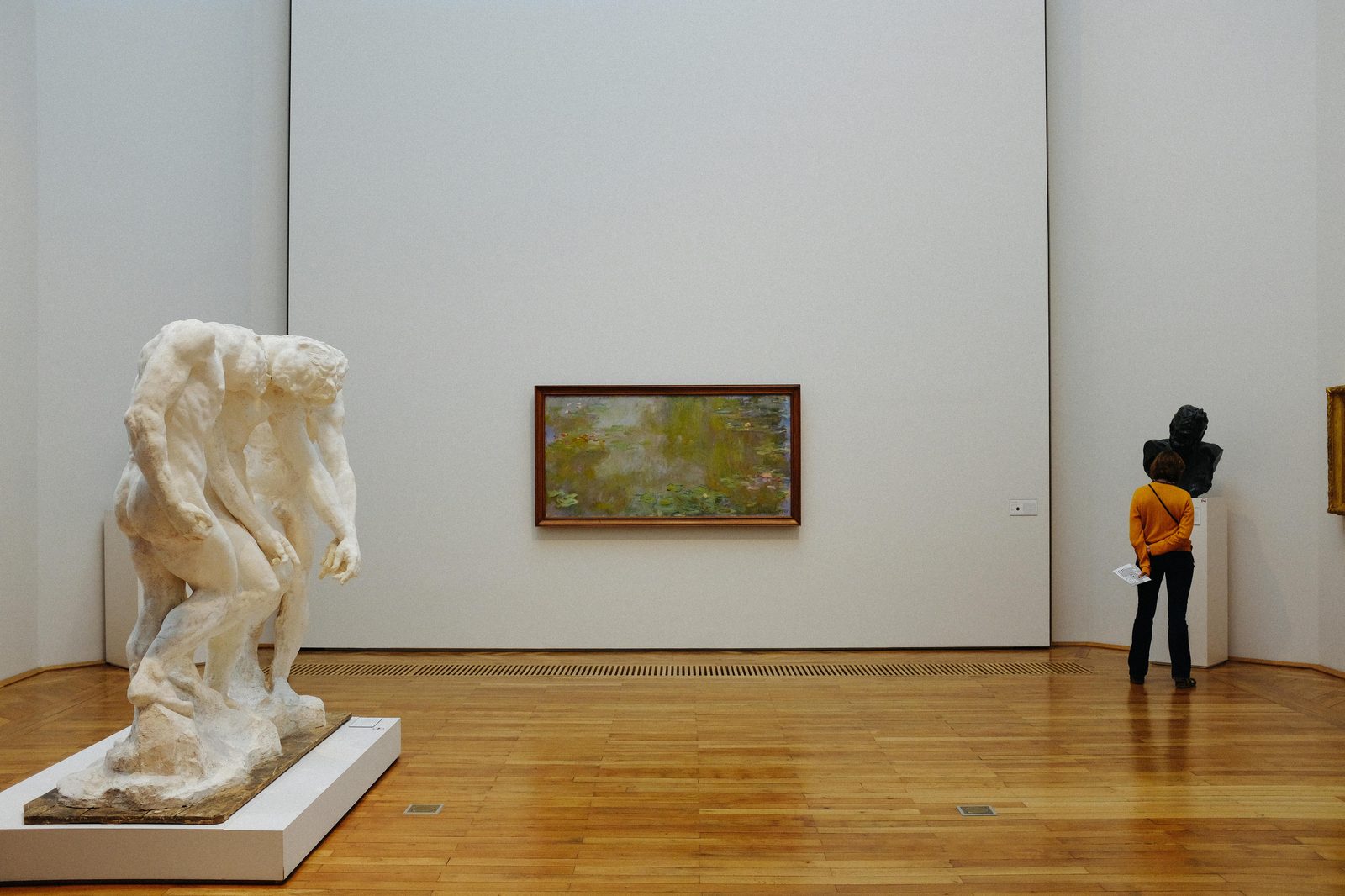
The Glyptotek’s French Impressionist and Post-Impressionist collection rivals any in Northern Europe. Carl Jacobsen began collecting in the 1880s when these works were still affordable. Today the collection includes:
- Édouard Manet: 4 paintings including ‘The Absinthe Drinker’.
- Claude Monet: 8 paintings, including the famous ‘The Houses of Parliament, London’ series.
- Camille Pissarro: 17 paintings, the largest concentration in Northern Europe.
- Paul Cézanne: 5 paintings, including ‘The Smoker’ (1890).
- Paul Gauguin: 47 works (paintings + sculpture) — the largest Gauguin collection outside Paris.
- Vincent van Gogh: 6 paintings including ‘Landscape from Saint-Rémy’.
- Henri de Toulouse-Lautrec: 7 works on paper.
- Pierre Bonnard, Édouard Vuillard, Pierre-Auguste Renoir: Multiple works each.
The Rodin Collection

The Glyptotek owns 30+ bronzes by Auguste Rodin — the largest Rodin collection outside Paris’s Musée Rodin. Carl Jacobsen acquired most of them directly from the artist in the 1900s, including casts made under Rodin’s personal supervision. Highlights:
- ‘The Thinker’ (Le Penseur): The original 1881–82 small bronze, Jacobsen’s 1906 acquisition.
- ‘The Kiss’ (Le Baiser): Marble version, in the Pompeian Hall.
- ‘The Burghers of Calais’: One of only 12 lifetime casts; commissioned 1885.
- ‘Eternal Idol’: 1893, marble.
- ‘The Walking Man’: Late Rodin from the 1900s.
- Numerous study busts from Rodin’s work on the unfinished ‘Gates of Hell’ commission.
The Degas Bronzes
The Glyptotek owns 70+ bronzes by Edgar Degas — second only to the Musée d’Orsay. The signature work is “The Little Dancer Aged Fourteen” (1881), a wax-and-fabric original later cast in bronze. The collection covers Degas’s ballet dancers, racehorses, and bathing-women bronzes from the 1880s–1900s.
Danish Golden Age and Modern Danish Art
A separate wing displays 19th-century Danish painting (the “Golden Age” of 1800–1864). Highlights: Christen Købke’s Copenhagen views, C.W. Eckersberg’s portraits, and the Skagen painters’ luminous beach scenes. The modern Danish galleries include works by Vilhelm Hammershøi (Denmark’s most internationally famous painter, known for muted grey interiors), L.A. Ring, and contemporary Danish ceramic artists.
The Winter Garden — Copenhagen’s Most Photogenic Indoor Space
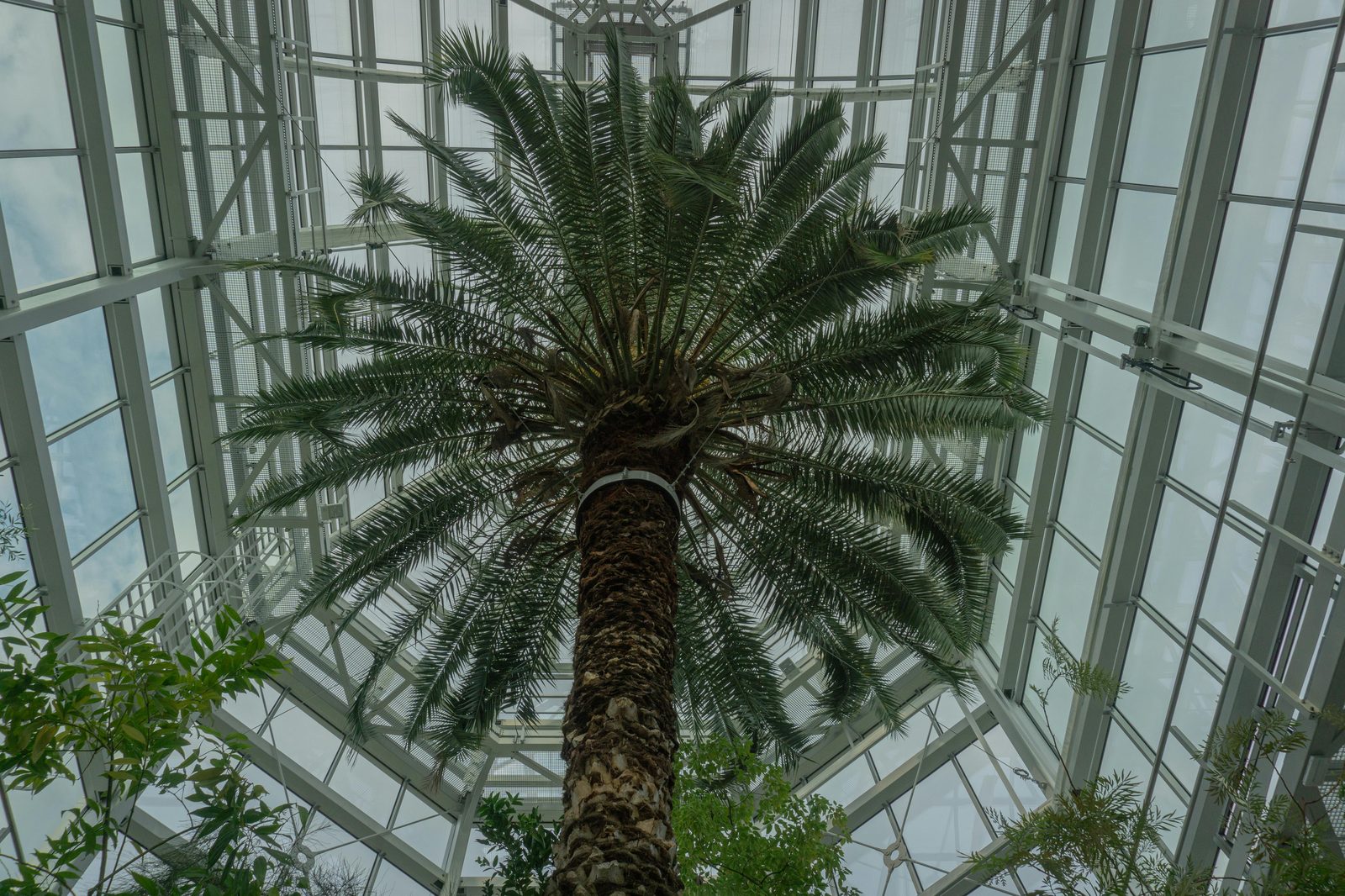
At the heart of the Glyptotek lies the Winter Garden (Vinterhaven) — a Belle Époque conservatory under a glass dome, designed by Hack Kampmann in 1906. Tropical palms (some 100 years old), a marble fountain sculpted by Kai Nielsen (“The Water Mother and her Children”, 1920), and 19th-century cast-iron seating. It is widely considered the most beautiful indoor space in Copenhagen — and free to enter even without a museum ticket.
Café Picnic, in the Winter Garden, serves smørrebrød and modern Danish lunches surrounded by the palms. Open during museum hours; popular as a Sunday-coffee destination for Copenhageners. The garden hosts free classical-music performances some evenings — check ngl.dk for the calendar.
On a grey day, the glass-domed Winter Garden is one of the loveliest places to sit in the whole city — see our Copenhagen rainy-day activities for more indoor ideas.
The Pompeian Hall and the Central Dome
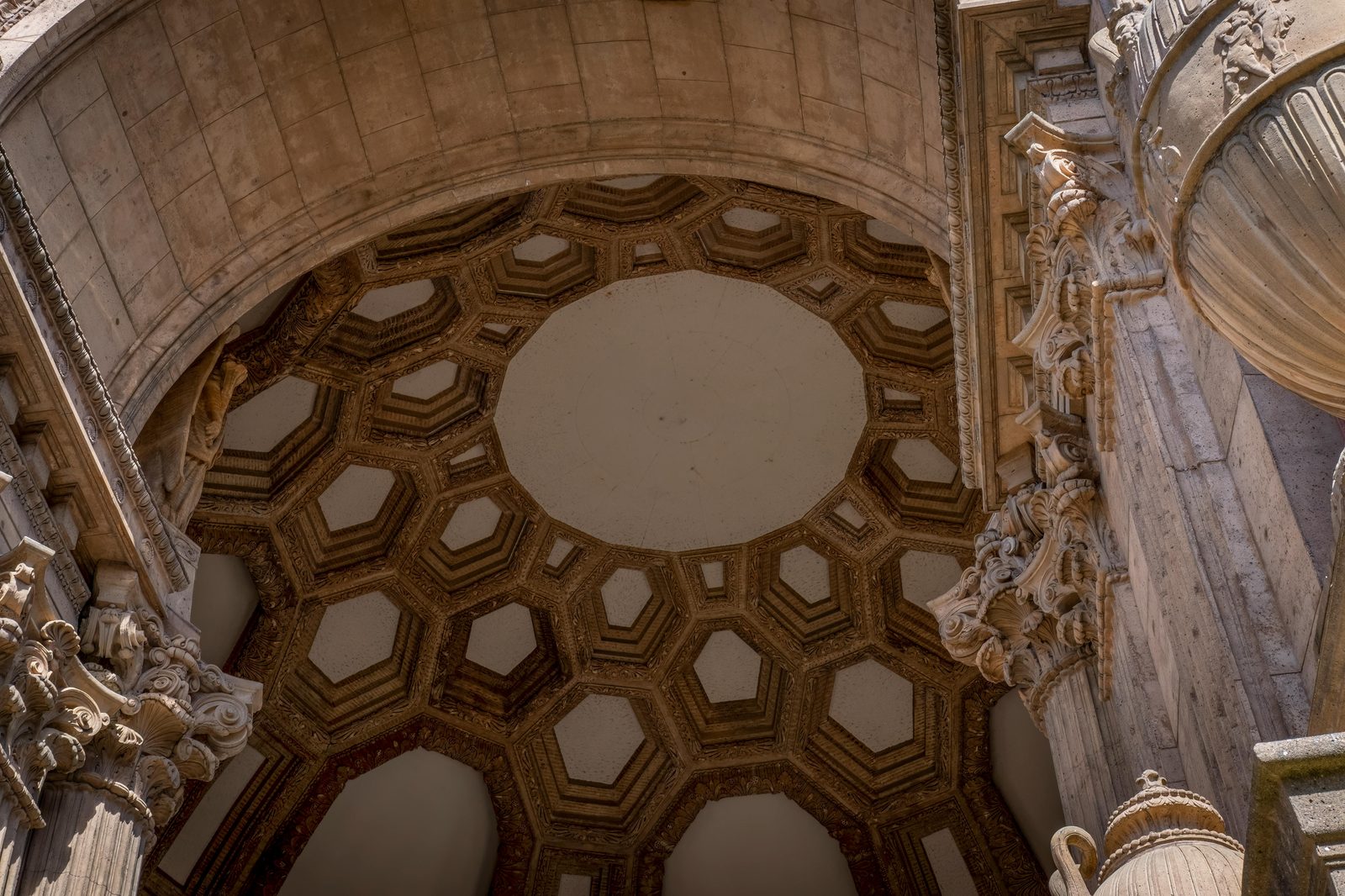
Beneath Vilhelm Dahlerup’s 1897 dome sits the Pompeian Hall — a faithful reconstruction of a Roman atrium with deep-red walls, white marble columns, mosaic floors and ancient Roman sculpture. The hall takes its inspiration from the houses of Pompeii excavated in the 1860s–1880s. It is one of the Glyptotek’s signature spaces and a perfect counterpoint to the modern Henning Larsen wing on the other side of the museum.
Visiting the Glyptotek — Practical Guide
Opening Hours
| Day | Hours |
|---|---|
| Tuesday, Wednesday, Friday | 10:00–17:00 |
| Thursday | 10:00–21:00 (late opening) |
| Saturday, Sunday | 10:00–17:00 |
| Monday | Closed |
| Tuesdays | FREE admission for everyone |
| Christmas closure | 23–25 December and 31 December |
| Last admission | 30 minutes before close |
Tickets
| Ticket | Price (DKK) |
|---|---|
| Adult | 125 |
| Senior (65+) / Student | 95 |
| Children under 18 | Free |
| Tuesdays — everyone | Free |
| Annual pass | 395 |
| Copenhagen Card | Included |
Free Tuesday: Every Tuesday, the Glyptotek is free for everyone, including tourists. The museum is busier on Tuesdays but still less crowded than typical European art museums on free days. Combined with the Copenhagen Card, the Glyptotek is genuinely accessible to budget travellers — it’s a fixture in our guide to free things to do in Copenhagen.
How to Get There
- Central Station (Hovedbanegården): 5-minute walk south down H.C. Andersens Boulevard.
- Rådhuspladsen (City Hall): 4-minute walk south.
- From Tivoli main entrance: 4-minute walk south.
- Metro: Rådhuspladsen (M3, M4) — 4 minutes walk.
- From Nyhavn: 15-minute walk west via Strøget.
- From the National Museum: 8-minute walk south.
- By bus: Lines 11A and 23 stop at H.C. Andersens Boulevard.
See our Copenhagen transportation guide for Metro and bus routes.
Combining the Glyptotek with Other Sites
The Glyptotek is in the densest cluster of Copenhagen attractions — Tivoli, Central Station, the National Museum and Rådhuspladsen are all within 10 minutes walk.
| Combination | Time | Why pair them |
|---|---|---|
| Glyptotek + Tivoli | Full day | Glyptotek 10:00–13:00, lunch in Winter Garden, Tivoli 14:00 onwards. |
| Glyptotek + National Museum | Full day | Two complementary museums, 8 minutes apart — antiquities + Danish history. |
| Glyptotek + Christiansborg | Half-day | Both indoor; 10-min walk. |
| Glyptotek + Round Tower | Half-day | Museum morning, panoramic afternoon. |
| Free Tuesday museum-hop: Glyptotek + Christiansborg + Round Tower | Full day | All free or low-cost on Tuesdays. |
| Glyptotek + Carlsberg Brewery (Visit Carlsberg) | Full day for Jacobsen completists | The brewer’s brewery + the brewer’s museum, 4 km apart. |
See our Copenhagen itinerary guide for day plans that build the Glyptotek into a full day.
Practical Tips for Your Glyptotek Visit
- Visit on a Tuesday for free entry — but expect 25% more visitors. Or visit Thursday evening (open until 21:00) for the quietest experience and atmospheric lighting.
- Order to visit: Mediterranean antiquities first (ground floor), Pompeian Hall and Winter Garden second, Impressionists and Rodin in the new Henning Larsen wing third, Danish painting fourth. Total: 2.5–3 hours.
- Audio guides: 30 DKK; in 6 languages. The free printed multilingual map is excellent and may be enough.
- Photography: Allowed throughout, no flash, no tripods on busy days.
- Café Picnic in the Winter Garden: Reservations recommended for Sunday lunch (call +45 33 41 81 28). Open during museum hours.
- Cloakroom: Free; backpacks larger than 30cm must be checked.
- Accessibility: Lift access throughout; wheelchair loan free at entrance; accessible toilets every floor.
- Special exhibitions: 2–3 special shows per year, included with regular entry. Check ngl.dk for the calendar before you go.
- Best photo angle: Looking up through the Winter Garden glass dome at golden hour.
Glyptotek FAQs
Is the Ny Carlsberg Glyptotek worth visiting?
Yes — it is the best fine-art museum in Denmark and one of the top three in Scandinavia. The combination of world-class Mediterranean antiquities, French Impressionists, the largest Rodin collection outside Paris, and the magical Winter Garden makes it Copenhagen’s most rewarding indoor cultural visit. If you have to choose only one museum in Copenhagen and your interest is fine art, choose the Glyptotek over the National Museum.
How long does a Ny Carlsberg Glyptotek visit take?
Highlights only (Rodin’s Thinker, Gauguin, Pompeian Hall, Winter Garden) — 90 minutes. Standard visit — 2.5–3 hours. Complete coverage including a special exhibition and Café Picnic lunch — half-day (4 hours). Most visitors stay longer than they planned.
Is the Glyptotek free on Tuesdays?
Yes — every Tuesday the Glyptotek is free for everyone, regardless of nationality or age. A genuine cultural-policy decision; the museum is busier on Tuesdays but still significantly less crowded than typical free-day museums. Combined with the Copenhagen Card, this makes the Glyptotek accessible to all budgets.
How does the Glyptotek compare to the National Museum?
They are complementary, not competitive. The National Museum covers Danish cultural history (Vikings, Bronze Age, Danish Middle Ages) and is FREE. The Glyptotek covers fine art (Mediterranean antiquities, French Impressionists, Rodin, Danish Golden Age painting). Both are worth visiting; the Glyptotek is more aesthetically focused; the National Museum is more historically focused. See our National Museum guide.
What’s the most famous artwork at the Glyptotek?
Rodin’s “The Thinker” is the most-photographed work, but Degas’s “Little Dancer Aged Fourteen” is widely considered the museum’s undisputed signature piece. The Pompeian Hall and the Gauguin collection are also frequently mentioned by serious art tourists.
Does the Glyptotek have a good café?
Yes — Café Picnic in the Winter Garden is one of Copenhagen’s most beautiful coffee spots. Open during museum hours; smørrebrød and modern Danish lunches at reasonable central-Copenhagen prices. The Winter Garden is also free to enter even without a museum ticket — making it a viable destination just for coffee.
Can I bring kids to the Glyptotek?
Yes, but it is more child-tolerant than child-focused. The mummies, the Pompeian Hall and the Winter Garden are usually engaging for kids 6+. Children under 18 are free. For more child-focused options, see our Copenhagen with kids guide.
Is photography allowed at the Glyptotek?
Yes — photography is allowed throughout, no flash. Tripods may be restricted on busy days. Photography is sometimes restricted in temporary exhibitions for copyright reasons; signs at the entrance to each show indicate.
Is there parking near the Glyptotek?
Yes, but limited. The closest parking is the Industriens Hus garage on H.C. Andersens Boulevard (3-minute walk; 55 DKK/hour). Don’t drive — use the Metro to Rådhuspladsen instead.
Related Reading
- Rosenborg Castle — the Crown Jewels, the King’s Garden and how long to allow.
- Nyhavn — the coloured houses, the canal boats and when to go to avoid the crush.
- Tivoli Gardens — 4 minutes north.
- Christiansborg Palace — 10 min walk; ideal museum-pairing.
- Round Tower (Rundetaarn) — 12 min walk.
- Little Mermaid Statue — also commissioned by Carl Jacobsen.
- What happens after sunset — canal cruises after sunset, jazz clubs and the Meatpacking bars.
- Pre-trip practicalities — including Copenhagen Card.
- Best time to visit Copenhagen — including rainy-day museum days.
Final Thoughts: Is the Glyptotek Worth It?
The Ny Carlsberg Glyptotek is Copenhagen’s most rewarding fine-art experience and one of the best-curated museums in Northern Europe. The combination of Mediterranean antiquities, French Impressionists, Rodin, Danish Golden Age painting, and the magical Winter Garden makes for a 2.5–3 hour visit that consistently exceeds expectations. Visit on a free Tuesday for budget travellers, or Thursday evening for the quietest experience and best lighting. Pair with Tivoli (across the road) for a full Copenhagen day, or with the National Museum (8 minutes away) for a thematic complement. If you only do one museum in Copenhagen and your interests lean toward fine art, the Ny Carlsberg Glyptotek is the right choice.
Last updated: July 2026. Ticket prices, free-Tuesday policy and opening hours can change — check glyptoteket.com before you go.