Land at Copenhagen Airport and the metro has you in the city centre in about a quarter of an hour on a 40-kroner ticket. Land at Arlanda and the fast train into Stockholm costs 340 Swedish kronor before you have seen a single thing. It is one of the few places where Stockholm is the dearer city. Almost everywhere else, from the hotel room to the dinner bill, Copenhagen costs more, and yet for most first trips it is still the one we would send you to. Copenhagen vs Stockholm is not a contest between a good city and a bad one. It is two very different ideas of a Scandinavian capital, and the right answer depends on what you want from the trip.
Below, the two compared category by category: cost, getting in and around, food, drink, museums, looks, nature, the seasons, day trips and families, with a verdict for each and a straight answer at the end on who should pick which. Prices were checked in September 2026. Swedish prices are in SEK; a Swedish krona is worth roughly two-thirds of a Danish one, so check the current rate before you do the sums.
The Short Answer
| Category | Winner | Why |
|---|---|---|
| Overall cost | Stockholm | Lower price level and lower VAT on rooms and meals |
| Airport to city | Copenhagen | Metro in about 15 minutes for 30 DKK |
| Getting around | Copenhagen | Flat, compact and built for bikes |
| Food | Copenhagen | The home of New Nordic cooking |
| Drinking | Copenhagen | Beer in every supermarket; no state monopoly |
| Museums | Stockholm, narrowly | The Vasa is in a league of its own |
| Old town and looks | Stockholm | A medieval core on islands |
| Nature | Stockholm | An archipelago of tens of thousands of islands |
| Winter | Copenhagen | Milder, an hour more daylight, Tivoli at Christmas |
| Summer | A draw | Stockholm’s islands against Copenhagen’s harbour baths |
| Day trips | Copenhagen | Another country 35 minutes away |
| Families | Copenhagen | Tivoli, and a flat city for pushchairs |
First trip, short trip, food trip or winter trip: Copenhagen. Summer, nature, museums and grandeur: Stockholm. And if you cannot decide, you do not have to, because the two are about five and a half hours apart by train and just over an hour by air.
Cost: Stockholm Is Cheaper, Mostly
Eurostat’s price level index puts Denmark at 139.7 against an EU average of 100, the highest in the Union, and Sweden at 121.0. On that measure Copenhagen is about 15 per cent dearer overall, and the gap is widest where visitors spend most. In 2024 Denmark was the most expensive country in the EU for restaurants and hotels, at 148 per cent of the average.
The reason is tax as much as anything. Denmark charges 25 per cent VAT on everything, restaurants and hotels included. Sweden charges 12 per cent on hotel rooms and restaurant meals. On a mid-range dinner or a week in a hotel, that difference alone is worth a noticeable slice of the bill. Our guide to whether Copenhagen is expensive breaks the Danish side down.
| Copenhagen | Stockholm | |
|---|---|---|
| Airport to city | 30 DKK, metro, about 15 minutes | 340 SEK on the Arlanda Express |
| Single public transport ticket | 24 DKK for two zones | 43 SEK, valid 75 minutes |
| Flagship museum | National Museum, 150 DKK | Vasa Museum, from about 230 SEK online |
| Supermarket beer, 0.5L | From about 15.50 DKK | Strong beer only at the state shop |
| VAT on hotels and restaurants | 25% | 12% |
Two things narrow the gap. Once you have paid for the Arlanda Express, which works out at more than five times Copenhagen’s airport fare, Stockholm has clawed back a good part of what it saves you on the first night. And Stockholm’s sights are spread over more islands, so you will ride more and walk less. Verdict: Stockholm, by less than you would think.
Getting In and Getting Around: Copenhagen
Copenhagen Airport sits at Kastrup, on the edge of the city. The M2 metro gets you to the centre in about a quarter of an hour and runs around the clock, and a regional train goes to Central Station in about the same time. Our airport transfer guide has every option. Arlanda is around 40 kilometres north of Stockholm. The Arlanda Express is quick, at about twenty minutes, but costs 340 SEK one way, and the cheaper commuter trains and airport coaches take longer.
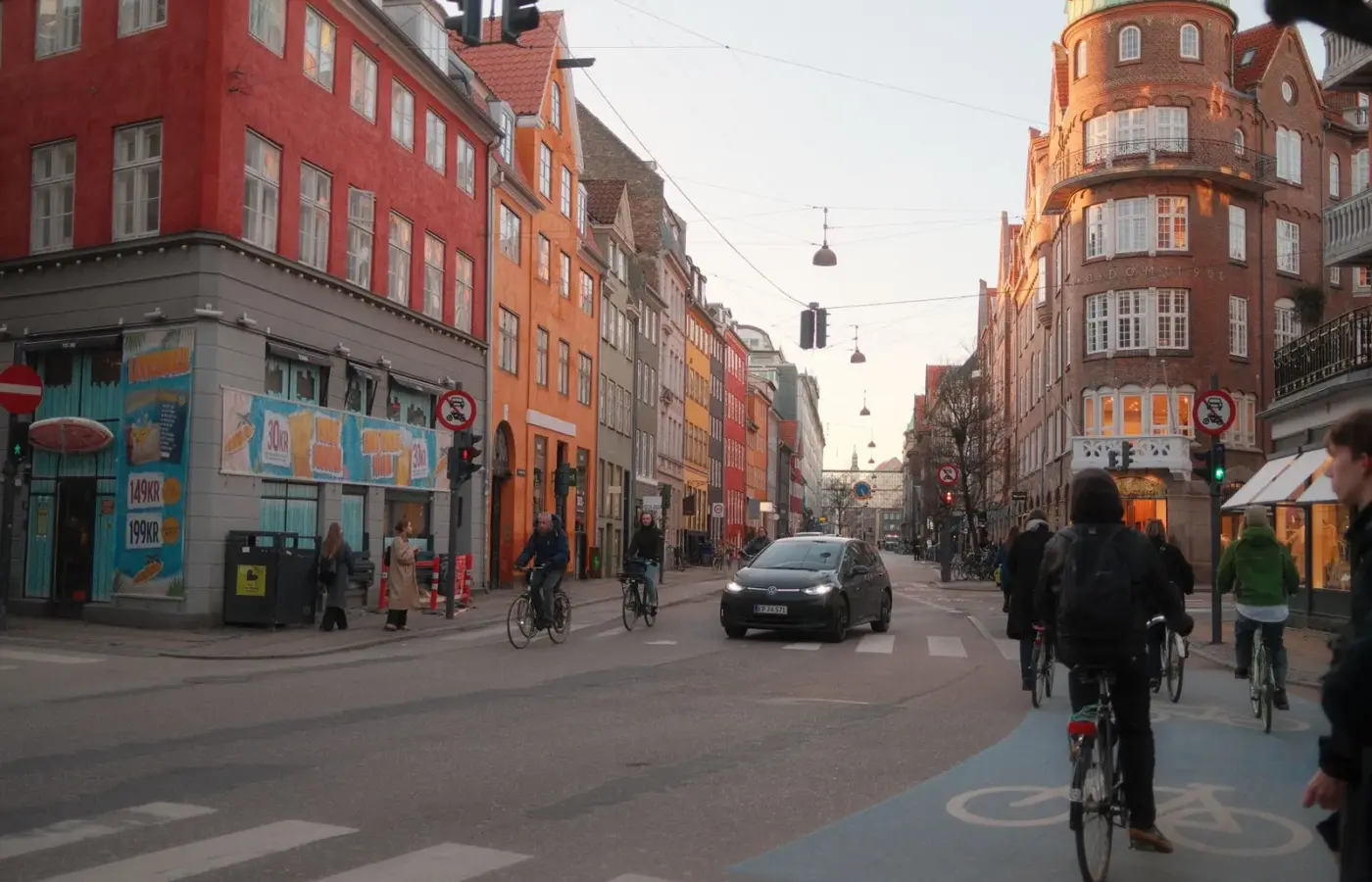
Once you are in, the difference is geography. Copenhagen is flat, compact and built around the bicycle: you can walk from Tivoli to Nyhavn in twenty minutes, and a rented bike makes the whole city a ten-minute ride. Stockholm is spread across fourteen islands where Lake Mälaren meets the Baltic, and parts of it, Södermalm above all, are properly hilly. It has an excellent metro, much of it decorated as an underground art gallery, and you will use it. Getting around Copenhagen rarely needs more than your feet and a bike. Verdict: Copenhagen.
Food: Copenhagen

This is the category that decides it for a lot of people. Copenhagen is where New Nordic cooking was born, the city of Noma and of a generation of chefs who trained there and opened places of their own. It has serious depth at every level: smørrebrød that is worth crossing town for, some of the best bakeries in Europe, and a street food scene that runs from hot-dog vans to harbour-side food markets.
Stockholm eats well too, and it would be unfair to pretend otherwise. Its food halls are excellent, the meatballs and herring are as good as their reputation, and its fika, the institutional coffee-and-cinnamon-bun break, is a better daily ritual than anything Copenhagen has. But if food is why you travel, the choice is not close. Our guide to New Nordic cuisine explains why. Verdict: Copenhagen.
Drinking: Copenhagen, and It Is Not Close

Sweden sells beer stronger than 3.5 per cent, wine and spirits only through Systembolaget, the state-owned chain, which shuts in the early evening, earlier on Saturdays and all day on Sundays. Supermarkets sell only weak beer. Drinking outdoors is also restricted in much of central Stockholm.
Denmark does none of this. Beer, wine and spirits are on every supermarket shelf, a half-litre of lager costs from about 15.50 DKK plus the deposit, and drinking a beer on the harbour edge on a summer evening is legal and completely normal. Copenhagen also has one of Europe’s best craft beer scenes, old wood-panelled bodegas where a beer is still cheap, and a nightlife that runs late in Kødbyen. Bars are expensive in both cities. Verdict: Copenhagen, comfortably.
Museums: Stockholm, by a Ship’s Length
Stockholm has the single greatest museum object in Scandinavia. The Vasa, a royal warship that sank in Stockholm harbour on its maiden voyage in 1628 and was raised in 1961, stands almost complete inside its own museum, and there is nothing else like it in the world. Around it on the island of Djurgården sit Skansen, the first open-air museum anywhere, and a cluster of others, from the ABBA museum to the Nordic Museum. The Vasa is free for under-18s and, out of season, open until 20:00 on Wednesdays.
Copenhagen’s strength is breadth rather than one knockout. The National Museum, the Glyptotek, SMK and the free David Collection are all excellent, and Louisiana, 35 minutes up the coast, is one of the best modern art museums in Europe. As a set, Copenhagen’s are the stronger. At the very top, Stockholm has the Vasa. Verdict: Stockholm, narrowly.
Old Town and Looks: Stockholm
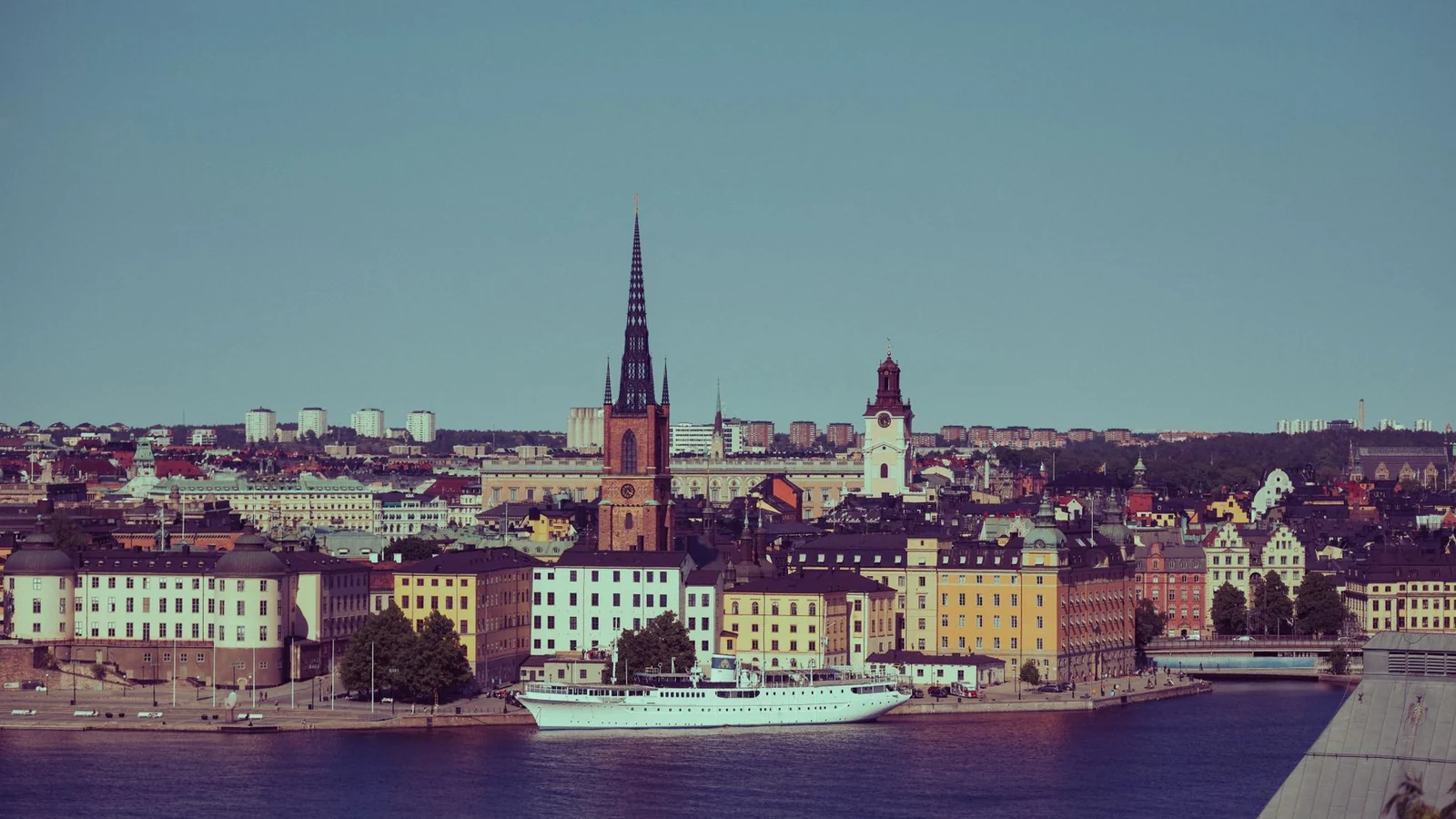
Stockholm is the more dramatic city. Its medieval old town, Gamla Stan, sits on its own island, with the vast Royal Palace on one side and water on all of them, and the views across the channels from Södermalm or the City Hall tower are among the best of any European capital.
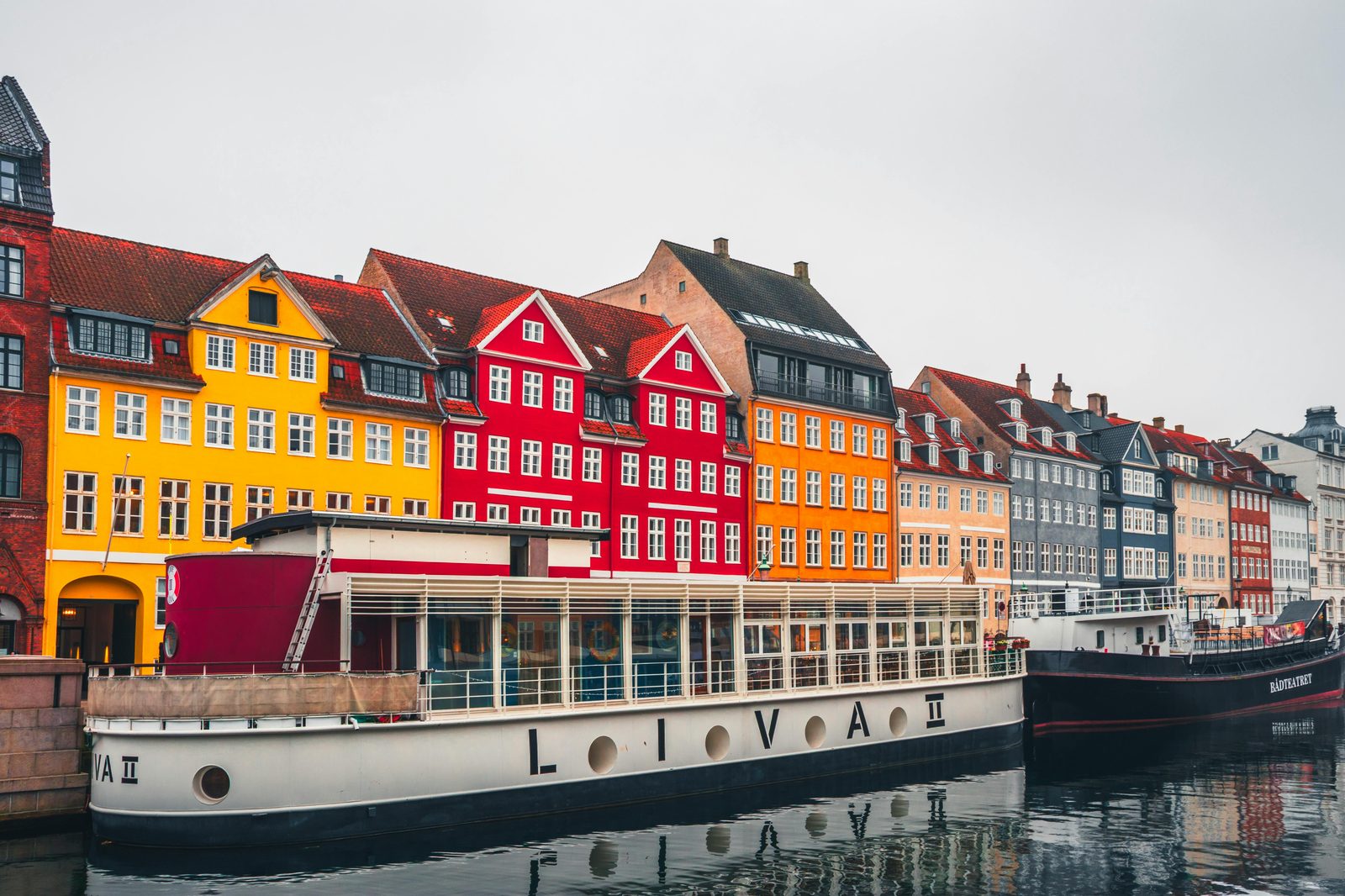
Copenhagen lost much of its medieval centre to two great fires, in 1728 and 1795, and what it has instead is charm at a domestic scale: the painted houses of Nyhavn, the rococo grid of Frederiksstaden around Amalienborg, the canals of Christianshavn. It is lovely to walk through. It does not take your breath away in quite the same way. Verdict: Stockholm for grandeur, Copenhagen for charm.
Nature: Stockholm’s Archipelago

Stockholm’s great trump card is its archipelago: tens of thousands of islands, skerries and rocks stretching out into the Baltic, reached by ferries from the city centre. On a summer day you can be swimming off a granite rock with nobody in sight within a couple of hours of leaving your hotel. Copenhagen has nothing to match it.
What Copenhagen has instead is nature inside the city. You can swim in the harbour itself at Islands Brygge, walk to a proper beach at Amager Strandpark, and take the S-train to the ancient deer park at Dyrehaven. The chalk cliffs of Møns Klint make a spectacular day out. It is good, but it is not the archipelago. Verdict: Stockholm.
The Seasons
Winter goes to Copenhagen. It is milder and less snowy, and it gets more light: seven hours of daylight at the winter solstice against six in Stockholm, where the sun sets before three. Copenhagen also has Tivoli’s Christmas season and some of the best Christmas markets in Scandinavia, covered in our Christmas markets guide. If you specifically want snow, Stockholm is the likelier bet.
Summer is a draw. Stockholm’s longest day runs to 18 hours 37 minutes against Copenhagen’s 17 hours 32, and the archipelago is at its best. Copenhagen answers with harbour swimming, bonfires on the beach at midsummer and a festival calendar that runs from Distortion to the Jazz Festival. Our guide to Copenhagen in summer makes its case.
Day Trips: Copenhagen, Because Sweden Is One of Them
Copenhagen’s most popular day trip is to another country. Trains cross the Øresund Bridge to Malmö in 35 minutes, every 20 minutes, and our Copenhagen to Malmö guide explains the passport rules. Beyond that there is Hamlet’s castle at Kronborg, the Viking ships at Roskilde, Frederiksborg Castle and Louisiana, all within about an hour.
Stockholm’s day trips are fewer but good: the archipelago, the royal palace at Drottningholm by boat, and the old university town of Uppsala. If you visit Copenhagen, you get a taste of Sweden thrown in. If you visit Stockholm, you do not get a taste of Denmark. Verdict: Copenhagen.
Families: Copenhagen, Thanks to Tivoli
Tivoli has sat in the middle of Copenhagen since 1843, and it is still the best city-centre amusement park in Europe: rides, gardens, lakes and restaurants a few minutes’ walk from Central Station, open through the summer, at Halloween and at Christmas. Add the aquarium at Den Blå Planet, Experimentarium and the city’s famously good playgrounds, and our guide to Copenhagen with kids more or less writes itself.
Stockholm’s answer is Djurgården. Skansen’s open-air museum comes with Nordic animals, bears and elk among them, Junibacken turns the stories of Astrid Lindgren and Pippi Longstocking into a building, and the Gröna Lund fairground sits right on the water. For small children who have grown up on Pippi, Stockholm is magic. For almost everyone else Tivoli wins, and Copenhagen’s flat streets make a pushchair far less work than Stockholm’s hills and stairs. Verdict: Copenhagen.
Doing Both in One Trip
The train is the civilised way between the two: about five and a half hours from city centre to city centre, running via Malmö, with no airport transfers at either end. Fares rise as the departure date approaches, so book as early as you can. Flying takes just over an hour in the air, but by the time you have reached Arlanda and paid for the train into town, the saving in time is smaller than it looks.
Where you stay matters more in Stockholm, because it is bigger. Norrmalm, around the central station, is the practical choice; Södermalm has the bars, the views and the best evenings; Östermalm is the smart end of town; and Gamla Stan puts the old town on your doorstep at the price of summer crowds. Copenhagen is compact enough that almost anywhere central works, and our guide to where to stay picks between Indre By, Vesterbro, Nørrebro and Christianshavn.
Who Should Pick Which
- Pick Copenhagen for a first trip to Scandinavia, a long weekend, a food-led trip, a winter or Christmas break, a cycling holiday, or if you want to see a bit of Sweden too. Our guide to how many days you need helps with the planning.
- Pick Stockholm for a summer trip built around the water and the islands, a museum-heavy break, a city that looks spectacular from every bridge, or a slightly lower bill for rooms and dinners.
- Do both if you have a week. Four nights in one and three in the other works well, with the train between them. Fly into one and home from the other so you do not double back.
Frequently Asked Questions
Which is better, Copenhagen or Stockholm?
Neither overall. Copenhagen is better for food, drinking, cycling, winter and short trips; Stockholm is better for nature, museums and dramatic views. For a first trip to Scandinavia, most people are happier starting with Copenhagen.
Which is cheaper, Stockholm or Copenhagen?
Stockholm. Denmark’s overall price level is about 15 per cent higher than Sweden’s, and Denmark charges 25 per cent VAT on hotels and restaurants against Sweden’s 12. Stockholm’s airport train is the big exception: 340 SEK against 30 DKK on Copenhagen’s metro.
How far is Stockholm from Copenhagen?
About five and a half hours by train, or just over an hour by air. The two combine easily in a single trip.
Can you visit Sweden on a day trip from Copenhagen?
Yes. Trains cross the Øresund Bridge to Malmö in 35 minutes, running every 20 minutes. Bring your passport or ID card.
Is Copenhagen or Stockholm better in winter?
Copenhagen, for most people. It is milder, it gets about an hour more daylight at the winter solstice, and it has Tivoli’s Christmas season. Stockholm is colder and more likely to have snow.
Is Copenhagen or Stockholm better in summer?
It is close. Stockholm has longer days and its archipelago; Copenhagen has harbour swimming, beaches and a busier festival calendar.
Can you buy alcohol in supermarkets in Stockholm?
Only weak beer, up to 3.5 per cent. Stronger beer, wine and spirits are sold only in the state-owned Systembolaget shops. In Copenhagen, supermarkets sell all of it.
Related Reading
- Copenhagen to Malmö is the easy way to add Sweden to a Copenhagen trip.
- Is Copenhagen expensive? puts real prices on the Danish side of the comparison.
- Things to do in Copenhagen if you have picked the Danish capital.
- A Copenhagen itinerary for turning the decision into a plan.
- Day trips from Copenhagen including the ones across the water in Sweden.
Final Thoughts
If you want the more beautiful city, go to Stockholm. If you want the more enjoyable one, go to Copenhagen. That is the honest version, and it holds up surprisingly well across seasons and budgets: Stockholm wins the postcards, the islands and the one great museum; Copenhagen wins the meals, the evenings, the bike rides and the sheer ease of being there.
For a first visit to Scandinavia, start in Copenhagen, take the train to Malmö for a day, and save Stockholm for a summer when you can give the archipelago the week it deserves.
Last verified: September 2026. Price levels from Eurostat; Stockholm transport and museum prices from the operators, which change each year. Daylight times are calculated for the solstices of 2026 and 2027.