Every week, thirty people get to climb the dome of the Marble Church. Two tours, Saturday and Sunday at half past one, fifteen places each, no advance booking, and cancelled if it rains. Everyone else — which is nearly everyone — walks in through the front door for free, stands under the dome, and looks up. Both are worth doing. But if the climb is why you came, the Marble Church Copenhagen is the most tightly rationed attraction in the city, and the plan has to start with that.
Below: the hours, the free entry, how the dome tour actually works, what you see from the top, and the strange story of a church that stood as an unfinished ruin for 150 years. Hours and prices come from the church’s own site and were checked in September 2026.
Hours, Tickets and the Dome Tour
| Detail | |
|---|---|
| Church entry | Free |
| Monday to Thursday | 10:00–17:00 |
| Friday | 12:00–17:00 |
| Saturday | 10:00–17:00 |
| Sunday | 13:00–17:00 |
| Closed | During services, concerts and rehearsals |
| Dome tour times | Saturday and Sunday at 13:30 only |
| Dome tour price | 50 DKK adults; children 0–12 free |
| Group size | Maximum 15 people per tour |
| Booking | Not possible — first come, first served |
| Cancellations | Services, concerts and bad weather |
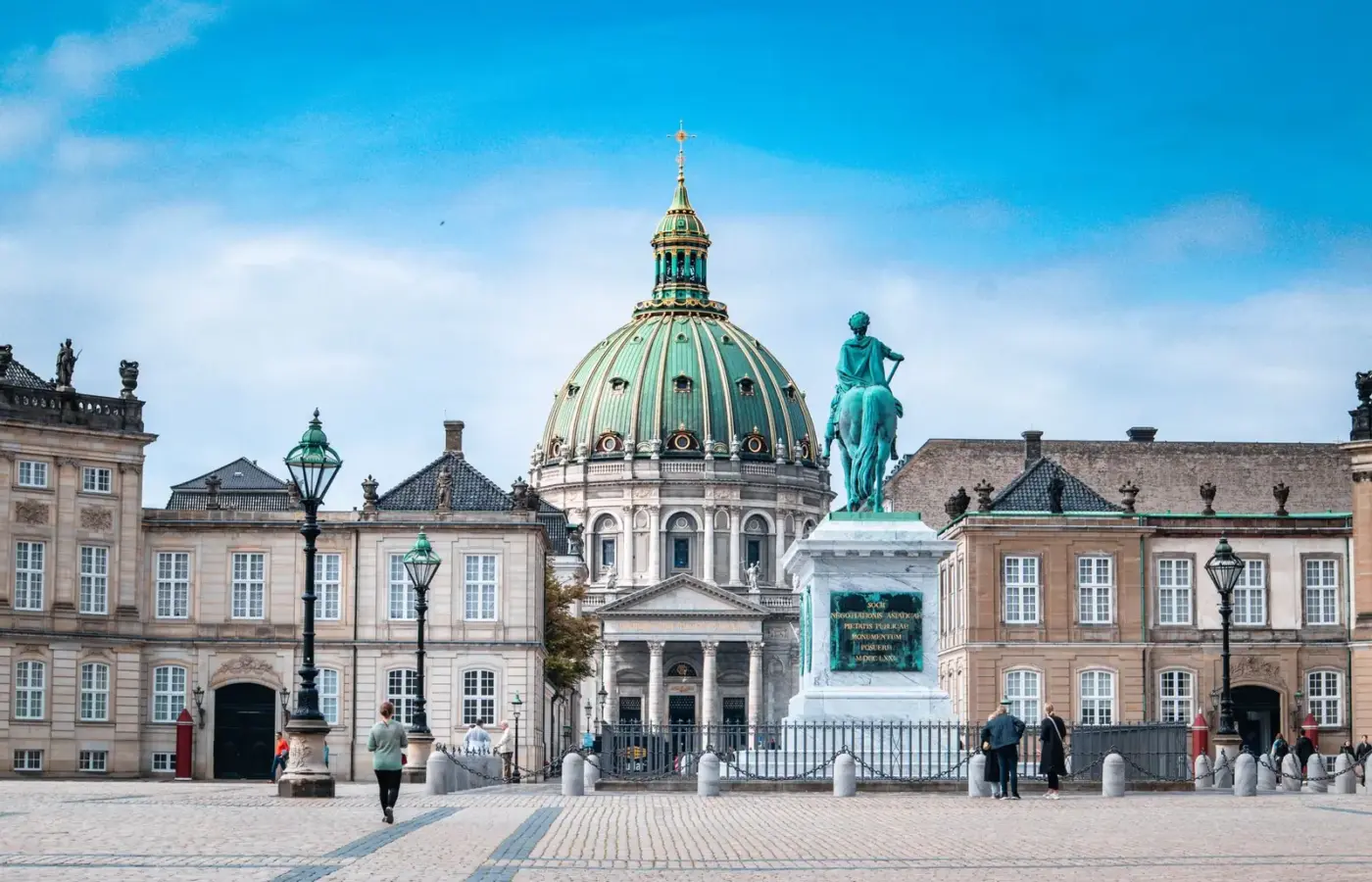
The church is officially Frederiks Kirke, Frederik’s Church, and everyone calls it Marmorkirken, the Marble Church. Both names appear on maps and signs. It stands on Frederiksgade in the middle of Frederiksstaden, directly on the axis of Amalienborg Palace, and the nearest station is Marmorkirken on the M3 City Circle line — see our metro guide.
How the Dome Tour Actually Works
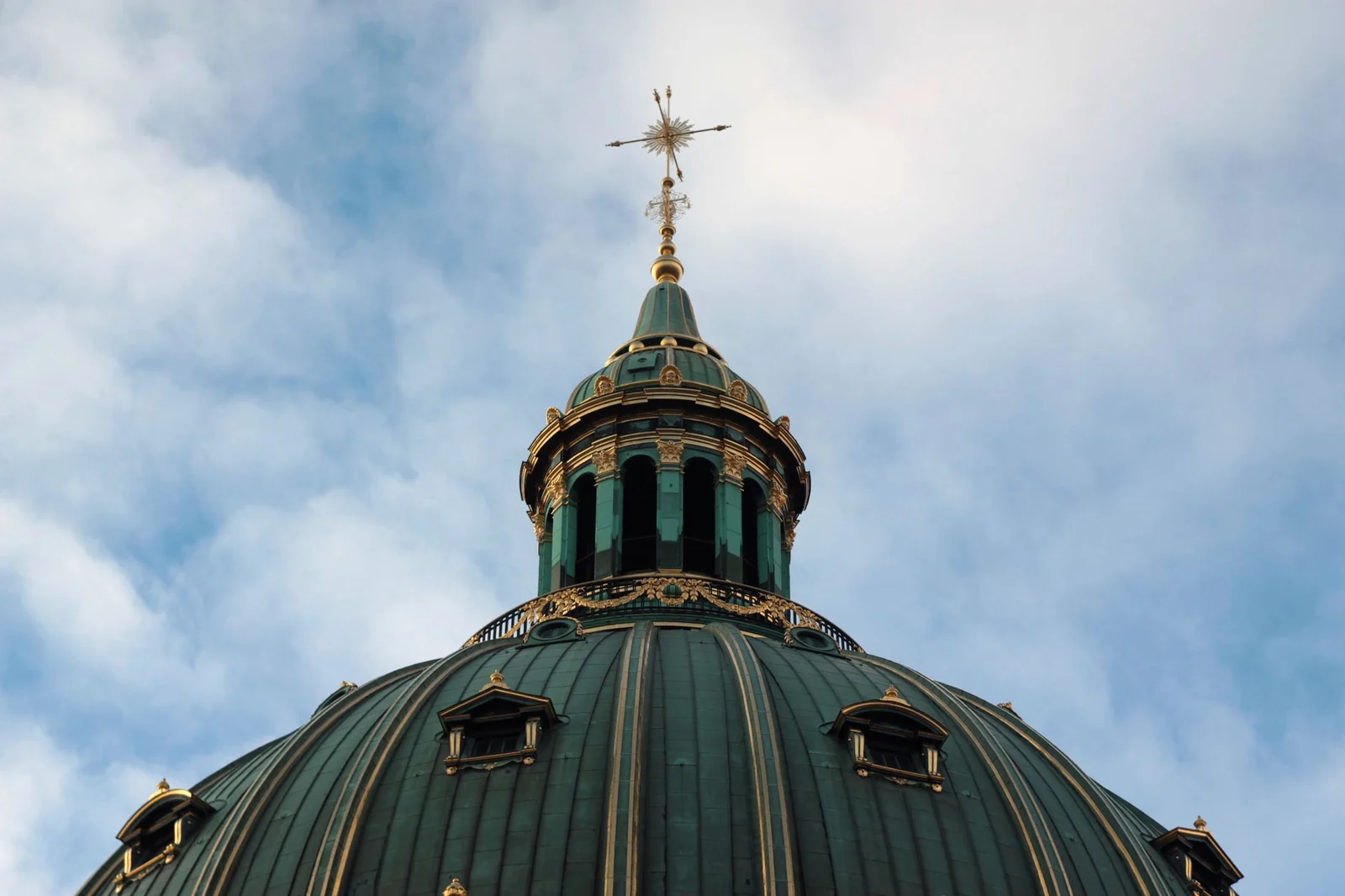
The rules are strict and slightly old-fashioned, and understanding them is the difference between getting up there and not.
- Two slots a week. Saturday at 13:30 and Sunday at 13:30. There are no weekday tours.
- Fifteen people per tour. Thirty places a week in total, for one of the most visible landmarks in the city.
- No pre-booking. The church states plainly that tickets cannot be ordered in advance and that it does not answer emails about visits. Do not waste time trying.
- Weather cancels it. So do services and concerts. The church posts planned cancellations on its website; weather cancellations are decided on the day.
Put that together and the practical advice writes itself. Arrive by about 13:00 and wait at the entrance. On a sunny summer weekend the fifteen places go to whoever is standing there first, and a family of five arriving at 13:25 can take a third of the tour on their own. On a grey weekend in October you may be one of four. Check the website on the morning for a posted cancellation, look at the sky, and have a backup plan.
The backup plan is easy, because two of the best towers in the city are a short walk away. The Round Tower is open daily with no slots and no weather rule, and the Church of Our Saviour across the harbour has a bookable climb to 86 metres. If the Marble Church tour is off, you are fifteen minutes from either.
What You See From the Dome
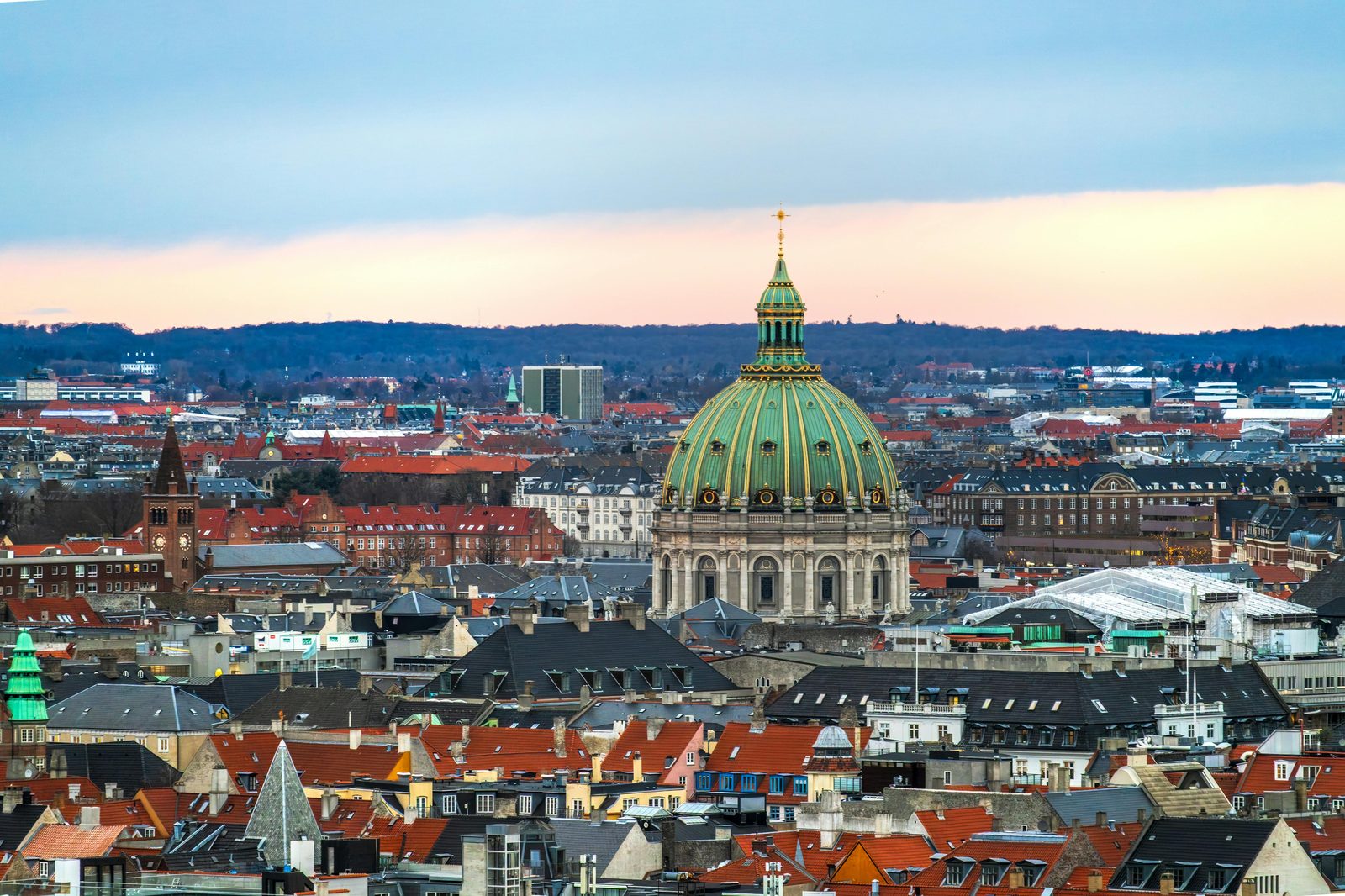
The tour takes you up through the church and out onto a walkway around the base of the dome. The view is the reason the church was placed where it is: straight down the axis of Frederiksstaden to the octagon of Amalienborg, across the harbour to the Opera House on Holmen, and over the copper roofs and spires of the old city to the south.
Is it the best view in Copenhagen? No — the Church of Our Saviour and Christiansborg’s tower are both higher. What the Marble Church has is the axis. From the dome you can see the eighteenth-century plan of this quarter laid out as it was drawn: church, palace square, harbour, opera house, one straight line. It is the only viewpoint that makes the design of Frederiksstaden legible, and for anyone interested in how cities are built that is more interesting than extra height.
Inside: The Reason to Go Even Without the Climb
The interior is free and it is the part most visitors actually see. It is round, which is unusual for a Danish church, and the whole space is organised around the dome: twelve great columns hold it up, and the inside of the cupola is painted with the twelve apostles against a gold-flecked blue ground. Stand in the centre, look straight up, and the scale of it lands. The span is roughly 31 metres, among the largest church domes in Scandinavia.
It is a working parish church and a quiet one. Visitors come in, sit, look up, and leave; there is no audio guide, no gift shop to speak of, and a sign asking for silence. That calm is the charm. It is one of the few properly grand interiors in Copenhagen you can walk into from the street without paying or queueing, which is why it sits on our list of free things to do in Copenhagen.
One practical note: the church closes during services, concerts and rehearsals, and on some individual dates the hours shift. If you are going specifically, check the calendar on the church’s site first.
The Church That Took 145 Years to Finish
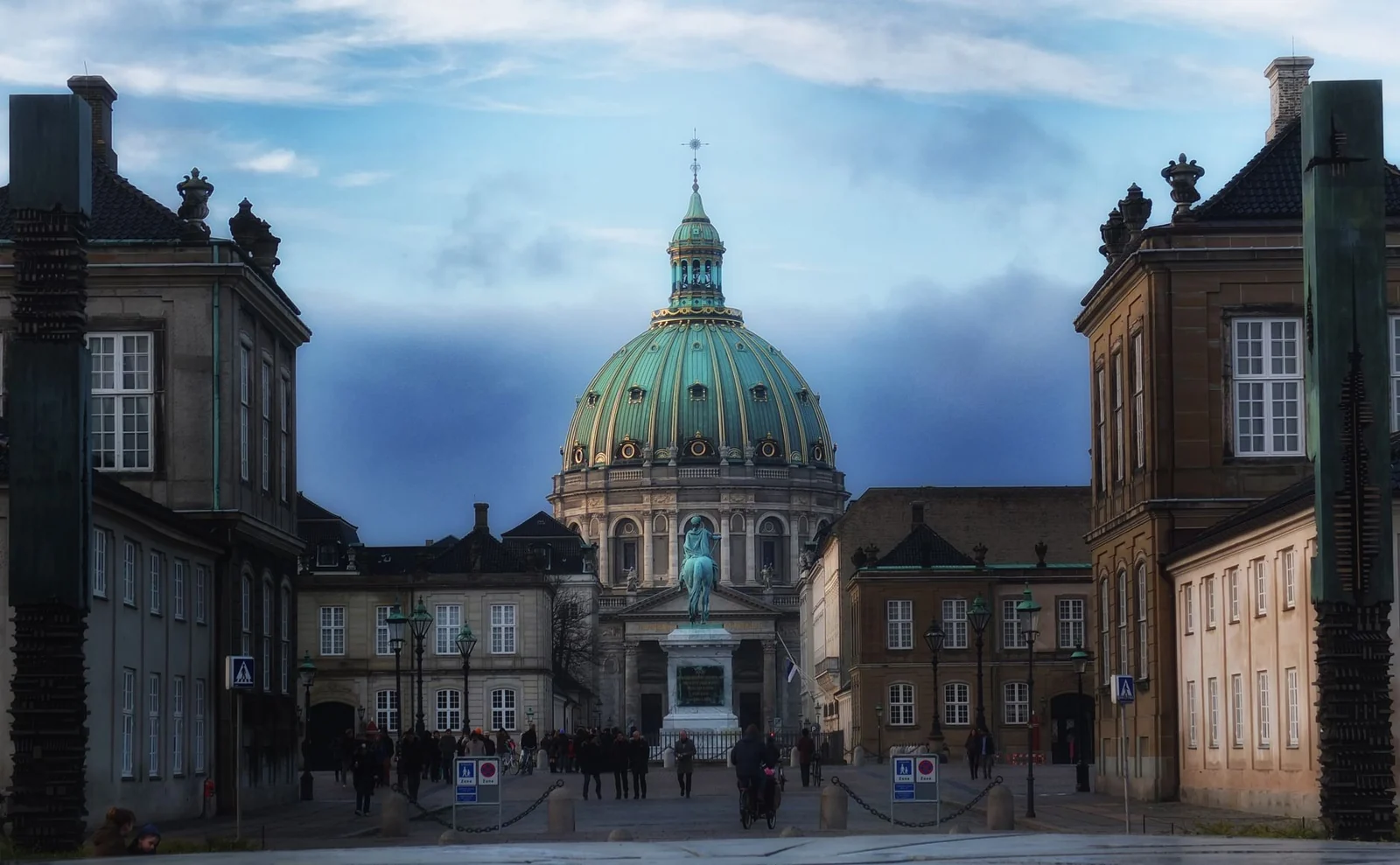
The story is the best thing about this building, and the one the free interior does not tell you.
Frederik V laid the foundation stone in 1749 as the centrepiece of Frederiksstaden, the new royal quarter being built to celebrate 300 years of the Oldenburg dynasty. The architect Nicolai Eigtved designed a church to be faced entirely in Norwegian marble. Eigtved died in 1754, the budget collapsed under the cost of the marble, and by 1770 construction had stopped with the walls only partly built.
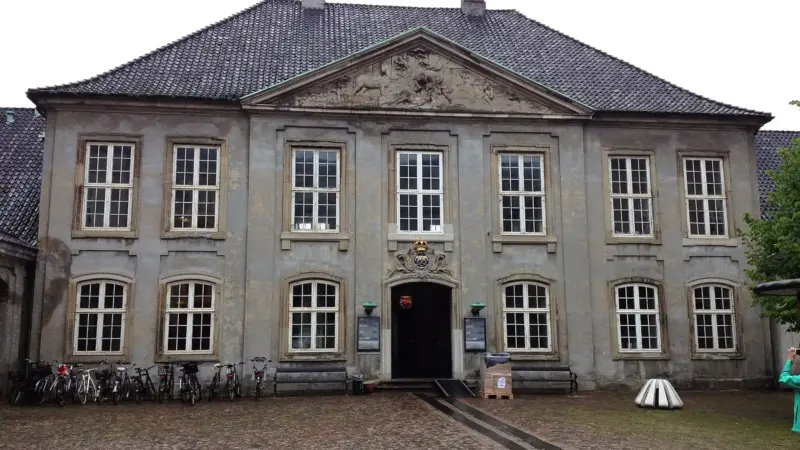
Frederik V’s other monument on the same street is the royal hospital he founded a few years later, a couple of minutes north on Bredgade. It is now Designmuseum Danmark, and its walled garden and café are free to visit without a ticket.
Then nothing happened for more than a century. The half-built church stood as a ruin in the most prestigious district of the capital, overgrown and used by locals as a quarry and a playground, while successive proposals to finish it failed for want of money. It was eventually bought by the financier C.F. Tietgen, who paid for its completion to a revised design by the architect Ferdinand Meldahl. The church was consecrated in 1894 — 145 years after the first stone.
The finished building shows the join if you know to look. The lower walls are the original Norwegian marble from the 1750s; above them, the cheaper Danish Faxe limestone that Tietgen’s budget allowed. A marble church that is only partly marble, finished by a banker a century and a half late, directly opposite the royal family’s front door. It is a very Copenhagen monument.
Combining It With the Rest of the Quarter

The Marble Church belongs to a small, very walkable cluster, and the best way to see it is as part of a two-hour loop rather than a standalone visit.
- Amalienborg, one minute away on the same axis — the four palaces round the octagonal square, with the changing of the guard at noon. Our Amalienborg guide covers the museum and the timings.
- Nyhavn, a ten-minute walk south. The Nyhavn guide has the rest.
- Kastellet and the Little Mermaid, fifteen minutes north along Bredgade and Esplanaden. The Little Mermaid is the end point.
- Rosenborg and the King’s Garden, ten minutes west. Rosenborg holds the crown jewels.

A good weekend sequence is Amalienborg for the noon guard change, a quick lunch, the Marble Church entrance by 13:00 for the dome tour, then north to Kastellet in the afternoon. Our Indre By guide covers the wider old town.
Is It Worth It?
The interior: yes, unreservedly. It is free, it is five minutes from Amalienborg, and standing under that dome is one of the best free experiences in the city.
The dome tour: yes, if you can make the timing work — which means a weekend visit, arriving early, reasonable weather, and a relaxed attitude to disappointment. At 50 DKK it is cheap. But do not make it the one thing you plan a Copenhagen day around. Treat it as a bonus that comes off roughly half the time, and have the Round Tower in your back pocket for the half that does not.
Frequently Asked Questions
Is the Marble Church in Copenhagen free?
Yes. Entry to the church is free during opening hours. Only the dome tour carries a charge: 50 DKK for adults, free for children up to 12.
When can you climb the Marble Church dome?
Only on Saturday and Sunday at 13:30. Each tour takes a maximum of 15 people, and tours are cancelled during services, concerts and bad weather.
Can you book the Marble Church dome tour?
No. The church does not sell advance tickets and does not answer emails about visits. Places go to whoever is at the entrance first, so arrive by about 13:00 on a busy weekend.
What are the Marble Church opening hours?
Monday to Thursday 10:00 to 17:00, Friday 12:00 to 17:00, Saturday 10:00 to 17:00 and Sunday 13:00 to 17:00. The church closes during services, concerts and rehearsals.
Why is it called the Marble Church?
It was designed in the 1740s to be faced entirely in Norwegian marble. The cost stalled construction for over a century, and when it was finally completed in 1894 the upper parts were built in cheaper Danish limestone.
What is the nearest metro to the Marble Church?
Marmorkirken station on the M3 City Circle line, a couple of minutes’ walk away. Kongens Nytorv is about ten minutes on foot.
Related Reading
- Amalienborg Palace the royal residence one minute away on the same axis.
- The Round Tower the no-slots, no-weather-rule alternative climb.
- Church of Our Saviour the higher, bookable climb across the harbour.
- Free things to do in Copenhagen including this interior and several more like it.
- Christiansborg Palace with the tallest tower view in the city.
Final Thoughts
A church planned as a royal showpiece, abandoned for a century, finished by a banker in the wrong stone, and now open to anyone who walks in off Frederiksgade: the Marble Church has had a stranger life than any other building in Copenhagen, and it wears it calmly. The inside is free and deserves ten quiet minutes of anybody’s day.
The dome is another matter — thirty places a week, first come, first served, weather permitting. Go on a weekend, be at the door by one, and do not be too disappointed if it rains. The view down the axis to the harbour is worth the gamble.