
If you’re coming from the US — or anywhere with a strong tipping culture — let me save you some money and some anxiety: you’re probably about to over-tip in Copenhagen. The single most useful thing to know about tipping in Copenhagen is that the bill you’re shown is the bill you pay. Service is already included, staff earn a proper wage, and tipping is genuinely optional. No one is doing mental math hoping for 20%.
That said, “optional” isn’t the same as “never,” and there’s one real exception plus a new wrinkle (those card machines that now ask for a tip) worth understanding. So here’s the complete, no-stress guide to who, when and how much — with a quick-reference table you can screenshot.
Do you tip in Copenhagen? The quick answer
- Expected? No. Service is included and staff are paid a living wage.
- Restaurants: Round up or add 5–10% for excellent service — optional.
- Bars, cafés, taxis: Not expected; round up if you like.
- The one exception: Free walking tour guides — do tip them (50–100+ DKK).
- The new trap: Card terminals that prompt for a tip — the default is “no,” and declining is completely normal.
Why Danes don’t really tip
Understanding the “why” makes everything else click. In Denmark, service is included in the prices you see, and hospitality staff earn solid, livable wages set through collective bargaining rather than relying on tips to get by. (Denmark famously has no statutory minimum wage, yet service workers are well paid.) Culturally, there’s also a strong egalitarian streak — the idea that someone should grovel for gratuities sits awkwardly. So tipping here is a small “thank you” for something genuinely great, not a wage subsidy and not a social obligation. A modest round-up reads as generous; an American-style 20% can feel slightly over the top.
Tipping by situation
Restaurants
The printed total already includes service. For a really lovely meal, it’s gracious to round up or add around 5–10% — but average service warrants nothing extra, and no one will bat an eye. You can leave it in cash or add it when you pay by card.
Cafés and bars
Not expected at all. Danes almost never tip on a coffee or a beer. If there’s a jar, dropping in your loose coins is a friendly gesture, nothing more.
Taxis
The metered fare is the fare. Feel free to round up to the nearest note (say 92 DKK up to 100), and 10–20 DKK is a kind touch if the driver wrestles with heavy luggage — but it’s not expected.
Hotels
Housekeeping and porters don’t expect tips. For genuinely exceptional help you might leave 10–20 DKK or offer a sincere thanks, but it’s entirely optional.
The exception: tour guides
Here’s the one place you really should tip. “Free” walking tours aren’t free — the guides are freelancers who earn their living entirely from what guests give at the end. If you enjoyed a roughly two-hour tour, 50–100 DKK per person is a fair tip (more if it was superb). Paid, pre-booked tours don’t carry the same expectation. See my guide to walking tours in Copenhagen for the best ones.
Everyone else
Hairdressers, spas, nail salons, food delivery — none expect a tip. A warm “tak” covers it.
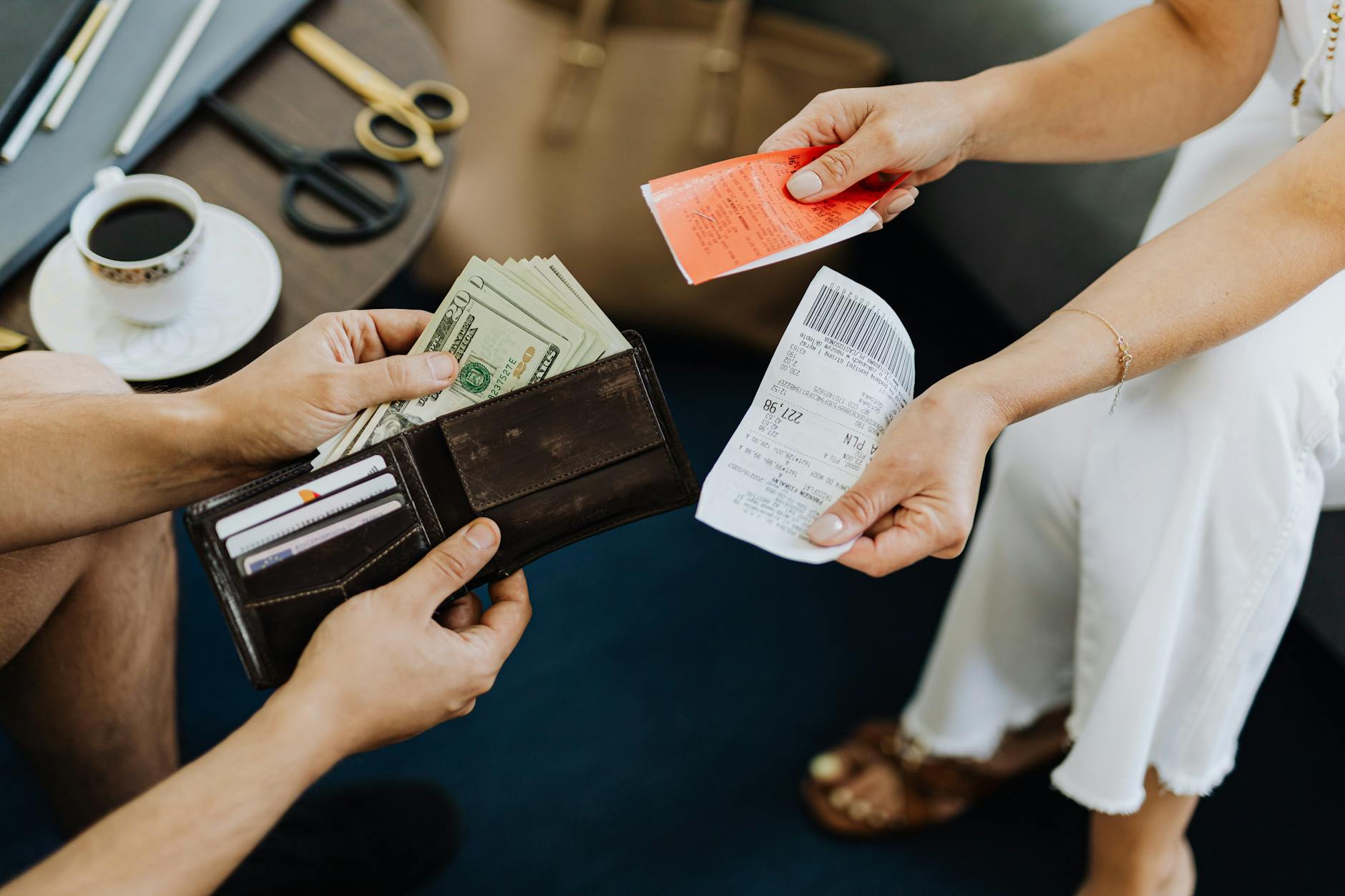
The card-terminal tip prompt (“tip-flation”)
Here’s the modern wrinkle. In the last couple of years, more and more card terminals in Copenhagen have started prompting for a tip before you tap — a practice imported from abroad, not a Danish tradition. Don’t feel pressured. The default is no, and Danes routinely select 0 or skip it without a second thought. A quiet tip: paying by contactless often bypasses the prompt entirely. If you do want to leave something, great — but understand that the screen asking isn’t a sign you’re supposed to.
Quick-reference tipping table
| Who | Expected? | If you choose to |
|---|---|---|
| Restaurant (great service) | No | Round up or 5–10% |
| Restaurant (average) | No | Pay the printed total |
| Café / bar | No | Loose coins, optional |
| Taxi | No | Round up; 10–20 DKK for luggage |
| Hotel housekeeping / porter | No | 10–20 DKK for exceptional only |
| Free walking tour guide | Yes (the exception) | 50–100+ DKK per person |
| Paid tour guide | No | Optional |
| Hairdresser / spa / delivery | No | “Tak” is enough |
| Card-terminal prompt | No | Decline freely — default is no |
Cash or card for tips?
Either works. Since Copenhagen is overwhelmingly cashless, adding a tip on the card or via the terminal is easiest, and most tour guides happily take card these days too. If you prefer cash, Danish kroner is the way — but there’s no need to carry cash just for tipping.
Is it rude not to tip in Copenhagen?
No. This is the anxiety I most want to put to rest. Not tipping is completely normal and not remotely rude — it’s the cultural default. You will never get a dirty look for paying exactly what the bill says. The only situation where skipping a tip would be a bit ungenerous is after a great free walking tour, since that’s literally how the guide is paid.
The bottom line
Relax: in Copenhagen the price is the price. Pay what’s on the bill, round up if something was lovely, tip your free-tour guide properly, and tap “no” on the terminal prompt without guilt. That’s the whole etiquette. It’s one of the easiest cities in the world to get tipping “right,” precisely because there’s so little to get wrong. For the rest of your money questions, see my Copenhagen currency and money guide, and for the full pre-trip rundown, the complete Copenhagen travel tips.
Why this trips up Americans most
If you’re from the United States, tipping in Copenhagen requires actively unlearning a habit, and that’s worth naming. In the US, tipping 18–22% is a moral obligation because servers are paid below minimum wage and depend on tips to live. In Denmark, none of that applies: there’s no sub-minimum “tipped wage,” hospitality staff earn solid pay through collective agreements, and the menu price already includes service. So the American reflex to add 20% isn’t generous here so much as unnecessary — and to some Danes it can feel slightly off, even faintly awkward, against the country’s egalitarian grain. The mental shift is simple but real: in Copenhagen, paying exactly what the bill says is normal, expected and completely respectable. Tip if something delighted you, not because you’re afraid of looking cheap.
Tipping at hotels, spas and salons, in detail
Across the service industries the answer is consistently “not expected,” but here’s the nuance:
- Hotel housekeeping: No tip expected. For a long stay or genuinely exceptional service, leaving 10–20 DKK is a kind gesture, never an obligation.
- Porters/bellhops: Not expected; a small note for hauling heavy bags is appreciated but optional.
- Concierge: No tip for normal help; only for something well beyond the call of duty.
- Spas, massage, hairdressers, nail salons: Not expected at all — the price is the price, and a sincere “tak” is the right currency.
- Hotel restaurants and bars: Same as anywhere else — service included, round up only if you wish.
You won’t cause any offence by not tipping in any of these settings; it’s simply the norm.
Group dining, large bills and special cases
A few situations worth a note. For large groups, some restaurants may add a service charge to the bill automatically — check before adding anything on top so you don’t double up. For a big celebratory meal where the service was wonderful, rounding up to a generous round number (rather than a strict percentage) is the Danish way to say thanks. At counter-service and street-food spots, there’s no tipping culture whatsoever — you order, pay and go. And if you’re splitting a bill by card, there’s no need for everyone to add a tip; one person rounding up, or nobody tipping at all, is perfectly normal.
How to actually leave a tip
The mechanics, since they differ from what some visitors expect: you can leave a tip in cash on the table (in DKK), tell the server a total to charge when paying by card (“make it 400,” say), or use the tip prompt on the card terminal if one appears. There’s no custom of writing a tip line on a paper receipt the way Americans do — it’s either cash, a verbal round-up, or the terminal. Since Copenhagen is so cashless, the terminal or a verbal round-up is easiest, and you don’t need to carry cash specifically for tipping.
The art of rounding up
If you take one practical habit from this guide, make it rounding up. It’s the quintessentially Danish, low-key way to acknowledge good service without making a production of it: a 184 DKK bill becomes 200, a 92 DKK taxi fare becomes 100. It’s small, it’s effortless, and it fits the culture perfectly — generous enough to be kind, modest enough not to feel like a statement. No percentages, no agonising, no calculator. That’s the whole philosophy of tipping in Denmark in two words.
Delivery apps and ride-hailing
Modern services follow the same logic. Food-delivery apps (Wolt is the big one in Copenhagen) may offer an in-app tip option; couriers are paid properly, so it’s appreciated but optional — many locals don’t. Ride-hailing (Uber returned to Copenhagen in 2025, and Bolt operates too) works the same as taxis: no tip expected, round up in-app if you like. Across the board, the rule holds — tipping is a bonus for excellence, never a built-in expectation. Knowing that, you can relax and enjoy your trip without the running mental math that tipping cultures impose.
Tipping in Denmark vs the rest of the world
It helps to place Denmark on the global map of tipping customs, because that context dissolves a lot of anxiety. In the United States, 18–22% is effectively mandatory because servers are paid a sub-minimum wage. Across much of continental Europe, a small round-up or 5–10% is a polite norm. In Japan, tipping can actively confuse or even offend. Denmark sits much closer to the Japanese end than the American one: service is included, wages are fair, and tipping is a genuine extra rather than an expectation. So if you’re arriving with US instincts, recalibrate downward; if you’re arriving from a no-tipping culture, you’ll feel right at home. The single most useful mental model is “Northern European, service-included” — pay the bill, round up for something special, and don’t overthink it.
Why service is included: a little background
The reason tipping never took deep root in Denmark is structural. The country has a strong collective-bargaining tradition rather than a legal minimum wage, and hospitality workers are covered by agreements that pay a proper, livable hourly rate with benefits — they don’t need tips to survive. Layered on top is a deeply egalitarian culture that’s a little uneasy with the idea of customers and servers in a tipping hierarchy. Danish consumer-pricing norms also mean the price you’re shown is the price you pay, service and tax included — no surprise additions at the end. Put those together and you get a country where a tip is a sincere “that was lovely,” not a wage top-up or a social tax. Knowing the “why” makes the “don’t worry about it” advice much easier to actually follow.
What if the service was genuinely bad?
Easy: you simply pay the bill and leave nothing extra — which is the default anyway, so there’s no awkward “withholding a tip” moment the way there is in a tipping culture. Because no gratuity is expected, declining to add one carries no message and raises no eyebrows. If something was actually wrong with your meal or service, the Danish approach is to mention it politely to staff at the time rather than to communicate through the tip — they’d rather fix it. But in the normal run of things, average or even mediocre service just means you pay exactly what’s printed, walk out, and think no more about it.
Buskers, coat-check and the small stuff
A few odds and ends that come up: street performers and buskers appreciate a few coins if you stopped to enjoy them, like anywhere. Cloakroom/coat-check at clubs or theatres sometimes has a small fixed fee (often signposted), which isn’t a tip — pay what’s posted and nothing more. Public toilets occasionally charge a small fee or coin, again not a tip. Bartenders at a busy club don’t expect tips, though dropping your change in a jar is a friendly gesture. None of these are obligations; they’re just the small-change situations where a coin is a nice-to-do, not a must-do. Since the city is so cashless, you may not even have coins — and that’s fine.
Don’t feel cheap — really
I’ll close on the emotional core of this, because it’s the part travellers struggle with most. If you come from a tipping culture, paying the exact bill and walking out can feel wrong, like you’ve stiffed someone. You haven’t. In Copenhagen that’s simply how it works, for everyone, every day — locals do exactly the same. Over-tipping out of guilt doesn’t make you a better guest; if anything, a wildly American gratuity can feel slightly out of step. So give yourself permission to relax: enjoy your meal, pay what it costs, round up or add a little if you were genuinely delighted, tip your free-tour guide properly, and tap “no” on the terminal without a flicker of guilt. That’s not being cheap — that’s being a Copenhagen local. And because everyone speaks English, you can always just ask a waiter what’s customary if you’re unsure.

Frequently asked questions
Do you tip in Copenhagen?
It’s not expected. Service is included in the prices and staff earn a proper wage. Tipping is optional — round up for excellent service if you like.
Is a service charge included in Danish restaurant bills?
Yes — service is included in the menu prices, so the total you’re shown is what you pay. Any tip on top is voluntary.
How much should you tip at a restaurant in Copenhagen?
Nothing is required. For exceptional service, rounding up or adding 5–10% is generous; for average service, just pay the bill.
Do you tip taxi drivers in Copenhagen?
Not expected. You can round up to the nearest note, and 10–20 DKK is a nice gesture if they handle heavy luggage.
Should I tip when the card machine asks?
You don’t have to — the default is no, and declining is completely normal. Paying contactless often skips the prompt entirely.
Do you tip on free walking tours?
Yes — this is the main exception. Guides rely on tips, so 50–100+ DKK per person for a good two-hour tour is appropriate.
Sorted on tips? Get your entry paperwork and a SIM card sorted, then book one of the best walking tours in Copenhagen.
Tipping sits inside a broader Danish attitude to money and status that shapes a lot of social behaviour here — bills split to the krone, nobody grandly picking up the tab, and a general reluctance to advertise what anything cost. We unpack that, and the rest of the unwritten rules, in our guide to Danish etiquette and customs.
When the bill comes, regningen, tak is how you ask for it and kan jeg betale med kort? is how you check the card terminal will take yours. Those and thirty-eight more are in our guide to Danish phrases for travellers.
Last updated: July 2026.