Copenhagen Airport has two terminals but, for almost every passenger, only one security checkpoint: a long hall between Terminals 2 and 3 that everyone funnels through on the way to the gates. Understand that, and most of the airport’s apparent complexity disappears. This Copenhagen Airport guide explains how the place actually works, from the terminal you check in at to the pier you leave from, so you can spend less time looking at signs and more time deciding which beer to have before you fly.
It covers the terminals, security and fast track, the piers and gates, passport control, how early to arrive, food and drink, lounges, shopping and the VAT refund, and the practical details from Wi-Fi to assistance. Getting between the airport and the city has its own guide, Copenhagen Airport to the city centre, and so does a short stopover, our Copenhagen layover guide. Details were checked in October 2026; airports change constantly, so confirm anything critical with your airline.
Copenhagen Airport at a Glance
| Detail | |
|---|---|
| Code and location | CPH, at Kastrup on Amager, about 8 km south-east of the city centre |
| Terminals | 2 and 3, joined end to end and a few minutes’ walk apart |
| Security | One central checkpoint between Terminals 2 and 3; CPH Express lanes 05:00–21:00 |
| Gates | Piers A to F; non-Schengen flights behind passport control |
| Arrive | 2 hours before flights within Europe, 3 hours beyond; 2.5–3 hours with small children |
| Metro and trains | Both at Terminal 3; 30 DKK to the city centre in 2026 |
| VAT refunds | Forms stamped in Terminal 3; cash or card refunds airside, 05:00–22:00 |
| Wi-Fi | Free |
| Last beer | Mikkeller’s airport bar, 05:00–23:00 |
Terminal 2 or Terminal 3? It Matters Less Than You Think
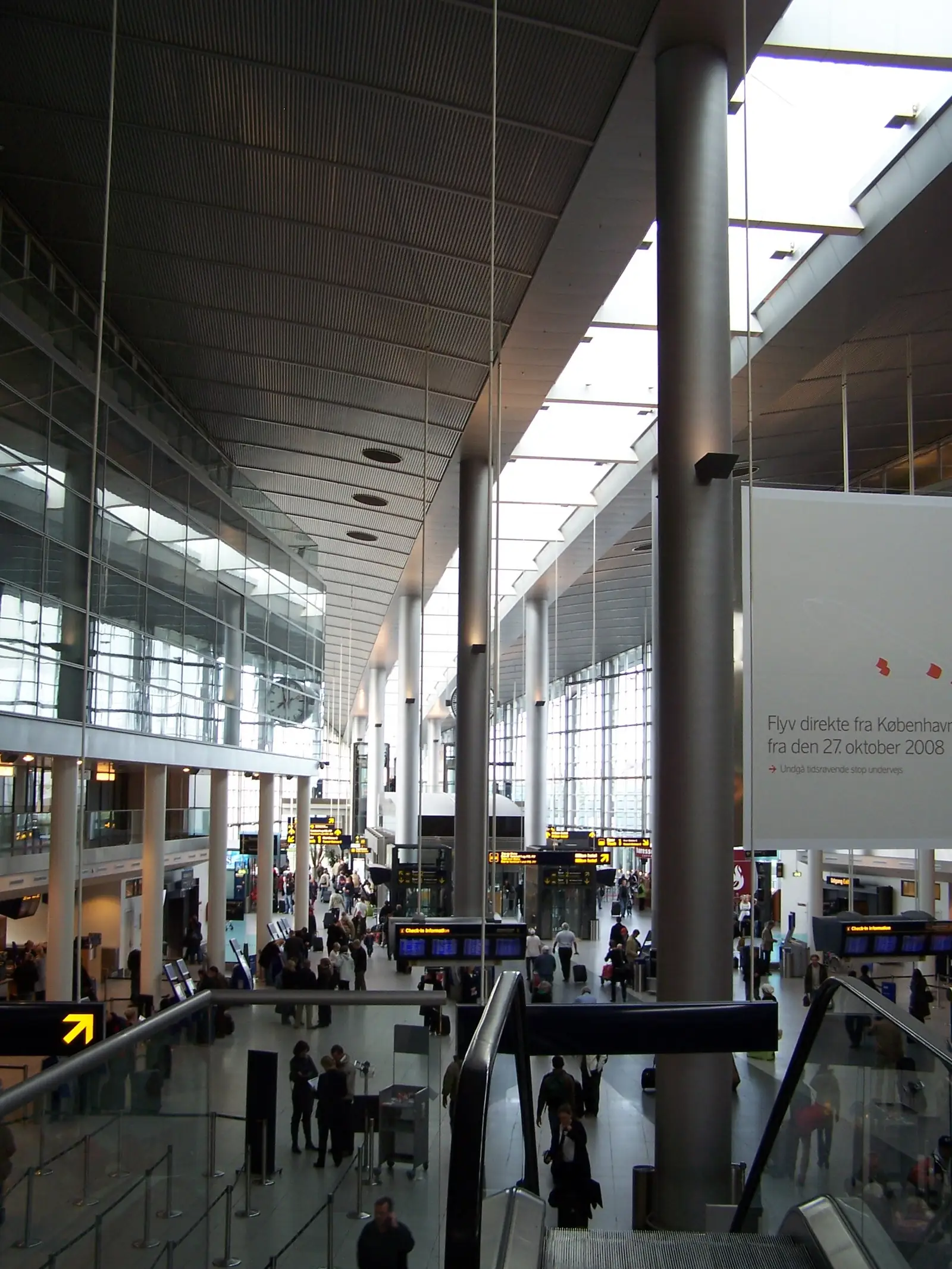
Your booking and the departure boards will tell you whether you check in at Terminal 2 or Terminal 3. It is not a decision to worry about. The two terminals are one continuous building, a few minutes’ walk apart, and both lead to the same central security checkpoint and the same airside area beyond it.
Terminal 3 is the transport hub, with the metro and railway station built into it, so if you arrive by train or metro and check in at Terminal 2, allow a few extra minutes for the walk. If you have no bags to drop, you can ignore the check-in halls altogether and head straight for security.
Most of the old confusion about CPH comes from older guides and maps. Today almost everything a passenger needs happens in the joined-up Terminals 2 and 3.
Security: One Checkpoint for Almost Everyone
Copenhagen runs a single, centralised security checkpoint between Terminals 2 and 3. That is good news and bad news. The good: there is never a question of which security to use. The bad: when several big waves of departures overlap, typically early in the morning and on summer weekends, everyone is in the same queue.
You can check the current waiting time before you leave your hotel: select your departure on the airport’s website and the live waiting time for security is shown with it. Use it. It is the single most useful piece of information for deciding when to set off.
At each end of the checkpoint are the CPH Express fast-track lanes, open from 05:00 to 21:00, where the airport aims to get passengers through in under five minutes 99 per cent of the time. Access comes with business-class tickets and some frequent-flyer tiers, so check with your airline whether yours includes it. Everyone else uses the main lanes, which usually move steadily.
The rest is standard: liquids and electronics as instructed at the lane, belts and coats in the trays, and no arguing with the scanner. Rules on liquids have been changing across Europe as airports install new scanners, so follow the signs on the day rather than what you remember from your last trip.
Piers and Gates: How the Airside Works
Past security you come out into the main airside area, a long hall of shops, restaurants and bars, and from there the piers branch off, lettered A to F. Gate numbers start with the pier letter, so C26 is on pier C and D101 on pier D. The departure screens show your gate well before boarding; until then, there is no point setting off in a particular direction.
Allow time for walking. The far ends of the piers are a long way from the security exit, comfortably ten to fifteen minutes at a normal pace, and more if your gate is behind passport control. When the screen says “go to gate”, go, especially from the bars.
- Flights within the Schengen area, which covers most of Europe, leave from gates you can walk to directly, with no further checks.
- Flights to non-Schengen destinations, including the UK, Ireland, North America and most long-haul routes, leave from gates behind passport control, on piers C, D and E. There are passport control points near the C gates and near the E gates.
If your flight is non-Schengen, go through passport control in good time and do your eating and shopping on the far side; there are bars, shops and lounges there too, and the queue at passport control is the one part of the journey you cannot predict.
Passport Control and the EU’s Entry/Exit System
Leaving the Schengen area means an exit check at passport control, and since October 2025 the EU’s Entry/Exit System has been registering non-EU travellers’ fingerprints and facial images at the border, which can make the first crossing slower than you are used to. UK, US, Canadian and Australian passport holders are all affected. Allow extra time, particularly in summer and at the start of the school holidays. Our guide to visa requirements for Copenhagen covers the rules on the way in.
How Early to Arrive at Copenhagen Airport
The airport’s own advice is to arrive two hours before flights within Europe and three hours before flights outside Europe, and two and a half to three hours if you are travelling with small children. That is the right advice for most people, and in July it is the right advice for everyone.
The honest version: on a quiet weekday morning outside the holidays, with hand luggage only and a flight within Schengen, plenty of Copenhageners turn up much later than that and get away with it. Do not try it if any of the following apply:
- You have bags to check, or a VAT refund form to stamp, which can add half an hour on its own.
- Your flight is non-Schengen, so you have passport control to clear as well as security.
- It is a summer weekend or the start of a school holiday.
- You are travelling with children, or need assistance.
If you are coming from the city, the metro and trains run very frequently and take about fifteen minutes, so building in a buffer costs you little. Our guide to arriving in Copenhagen has the fares, which work the same in reverse.
Eating and Drinking
The airside area has the usual mix of cafés, sandwich bars, Danish bakeries and sit-down restaurants, with plenty of options before and after passport control. Prices are higher than in town, as they are at every airport, so if you are on a budget, eat in the city and buy a pastry for the plane.
The place worth knowing about is Mikkeller. The Copenhagen brewery opened its airport bar in June 2018, and it is open daily from 05:00 to 23:00, with twenty beers on tap and more than two hundred cans and bottles to take away. It is the best last drink in Scandinavia, and a reasonable first one if you have just landed and have time to spare. Our guide to craft beer bars in Copenhagen covers the brewery’s city bars, and beer prices in Copenhagen explains why the airport pint will hurt.
Lounges
Lounge access at CPH depends on your ticket, your status and which side of passport control you are on. For non-Schengen departures, there are three to know about:
- Carlsberg Aviator Lounge, on pier C near gate C26, open 05:00–20:30.
- Eventyr Lounge, on level 4 after passport control near gates C15–C17, open 05:30–20:30, run in partnership with Plaza Premium.
- Primeclass Lounge, on pier D, second floor, next to gate D101.
SAS, the home carrier, runs its own lounges for its premium passengers and eligible frequent flyers. Independent lounges generally sell entry on the day or in advance and accept the main lounge-membership programmes; check the current terms before you count on getting in.
Our verdict: for a short wait, a lounge is rarely worth paying for. For a long delay, an early-morning departure or a long-haul flight, a quiet seat, a shower and free coffee can be worth every krone.
Shopping, Duty-Free and the VAT Refund
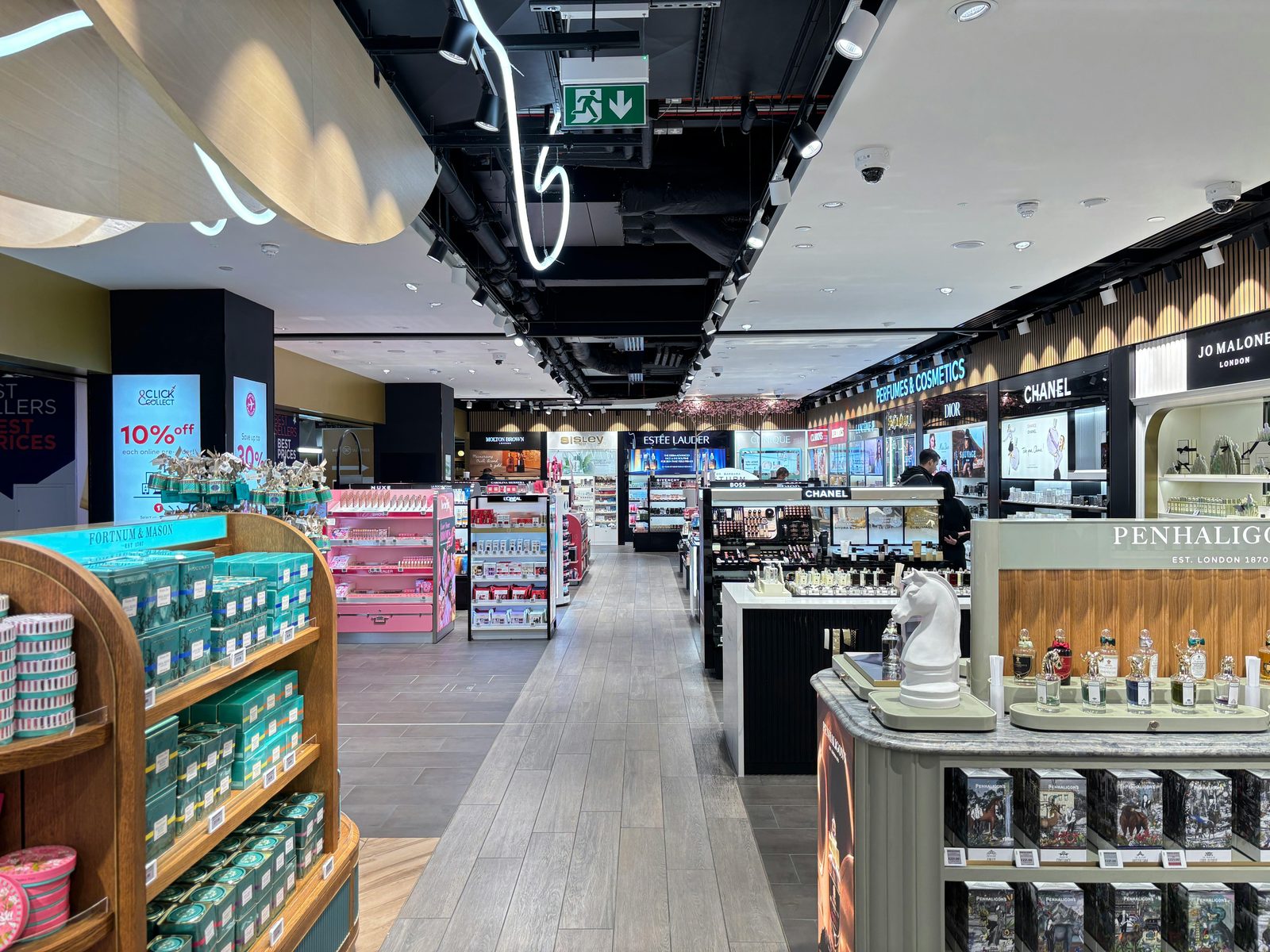
The airside shopping area is large and well stocked with Danish design, fashion, chocolate, liquorice and the usual duty-free brands. It is convenient, but it is rarely cheaper than the city, so buy the things you have been planning to buy in town and use the airport for the forgotten gift. Our guide to the best souvenirs from Copenhagen has ideas worth carrying home.
If you live outside the EU and bought goods in town, this is where you claim the VAT back. Tax-free forms are stamped in Terminal 3, by Global Blue or Planet, or by Customs outside their opening hours, and you collect the money at Forex by the B gates or at Prosegur, both past security and open 05:00–22:00. Get the stamp before you check in any bag containing the goods. Our guide to the VAT refund in Denmark explains the whole process and why you will get back less than 25 per cent.
Practical Matters
- Wi-Fi is free throughout the terminals, and there are charging points around the gates. Our SIM card and Wi-Fi guide covers staying connected in the city.
- Water: Danish tap water is excellent, so bring an empty bottle through security and refill it from a tap or fountain airside rather than buying one.
- Money: you will barely need cash in Denmark, and airport exchange counters rarely offer good rates. Our money guide explains why cards are enough.
- Families: allow the extra time the airport recommends, and see our guide to Copenhagen with a stroller for the city side of the trip.
- Assistance: if you need help getting through the airport, request it through your airline at least 48 hours before you travel, which is the standard rule for airports in the EU.
- Luggage: if you have hours to fill before a late flight, the lockers at Central Station, thirteen minutes away by train, let you spend them in the city rather than at the gate.
Getting To and From the Terminal
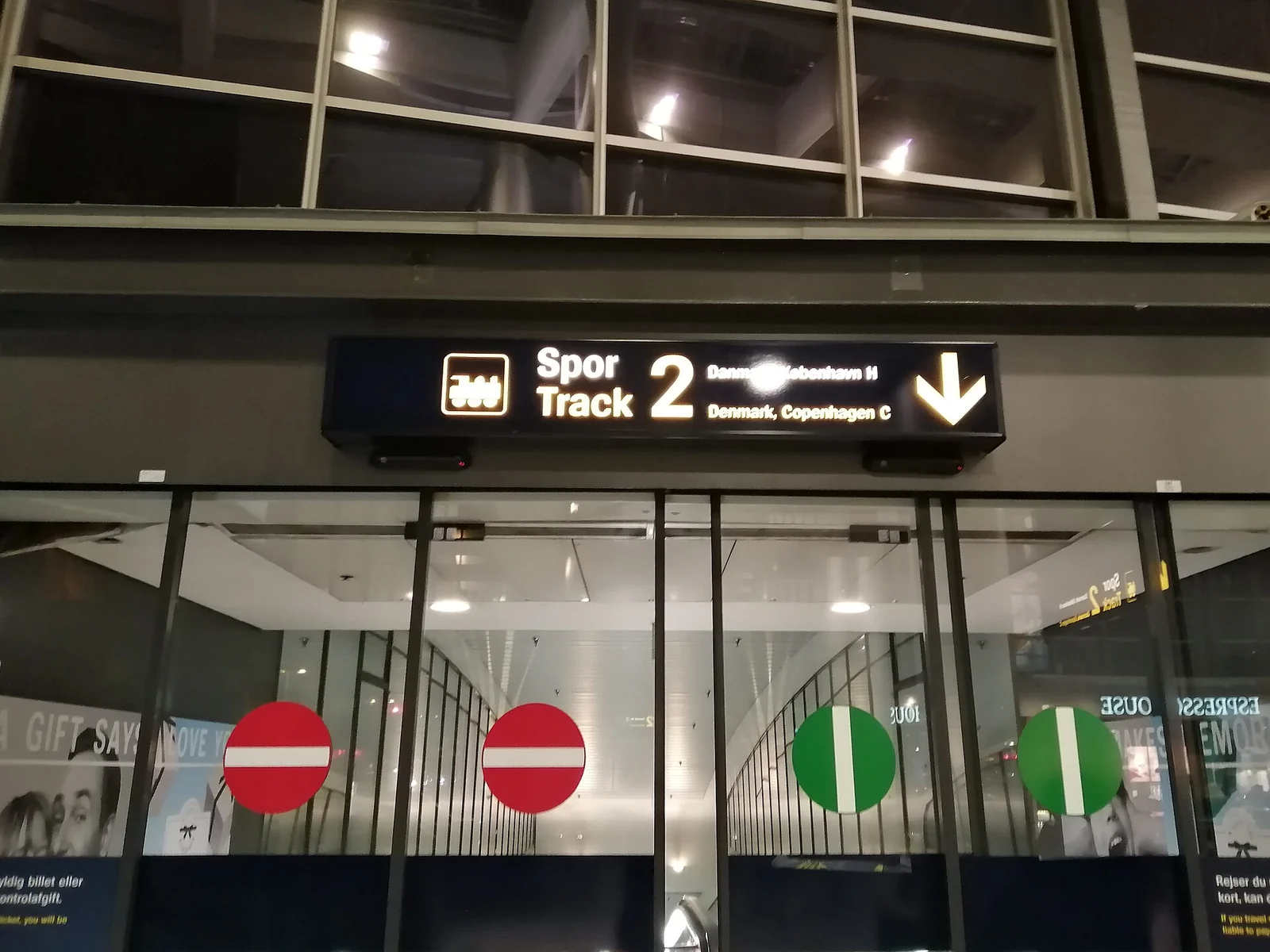
The metro and the railway station are both inside Terminal 3. The M2 metro runs around the clock to Christianshavn, Kongens Nytorv and Nørreport in about fifteen minutes; the trains reach Copenhagen Central Station in about thirteen. Both need a three-zone ticket, 30 DKK for an adult in 2026. At the station, check the direction before you board: the platform for central Copenhagen is signed København H, while trains on the other side head over the bridge to Malmö.
Taxis wait outside Terminal 3; see our guide to taxis in Copenhagen. If your flight leaves very early, a night in one of the hotels near Copenhagen Airport can be worth more than the extra hour in bed suggests.
Frequently Asked Questions
Which terminal is my flight at Copenhagen Airport?
Check-in is in Terminal 2 or Terminal 3; your booking and the departure boards will tell you which. The two terminals are joined and share one security checkpoint, so it makes little difference.
How early should I arrive at Copenhagen Airport?
The airport recommends two hours before flights within Europe and three hours before flights outside Europe, or two and a half to three hours with small children. Allow more in summer and if you need a VAT refund stamp.
Is there fast-track security at Copenhagen Airport?
Yes. CPH Express lanes at each end of the central checkpoint are open from 05:00 to 21:00. Access usually comes with business-class tickets or frequent-flyer status, so check with your airline.
Where are the non-Schengen gates at Copenhagen Airport?
Behind passport control, on piers C, D and E. Flights to the UK, Ireland, North America and most long-haul destinations use them.
Is there free Wi-Fi at Copenhagen Airport?
Yes, Wi-Fi is free throughout the terminals.
How long does it take to walk to the gate at Copenhagen Airport?
From security to the far end of a pier can take ten to fifteen minutes, more if you also need to pass through passport control. Head for your gate as soon as it appears on the screens.
Can I get a VAT refund at Copenhagen Airport?
Yes, if you live outside the EU. Get your forms stamped in Terminal 3, then collect the refund at Forex by the B gates or Prosegur, both past security.
Related Reading
- The Copenhagen metro guide for the M2 line that serves the airport day and night.
- Copenhagen public transport tickets for passes that include the airport.
- Copenhagen to Malmö because the airport trains continue across the bridge.
- Where to stay in Copenhagen to pick a base with an easy run to the airport.
Photo Credits
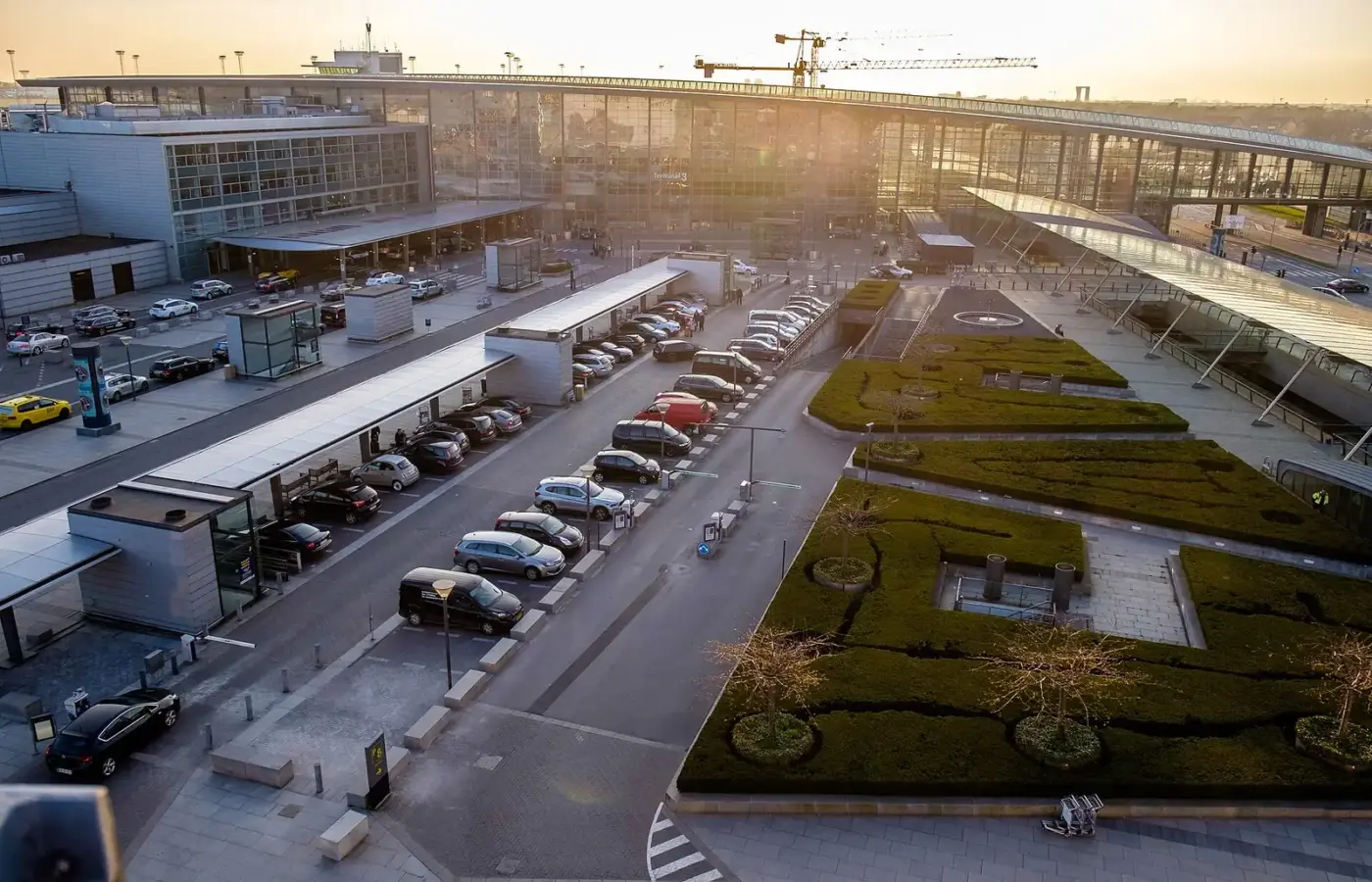
- Copenhagen Airport Terminal 3 seen from above at sunset, with the taxi rank, drop-off lanes and gardens in front: photo by Håkan Dahlström from Malmö, Sweden, Copenhagen Airport Terminal 3 (34971886605).jpg, CC BY 2.0
- The check-in hall of Terminal 3 at Copenhagen Airport, with its curved ribbed ceiling, tall columns and departure boards: photo by Niels Elgaard Larsen – User: (WT-shared) Elgaard at wts wikivoyage, Terminal 3, inside Copenhagen Airport.jpg, CC BY-SA 4.0
- The sign for track 2 at Copenhagen Airport station, marked for trains to Kobenhavn H, Copenhagen Central Station: photo by Luis9595, Copenhagen Airport Station Sign.jpg, CC BY-SA 4.0
Final Thoughts
Copenhagen Airport is one of the easier big airports in Europe, mainly because it is compact, its transport links are superb and almost everyone passes through the same security hall. The things that catch people out are the walk to the far gates, passport control for non-Schengen flights, and the July crowds.
Check the live security wait before you leave the city, take the official arrival times seriously in summer, and if you have half an hour spare on the far side of security, spend it at Mikkeller rather than at the gate. It is the most Copenhagen way to leave.
Last verified: October 2026. Lounge locations and hours, fast-track eligibility and opening times change frequently; check Copenhagen Airport’s website and your airline before you travel.