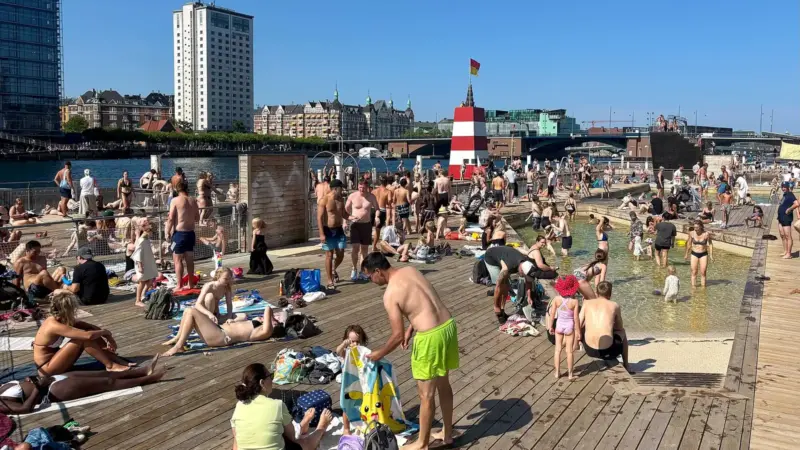
Between June and August 2025, Copenhagen’s harbour baths and swimming zones logged more than 475,000 visits, nearly 40 per cent up on the summer before. The busiest of them was not the famous bath at Islands Brygge that appears in every guidebook, but a run of wooden steps and platforms on the quay at Sandkaj in Nordhavn, which took more than 200,000 on its own. That is the first thing to understand about the outdoor things to do in Copenhagen: they are not attractions laid on for visitors. They are how the city lives, and almost all of them are free.
This guide is the hub for everything outdoors: harbour swimming and the beaches a metro ride away, the parks, ramparts and cemeteries that double as parks, cycling, boats and kayaks, saunas and winter bathing, the ski slope on top of a power station, the royal deer park twenty minutes up the coast, and how all of it changes with the seasons. Prices and details were checked in October 2026; treat them as the right order of magnitude and confirm anything with a ticket before you go.
Outdoor Copenhagen at a Glance
| Activity | Where | Cost | Best season |
|---|---|---|---|
| Harbour swimming | Islands Brygge, Sandkaj, Fisketorvet, Sluseholmen | Free | June to August |
| Beach | Amager Strandpark (metro), Bellevue (S-train) | Free | June to September |
| Parks and gardens | Kongens Have, Frederiksberg Have, Fælledparken | Free | April to October |
| Star fortress | Kastellet, behind the Little Mermaid | Free | All year |
| Lakes loop | Søerne, about 6 km round | Free | All year |
| Cycling | Everywhere, on separated lanes | Bike hire | April to October |
| Self-drive boat or kayak | Islands Brygge and the inner harbour | Paid | May to September |
| Sauna and cold dip | Refshaleøen and the harbour | Paid | October to April |
| Roof walk or dry-slope skiing | CopenHill, Amager | Roof free; skiing paid | All year |
| Deer park | Dyrehaven, Klampenborg | Free | Autumn, for the rut |
Swimming in the Harbour
Thirty years ago the inner harbour was fouled by sewage and industry, and nobody swam in it. Today it is clean enough that the city runs official swimming spots along it, and on a hot evening it can feel as if half of Copenhagen is in the water. There are three proper harbour baths, with pools, diving boards and lifeguards in summer, plus three newer swimming zones that are little more than ladders, steps and platforms on the quay.
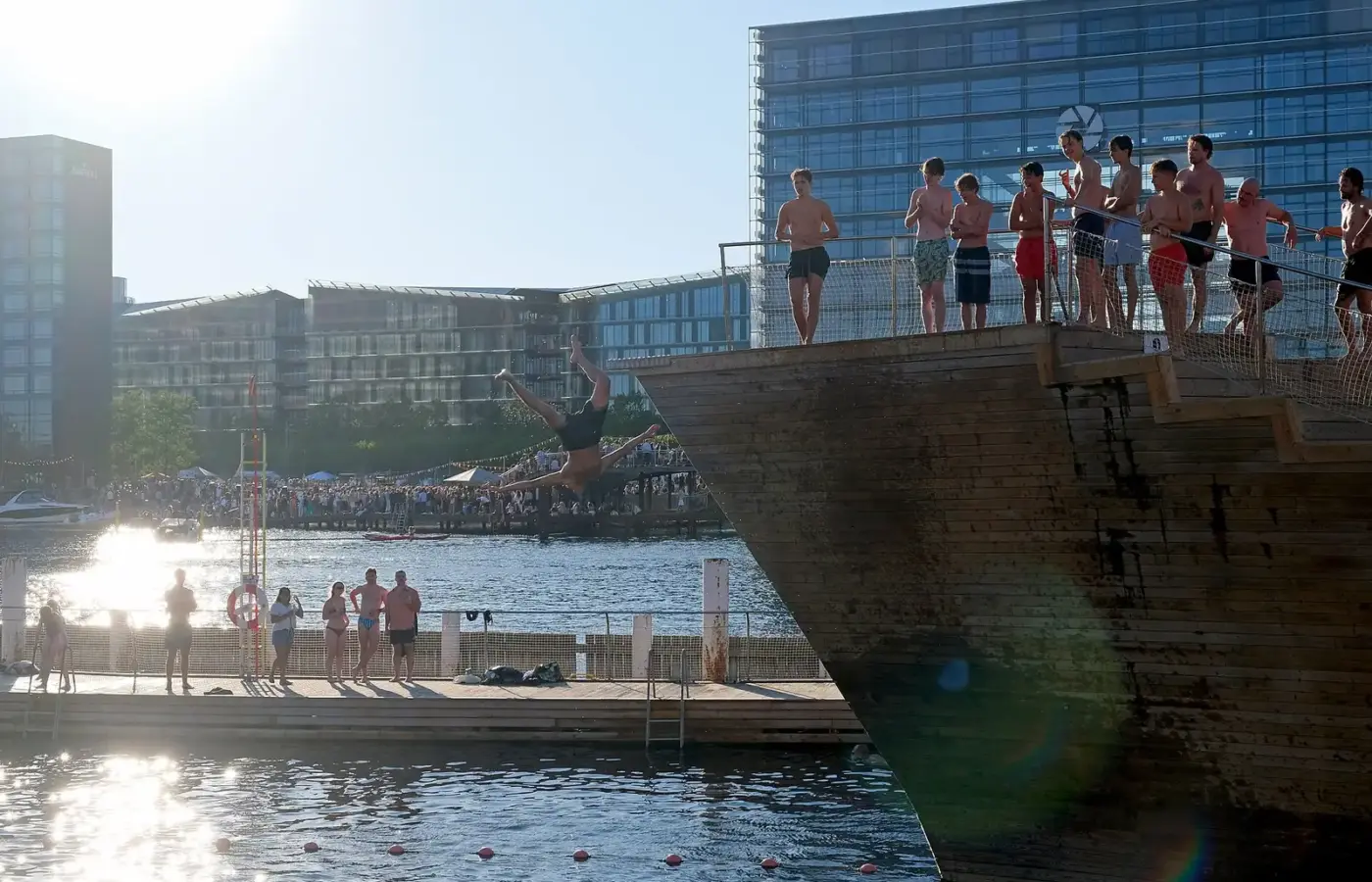
- Islands Brygge, near Langebro. The original and the most famous, with a diving tower, a children’s pool and a big lawn behind it for drying off. Open all year, and busiest from June to August.
- Fisketorvet, by the shopping centre of the same name, sometimes called Copencabana. Smaller, calmer, and the easiest to combine with an errand.
- Sluseholmen, in the new canal district of Sydhavn. The local’s bath, with fewer tourists than either of the others.
- Sandkaj, in Nordhavn, the busiest harbour swimming spot in summer 2025. Wide wooden steps into deep water and a young, after-work crowd.
- Halfdansgade on Islands Brygge and Søndre Refshalebassin on Refshaleøen, the other two swimming zones.
All of them are free. Two rules matter. The harbour baths close after heavy rain, when storm drains overflow into the harbour; the city publishes a daily bathing water forecast (search badevand København), and a red flag means stay out. And the harbour is a working waterway with boats, currents and cold patches, so swim only at the marked spots. The water is at its warmest in August, in the high teens Celsius, which our guide to Copenhagen in August covers alongside the rest of the late-summer calendar.
Our ranking of the Copenhagen harbour baths takes each spot in turn, with the facilities, the crowds and the best time of day to go.
Beaches Within Half an Hour
The harbour gets the photographs, but when Copenhageners want sand they go east or north.
Our ranking of the best beaches near Copenhagen takes nine of them in turn, from Amager Strandpark to the north-coast villages, and explains why the Øresund beaches are best in the morning.
- Amager Strandpark is the city beach: a long artificial lagoon and island built in the 2000s, with sand on both sides, a shallow lagoon for children and the Øresund Bridge on the horizon. The M2 metro stops at Amager Strand and Femøren, both a short walk from the sand, so you can be on the beach fifteen minutes after leaving the centre. Our metro guide explains the tickets.
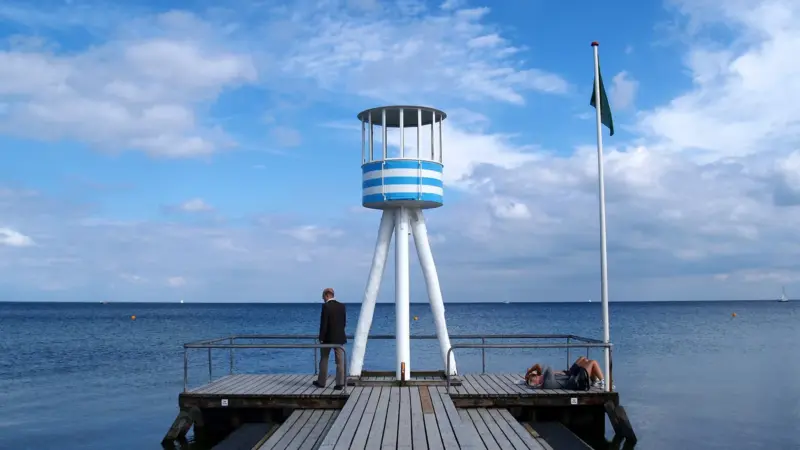
- Bellevue at Klampenborg is the prettier choice, with Arne Jacobsen’s blue-and-white striped lifeguard towers and his modernist housing and theatre behind the sand. It is the end of the line for the C-line S-train, and it gets very full on hot weekends.
- Svanemøllestranden in Østerbro is a small city beach by Svanemøllen station, good for a quick swim rather than a day out.
- Kastrup Søbad, near the airport, is not a beach but a curving wooden sea bath on stilts, nicknamed the Snail, and one of the most striking places to swim in Denmark. Kastrup station on the M2 is a walk away.
Further up the coast, Hornbæk and Tisvildeleje on the north coast of Zealand are proper seaside villages with long sandy beaches, an hour or so away by train. Water flags and the same bathing water forecast apply everywhere. For the train side of it, see our guide to train travel from Copenhagen.
Parks, Gardens and a Star Fortress
Copenhagen does not have one great central park. It has a dozen good ones, each with its own character, and the best way to use them is the Danish way: with a blanket, something from a bakery and no plan.
Kongens Have, the King’s Garden
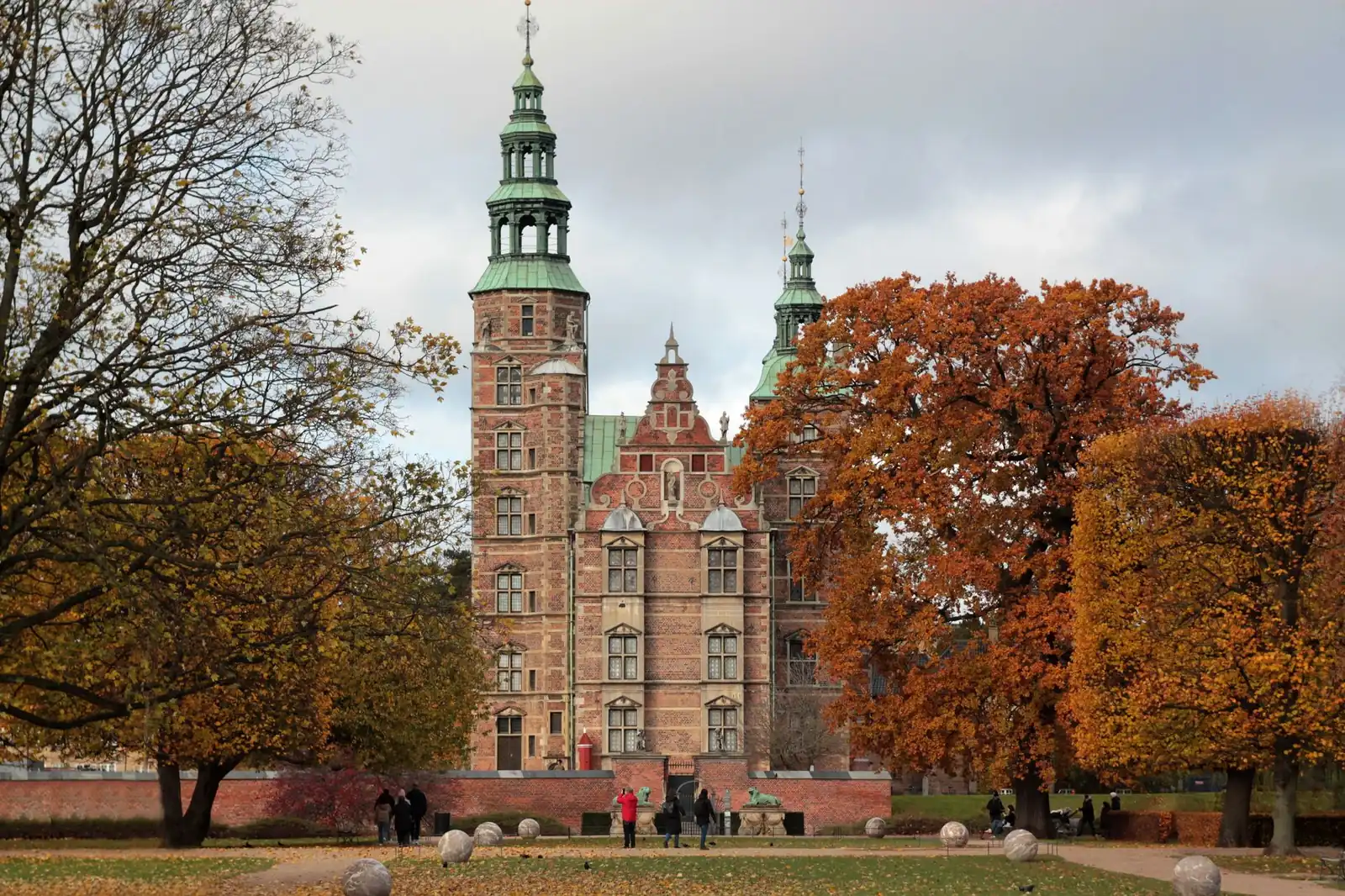
The oldest royal garden in the city, laid out for Christian IV in the early 1600s around Rosenborg Castle. On a sunny day its lawns fill with office workers, students and families in a way that feels like the whole of the old town has come up for air. The rose garden by the castle moat is the prettiest corner.
Frederiksberg Have and Søndermarken
A romantic landscape garden of canals, islands and a Chinese pavilion, sitting on the hill around Frederiksberg Palace in Frederiksberg. It backs onto the zoo, and from some paths you can see into the elephant enclosure for free. Across the road, Søndermarken looks like an ordinary park until you notice the glass pavilions in the grass: they are the entrances to the Cisterns, a former underground reservoir now used for art installations.
Fælledparken and the Lakes
Fælledparken is the big, unfussy one, the place for football, frisbee, running and enormous summer picnics, next to the national stadium. A few minutes south, the Lakes, Søerne, form a chain of three long reservoirs on the edge of the old city, and the path around them, about six kilometres, is the most popular running and walking loop in Copenhagen. Dronning Louises Bro, the bridge in the middle, is where the city sits on a warm evening.
Kastellet
The star-shaped fortress behind the Little Mermaid is the most underused outdoor space in central Copenhagen. Most visitors walk to the statue, take their photograph and leave. Walk up onto the grassy ramparts behind her instead and you get a free, quiet circuit with views over the harbour, an old windmill and the long red barracks of what is still an active military site. It takes forty minutes and costs nothing.
Our full Kastellet guide has the route round the bastions, the history of the church and its prison, and the rules for walking through a site the armed forces still use.
Assistens Kirkegård and Superkilen
In Nørrebro, Assistens Kirkegård is a cemetery that has quietly become a park. Hans Christian Andersen, Søren Kierkegaard and Niels Bohr are buried here, and on a summer afternoon locals read and sunbathe on the lawns between the graves. It is respectful, and very Danish. Ten minutes away, Superkilen is the opposite: a strip of urban park in red, black and green, filled with benches, swings and street furniture gathered from dozens of countries.
Two more for the right season: the cherry avenue in Bispebjerg Cemetery, which blooms before the better-known trees at Langelinie, is covered in our Copenhagen in April guide; and the ramparts of Christianshavn make a fine evening walk with the harbour on one side, as our Christianshavn guide explains.
Cycling: The Best Way to Join It All Up
The outdoor city is spread out, and the bike is how it hangs together. Copenhagen has an extensive network of separated cycle tracks, and bridges built only for bikes and walkers. A good first ride strings together Inderhavnsbroen across the harbour, the waterfront of Christianshavn, the Bicycle Snake, Cykelslangen, a bright orange elevated lane that swoops between buildings by Fisketorvet, and back along the harbour to Islands Brygge for a swim.
The rules are few but enforced, mostly by other cyclists: keep right, signal with your hand before you stop or turn, never ride on the pavement, and use lights after dark. Our guide to bike rental in Copenhagen compares the city bikes with the rental shops, and our getting around guide covers how bikes fit with the trains and metro.
On the Water: Boats, Kayaks and the Harbour Bus
You do not need a tour to get onto the harbour.
- GoBoat rents small solar-powered boats from its base at Islands Brygge. No licence is needed, each one has a picnic table in the middle, and a group sharing the cost makes it one of the best-value ways to see the harbour. Bring your own food and drink.
- Kayaks can be hired from several operators around the inner harbour, and paddling under the bridges of Christianshavn at water level is a very different city from the one on the quay.
- The harbour bus is the cheap option. It is part of the ordinary public transport network, runs up and down the inner harbour, stopping at the Royal Library, Nyhavn and the Opera among others, and costs the same as any bus. Our guide to public transport tickets has the fares.
And the honest verdict on canal tours: the classic Nyhavn boat tour covers part of the harbour bus route for several times the price. Where it earns its money is in the narrow canals of Christianshavn and around Slotsholmen, which the harbour bus cannot reach. Take one for that, not for the harbour itself.
Saunas and Winter Bathing
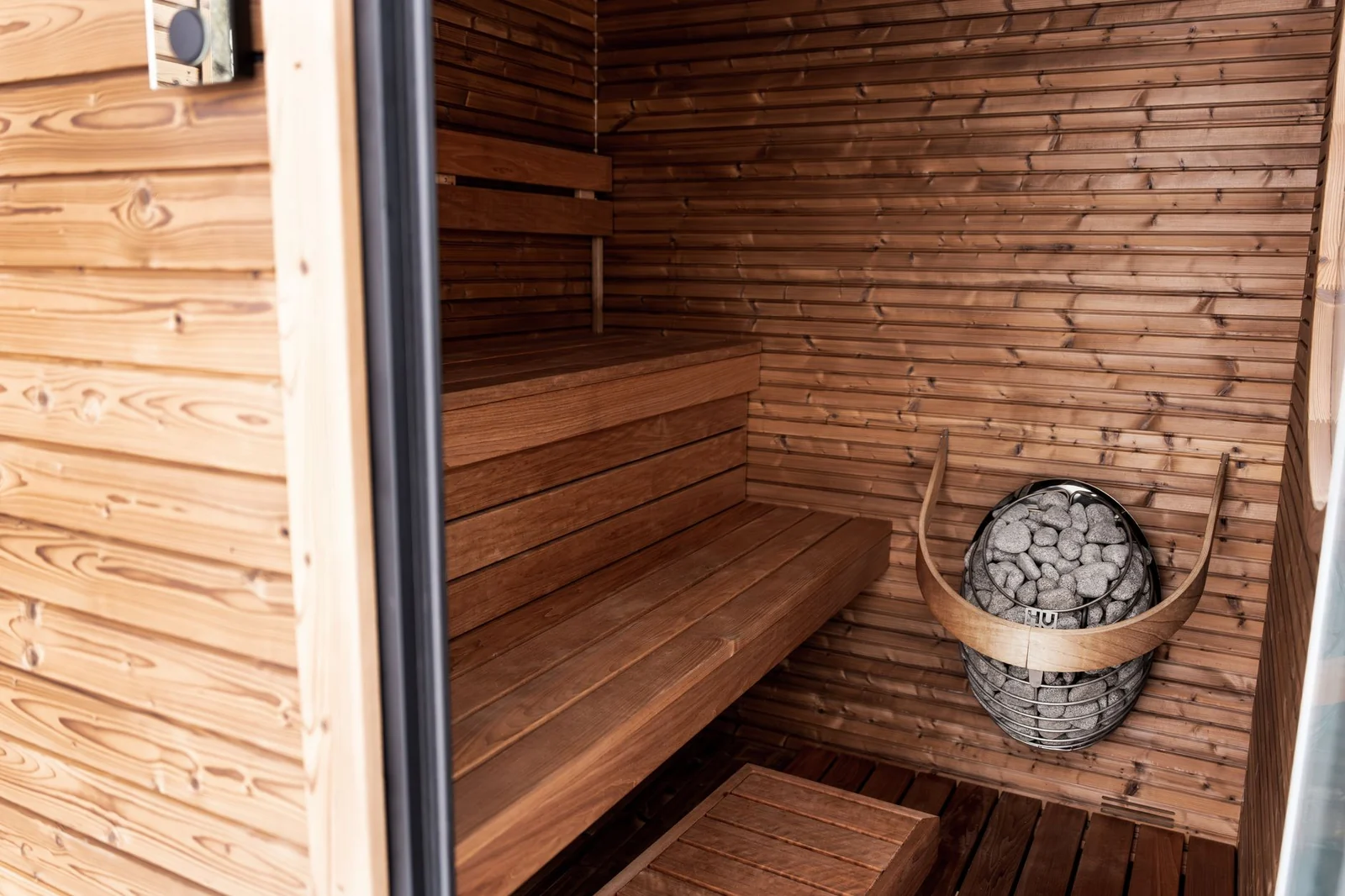
From October to April the outdoor city moves into the sauna. Winter bathing, vinterbadning, is a genuine Danish obsession: a few minutes in a wood-fired sauna on the quay, a plunge into a harbour at four or five degrees, and back into the heat, repeated until you feel extraordinary. Many of the harbour saunas are run by associations, and some open to the public on selected days, so check which ones take visitors before you go.
Refshaleøen is the easiest place to start. CopenHot hires out wood-fired hot tubs and saunas on the water by the hour, priced for groups rather than solo visitors. La Banchina, a small restaurant on the quay with its own jetty, has a little sauna of its own and is the more relaxed option. Book ahead at weekends, bring a hat for between dips, and never swim alone in winter water. Our Copenhagen in winter guide covers the rest of the cold season.
CopenHill: Ski, Climb or Walk a Power Station
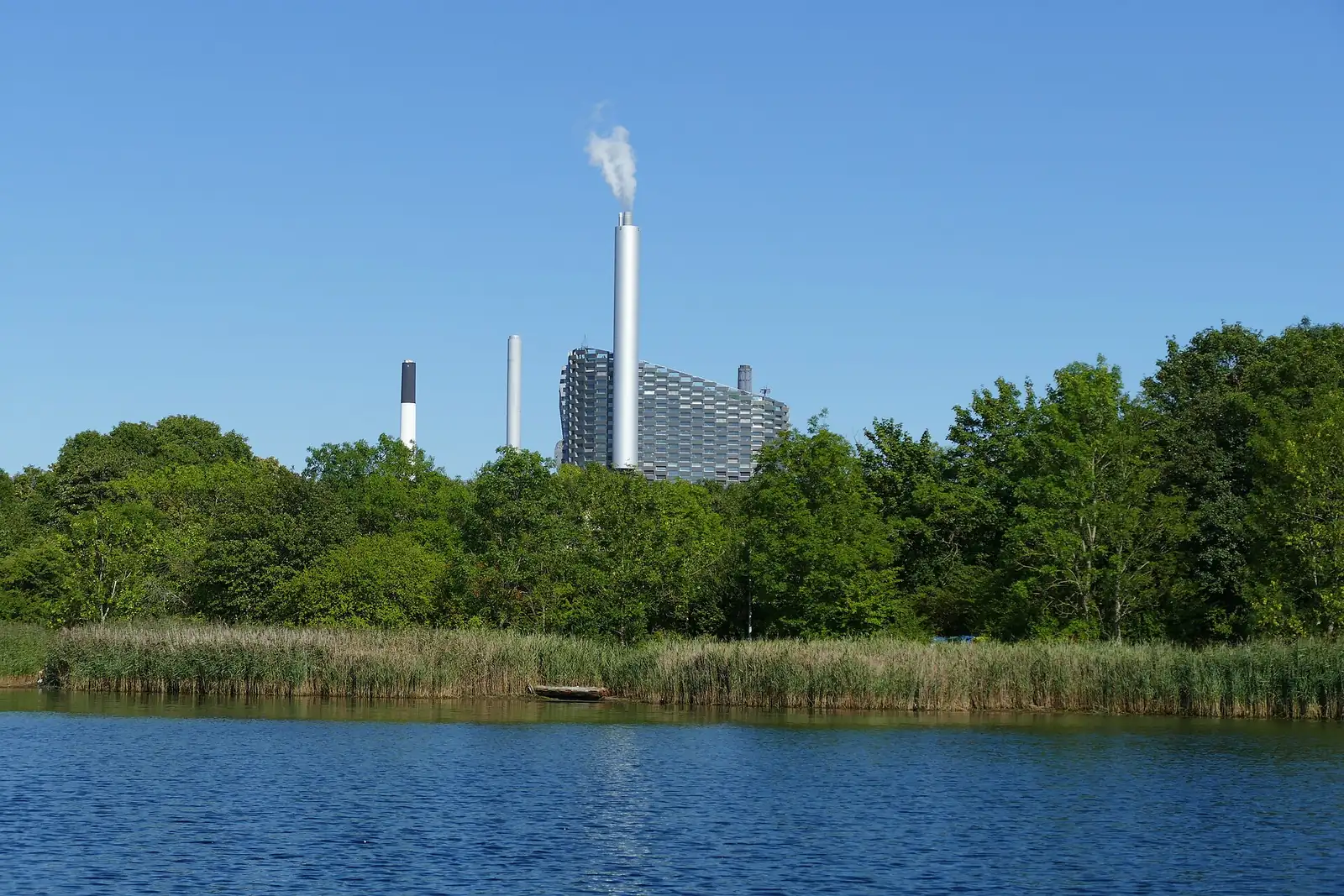
Only in Copenhagen. CopenHill is Amager Bakke, a waste-to-energy plant designed by Bjarke Ingels Group and opened in 2019, which burns the city’s rubbish to heat its homes and wears a year-round artificial ski slope, a hiking trail and, on one wall, the world’s tallest artificial climbing wall, 85 metres high.
The part most visitors miss is that the roof is free. You can walk or run up the trail, or take the lift, to the rooftop café during opening hours without paying anything, and on a clear day the view runs across the harbour, the Øresund and the whole flat sprawl of the city. Skiing costs extra, and the current prices are on copenhill.dk when you book. Hours vary with the season, the activity and the weather, so check before going.
Our verdict: the free walk to the top is one of the best views in the city and absolutely worth an hour. The skiing is a fun novelty if you already ski; it is not a reason to pack your gloves.
Dyrehaven: Deer, Forest and a UNESCO Landscape

Twenty minutes north of Central Station on the C-line S-train, Jægersborg Dyrehave is a former royal hunting forest of ancient oaks, beech woods and open grassland where herds of fallow, red and sika deer wander freely. Entry is free, it is open all year, and since 2015 it has been part of a UNESCO World Heritage Site, the par force hunting landscape of North Zealand, which few of the people jogging through it seem to know.
Walk up from Klampenborg station through the woods to the Hermitage, the royal hunting lodge that sits alone on the plain, and you will almost certainly meet deer on the way. In September and October the stags rut, and the bellowing carries across the grassland at dusk; keep your distance, because a rutting stag is not a petting-zoo animal. At the southern edge of the forest is Bakken, the old amusement park, which our Bakken guide covers. Combine both with a swim at Bellevue in summer and you have the easiest half-day escape from the city.
Picnics, Beer and the Pant Rule
The Danish way to use all of this is the picnic, and the city makes it easy. Pick up bread and pastries from a proper bakery, with our guide to the best bakeries in Copenhagen for the shortlist, or graze the market halls at Torvehallerne by Nørreport, then carry it all to the nearest lawn or quayside.
Drinking a beer in a park or on the harbourfront is legal in Denmark, a few local bans aside, and entirely normal on a summer evening; keep it relaxed and take your rubbish with you. Almost every can and bottle carries a deposit, pant, of 1 to 3 DKK, refunded by the machines in any supermarket. If you cannot be bothered, do what Copenhageners do and stand your empties next to a bin rather than in it. Collectors will take them, and it is a small, kind piece of local etiquette that most visitors never learn.
With children, add the playgrounds. Fælledparken has several, including one built from miniature copies of the city’s famous towers, and the shallow lagoon at Amager Strandpark is the gentlest swimming in town. Our guide to Copenhagen’s playgrounds has the rest.
Outdoor Copenhagen by Season
- Spring brings the cherry blossom at Bispebjerg and Langelinie in April, the parks turning green and the first brave harbour swimmers. Our spring guide has the details.
- Summer is harbour swimming, beaches, picnics and evenings that last until ten. See Copenhagen in summer.
- Autumn is the deer rut in Dyrehaven, golden beech woods, empty parks and the first sauna sessions. Our autumn guide covers the season.
- Winter is the sauna-and-sea habit, CopenHill on a crisp day and short, bright walks round the Lakes. Everything else is indoors, and that is fine.
Whatever the month, pack for wind. Copenhagen is flat and surrounded by water, and the breeze is what makes 15°C feel like 10. Our packing list goes season by season.
Further Afield: Cliffs, Islands and the Coast
If you have a spare day, Denmark’s best outdoor scenery is within reach. The white chalk cliffs of Møns Klint are the most dramatic, with steps down to a beach of flint and fossils. Stevns Klint, closer and quieter, is a UNESCO site where you can see the layer of rock that marks the extinction of the dinosaurs. Louisiana pairs a world-class art museum with a sculpture garden that runs down to the sea. And for a proper island adventure, tiny Christiansø and its bigger neighbour Bornholm are a world away. Our day trips guide ranks the lot.
Is Copenhagen Good for Outdoor Travel? The Honest Answer
From May to September, it is one of the best cities in Europe for it. The water is clean, the parks are generous, the beaches are on the metro and almost nothing costs money. In spring and autumn it is good, provided you dress for wind and accept that a sunny morning can turn into a soaking afternoon.
In winter it is honest to say that Copenhagen is not an outdoor city, with one glorious exception: the sauna and the cold plunge, which is the most Danish thing a visitor can do between November and March. The other things worth skipping, in any season, are the paid versions of free experiences. You do not need a guided tour of the Lakes, a ticket to sit by the harbour, or a canal tour to see the inner harbour when the harbour bus does it for the price of a bus fare. Save your money for a sauna, a boat you drive yourself, or a train ticket to the cliffs.
Frequently Asked Questions
What are the best outdoor things to do in Copenhagen?
Swimming in the harbour at Islands Brygge or Sandkaj, a day at Amager Strandpark or Bellevue beach, the ramparts of Kastellet, a picnic in Kongens Have, cycling the harbour, a sauna and cold dip on Refshaleøen, the free roof walk at CopenHill and the deer in Dyrehaven.
Can you swim in Copenhagen harbour?
Yes. The city runs three harbour baths and three swimming zones, all free. Swim only at the marked spots, and check the bathing water forecast after heavy rain, when the baths can close.
Is the water in Copenhagen harbour clean?
Usually, yes; the harbour was cleaned up over the past few decades and is monitored daily in the swimming season. The exception is after heavy rain, when overflow can close the baths for a day or two.
What is the best park in Copenhagen?
Kongens Have for a classic central picnic, Frederiksberg Have for a romantic stroll, Fælledparken for space and sport, and Kastellet for history and harbour views. Assistens Kirkegård is the most unusual.
For a park-by-park ranking, with the winter closing times that catch visitors out (the Botanical Garden shuts at 16:00 from 25 October), see our guide to the best parks in Copenhagen.
Is CopenHill free?
Walking or taking the lift to the rooftop is free during opening hours. Skiing, climbing and other activities are paid; check CopenHill’s own site for current prices and hours.
How do I get to the beach from Copenhagen?
Take the M2 metro to Amager Strand or Femøren for Amager Strandpark, about fifteen minutes from the centre, or the C-line S-train to Klampenborg for Bellevue beach and Dyrehaven.
What can you do outdoors in Copenhagen in winter?
Try a sauna and winter swim on the harbour, walk the Lakes or Kastellet on a bright day, and climb CopenHill for the view. Most other outdoor activities are best saved for spring to autumn.
Related Reading
- Free things to do in Copenhagen for the rest of the city’s no-cost highlights.
- Copenhagen with kids with the beaches, parks and playgrounds that work for families.
- Copenhagen weather by month to pick the right season for the outdoors.
- Copenhagen walking tours if you would rather explore on foot with a guide.
Photo Credits
- CopenHill, the Amager Bakke waste-to-energy plant with a ski slope on its roof, rising above trees and reeds across the water: photo by Kritzolina, Power plant with ski slope Amager Bakke 05.jpg, CC BY-SA 4.0
Final Thoughts
The best outdoor afternoons in Copenhagen rarely involve a ticket. They look like a swim off the steps at Sandkaj, a cycle over the harbour, a cinnamon bun on the ramparts of Kastellet, and a slow walk home round the Lakes as the light goes. The city has spent decades and a great deal of money making its water and green spaces usable by everyone, and it shows.
So plan your trip around the weather rather than the sights. On the grey days, go to the museums. On the bright ones, get outside, because Copenhageners certainly will.
Last verified: October 2026. Swimming spots, sauna operators and CopenHill prices change; check the city’s bathing water forecast and each operator’s own site before you go.