
Stand on the beach below the cliffs at Stevns Klint and run your finger along a thin, dark band of clay in the chalk wall. You are touching the exact moment the dinosaurs died — the layer of iridium-rich “fish clay” laid down 66 million years ago when an asteroid slammed into the planet off Mexico. That single, quiet stripe of sediment is why Stevns Klint is a UNESCO World Heritage Site, and why a Stevns Klint day trip is the most quietly mind-bending excursion you can take from Copenhagen.
And then, as if one extinction-level story weren’t enough, you can descend 18 metres underground into a Cold War fort built to survive the next apocalypse. Cliffs that mark the end of the dinosaurs, a bunker built against nuclear war — all within an hour of the city. Here’s how to do it in 2026.
Stevns Klint day trip at a glance
- Distance: ~65 km south of Copenhagen
- By car: about 1 hour
- By public transport: around 1.5 hours via Køge
- Why it matters: a UNESCO Site exposing the dinosaur-extinction boundary
- Stevns Klint Experience: 150 DKK adult, under-18s free
- Add-on: the underground Cold War Museum at Stevnsfort
- Time needed: half a day for the cliffs; a full day with both museums
How to get to Stevns Klint from Copenhagen
By public transport
It’s an easy-ish chain. Take an S-train (line A) or regional train from Copenhagen to Køge (about 40 minutes), then change to the Østbanen local line toward Rødvig. From Rødvig station it’s a roughly 2-kilometre walk along the clifftop Trampesti path to the Stevns Klint Experience visitor centre. Alternatively, ride to Store Heddinge and take bus 252 to Højerup for the old church. The whole journey is about 1.5 hours — check live times on Rejseplanen, as the local train and bus run less often than the mainline. My getting around Copenhagen guide explains the ticket system.
By car
Driving is quickest at about 1 hour (65–74 km). There’s free parking at the Stevns Klint Experience and at Stevns Lighthouse, while parking at Højerup costs around 50 DKK during the day. A car makes it far easier to string together the church, the visitor centre and the Cold War fort, which are spread along the coast.
By tour
Full-day guided minibus tours run from Copenhagen (around 8 hours) and typically include the Experience museum and Stevnsfort — a tidy option if you’d rather not juggle the connections.
Why Stevns Klint is a UNESCO Site
This is the part worth slowing down for. The cliff — about 41 metres high and 17 kilometres long, made of white chalk and bryozoan limestone — was inscribed by UNESCO in 2014 for one extraordinary reason: it contains the world’s best-exposed K-Pg boundary (the Cretaceous–Paleogene line). That dark seam of “fish clay,” just a few centimetres thick, is enriched with iridium — an element rare on Earth but common in asteroids — and it provided key evidence for the theory that a giant impact wiped out three-quarters of life on the planet, dinosaurs included. You are literally looking at the geological record of a mass extinction. I never get tired of that.
Højerup Old Church
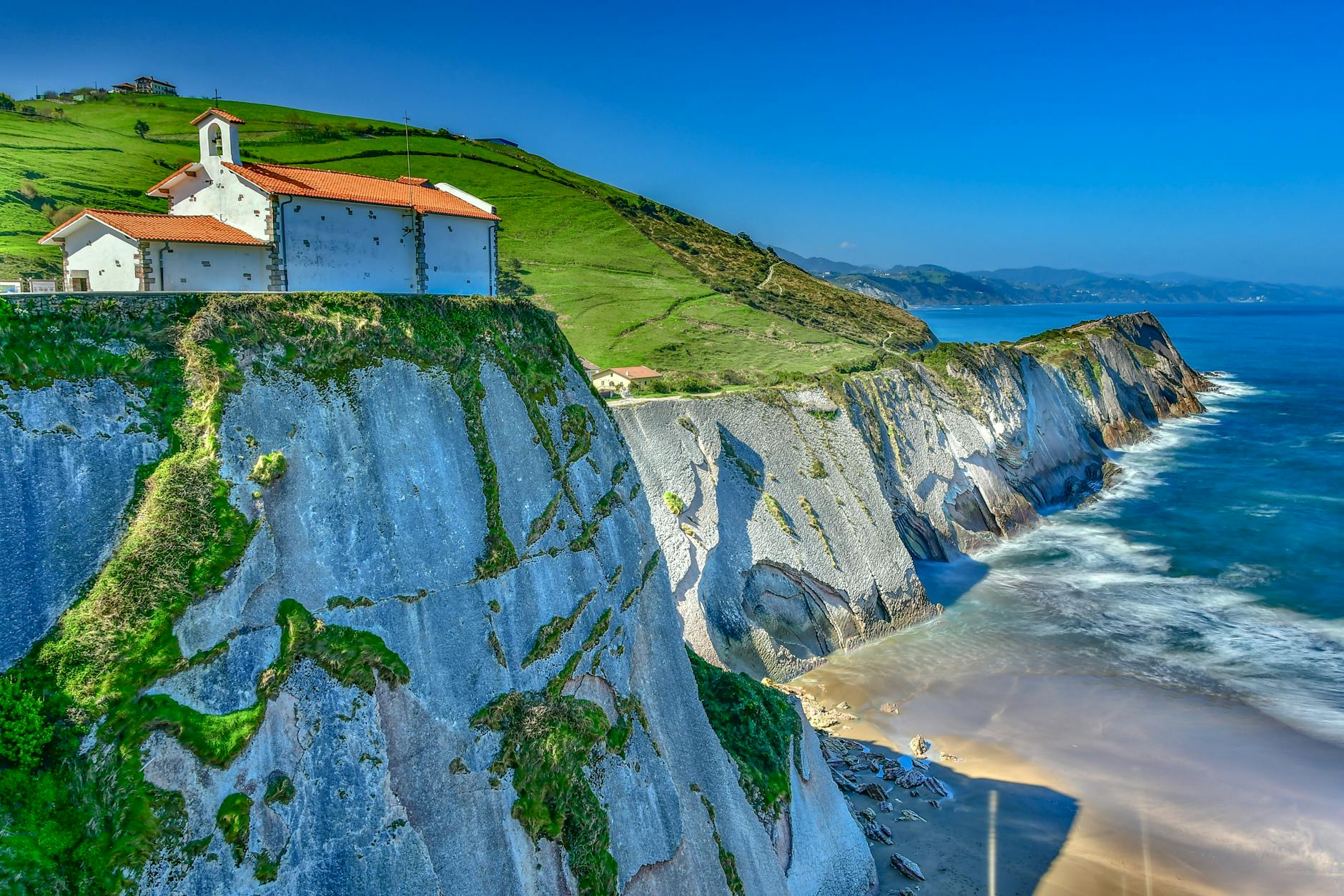
Perched dramatically on the very edge of the cliff is Højerup Old Church (Højerup gamle Kirke), built around 1250. Erosion has been eating the cliff for centuries, and in 1928 the church’s choir collapsed straight into the sea. The rest was saved and shored up with a concrete bastion, and the little terrace behind it offers the best cliff views around.
The Stevns Klint Experience
Opened recently, the Stevns Klint Experience visitor centre (Boesdalsvej 14, near Rødvig) tells the geology story with modern exhibits, a café and shop. Admission is 150 DKK for adults, 130 for students and seniors, and free for under-18s. It’s open daily 10:00–17:00 in peak season (1 June–28 September) and Tuesday–Sunday 10:00–16:00 the rest of the year (closed Mondays). It’s fully accessible, with free lockers and EV charging.
The discovery that rewrote history
It’s worth lingering on why that thin clay layer matters so much, because Stevns Klint played a starring role in one of science’s great detective stories. For a long time, nobody knew why the dinosaurs and so much other life vanished so abruptly 66 million years ago. Then, in 1980, physicist Luis Alvarez and his geologist son Walter found that the boundary clay — at sites including Stevns Klint — contained far more iridium than Earth’s crust normally holds. Iridium is rare on the surface of our planet but common in asteroids and comets. Their conclusion, radical at the time: a massive impact had thrown a global dust cloud into the sky, blotting out the sun and collapsing the food chain. The crater was later found at Chicxulub off Mexico. The dark seam you can touch at Stevns Klint is some of the best-preserved physical evidence of that day anywhere on Earth — which is precisely why UNESCO listed it. Reading the story and then standing at the layer is genuinely spine-tingling.
The Cold War fort: Stevnsfort
Now for the plot twist. A short way along the coast, the Cold War Museum Stevnsfort (Koldkrigsmuseum Stevnsfort) is a NATO bunker complex carved into the limestone, with around 1.7 kilometres of tunnels roughly 18 metres underground (there’s a lift), kept at a chilly 10°C year-round. Above ground stand HAWK missile launchers and naval guns; below, you tour the command rooms that would have run a hot war in the Baltic. The underground section is visited by guided tour — there’s an English tour, “The Secrets of Stevnsfort” — for around 190 DKK. Bring a sweater. It’s open roughly spring through November (closed December), so check current hours before you go.
The cliff walk, the beach and fossils
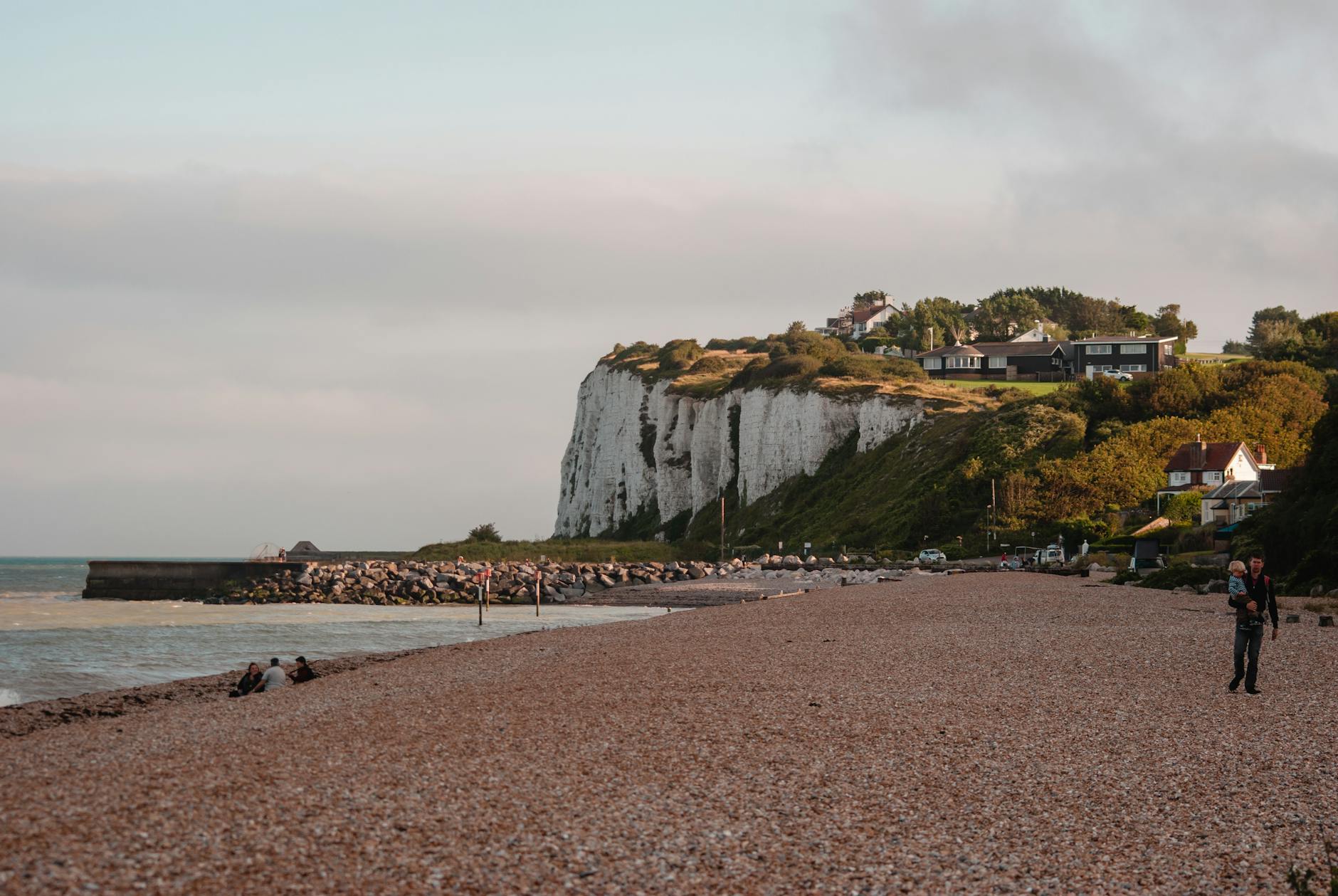
The Trampesti coastal path runs the length of the cliffs (somewhere between 18 and 22 km end to end), an easy clifftop walk with several wooden staircases down to the pebble beach. One of the most atmospheric spots is the Boesdal Limestone Quarry, a former works where a blasted tunnel lets you walk straight through the cliff to the shore.
A quick fossil-hunting guide
Half the fun of the beach is leaving with a souvenir from the deep past. The chalk and limestone here are full of sea urchins (echinoids), belemnites (bullet-shaped fossils of squid-like creatures), bivalves and bands of black flint. The trick is to search the loose, fallen debris at the foot of the cliff rather than hacking at the cliff face — which is both protected and dangerous. Look for regular geometric shapes among the pebbles; a sea-urchin fossil has a distinctive five-pointed star pattern. Lucky hunters have found fossilised shark teeth. You’re free to keep ordinary finds, but rare specimens should be reported. Bring a small bag and grippy shoes, and check the tide and weather before you scramble down.
A DIY full-day itinerary
- 9:00 am — Train from Copenhagen to Køge, change to the Østbanen line toward Rødvig.
- 10:15 am — Arrive Rødvig; walk the Trampesti path to the Stevns Klint Experience.
- 10:45 am — The visitor centre and the geology exhibits.
- 11:45 am — Walk to Højerup Old Church and the cliff-edge viewpoint.
- 12:30 pm — Down a staircase to the beach to find the boundary layer and hunt fossils.
- 1:30 pm — Lunch at Traktørstedet Højeruplund (seasonal) or a packed picnic.
- 2:30 pm — Guided tour of the underground Stevnsfort Cold War bunker.
- 4:30 pm — Train back toward Copenhagen.
Without a car, you’ll likely choose either a long morning at the cliffs or the fort tour, depending on the local timetable — check Rejseplanen and the fort’s tour times the night before so you don’t get caught out.
Where to eat
Right by Højerup church, Traktørstedet Højeruplund has served traditional Danish food with cliff views since 1846 (check seasonal hours). There’s also the café at the Experience centre, and the harbour town of Rødvig has more options if you want a proper sit-down meal. Picnic tables at Boesdal make a fine spot to bring your own.
Visiting Stevns Klint with kids
The “dinosaur extinction” angle is catnip for children, and it makes the science come alive in a way no classroom can. The Stevns Klint Experience is interactive and free for under-18s, the fossil hunt on the beach is a built-in treasure hunt, and older kids will be wide-eyed in the Cold War bunker. Mind the unfenced clifftop edges and the slippery beach, and bring warm layers (the fort sits at a constant 10°C). The staircases down to the shore are a workout for small legs, so build in time and snacks. All in, it’s one of the most educational fun days you can give curious children near Copenhagen — see our full guide to Copenhagen with children for more family-friendly ideas.
Best time to visit
Aim for May to September, when both museums are open and the weather cooperates; weekdays and the shoulder seasons are quietest. The cliffs face east, so this is a sunrise rather than a sunset spot. Bring windproof layers whatever the forecast — it’s exposed coastline — plus an extra sweater for the cold fort. For seasonal planning, see my best time to visit Copenhagen guide.
Mistakes to avoid
- Visiting the museums on a winter Monday. The Experience closes Mondays off-season; the fort closes in December.
- Wearing the wrong shoes. The beach and staircases are slippery — grippy footwear only.
- Digging into the cliff for fossils. Search the fallen debris on the beach instead; the cliff is protected and unstable.
- Underestimating the wind. It’s an exposed clifftop; bring layers even in summer.
- Rushing it. Give the cliffs at least 2–3 hours; a full day if you add the fort.
Is a Stevns Klint day trip worth it?
If you have any curiosity about the natural world, this is one of the most genuinely awe-inspiring things you can do near Copenhagen — and it’s far less visited than it deserves. The combination of deep geological time and Cold War history makes it unlike any other day trip on this list — for a different kind of remote adventure, the sunny Baltic island in our Copenhagen to Bornholm guide is worth a look. Pair it with Denmark’s other great chalk cliff for a perfect geology weekend — see my Møns Klint day trip guide — or browse all the day trips from Copenhagen to plan your route.
The Boesdal quarry and Stevns Lighthouse
Beyond the famous church and the boundary layer, the Stevns coast has a couple of atmospheric extras worth your time. The Boesdal Limestone Quarry (Boesdal Kalkbrud) is a former chalk-and-lime works, active until the 1970s and now a hauntingly beautiful recreational space — picnic tables, a striking conical event hall nicknamed “the Pyramid,” and, best of all, a blasted tunnel that lets you walk right through the cliff to the beach. A little further along, Stevns Lighthouse marks the highest point of the cliff, with sweeping views over the Baltic and free parking nearby. These quieter spots see a fraction of the visitors who cluster at Højerup church, so they’re perfect for a peaceful stretch of the walk.
Walking the Trampesti
The Trampesti (“trampled path”) is the clifftop trail that runs the length of Stevns Klint, roughly between Rødvig and Bøgeskov, and walking even a section of it is the best way to feel the scale of the place. It’s a relatively easy, mostly level path along the cliff edge, threading between the visitor centre, Højerup, Boesdal and the lighthouse, with wooden staircases dropping down to the beach at intervals. You don’t need to walk the whole thing — a two-to-three-kilometre stretch around Højerup and Boesdal captures the drama. Just keep back from the unfenced edge, which erodes, and wear shoes that cope with mud and the pebbly beach if you descend.
Combine with Køge old town
Since the public-transport route to Stevns passes through Køge, it’s easy to bolt on a stop in this underrated old market town on your way back. Køge has one of Denmark’s best-preserved historic squares, Torvet, ringed by colourful half-timbered houses, plus charming cobbled lanes and a pleasant harbour. A coffee and a wander for an hour rounds out the day nicely, and it breaks up the journey home. It’s the kind of low-key Danish town that rarely makes the guidebooks but quietly charms everyone who stops.
Practical tips and accessibility
A few pointers. The Stevns Klint Experience visitor centre is modern and fully accessible, with a café, free lockers and EV charging — a good base and warm-up before the cliffs. The cliff path and the staircases to the beach are not wheelchair- or buggy-friendly, but the clifftop viewpoints near the church and the centre are reachable on level ground. The underground Cold War fort involves stairs (with a lift option) and stays at a constant 10°C, so bring a sweater even in July. Carry water and a packed lunch if you’re doing the full day, and always check current opening times for the fort and the seasonal restaurant before setting out.
Why Stevns Klint stays with you
Some sights impress in the moment and fade; Stevns Klint tends to lodge in the memory, and I think it’s because of the ideas it makes physical. Most of us understand the dinosaur extinction as an abstract fact from a documentary. Here you can put your finger on the evidence — a literal line in the rock that marks the before and after of the worst day in the history of life on Earth. Then you descend into a Cold War bunker built because humans had, for the first time, the power to cause an extinction of their own. Two apocalypses, 66 million years apart, in one afternoon by the sea. It’s a quietly profound place dressed up as a pleasant cliff walk, and that combination of beauty and big ideas is what makes the trip worth the slightly fiddly journey. Go on a clear day, take your time, and let it sink in.
Frequently asked questions
How do I get to Stevns Klint from Copenhagen?
By car it’s about an hour. By public transport, take a train to Køge, change to the Østbanen line toward Rødvig, then walk about 2 km to the cliffs — roughly 1.5 hours in total.
Why is Stevns Klint a UNESCO World Heritage Site?
Because the cliff exposes the K-Pg boundary — the iridium-rich “fish clay” layer documenting the asteroid impact that wiped out the dinosaurs 66 million years ago.
Can you walk down to the beach at Stevns Klint?
Yes — several wooden staircases lead down from the clifftop Trampesti path, and a tunnel at the Boesdal quarry passes through the cliff to the shore.
How much does the Stevns Klint Experience cost?
150 DKK for adults, 130 for students and seniors, and free for under-18s. The cliffs and beach themselves are free.
Is there a Cold War museum at Stevns Klint?
Yes — Stevnsfort is an underground NATO bunker complex you can tour, with guided visits around 190 DKK; it’s open roughly spring to November.
Can you find fossils at Stevns Klint?
Yes — sea urchins, belemnites, bivalves and flint are common in the fallen debris on the beach. Search the loose material, not the protected cliff face.
For Denmark’s other spectacular UNESCO chalk cliff, see the Møns Klint day trip, and for a wilder island adventure, the Christiansø day trip.
Last updated: July 2026. Photos via copenhagentourism.org.


