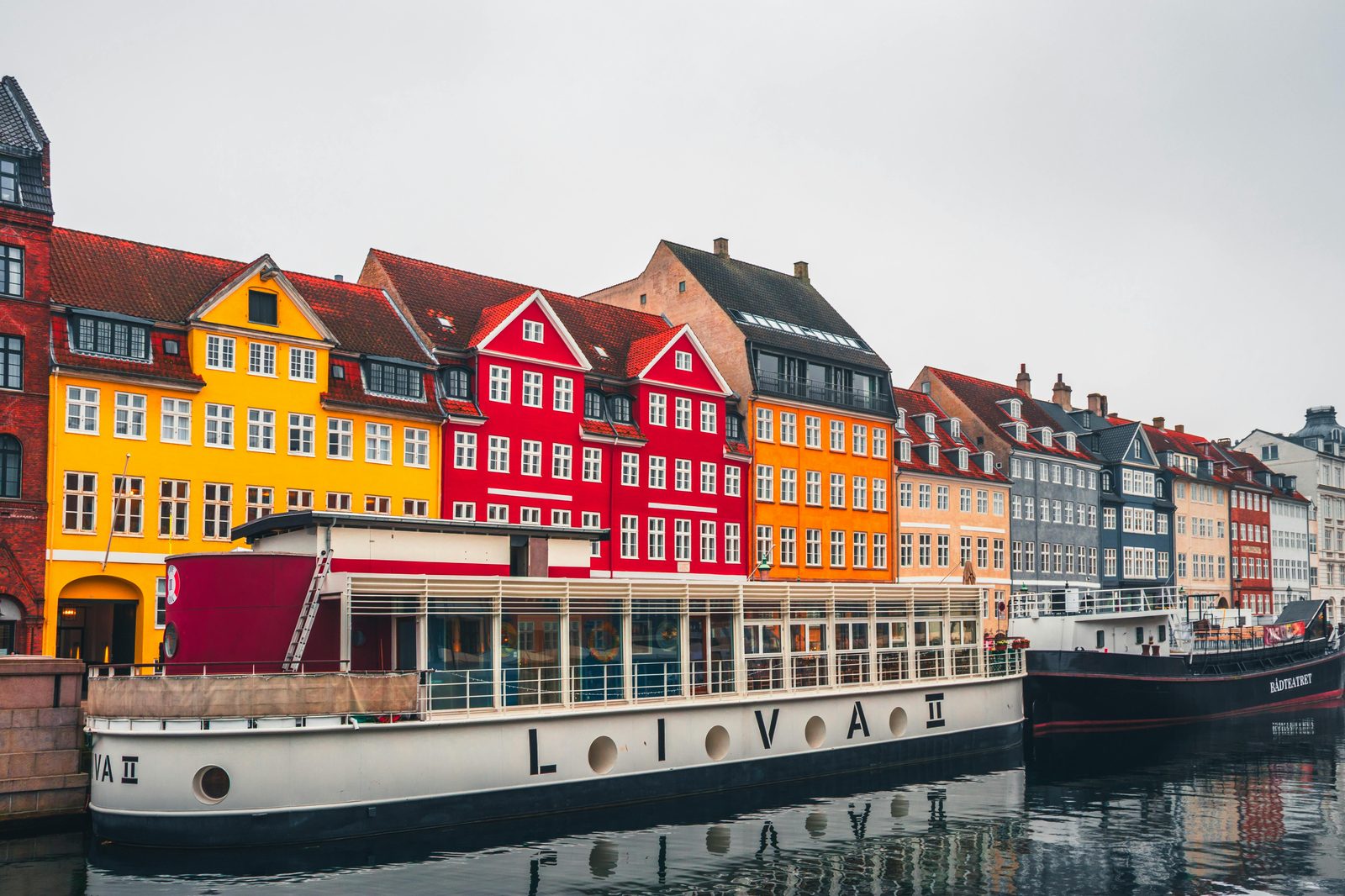
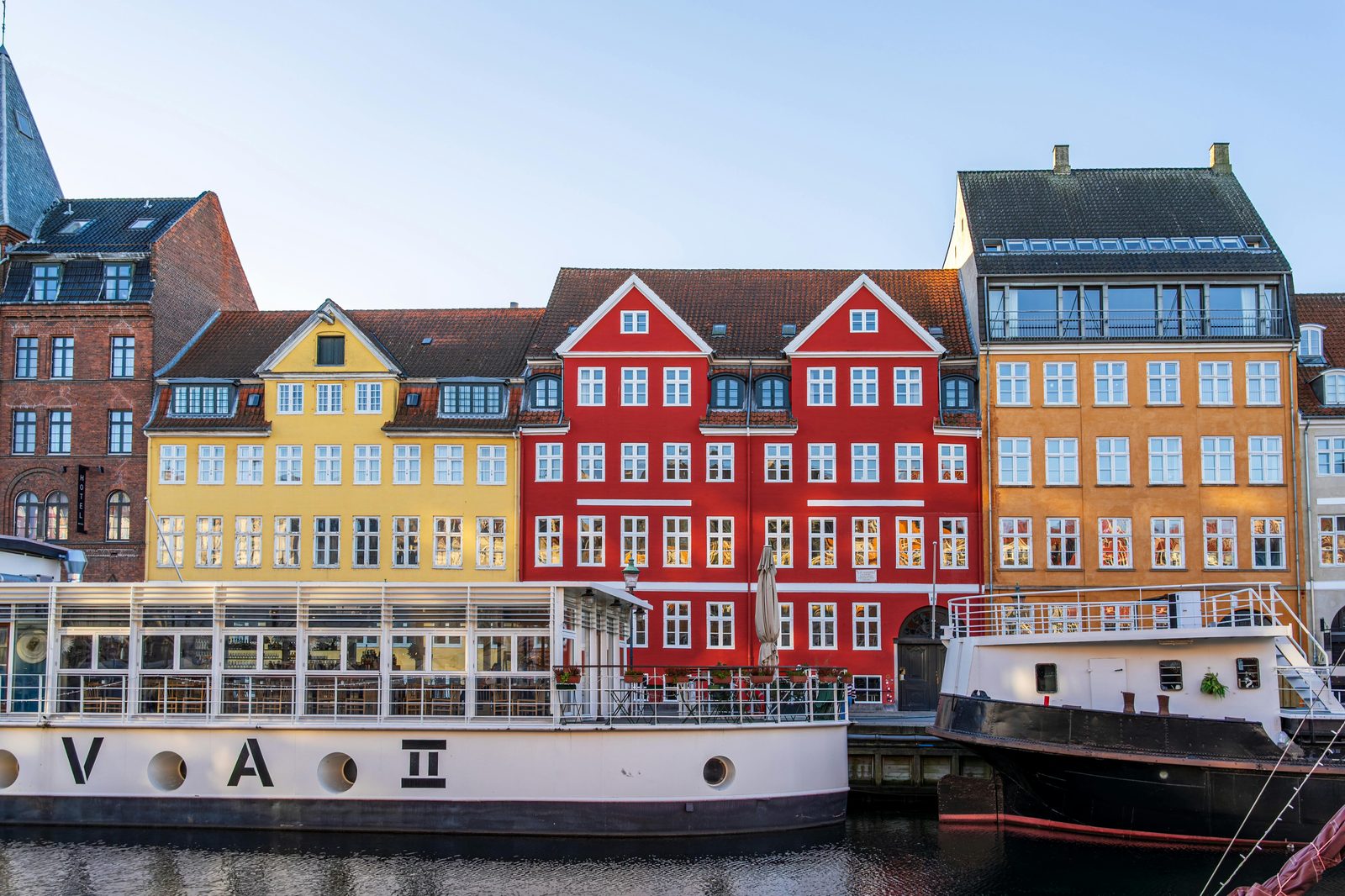
You’ve seen this place before you arrive. The row of lacquered townhouses in ochre, crimson and mustard, the wooden schooners on the water, the whole postcard — Nyhavn is one of Copenhagen’s most photographed spots, and one of the first stops on any list of things to do in Copenhagen.
Nyhavn (“New Harbour”) is a canal about 450 metres long in central Copenhagen, dug in the 1670s and lined with 17th-century houses. Come to walk the sunny north quay, photograph the boats and catch a canal tour — but eat elsewhere, because the terrace restaurants charge a steep view premium. This Nyhavn Copenhagen guide covers the history, the food trap, the best photo times and the corners most visitors miss.
Nyhavn Copenhagen at a Glance
Before the history and the practical tips, here are the essentials at a glance.
| Fact | Detail |
|---|---|
| Meaning | “Nyhavn” = “New Harbour” in Danish (pronounced nu-HOWN) |
| Built | From 1670, under King Christian V |
| Length | About 450 metres (Kongens Nytorv → Inner Harbour) |
| Famous residents | Hans Christian Andersen (at nos. 18, 20, 67) |
| Oldest house | Nyhavn 9 (1681) — original red townhouse |
| Christmas market | Check this year’s dates |
| Best time to photograph | Early morning (7:00–9:00) or sunset |
| Canal boat tours | Several departures a day from Nyhavn, most frequent in summer |
| Nearest metro | Kongens Nytorv (M1, M2, M3, M4) |
| Walking time | A short walk from the Royal Palace; Tivoli is across the old centre, or two M3 stops (Kongens Nytorv to Rådhuspladsen) |
A Brief History of Nyhavn
Nyhavn was dug from 1670 on the orders of King Christian V. It was a working commercial harbour for the better part of 300 years — ships unloaded fish, coal and timber directly onto Kongens Nytorv, and the colourful townhouses were built to house the merchants, sailors and dock workers who ran the port. By the 19th century Nyhavn had a reputation as a rough sailor’s quarter — full of taverns, brothels and tattoo parlours. Hans Christian Andersen moved in anyway.
Nyhavn’s commercial decline started in the 1950s as ships grew too large for the canal. The pedestrianisation you see today began in 1980, when the quay was closed to cars and the restaurants spread along the townhouses of the north side. Today it is one of the most visited corners of Copenhagen.
The colours of the houses are a signature design decision rather than a historical accident. The lacquered palette was standardised in the 1970s restoration as part of a conservation effort — a similar strategic colour scheme was later copied in Bryggen (Bergen) and Stavanger old town.
The Colourful Houses of Nyhavn
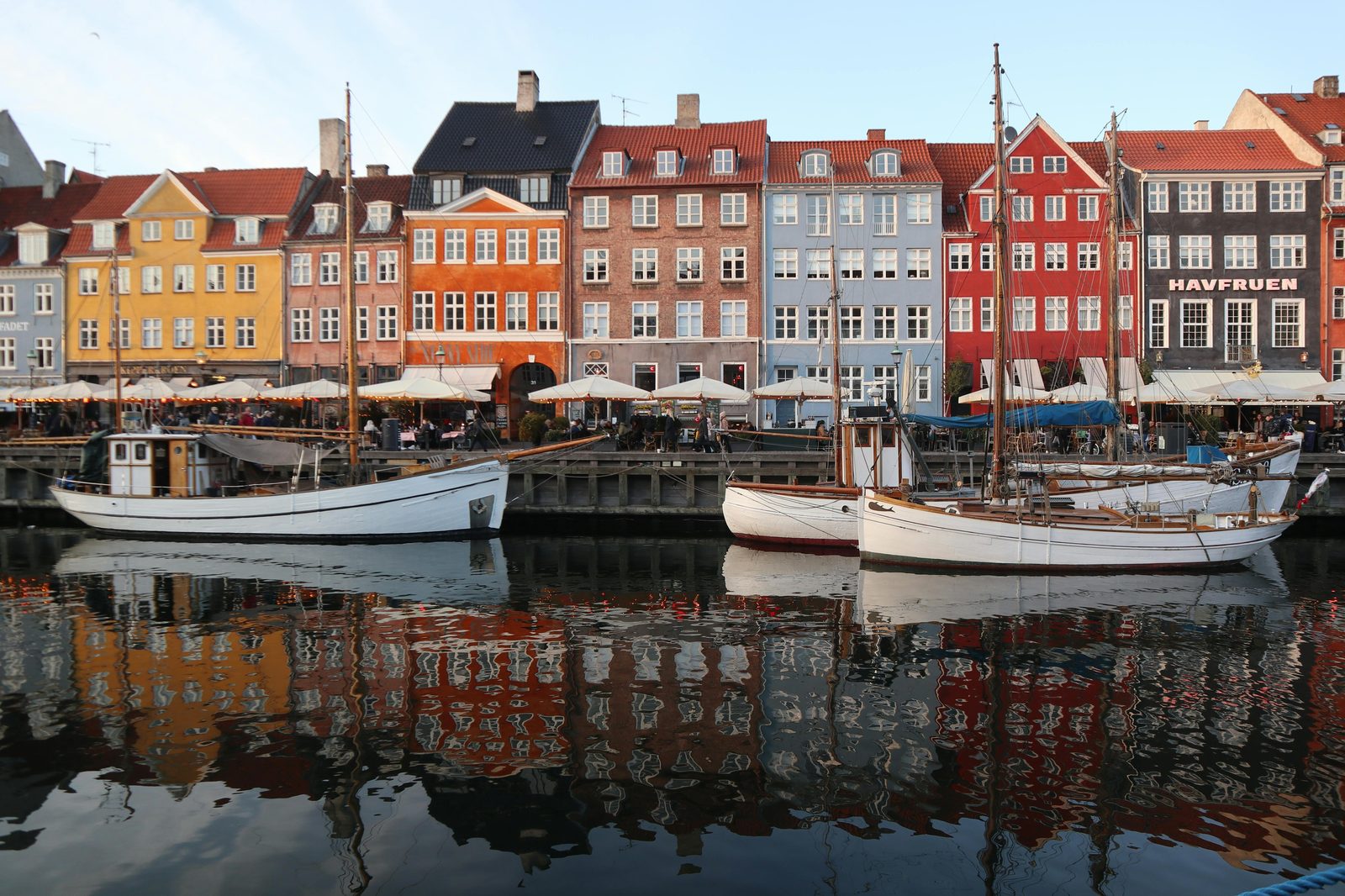
The most frequent question from visitors: are the Nyhavn houses original? Mostly yes. The oldest house is Nyhavn 9, built in 1681, and several others date from the 1680s and 1690s. The facades are wood-framed and rendered in the “bindingsværk” tradition (half-timbering visible as dark wood stripes against painted plaster). The colours alternate — no two adjacent houses wear the same shade, a rule enforced by Copenhagen’s city heritage office.
The palette uses eight traditional pigments — ochre yellow, oxblood red, indigo blue, bottle green, mustard, pink, cream and chocolate brown. These were the affordable natural pigments available in the 17th century. The gloss finish is a later addition — boat-lacquer was only applied from the 1960s — and is what makes Nyhavn so vivid in photographs.
Hans Christian Andersen in Nyhavn
Hans Christian Andersen lived in Nyhavn for about 18 of his 70 years, at three different addresses. All three are worth a moment of respect on your walk:
- Nyhavn 20 — Andersen’s first Nyhavn address. He wrote his first novel “Improvisatoren” here.
- Nyhavn 67 — Where he lived from 1845 to 1864, the years of “The Little Match Girl” (1845), “The Red Shoes” and other fairy tales.
- Nyhavn 18 — His final Nyhavn address, from 1871 to 1875.
Nyhavn 67 carries a memorial plaque — look up, not at the menus on the ground floor. The other two addresses are worth a glance as you walk the quay.
Where to Eat in Nyhavn (Honestly)
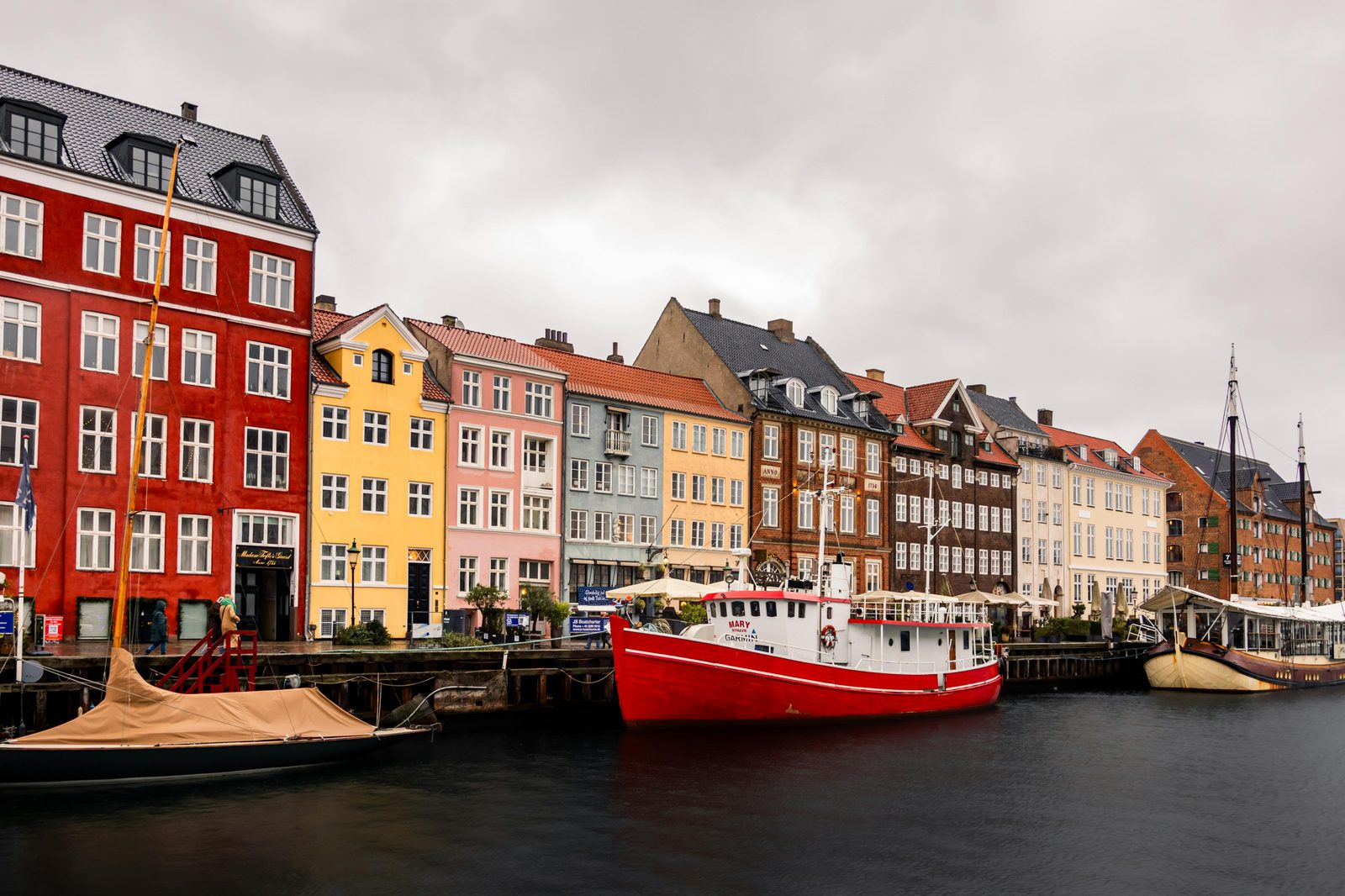
Here is the honest truth: most Nyhavn restaurants are tourist traps by Danish standards. The food is decent but overpriced, the service is rushed, and the view is priced into every plate. That said, there are three genuine reasons to eat on Nyhavn: the view, the summer terrace atmosphere, and a handful of restaurants that actually earn their prices. The full Copenhagen food scene lives elsewhere — see our Copenhagen food guide for where locals actually eat.
Worth the Premium
- Cap Horn (Nyhavn 21) — Organic, Danish-French. Traditional smørrebrød at lunch, modern French at dinner. Solid but not revelatory.
- Nyhavns Færgekro (Nyhavn 5) — Classic Danish menu including the infamous “herring buffet” at lunch (195 DKK for 12 homemade herring specialities). Touristy but authentic.
- Restaurant Kronborg (Brolæggerstræde 12) — Not on Nyhavn but a short walk away, and mainly a lunch place. The best smørrebrød Copenhagen has kept hidden from tourists.
Avoid
- Any restaurant with a cardboard sign in five languages out front. If they’re advertising to English, German, Spanish, Italian and Chinese, they’re not cooking for locals.
- Any quayside table charging more than 95 DKK for a Carlsberg half-litre.
- The ice-cream kiosks on the quay. Walk over to Conditori La Glace (Skoubogade 3) instead for infinitely better ice cream.
Canal Tours from Nyhavn
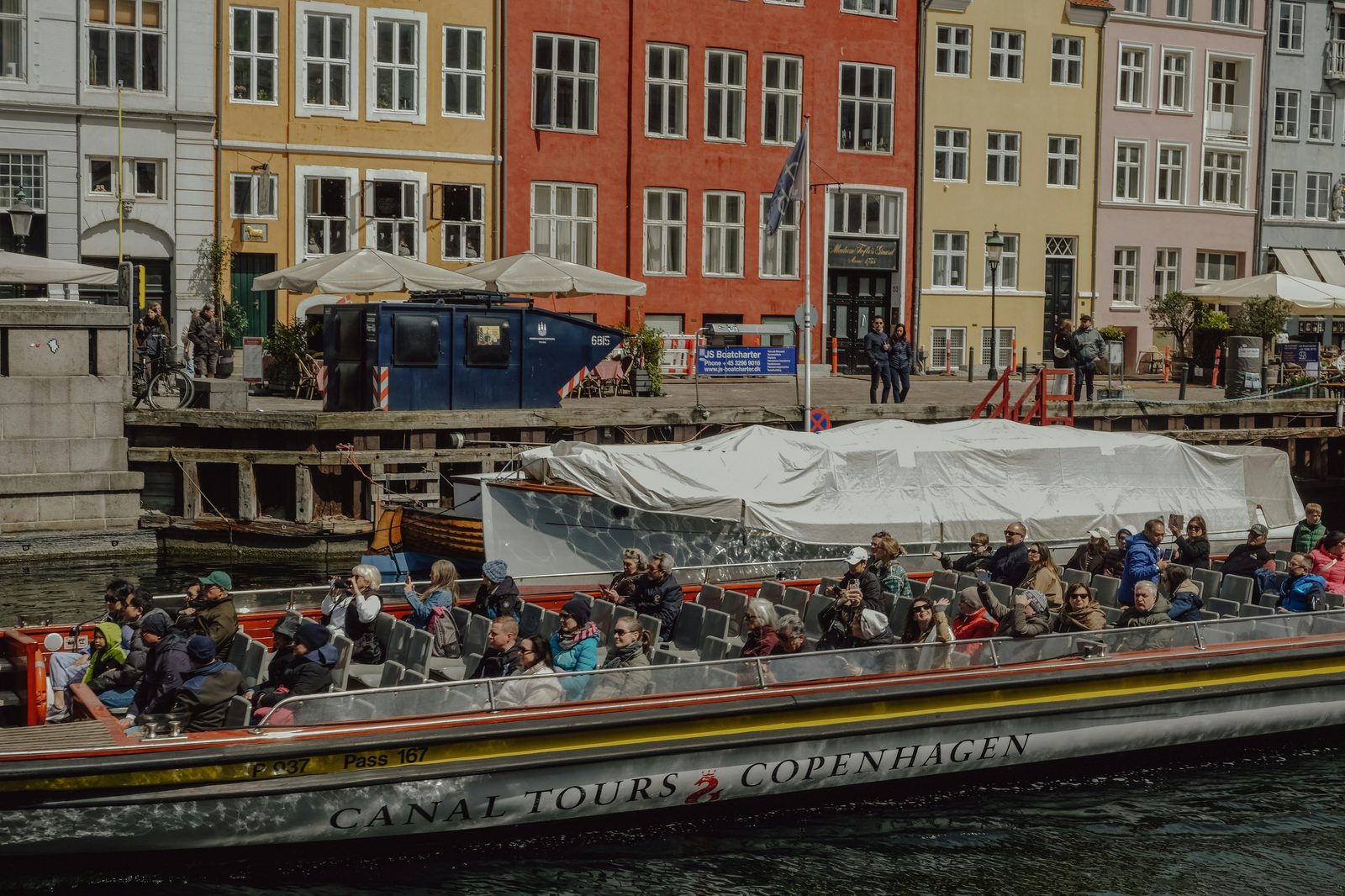
Nyhavn is the main departure point for Copenhagen canal tours. Two major operators, Netto-Bådene and Stromma, sail from here, with several departures a day and the busiest timetables in summer; check the day’s sailings on the operator’s site before you go. A one-hour tour covers the Little Mermaid, the Black Diamond royal library, the Opera House, Christianshavn and the underside of Inderhavnsbroen — and it’s genuinely the most flattering way to see the city.
| Operator | Departure | Price (adult) | Languages |
|---|---|---|---|
| Netto-Bådene | Nyhavn or Holmens Canal | 80 DKK / 1 hour (children 3–14: 40 DKK) | Danish, English and German (live guide) |
| Stromma Classic Canal Tour | Nyhavn 3 or Ved Stranden 26 | 209 DKK / 1 hour (135 DKK early-bird online) | English live guide |
| Hey Captain Landmarks | Ofelia Plads (near Nyhavn) | 250 DKK / 1 hour | Check when booking |
| Go-Boat self-drive | Islands Brygge (not Nyhavn, 15 min walk) | From 549 DKK for a boat of 8 (varies by time and season) | Self-drive |
Which to pick: For first-timers, the cheap Netto-Bådene tour is perfectly good and cheaper. For a more entertaining tour with a real guide, pay the extra for Stromma’s Hey Captain. Both run throughout the year; winter tours are in heated covered boats.
The Copenhagen Card includes one free Netto-Bådene tour, which can tip the card into good value for a two-day visitor even before you count free museum entry and public transport.
Nyhavn by Season
Nyhavn Copenhagen has four distinct personalities across the year. Peak summer is a different place entirely from quiet winter, and the Christmas market gives the quay another feel again. Choose your season carefully.
Summer Nyhavn (May–September)
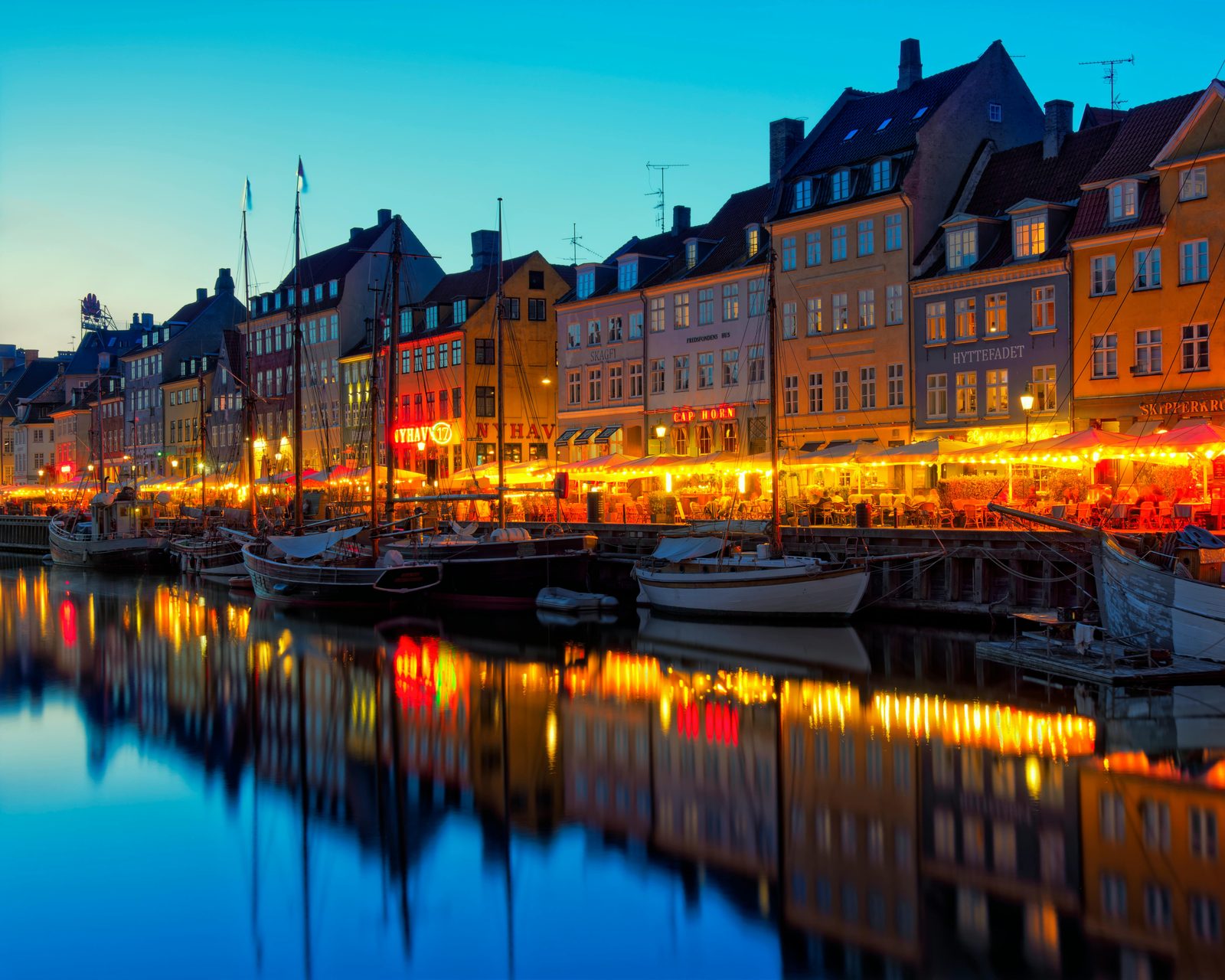
Peak Nyhavn is June through August, when the restaurants spill onto the cobbles and canal tours leave throughout the day. Summer is when the photographs earn their reputation. Long Copenhagen evenings give you a late golden hour — shadows long, sun low across the house fronts, and the colours at their most intense.
Avoid summer Fridays and Saturdays after 18:00 if you value space. Monday, Tuesday and Wednesday evenings are dramatically quieter but still warm.
Autumn Nyhavn (October–November)
Cooler weather, shorter days, dramatic light. By late October golden hour arrives in the afternoon — the rarest and prettiest time to photograph Nyhavn. Fewer tourists; locals return to their favourite harbourside bars.
Christmas at Nyhavn
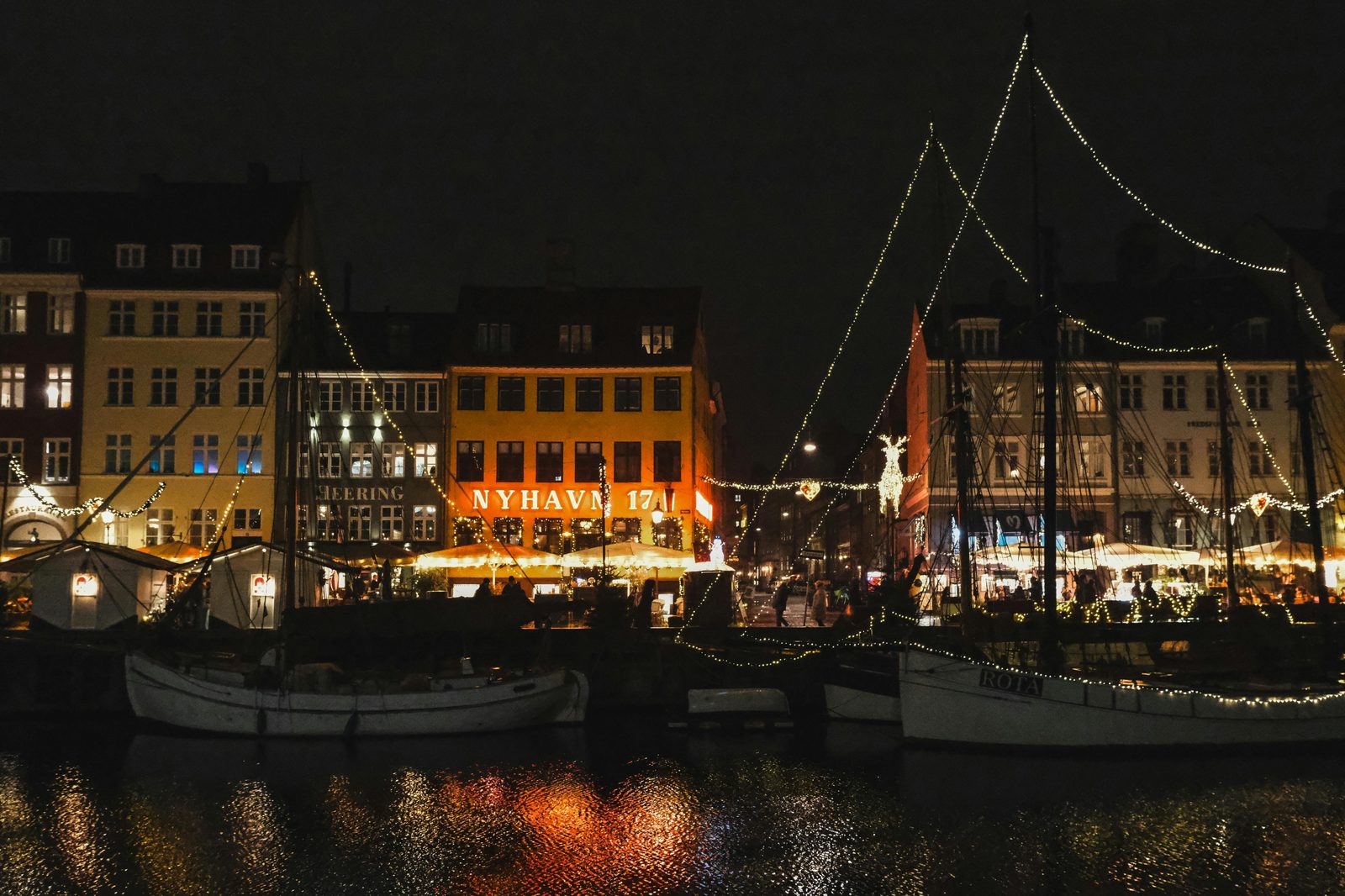
The Nyhavn Christmas Market is Copenhagen’s most atmospheric. Wooden stalls take over the quay for the festive season, selling gløgg (Danish mulled wine), æbleskiver (sugar-dusted pancake balls with jam), Danish-design gifts and hand-felt wool goods. Check this year’s dates and opening hours on the organisers’ site before you plan an evening around it.
Because it’s outdoors and dark by 16:00 in Danish December, the market is at its best from 17:00 onwards. Combine with Tivoli’s Christmas market, on the far side of the old centre, for the definitive Copenhagen Christmas evening.
Winter Nyhavn (January–March)
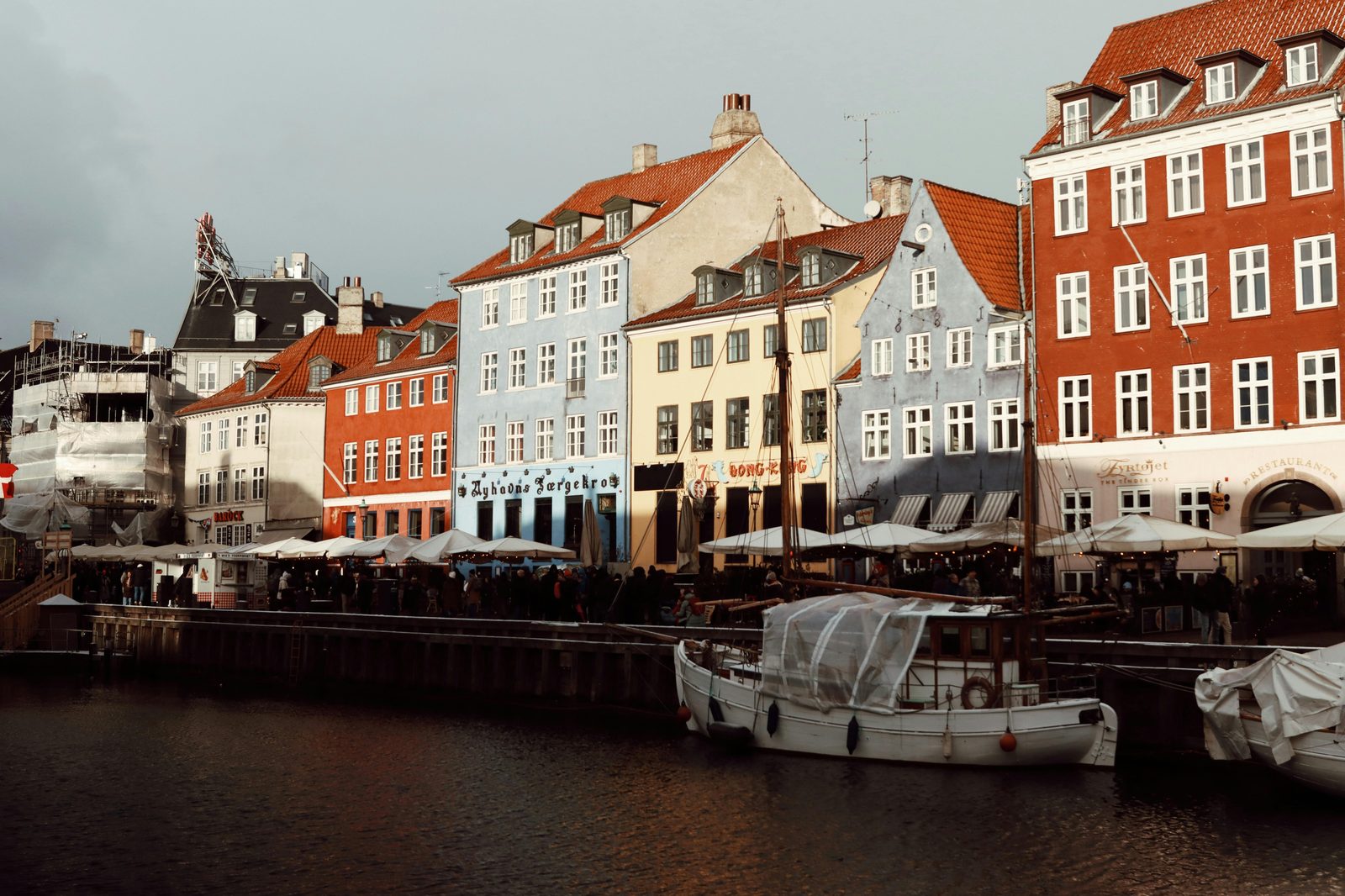
The quiet season. Most terraces close, the canal boats continue on reduced schedule, and the houses’ colours pop against grey skies. An ideal time for photographers who want the canal without crowds. Occasional snow transforms the scene into postcard material.
Getting to Nyhavn
Nyhavn is central and walkable — no special transport planning required.
- Metro: Kongens Nytorv (lines M1, M2, M3, M4) — the exit is 200 metres from the Nyhavn entrance. About 13 minutes from the airport on M2.
- Walking from Central Station / Tivoli: Straight up the full length of Strøget (Copenhagen’s pedestrian shopping street), or ride the M3 two stops from Rådhuspladsen to Kongens Nytorv.
- Walking from the Royal Palace: A short walk along Amaliegade.
- Harbour bus (Havnebus, lines 991/992/993): Stops at Nyhavn on the inner harbour run. An ordinary 24 DKK two-zone ticket covers it, the same ticket that works on the metro and buses.
- By bike: Bike racks at Kongens Nytorv and along Nyhavn’s north side. See our Copenhagen transportation guide.
Nyhavn Photography Tips
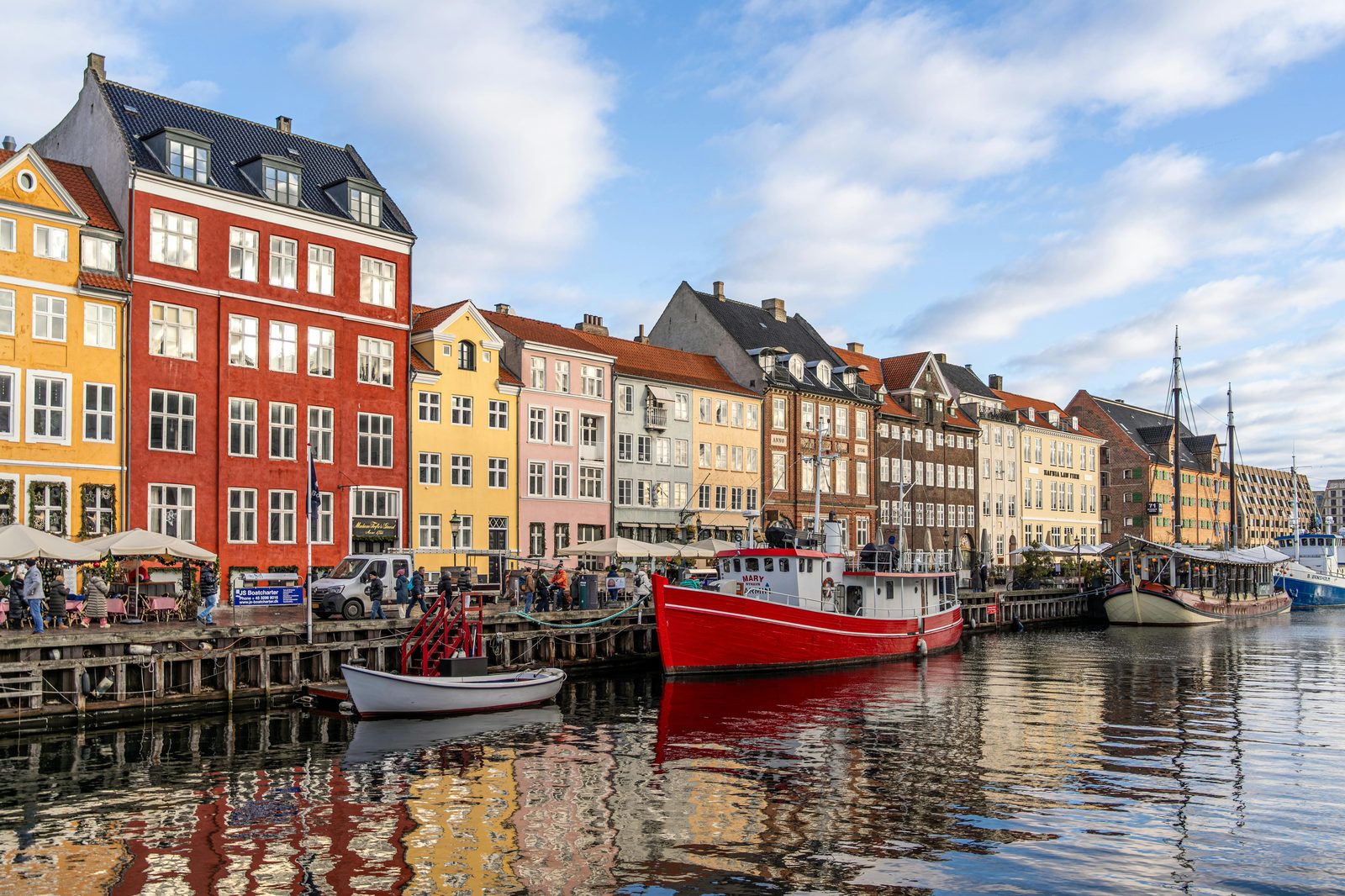
Nyhavn has four reliable photo angles that every serious photographer uses. Here they are ranked by difficulty:
- Classic angle (easy): Stand on the Nyhavnbro footbridge at the eastern (Inner Harbour) end of the canal, facing west towards Kongens Nytorv. Entire row of colourful houses + moored boats + canal in one frame. Best in late afternoon.
- Reverse angle (easier, but less famous): Stand on the western end (Kongens Nytorv side), facing east towards the harbour. Fewer tourists in frame.
- Ground-level from the cobbles (intermediate): Get down to 50cm height and shoot along the quayside. Stones provide foreground leading lines.
- From the Inderhavnsbroen (advanced): Walk east across the Inner Harbour Bridge and turn back — you get Nyhavn framed by the harbour with Christianshavn in the background. Best at sunset.
Crowd-avoidance: Arrive before 8:00 in summer. Later in the morning the canal tours get going and the cobbles fill with tour groups. For sunset shots, expect company all waiting for the same moment — embrace it or arrive Sunday morning.
Nyhavn Beyond the Obvious
The Historic Boats on the South Quay
The wooden ships moored along the south quay of Nyhavn are not just decoration — they are a floating museum. The highlight is Lilla Dan (Danish flagship training ship), a 35-metre topsail schooner built in Svendborg in 1951. Small plaques on each boat explain its story. Free to admire from the quayside.
The Anchor Memorial (Mindeankeret)
At the western end of Nyhavn, near Kongens Nytorv, stands an anchor memorial to the more than 1,700 Danish officers and sailors of the Navy, the merchant fleet and the Allied forces who died in WW2. Often overlooked, worth a moment.
The Inner Harbour Bridge (Inderhavnsbroen)
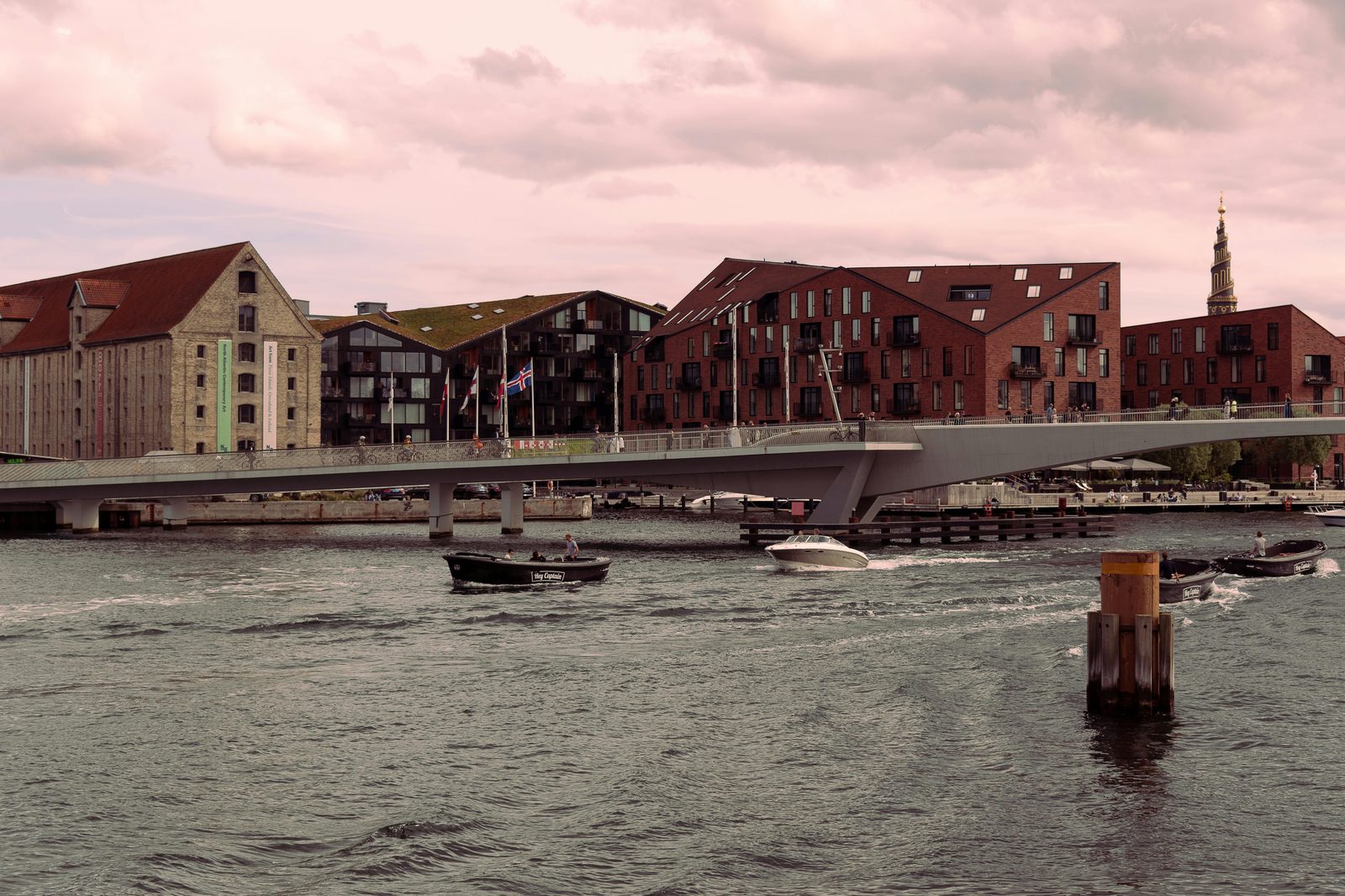
The “Kissing Bridge” is worth walking across — it opened in 2016 after long delays, connects Nyhavn directly to Christianshavn, and offers the best elevated view of the canal. The bridge is a retractable pedestrian-cycle bridge that splits apart to let ships through; if you hear a horn, stand clear of the central section. Walking into Christianshavn from here is the single best onward move — see our Copenhagen neighborhoods guide for what to find there. Come back after dark, too: Nyhavn glows once the terrace lights and Christmas market come on, and our guide to the city at night maps out the rest of the evening.
Kongens Have (King’s Garden)
A short walk north-west of Nyhavn (on the other side of Kongens Nytorv), Kongens Have is the oldest park in central Copenhagen, laid out as a royal garden in 1606 — laid out around Rosenborg Castle with roses, lavender beds and summer puppet theatre. Makes a perfect morning-before-Nyhavn escape from the crowds.
Nyhavn FAQs
How long should I spend in Nyhavn?
A proper visit is about 90 minutes: walk the length of both quays, look at the historic boats, look for the memorial plaque at Nyhavn 67, and have a coffee or half-litre of Carlsberg at a terrace. Add an hour for a canal tour. The “Instagram + selfie + leave” version is over in minutes; you’ll miss most of what’s interesting.
Is Nyhavn overrated?
It’s touristy, but it is genuinely beautiful and historically significant. The overrated version is “eat dinner in Nyhavn” — where the food is mediocre and expensive. The underrated version is “visit Nyhavn early in the morning, walk to the Inner Harbour Bridge, and eat dinner in Christianshavn instead.” Follow the second plan and you won’t regret it.
Is Nyhavn free to visit?
Completely free to walk, photograph, and look at the boats. You only pay if you eat, drink, or take a canal tour.
Is Nyhavn safe at night?
Very safe. Copenhagen is one of the safest capital cities in Europe, and Nyhavn is patrolled and busy late into the night, especially in summer. Standard precautions against pickpockets in crowded tourist zones apply.
Can I swim in Nyhavn?
No — Nyhavn is a working canal with boat traffic. For harbour swimming head to Havnebadet Islands Brygge (south of the centre, across the harbour) or La Banchina (on the Refshaleøen side). Nyhavn itself is not a designated bathing area.
What is Nyhavn 17?
Nyhavn 17 is best known for its tattoo parlour, a link back to the sailor-quarter Nyhavn of taverns and tattooists.
What’s the best place to photograph Nyhavn?
The Nyhavnbro footbridge at the Inner Harbour end is the classic shot. For the reverse-light morning version, stand at the Kongens Nytorv end and face east. For sunset, cross the Inderhavnsbroen and look back at Nyhavn with Christianshavn in the background.
How far is Nyhavn from the airport?
About 13 minutes by the M2 metro, direct with no change of line. Get off at Kongens Nytorv, then it’s a short walk to Nyhavn. A taxi costs considerably more, and its journey time depends on traffic. See the full Copenhagen transportation guide for public-transport tips.
Related Reading
Nyhavn is the starting point for a broader Copenhagen visit. Continue with:
- The Round Tower — the spiral ramp, the observatory and the city view from the top.
- Tivoli Gardens Copenhagen — the amusement park west of Nyhavn, across the old centre.
- Ready-made trip plans — day-by-day plans including Nyhavn morning walks.
- Christiansborg Palace — the free tower climb, the royal reception rooms and the ruins below.
- Copenhagen events and festivals — including the Nyhavn Christmas market.
- The National Museum of Denmark — Viking halls, the Sun Chariot and a free children’s museum.
- The city’s shops and design stores — Strøget starts at Kongens Nytorv, just west of Nyhavn.
- When to visit Copenhagen — season by season, including Nyhavn’s best months.
Final Thoughts: Is Nyhavn Worth It?
Nyhavn is not overrated — it is simply misused. Most visitors race through, take the photo, pay over the odds for a watery beer, and leave with a half-formed impression of a pretty street. Spend 90 minutes instead: walk both quays, find Andersen’s old homes, sit with a coffee rather than an overpriced dinner, take a canal tour, and finish by crossing the Inderhavnsbroen into Christianshavn. Do it that way and Nyhavn is exactly what it’s cracked up to be — a picturesque 450-metre stretch of canal that rewards a slow walk.
Last updated: July 2026. Prices, opening hours and market dates change — confirm the latest before you go.