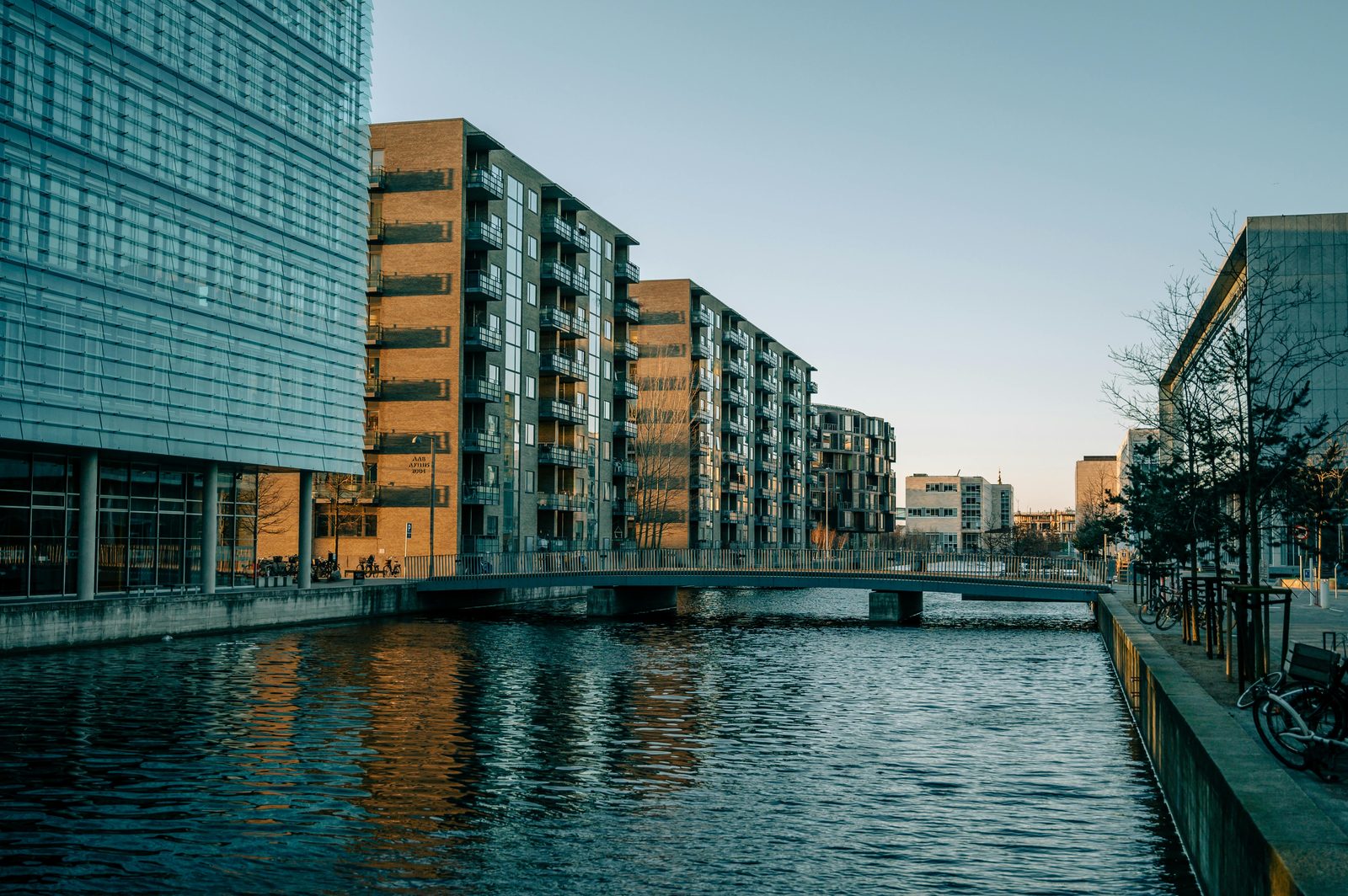
If Copenhagen has a living room, this is it. Indre By is the medieval old town — the historic core inside the vanished city walls, where 800-odd years of Danish capital history are crammed into a few square kilometres. Indre By Copenhagen holds the greatest concentration of landmarks in the country: the painted merchant houses of Nyhavn, the working parliament at Christiansborg, the spiral-ramped Round Tower, the royal palaces of Amalienborg, and Strøget — at 1.1 km, one of the longest pedestrian shopping streets in Europe. Nearly every first-time visitor spends the bulk of their trip right here, and honestly, that’s the sensible thing to do.
This guide walks you through the district the way a local would: the sights worth your time, the streets worth wandering, where to eat and stay, when to come, and how to string it all into a good day on foot. It’s part of our wider Copenhagen neighborhoods series, so when you’re ready to venture out, you’ll know exactly where to head next.
Indre By at a glance
| Fact | Detail |
|---|---|
| Meaning | Indre By means ‘inner city’ in Danish — Copenhagen’s medieval old town |
| Population | ~50,000 residents |
| Area | 5.6 km² |
| Founded | 1167 (city of Copenhagen) |
| Defining sights | Strøget, Nyhavn, Round Tower, Amalienborg, Christiansborg, Tivoli |
| Best for | First-time tourists, history enthusiasts, royal sights, shopping |
| Best metro stations | Nørreport, Kongens Nytorv, Hovedbanegården (Central Station) |
| Atmosphere | Historic, royal, busy, central, touristy |
| Best season | May–September for cafés; December for Christmas markets |
Top things to do in Indre By
1. Walk Strøget

Strøget runs 1.1 km from City Hall Square (Rådhuspladsen) to Kongens Nytorv, and it’s been car-free since 1962. You’ll find the international chains you’d expect, but the reason to walk it is Danish design — Royal Copenhagen porcelain, Illums Bolighus, Georg Jensen silver. Allow an hour or two for the full length, more if you browse. Honest tip: do it once, then escape one block off the spine, where the interesting shops and cafés actually live.
2. Photograph Nyhavn

Nyhavn is the picture everyone comes for: colourful 17th-century merchant houses along a working canal, wooden boats moored below. Hans Christian Andersen lived at numbers 18, 20 and 67. Grab a beer or a plate of smørrebrød on the sunny north side, but know you’re paying tourist prices for the view. Our Nyhavn guide covers the best time to shoot it and where to eat nearby for less.
3. Climb the Round Tower

The Round Tower (Rundetårn) was built in 1642 by King Christian IV as an astronomical observatory. Instead of stairs, a 268-metre spiral ramp winds to the top, wide enough that a carriage once drove up it. The reward is a 360° view over the copper rooftops. Adults pay 60 DKK, and it is no longer included in the Copenhagen Card. Full details in our Round Tower guide.
4. Watch the changing of the guard at Amalienborg

Amalienborg is the royal family’s winter home: four matching rococo palaces around an octagonal courtyard. The changing of the guard happens daily at 12:00 noon, and it’s grander when the monarch is in residence (watch for the flag). It’s free to stand and watch — arrive around 11:45 for a decent spot. The palace museum inside costs about 110 DKK, free with the Copenhagen Card. Walk five minutes up Frederiksgade and you’ll hit the great dome of the Marble Church (Frederik’s Church), worth a look inside.
5. Visit Christiansborg Palace

Christiansborg, on the little island of Slotsholmen, is genuinely unusual: it houses Denmark’s working parliament, the Supreme Court and the royal reception rooms all under one roof. You can visit the Royal Reception Rooms (95 DKK), the Royal Stables (40 DKK), the ruins of the earlier castles beneath the palace (40 DKK), and — the best free thing in the district — climb the Castle Tower for a sweeping view at no charge. A combo ticket runs 175 DKK, or it’s free with the Copenhagen Card. See our Christiansborg guide for what’s worth your time.
6. Explore Kongens Nytorv

Kongens Nytorv (“King’s New Square”) anchors the eastern end of the old town. The Royal Danish Theatre, the Charlottenborg art hall, the grand old Hotel d’Angleterre and an equestrian statue of King Christian V (1688) all ring the square, and the Metro (M1, M2, M3 and M4) stops right underneath. In winter it hosts a small ice rink; step off it straight onto Nyhavn.
7. Wander the Latin Quarter

This is the old university district, and it’s the part of the centre where you should just get lost. Cobbled alleys wind around the University of Copenhagen (founded 1479) and Trinitatis Church, which is attached to the Round Tower. The buildings here are 700 years old in places, and the cafés are some of the best in the city. There’s no checklist — that’s the point.
8. Tivoli Gardens
Tivoli sits just south of the old town — technically over the line in Vesterbro, but effectively part of any Indre By day. Opened in 1843, it’s the world’s second-oldest amusement park, and it famously helped inspire Walt Disney’s Disneyland. It opens in spring and runs to late September (in 2027 the Easter season starts on 19 March and the summer season follows on 30 March), then reopens for Halloween and a magical Christmas season. Adult entry is 200 DKK, with rides charged on top. Come at dusk, when 100,000 lanterns switch on — that’s when it’s at its best. Our Tivoli Gardens guide has the ride and ticket breakdown.
Streets worth walking
Half the pleasure of the old town is the walking itself. Beyond the headline sights, these streets reward an aimless hour:
- Strøget — the 1.1 km pedestrian spine; the world’s longest.
- Strædet — a quieter parallel pedestrian street just south of Strøget, with better browsing.
- Pisserenden — the heart of the Latin Quarter, thick with third-wave coffee.
- Magstræde — one of the oldest streets in the city, cobbled and crooked.
- Vimmelskaftet — the central stretch of Strøget.
- Frederiksberggade — the western end of Strøget, off Rådhuspladsen.
- Bredgade — the grand Royal Quarter avenue, lined with the Marble Church and design museums.
- Store Kongensgade — a handsome shopping street running up toward the citadel.
- Krystalgade — a quiet medieval lane past the synagogue and the university library.
- Larsbjørnsstræde — the Latin Quarter’s boutique row, good for vintage and design.
Where to eat and drink in Indre By

You can eat superbly here, from an 1877 smørrebrød cellar to a three-star tasting menu — just book the good places ahead, because the small rooms fill up fast.
Smørrebrød — the Danish open sandwich
This is the dish to eat in the old town. Our picks:
- Schønnemann — an 1877 institution, 80–145 DKK per piece; expect a wait or book ahead.
- Krogs Fiskerestaurant — old-world fish and open sandwiches near Gammel Strand.
- Aamanns — a modern, produce-led take on the classic.
For a full rundown, see our best smørrebrød in Copenhagen guide.
Fine dining
The centre and its edges hold eight-plus Michelin restaurants. The heavy hitters: Geranium (three stars, technically in Østerbro but a short hop away), Kong Hans Kælder (in a medieval vaulted cellar), plus the wine-focused Apollo Bar. Reserve weeks out for the starred rooms. Our Michelin restaurants in Copenhagen guide lays out the options and prices.
Coffee and cafés
The old town is the city’s coffee heartland. Coffee Collective has a Strøget bar, La Cabra roasts in the Latin Quarter, and Democratic Coffee (inside the main library on Krystalgade) does a legendary almond croissant. See our full coffee guide for the full map. And if you’d rather graze, Torvehallerne — the glass market hall by Nørreport, on the district’s northern edge — has more than 60 stalls of fresh fish, cheese, pastries and hot lunches.
Where to stay in Indre By

If you want to walk to everything, this is where you stay — the district has the city’s highest hotel density, at every price point. Rates below are rough guides; check current prices before you book.
- Hotel d’Angleterre — five-star grande dame at Kongens Nytorv; 4,500–12,000 DKK.
- Nimb Hotel — a jewel-box boutique inside Tivoli Gardens; 3,000–8,000 DKK.
- Hotel Sanders — polished, theatrical boutique near Kongens Nytorv; 2,800–6,000 DKK.
- Coco Hotel — design-led rooms in the Latin Quarter; 1,500–3,500 DKK.
- Ibsens Hotel — reliable mid-range near Nørreport; 1,200–2,500 DKK.
- Generator Hostel — the central budget pick; 200–400 DKK a dorm bed.
Not sure the old town is your best base? Our where to stay in Copenhagen for first-timers guide compares it against Vesterbro, Nørrebro and the rest, and the wider neighbourhood-by-neighbourhood accommodation guide goes deeper on hotels.
Getting to and around Indre By
You almost certainly won’t need a taxi here. Copenhagen Airport is about 15 minutes away on the M2 Metro, which runs to Kongens Nytorv and Nørreport in the heart of the district; a single ticket costs 30 DKK. From Central Station (Hovedbanegården), Rådhuspladsen and Tivoli are a two-minute walk. Once you’re in, walking is the only sensible way to see the old town — the streets are tight, cobbled and largely car-free.
For anything beyond the centre, the Metro (M1–M4) and city bikes take over. Nørreport is the busiest transport hub in the country, linking the Metro, S-train and regional trains, and it sits right on the district’s northern edge. If you’re pairing the old town with the harbour or the outer neighborhoods, the tips in our full public-transport rundown will save you money.
A perfect day on foot
Short on time? This loop hits the essentials in a single unhurried day, all on foot:
- Morning: start at Nørreport, coffee and a pastry at Torvehallerne, then climb the Round Tower before the crowds.
- Late morning: wander the Latin Quarter, then walk the length of Strøget down to Kongens Nytorv.
- Lunch: smørrebrød at Schønnemann, or a canal-side plate at Nyhavn.
- Afternoon: cross to Slotsholmen for Christiansborg and a free climb up the Castle Tower, then up to Amalienborg and the Marble Church.
- Evening: finish inside Tivoli as the lanterns come on.
Best time to visit
| Season | What’s special | Crowds |
|---|---|---|
| May–June | Long days, café terraces open, up to 16 hours of daylight | Moderate |
| July–August | Peak summer; Tivoli concerts; warmest weather | Highest |
| September | Mild weather; harvest festival; thinner crowds | Moderate |
| October–November | Atmospheric autumn; ghost tours; cosy cafés | Low |
| December | Christmas markets at Nytorv and Gammeltorv; Tivoli Christmas; lights | High |
| January–February | Cheapest; coldest (around -3°C); few tourists | Lowest |
| March–April | Spring blooms; Easter market; lengthening days | Moderate |
Practical tips
- Wear comfortable shoes. It’s more than 5 km of cobblestones if you do the full circuit.
- Cluster your sights. Round Tower, Strøget and Nyhavn make an easy half-day together.
- Skip Tivoli on Saturdays — it’s the busiest day; book online ahead whenever you go.
- Sundays aren’t dead. Most Strøget shops open roughly 11:00–18:00.
- Watch for cyclists — they’ll appear even on the pedestrian streets.
- Book the small restaurants — reserve Schønnemann a couple of days out, Geranium a month or more.
- Do Tivoli after dark. Arrive from 18:00 for the lanterns and the mood.
- Free walking tours depart daily from Rådhuspladsen (tip-based); a cheap way to get your bearings.
- Public toilets are easiest inside Magasin (Kongens Nytorv), Illum (Strøget) and Tivoli.
- A Copenhagen Card pays off fast here — it covers the Round Tower, Christiansborg, Amalienborg and transport.
Indre By FAQs
What does Indre By mean?
It’s Danish for “inner city” — Copenhagen’s medieval old town, inside the line of the former ramparts. This is the historic heart of the capital and holds its biggest cluster of palaces, museums and royal sites.
Is Indre By the city centre of Copenhagen?
Yes. This is Copenhagen’s defined city centre — home to Strøget, Nyhavn, Tivoli, Christiansborg, the Round Tower and the Royal Quarter. First-timers usually base themselves here or in adjacent Vesterbro.
How big is Indre By?
About 5.6 km², with roughly 50,000 residents. The pedestrian core around Strøget is small enough to cross in 30 minutes; taking in Slotsholmen and the Royal Quarter as well is a two-to-three-hour walk.
Is Indre By walkable?
Extremely. Strøget is pedestrianised and many side streets are car-free or low-traffic. The one caveat is the cobblestones — they’re uneven, so leave the heels at home.
How long do I need in Indre By?
A single day covers the highlights — a Strøget walk, Nyhavn, the Round Tower and Christiansborg. Two or three days lets you slow down and explore properly. Most first-time visitors spend the bulk of their trip in and around the old town anyway.
Where’s the best place to stay in Indre By?
For luxury, Hotel d’Angleterre on Kongens Nytorv. For boutique, Hotel Sanders or Coco Hotel. For mid-range, Ibsens near Nørreport. For budget, Generator Hostel. All are within walking distance of the major sights.
Is Indre By safe?
Very. There’s a visible police presence and low crime. The only real risk is pickpocketing in the tourist crush around Nyhavn and Strøget, so keep your bag zipped. Otherwise it’s safe day and night.
What’s the best part of Indre By?
Depends what you’re after: the Latin Quarter for atmosphere, Nyhavn for photos, the Royal Quarter (Frederiksstaden) for palaces and design museums, and Strøget for shopping. Most people end up combining all four — and that’s the right move.
Related reading
- Frederiksberg Gardens and the zoo — the palace gardens, Copenhagen Zoo and a quieter, greener side of the city.
- What’s actually worth your time in Copenhagen
- Vesterbro and the Meatpacking District — the Meatpacking District, Værnedamsvej and Copenhagen’s best bar strip.
- The canal district — the canals, the Vor Frelsers spire and Freetown Christiania next door.
- What to do in Nørrebro — Jægersborggade, Superkilen and the best bakeries in the city.
- The Refshaleøen shipyard island — Reffen street food, Copenhill’s ski slope and the old shipyard sheds.
- Ready-made trip plans
- Holmen and the old naval yards
- Østerbro, the leafy family district
- Carlsberg City, the old brewery quarter
- Sydhavn, the harbour’s quiet south
Final thoughts
Indre By is the essential Copenhagen — the historic core where Strøget, Nyhavn, the Round Tower, Christiansborg, Amalienborg, the Latin Quarter and Tivoli all sit within a half-hour walk of each other. If it’s your first trip, base yourself in or right beside the old town, plan your day around the noon changing of the guard, and save Tivoli for the evening. Give it two or three days and you’ll feel like you know the place. Then rent a bike and go find the neighborhoods where the locals actually spend their weekends.
Last updated: July 2026.