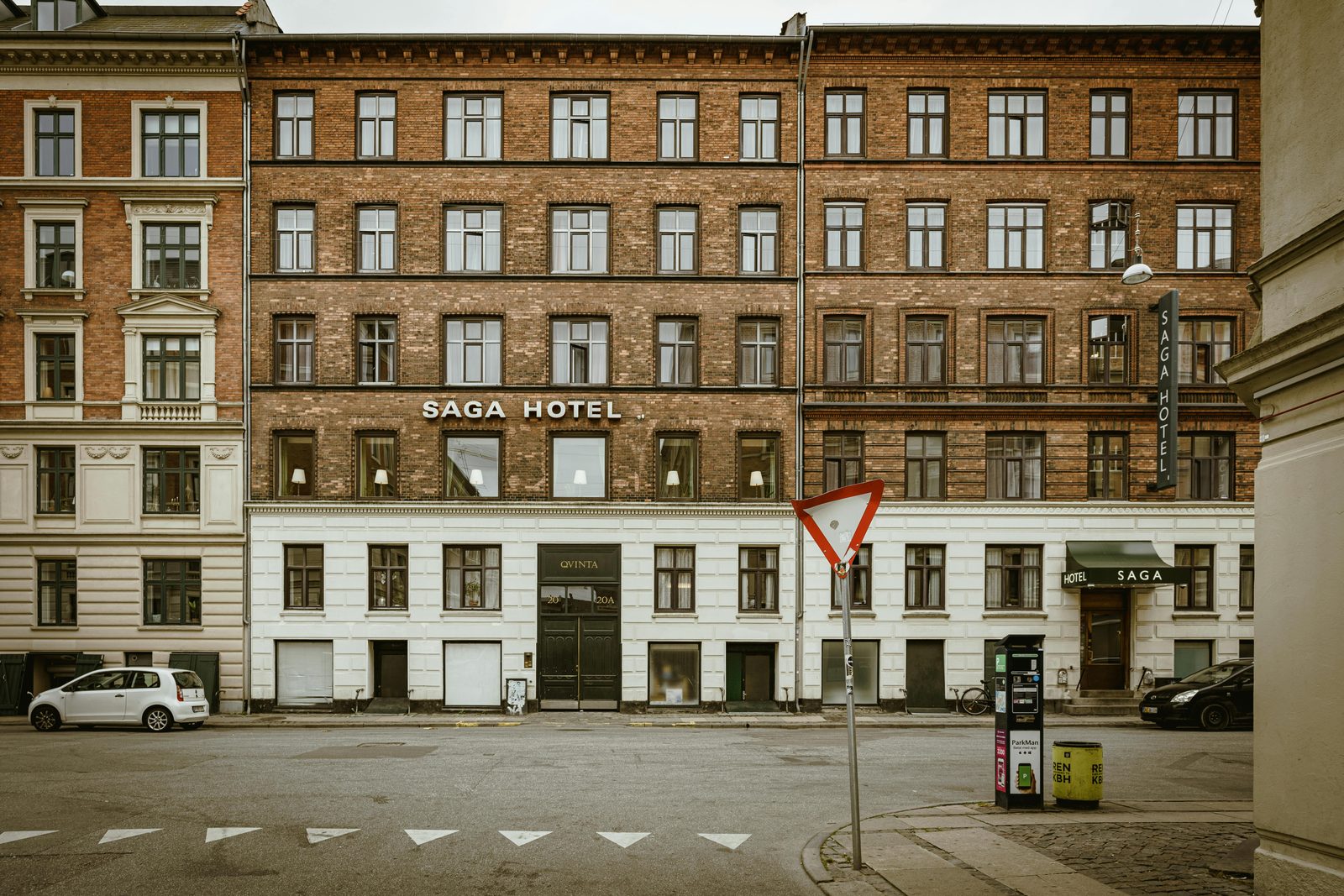
Pick the right neighborhood and Copenhagen feels like it was designed for you; pick the wrong one and you’ll spend the trip on the metro wishing you were somewhere else. That’s why deciding where to stay in Copenhagen matters more than which hotel you book. For most first-timers the answer is simple: base yourself in Indre By, the historic centre, where you can walk to Nyhavn, Tivoli, the castles and the harbour. But the city has ten very different corners, and the best area really depends on whether you’re here for the food, the nightlife, the kids, or the quiet — so let’s match you to yours.
We’ve pulled together the latest pricing data, the current Danish short-term-rental law, and a lot of on-the-ground context to make deciding where to stay in Copenhagen genuinely easy. Below you’ll find the eight best neighbourhoods ranked and compared, honest picks for every budget and travel style, and the practical stuff — airport transfers, seasonal pricing, and what to book before it sells out. For a wider view of each area beyond hotels, our guide to Copenhagen’s neighbourhoods goes street by street.
Where to stay in Copenhagen at a glance
Short on time? This quick-pick table summarizes the best Copenhagen neighborhood for each type of traveler. Each area is expanded further down the page.
| Your travel style | Best neighborhood | Why |
|---|---|---|
| First-time visitor | Indre By (City Center) | Walk to every major sight; most hotel choice |
| Couples / romantic | Christianshavn or Indre By | Canals, boutique hotels, fine dining |
| Families with kids | Østerbro or Frederiksberg | Quiet, parks, family hotels, safe streets |
| Foodies & nightlife | Vesterbro | Best restaurants, bars, and cafés in the city |
| Local / hipster vibe | Nørrebro | Diverse, affordable, great street food |
| Design & architecture | Nordhavn | New-build waterfront, design-forward hotels |
| Budget travelers | Vesterbro or Nørrebro | Hostels, cheaper eats, still central |
| Luxury travelers | Indre By (Kongens Nytorv) | d’Angleterre, Nimb, Nobis — all within 400 m |
| Business / conference | Indre By or Nordhavn | Easy metro; meeting hotels like Villa, Nobis |
| Early / late flight | Kastrup (airport area) | Walk from Terminal 3 to your room |
Jump to a section
- At a glance table
- Cost of hotels in Copenhagen
- 8 best Copenhagen neighborhoods
- Best area for first-time visitors
- Where to stay by travel style
- Hotel types — luxury to hostel
- Airbnb in Copenhagen: the 70-day rule
- Areas to avoid when choosing where to stay
- Hotels near specific landmarks
- Booking tips and price trends
- Getting from the airport to your hotel
- Seasonal pricing guide
- FAQ
How much does a hotel in Copenhagen cost in 2026?
Before you settle on an area, it helps to know what you’ll actually pay. Copenhagen is not a cheap city — hotel rates now sit in the same league as Amsterdam, Paris and London. According to aggregate data from booking platforms, the average nightly rate across all categories sits near $101 USD, but that average masks massive seasonal swings. June is the most expensive month (roughly $350-400 for a mid-range double), while February and early November are the cheapest.
| Hotel tier | Typical rate (low season) | Typical rate (high season) | What you get |
|---|---|---|---|
| Hostel dorm | €25–45 | €40–70 | Shared dorm 4–8 beds, social spaces |
| Budget hotel | €80–110 | €130–180 | Small room, basic breakfast, central-ish |
| Mid-range / 3-star | €110–150 | €180–250 | Comfortable room, good location, WiFi |
| 4-star / design | €160–220 | €250–400 | Character hotels, bar, restaurant |
| 5-star / luxury | €300–450 | €500–900+ | Nimb, d’Angleterre level; spa, Michelin dining |
Copenhagen has no tourist tax as of 2026 — a proposal for one was rejected by the Danish government — so what you see in your booking is what you pay. Hotels will often charge extra for breakfast (€18–28 per person per day) and parking (€25–50 per night if you’re driving, which we don’t recommend; more on that later).
Book early = save more
Copenhagen hotel prices swing by 2–3× between shoulder and peak season. If you’re visiting May–August, book 3–6 months ahead for the best rates. For December (Christmas markets) and Distortion festival in June, expect availability to vanish by the end of March.
The 8 best neighborhoods in Copenhagen
Copenhagen is far more compact than first-time visitors expect — the distance from Nørrebro to Christianshavn is only about 3 km, and you can cross the entire historic core on foot in 30 minutes. That means your neighborhood choice is less about transport logistics and more about the atmosphere you want to wake up to. These are the eight areas we point travellers to, ordered roughly by how often people ask about them.
1. Indre By — the historic city centre (best for first-time visitors)
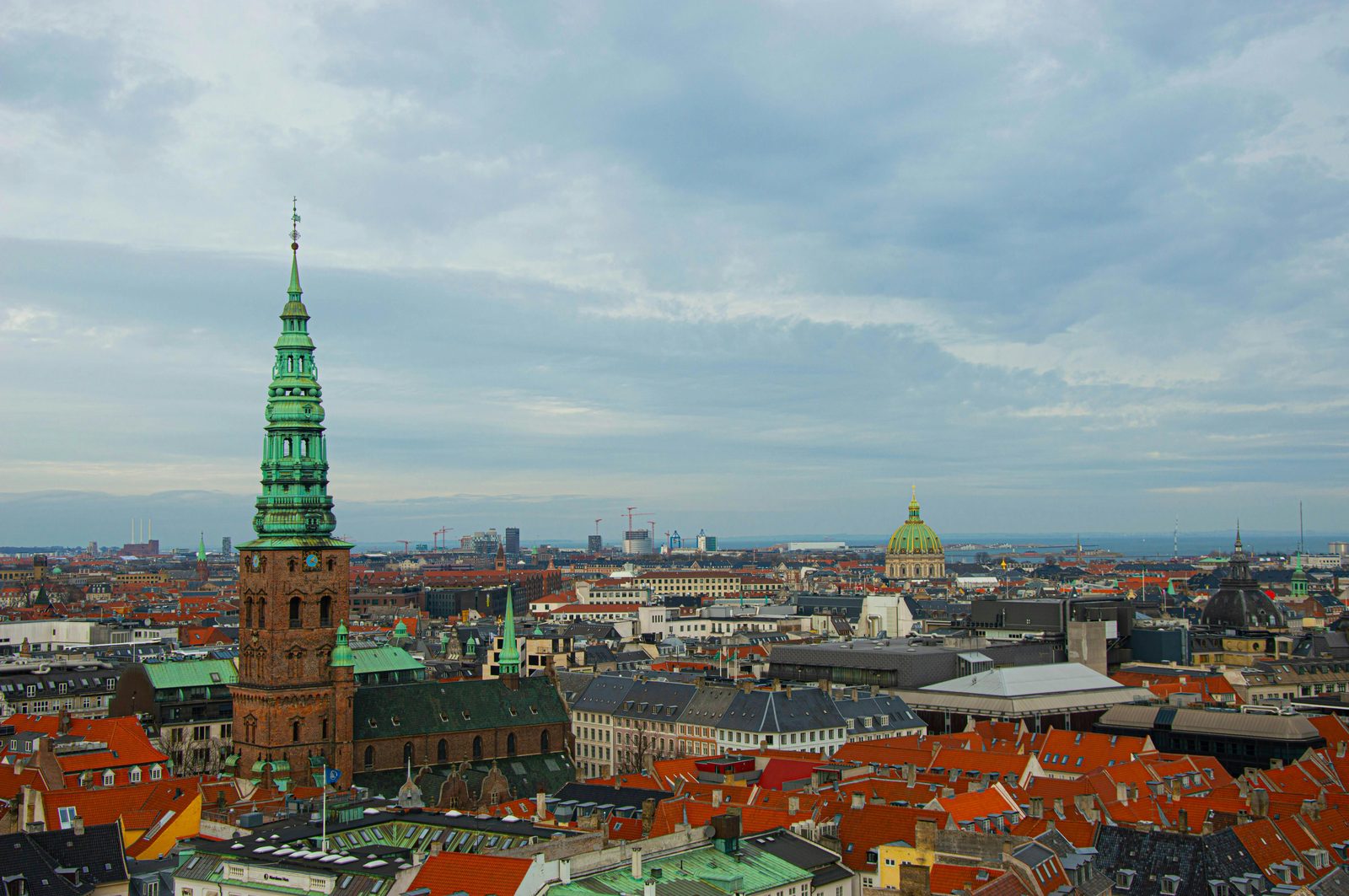
Indre By literally means “inner city,” and it’s the beating heart of Copenhagen. This is where you’ll find Nyhavn’s candy-colored townhouses, Strøget (Europe’s longest pedestrian shopping street), Rosenborg Castle, the Round Tower, and the royal reception rooms at Christiansborg Palace — many of which we cover in our guide to what’s actually worth your time in Copenhagen. Want the fine-grained street map? Our Indre By neighbourhood guide breaks it down block by block. If it’s your first trip, honestly, just stay here.
What Indre By is best for
- First-time visitors who want to walk everywhere
- Travellers with limited time (2–3 days in Copenhagen)
- Luxury travellers — the top 5-stars cluster here
- Shoppers — Strøget and the surrounding alleys
- Couples doing a romantic getaway
What Indre By is not ideal for
- Travellers who want quiet — Strøget is busy until midnight in summer
- Budget travellers — few hostels, most rooms are mid-to-luxury
- Anyone looking for a “local” feel — this is the tourist hub
Approximate nightly rate: €180–500 in high season. Notable hotels: Hotel d’Angleterre (5-star, 1755), Nimb Hotel (overlooking Tivoli), Nobis Copenhagen (former conservatory), Hotel Sanders (boutique), and dozens more — see our full list of the best hotels in Copenhagen.
2. Vesterbro — Copenhagen’s hippest neighborhood
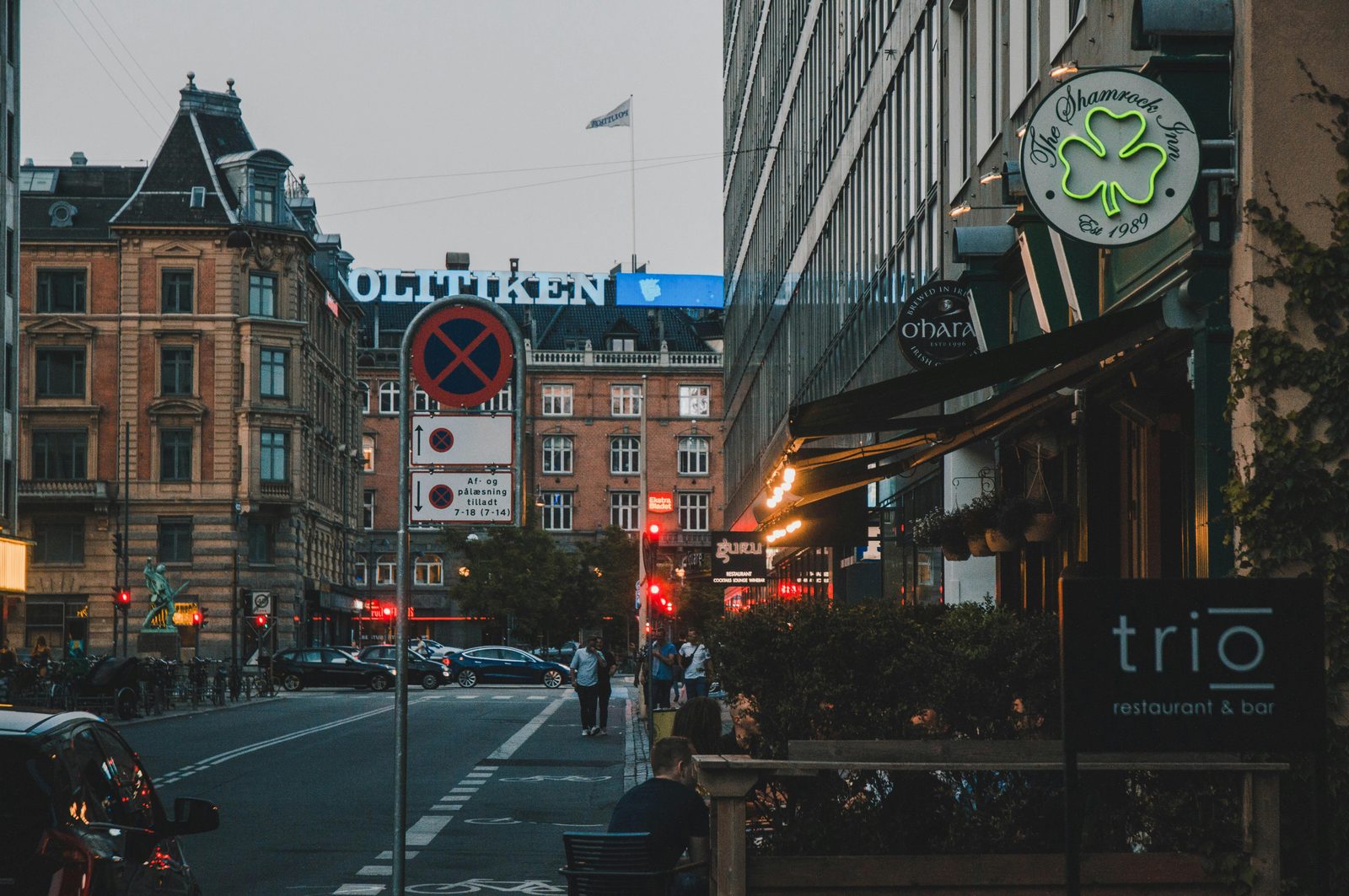
Twenty years ago, Vesterbro was a gritty former red-light district. Today, it’s where young Copenhageners (and visiting New Yorkers) go for third-wave coffee, natural wine bars, and Michelin-starred restaurants in converted meatpacking warehouses. The Meatpacking District — Kødbyen — is one of the most exciting food and nightlife clusters in Europe. The full Vesterbro guide maps the best of it. If you care about where you eat and drink more than where you sleep, Vesterbro is the obvious pick.
What Vesterbro is best for
- Foodies and nightlife-seekers
- Budget travellers — central but cheaper than Indre By
- Design-hotel fans — Radisson Collection Royal Hotel (Arne Jacobsen’s SAS House) is here
- Travellers who want to walk to Central Station for day trips
What Vesterbro is not ideal for
- Families — nightlife noise can be intense on Istedgade and Vesterbrogade
- Early sleepers — this is a party neighborhood
- Those who dislike the lingering traces of Copenhagen’s adult-entertainment history on lower Istedgade
Approximate nightly rate: €110–280 in high season. Notable hotels: Radisson Collection Royal Hotel, Nimb Hotel (technically Vesterbro-adjacent), Scandic Copenhagen, Andersen Boutique Hotel, Absalon Hotel, and several affordable chains near the station.
3. Nørrebro — diverse, cool and very local
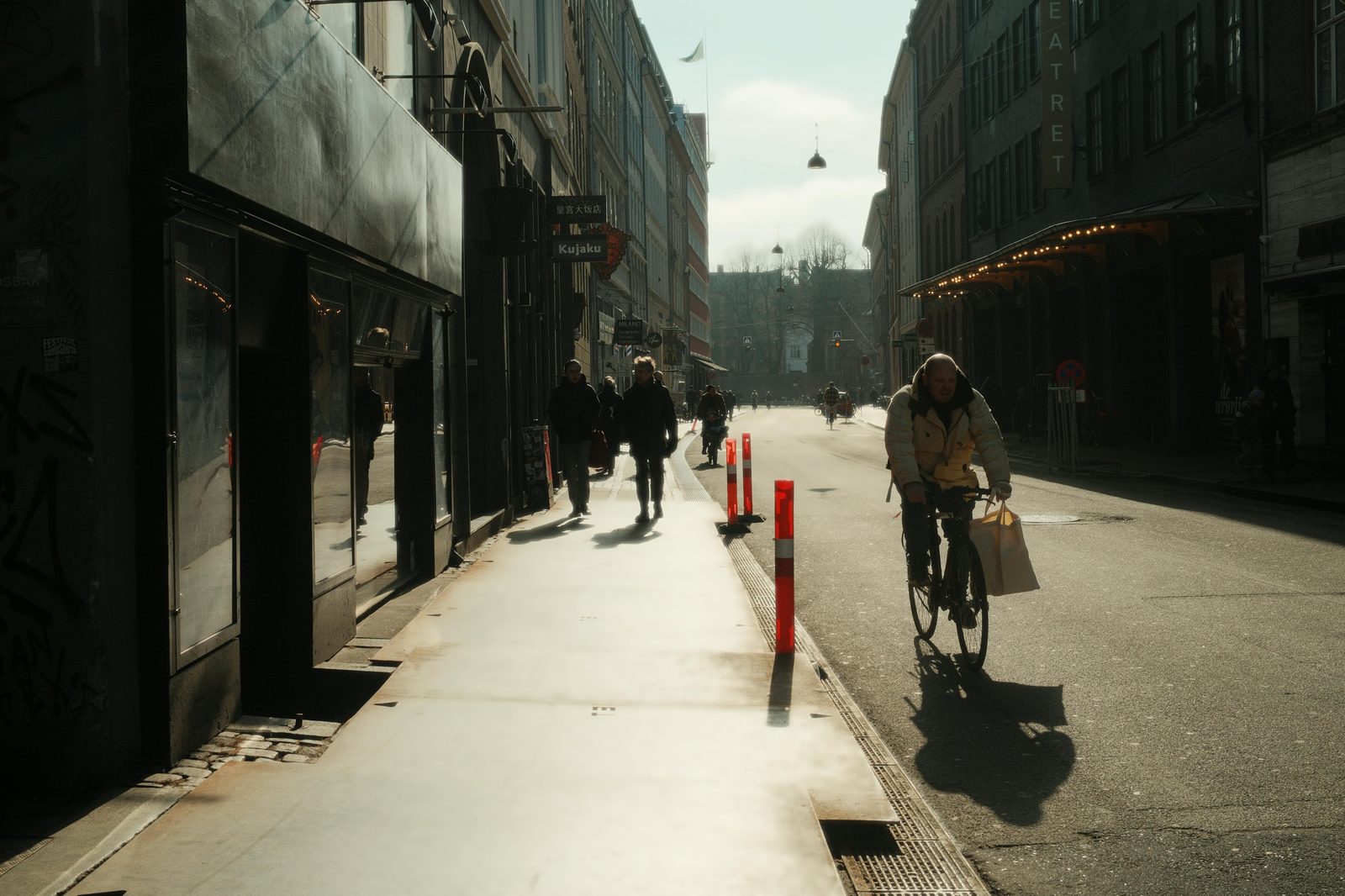
Nørrebro is Copenhagen’s most ethnically and culturally diverse district — a brilliant mix of Turkish barbershops, Middle Eastern bakeries, Danish design shops and Michelin-starred restaurants on the same block. Jægersborggade is one of the most photogenic streets in the city, and the Superkilen urban park is an architectural icon. Stay here if you’d rather feel like a resident than a sightseer. It’s a trade-off, though: you’ll bike or bus in to the big sights. Our Nørrebro guide covers where to eat and wander.
What Nørrebro is best for
- Repeat visitors who’ve done Indre By already
- Travellers in their 20s and 30s who want local vibe
- Independent shoppers — boutiques on Jægersborggade and Elmegade
- Mid-length stays of 4+ nights where you want to settle in
What Nørrebro is not ideal for
- First-timers with only 2 nights — you’ll spend too much time commuting
- Travellers focused on the Little Mermaid or the airport
- Light sleepers on Nørrebrogade (main street can be noisy)
Approximate nightly rate: €90–200 in high season. Notable hotels: fewer big-brand hotels here; instead, look at Hotel Nora, Ibsens Hotel (on the Indre By border), and a strong selection of budget-friendly and design-forward Airbnbs (check the Airbnb Copenhagen legal guide before booking).
4. Østerbro — quiet, green and family-friendly
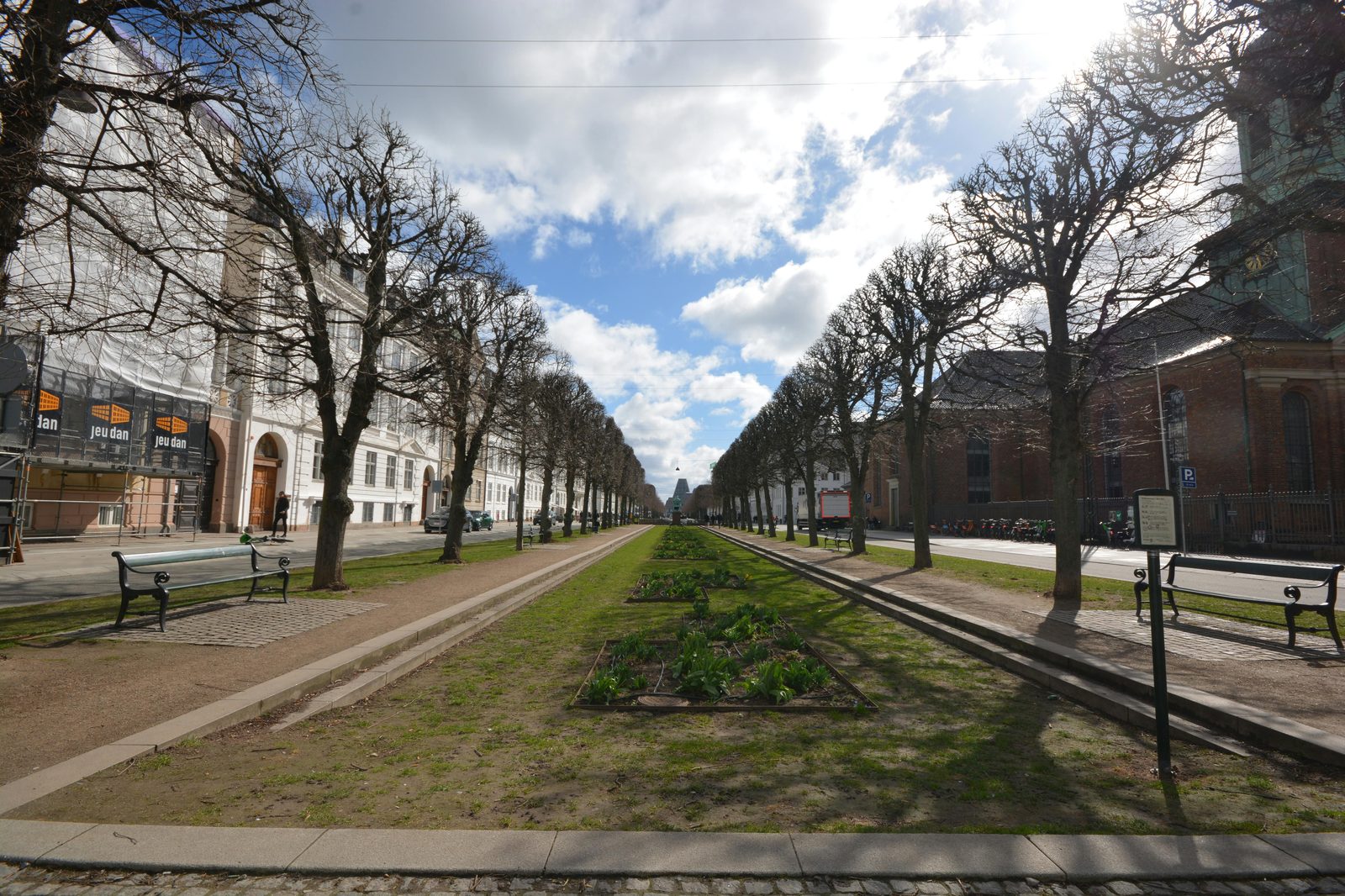
Østerbro is the city’s leafiest central neighborhood, with wide tree-lined boulevards, the vast Fælledparken, and elegant late-19th-century apartment blocks. It’s where many Copenhagen professionals and families live, so the streets feel quiet at night, and the pace is noticeably slower than Indre By or Vesterbro. If you’re travelling with kids, Østerbro is one of the top picks — see our guide to family hotels in Copenhagen, or the wider Østerbro area guide.
What Østerbro is best for
- Families with young children — parks, playgrounds, calm streets
- Anyone seeking a quieter base that’s still central
- Travellers visiting the Little Mermaid and Kastellet (both are on Østerbro’s edge)
- Runners and cyclists — the Lakes (Søerne) loop is the city’s favourite running route
What Østerbro is not ideal for
- Nightlife-seekers — bars close earlier here
- Short trips — you’ll want a bike or metro to reach central attractions quickly
- Budget travellers — hotel inventory is thin and mostly mid-range+
Approximate nightly rate: €120–240 in high season. Notable hotels: Hotel Østerport, Hotel Kong Frederik (border), and many Airbnbs in classic Copenhagen apartments.
5. Christianshavn — canal-side charm
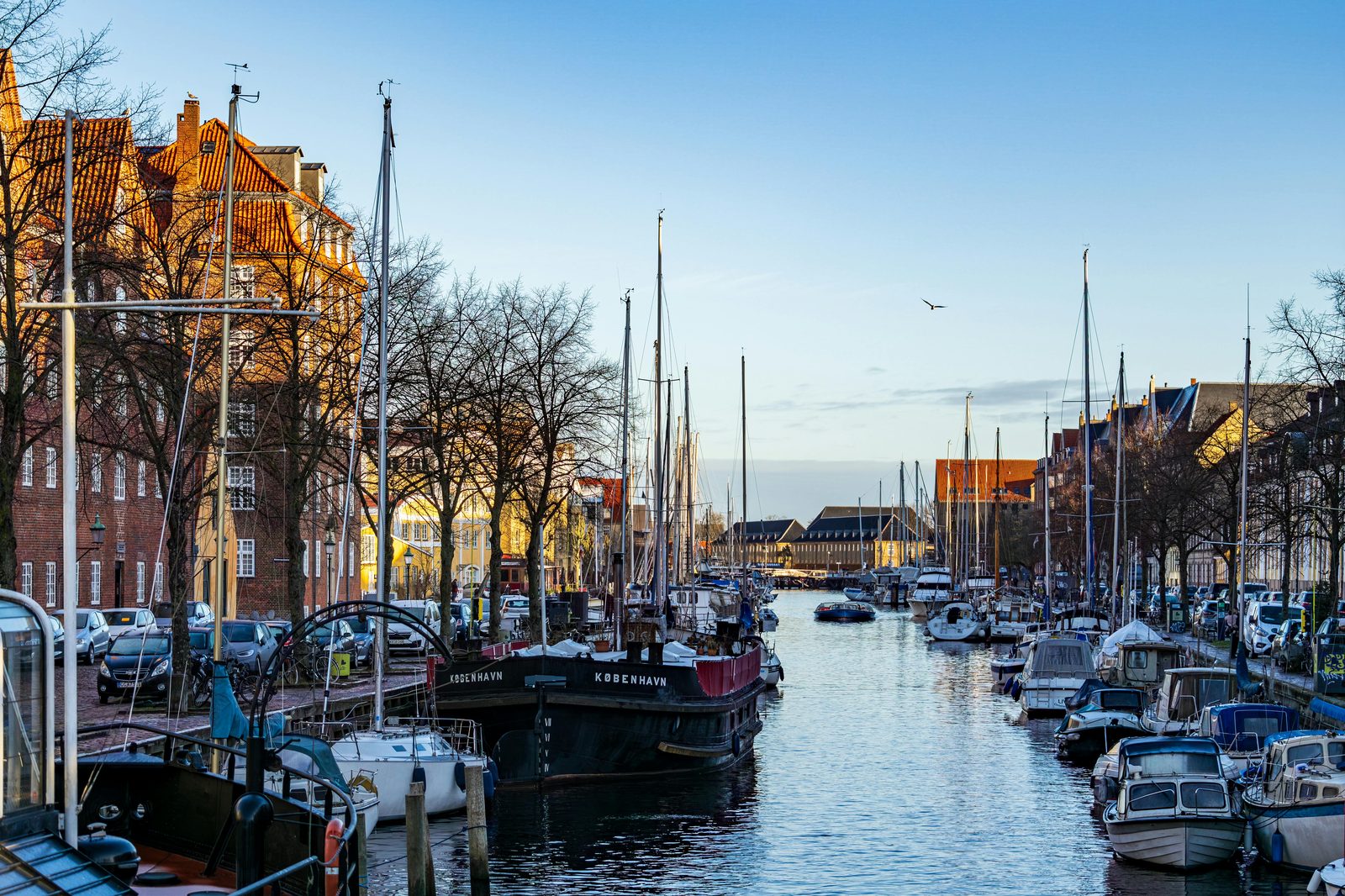
Christianshavn sits on its own small island, connected to Indre By by a series of bridges. Founded by King Christian IV in 1618 as a fortified trading district, today it’s a maze of canals, houseboats, 17th-century townhouses and some of the best restaurants in Scandinavia — including Noma and its sibling projects. Freetown Christiania is here too, which gives the area its bohemian edge. It’s postcard-pretty; just know the cobbles and bridges make it hard work with heavy luggage. More in the Christianshavn guide.
What Christianshavn is best for
- Romantic getaways — the canals are postcard-pretty at blue hour
- Food-focused travellers — Noma and many Michelin restaurants are here
- Architecture fans — the spiral tower of the Church of Our Saviour offers the best city view
- Walkers who want instant access to Indre By (5 minutes across a bridge)
What Christianshavn is not ideal for
- Travellers with heavy luggage — cobblestones and stairs are everywhere
- Anyone who finds Christiania uncomfortable (the alternative commune has an unusual atmosphere)
- Budget travellers — very little cheap inventory
Approximate nightly rate: €160–350 in high season. Notable hotels: CPH Studio Hotel (design-led), 71 Nyhavn Hotel (on the Indre By side of the bridge), STAY Copenhagen (apartment-hotel), plus a handful of boutique canal-side options.
6. Frederiksberg — elegant, leafy, upscale
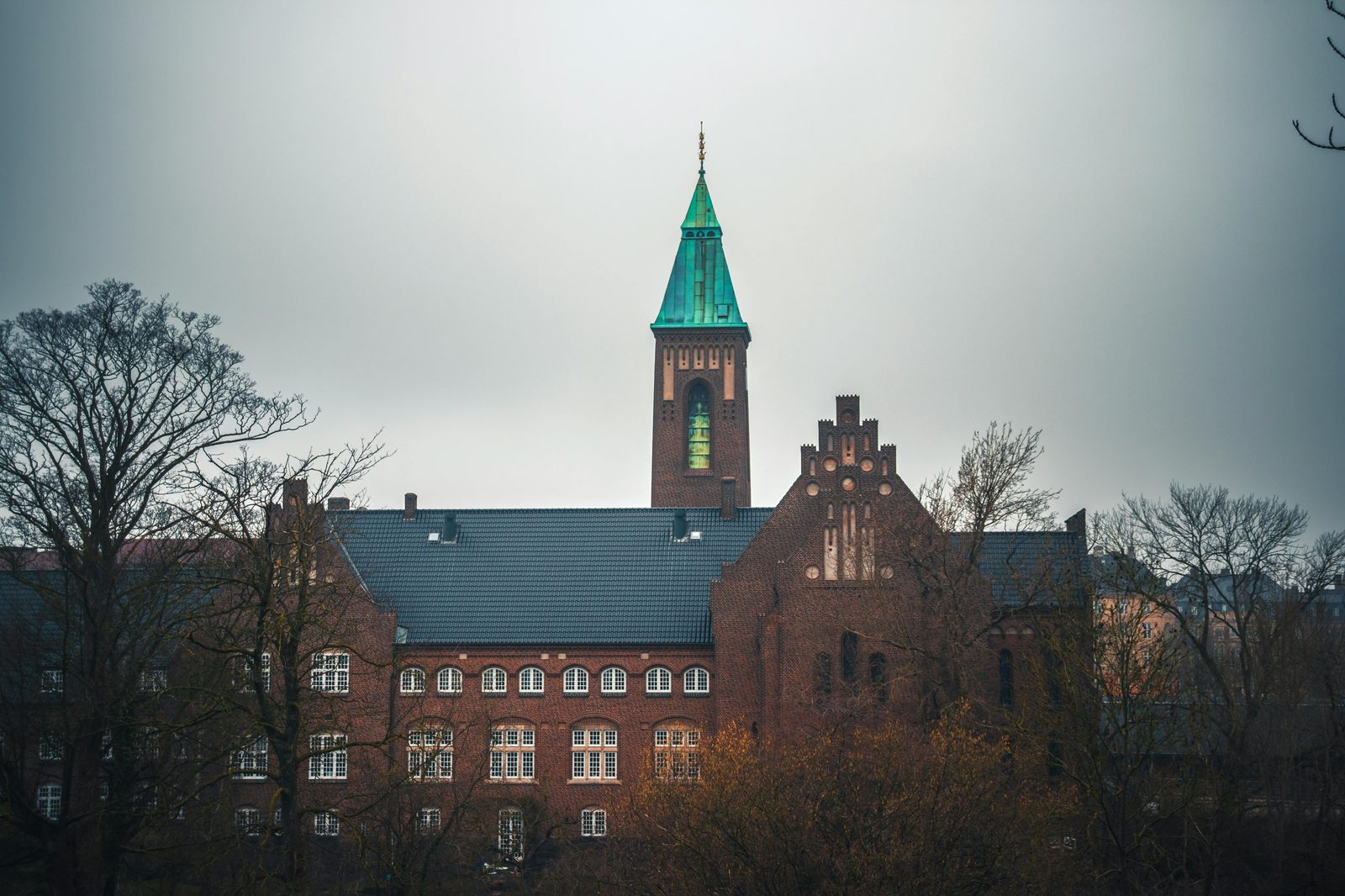
Technically Frederiksberg is a separate municipality surrounded by Copenhagen, but from a traveller’s perspective it’s just another neighborhood — and one of the nicest. Think wide boulevards, grand 19th-century buildings, the Frederiksberg Gardens and the zoo, and a reliably upscale atmosphere. Locals joke that Frederiksberg is where you move when you have a baby or a cat; it’s calm, leafy, and very liveable. The Frederiksberg guide has the full picture.
What Frederiksberg is best for
- Families and repeat visitors seeking a calmer base
- Luxury / business travellers wanting space away from the centre
- Anyone who values architecture and green space
- Visitors keen on the Carlsberg Brewery (Visit Carlsberg experience)
What Frederiksberg is not ideal for
- Travellers only in Copenhagen for 1–2 nights
- Anyone looking for edgy nightlife
- Budget accommodation seekers — rates mirror central areas
Approximate nightly rate: €140–260 in high season. Notable hotels: Avenue Hotel, Hotel Søpark, and design-forward Hotel Alexandra nearby.
7. Nordhavn — the new waterfront
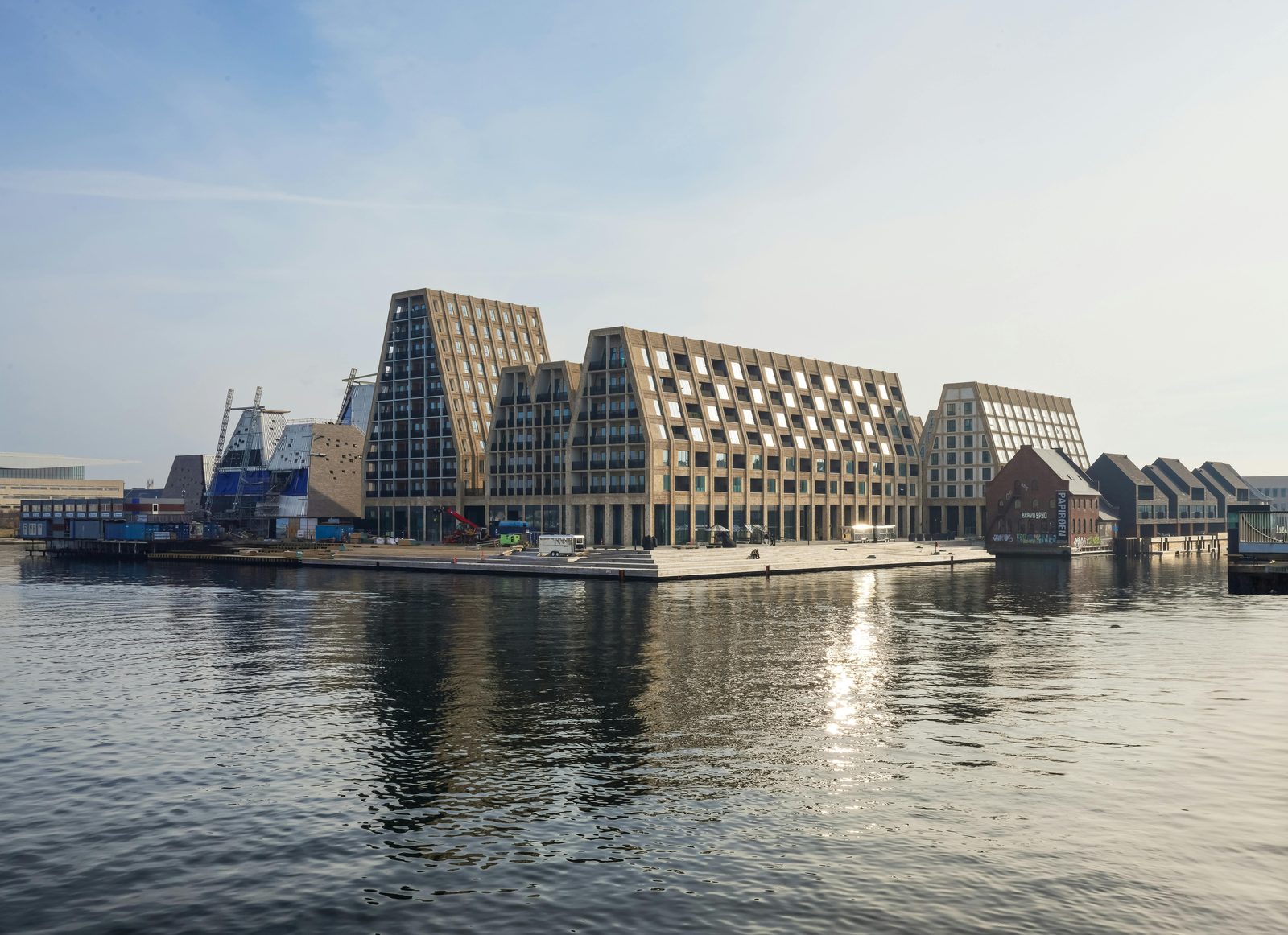
Nordhavn, Copenhagen’s former industrial northern harbor, is being rebuilt as one of Europe’s largest urban regeneration projects. The result is a sleek, architect-designed neighborhood of glass apartment blocks, waterfront promenades, sea baths, and new design hotels. If you care about contemporary architecture and you’ve seen the historic core before, Nordhavn is a revelation.
What Nordhavn is best for
- Design and architecture enthusiasts
- Business travellers — quick metro access to Indre By
- Travellers keen to swim — the Harbour Baths at Sandkaj are spectacular
- Cruise passengers — Ocean cruise terminal is at the edge of Nordhavn
What Nordhavn is not ideal for
- First-timers wanting immersive historic atmosphere
- Travellers without data roaming — some corners still feel empty after dark
- Budget visitors — new-build inventory is priced accordingly
Approximate nightly rate: €150–320 in high season. Notable hotels: The Audo Residence, STAY Nordhavn (apartment-hotel), plus a growing pipeline of boutique properties.
8. Refshaleøen — the foodie outpost (bonus)
Refshaleøen is a former shipyard on its own island, now the home of Noma (the world’s most celebrated restaurant), the Reffen street-food market, a sauna, a contemporary art center (Copenhagen Contemporary), and a climbing gym. Hotel inventory is almost non-existent — you visit Refshaleøen rather than stay there — but it’s worth knowing about as you plan which neighborhood is closest. Harbour Bus 992 connects Nyhavn and Nordhavn to Refshaleøen in minutes, and it’s a highlight of any Copenhagen food tour.
Where to stay in Copenhagen for first-time visitors
If this is your first trip, the answer is straightforward: stay in Indre By, ideally within a 10-minute walk of Kongens Nytorv or Nørreport Station. From here you can walk to Nyhavn, Tivoli Gardens, Rosenborg Castle, the Round Tower, Christiansborg Palace, Strøget and the National Museum without ever needing a bus or metro.
We cover the exact streets to target — and which to avoid — in our dedicated guide to where to stay in Copenhagen for first-time visitors. Three shortlists worth mentioning here:
- Premium first-timer pick: around Kongens Nytorv — Hotel d’Angleterre, Nobis, Hotel Sanders.
- Best-value first-timer pick: Nørreport / Latin Quarter side streets — Ibsens Hotel, Ascot Hotel, Coco Hotel.
- Budget first-timer pick: Vesterbro / Central Station corner — Wakeup Copenhagen, Cabinn City, Hotel Absalon.
Where to stay in Copenhagen by travel style
Luxury travellers
Copenhagen’s 5-star scene is concentrated in Indre By. The historic Hotel d’Angleterre on Kongens Nytorv has hosted royalty since 1755, Nimb Hotel occupies a Moorish palace on the edge of Tivoli Gardens, and Nobis Copenhagen turned the former Royal Danish Conservatory into a minimalist urban retreat. The newest 1 Hotel Copenhagen brings sustainable-luxury credentials to the harbor front. Expect €400–900+ per night — see the full breakdown in our best luxury hotels in Copenhagen guide.
Budget travellers
You can absolutely do Copenhagen on a budget, but you need to know where to look. Steel House Copenhagen (by Petersham hospitality, the same group behind the Generator chain) has dorm beds from €25 and is one of the best-designed budget hostels in Europe. Wakeup Copenhagen (Bernstorffsgade and Borgergade locations), Cabinn City, Cabinn Metro and MEININGER Hotel all offer reliable rooms from €70–110 in shoulder season. We go deeper in our best budget hotels in Copenhagen under $150 and best hostels in Copenhagen guides.
Families with kids
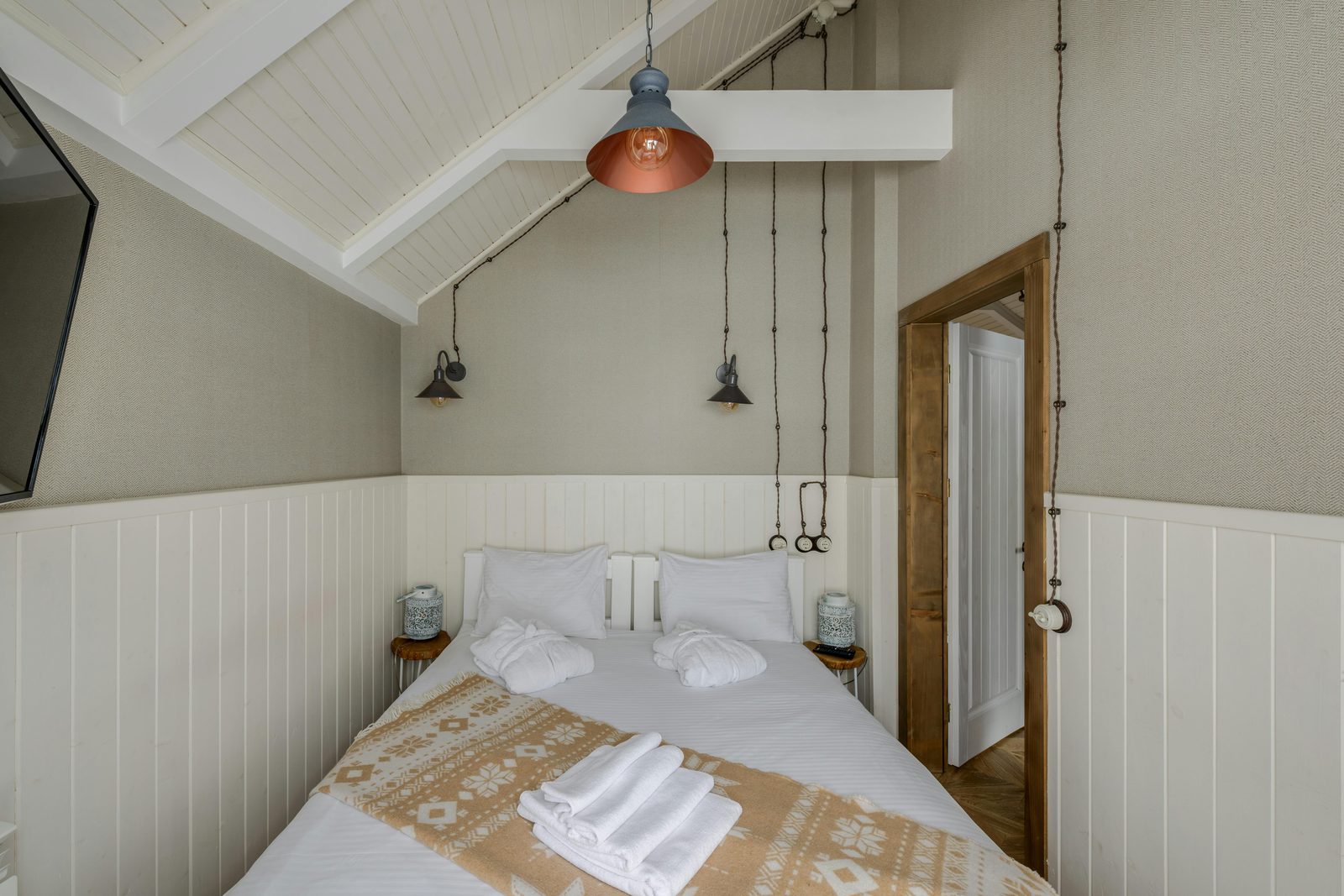
Families do well in Østerbro, Frederiksberg or the Indre By side closest to Tivoli. Tivoli Hotel itself has a pool and playground, Hotel Scandic Falkoner in Frederiksberg has family rooms and is next to Frederiksberg Gardens, and Hotel Danmark offers free extra beds for kids. See our full best family hotels in Copenhagen guide for 12 kid-tested picks.
Couples and romantic trips
For two, Christianshavn and the quiet Indre By streets around the Latin Quarter are magic. The Audo Residence in Nordhavn turns the city’s design-hotel vocabulary into a small B&B with nine rooms, while Hotel Sanders’ rooftop bar is one of Copenhagen’s most atmospheric places to end the day with a cocktail.
Solo travellers and digital nomads
Solo travellers usually pick Nørrebro or Vesterbro for the social density — plenty of solo-friendly cafés, easy-to-join running clubs, and several co-working spots. Generator Copenhagen, Steel House, and Urban House Copenhagen all run regular social events if you want to meet other travellers.
Business and conference travellers
If you’re here for a conference at Bella Center, consider Copenhagen Marriott or Crowne Plaza Towers — both on the metro line south of the city. For general business, Indre By (Nobis, Villa Copenhagen) puts you close to banking, media and government HQs. Nordhavn is another strong business pick thanks to its metro access. Wherever you land, getting between meetings is painless — see our guide to getting around Copenhagen.
Copenhagen hotel types — luxury to hostel
1. Luxury (5-star)
Hotel d’Angleterre, Nimb Hotel, Nobis Copenhagen, 1 Hotel Copenhagen, Villa Copenhagen, Copenhagen Admiral Hotel (former grain warehouse on the harbor). Spa facilities, Michelin-level dining, and concierge teams who can get you a Noma reservation. Nightly rates €400–900+.
2. Boutique design
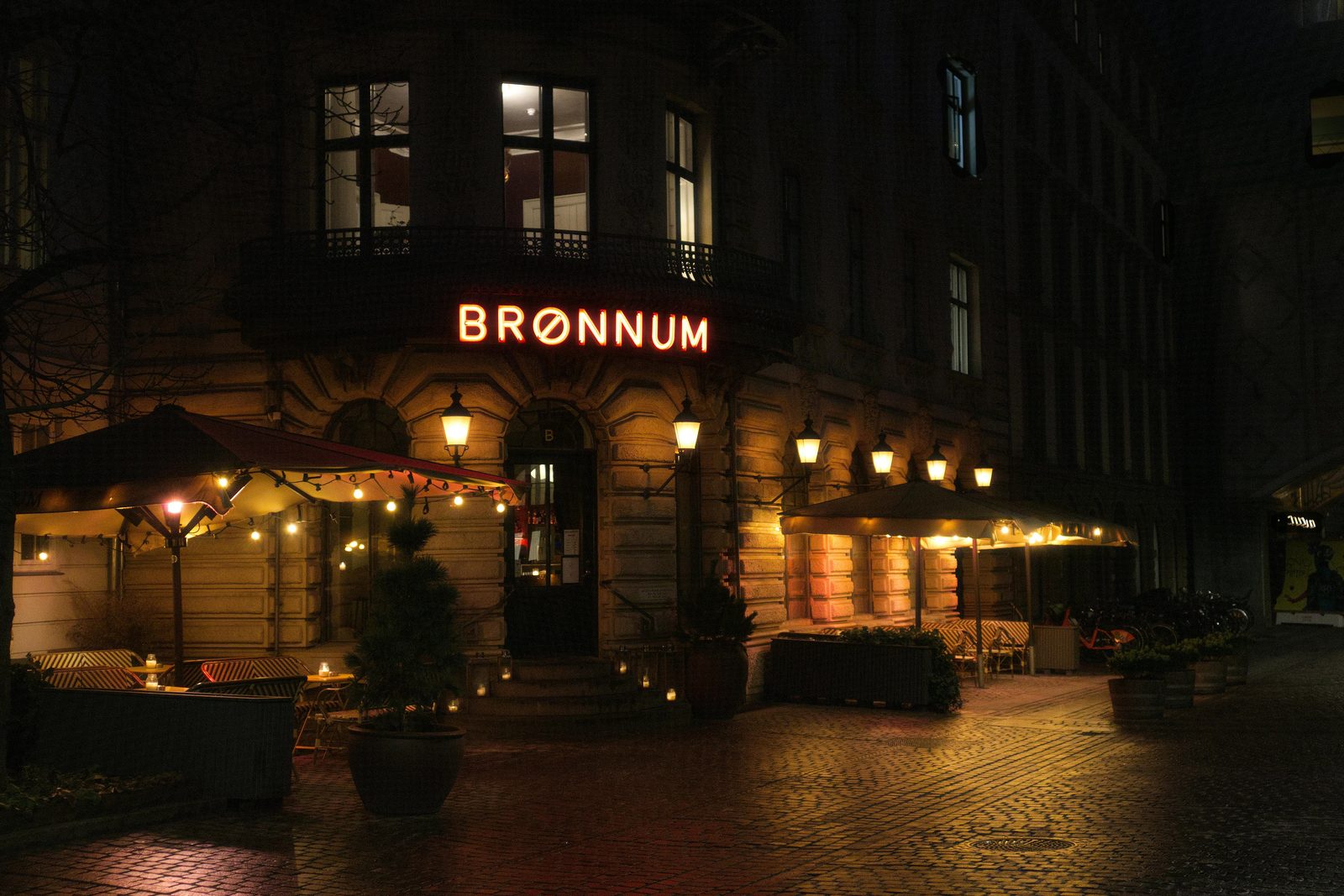
Hotel Sanders, Coco Hotel, Hotel Alexandra (mid-century Danish design), Hotel SP34, Andersen Boutique Hotel, The Audo Residence, and the new Hotel Hans from Brøchner Hotels. Small, design-led, often run by an independent group. See our best boutique hotels in Copenhagen guide for deep reviews.
3. Mid-range (3-star to 4-star chains)
Reliable, good-location hotels in the €140–220 range: Scandic Copenhagen, Radisson Blu Royal, Tivoli Hotel, Hotel Danmark, Imperial Hotel, Phoenix Copenhagen. You get comfortable rooms, breakfast buffets, and predictable service — useful if it’s your first trip and you want to minimize surprises.
4. Budget hotels
Wakeup Copenhagen (two locations), Cabinn City / Cabinn Metro / Cabinn Scandinavia, MEININGER Hotel Copenhagen, Hotel Absalon, and many Zleep Hotels properties in outer neighborhoods. Smaller rooms, but the locations are central and the rates competitive (€80–130 shoulder season).
5. Hostels
Steel House Copenhagen (best-rated), Generator Copenhagen, Urban House Copenhagen by MEININGER, Copenhagen Downtown Hostel, City Hub Copenhagen (pod hostel), and Danhostel Copenhagen City (the city’s main HI hostel, near Central Station). Dorm beds €25–55 shoulder, €40–70 peak.
6. Apartment hotels and serviced apartments
STAY Copenhagen, STAY Nordhavn, Adina Apartment Hotel, Tribe Copenhagen, and Brøchner’s Hotel Hans all offer apartment-style stays. Perfect for stays of 4+ nights, families, or anyone who wants a kitchenette to offset Copenhagen’s expensive restaurant scene.
Airbnb in Copenhagen — is it legal? The 70-day rule
Yes, Airbnb is legal in Copenhagen, but there are real limits. Since 2021, the Danish government caps short-term rentals of a primary residence at 70 nights per calendar year when you use a reporting platform like Airbnb or Booking.com. If you rent off-platform without that platform reporting to the tax authorities, the cap drops to 30 nights. You can read the official rules on the Danish tax authority (Skat) short-term-rental rules page.
In practice, this means many Airbnb listings near peak season sell out months ahead. It also means that some listings you’ll see are actually technically illegal commercial sublets — Copenhagen City launched a housing patrol in 2025 to track these down, and authorities can now force Airbnb to block bookings after the 70-night cap is hit. For a full explainer see our Airbnb Copenhagen legal guide.
Practical Airbnb tips for Copenhagen 2026
- Book 3–6 months ahead for May–August, Christmas, and Distortion festival
- Prefer Superhosts with 50+ reviews in your target neighborhood
- Look for full Copenhagen apartments (not just a spare room) if you’re traveling as a couple or family
- Double-check the listing mentions the bycykel (city bike) station nearby — Copenhagen is best by bike
- Avoid listings in Tingbjerg and Gellerup-style estates; they’re far from attractions and underserved by transport
Areas to avoid when choosing where to stay in Copenhagen
Copenhagen is one of the safest capitals in Europe — it’s regularly ranked in the top 3 of the Safe Cities Index. That said, there are a small number of micro-areas most locals would tell you to skip when booking accommodation, purely because they’re either unpleasant or far from anywhere interesting.
Better to avoid for accommodation
- Blågårds Plads (Nørrebro) — occasional gang-related incidents; fine to visit by day, not ideal to sleep on the square itself
- Kødbyen / Meatpacking District after 2 a.m. — amazing for dinner and drinks, but the late-night crowd and Scandinavia’s supervised drug room (H17) can make surrounding streets uneasy
- Immediately north of Central Station (Reventlowsgade / Colbjørnsensgade) — mostly fine, but the cheap bars and occasional rough sleepers can bother some travellers
- Tingbjerg, Husum and Bispebjerg outer pockets — far from attractions, limited transport
Bottom line: if your hotel is inside the Ring 2 metro boundary, you are in a safe area. Pickpocketing on trains to/from the airport and on Strøget is the most common actual risk — carry your phone on the side facing away from the aisle.
Hotels near specific landmarks
Hotels near Tivoli Gardens
If you want to roll out of bed and into the world’s second-oldest amusement park (Tivoli Gardens’ official website is directly across from the main entrance), target the hotels below. Most are under a 5-minute walk.
- Nimb Hotel — inside Tivoli’s walls; the ultimate stay
- Villa Copenhagen — 3 minutes walk, former post office building
- Radisson Collection Royal Hotel — 2 minutes, Arne Jacobsen–designed landmark
- Tivoli Hotel — Arne Jacobsen-adjacent, walking distance (15 min via Dybbølsbro)
- Wakeup Copenhagen Bernstorffsgade — 3 minutes, budget-friendly
- MEININGER Hotel Copenhagen — 6 minutes, hostel-hotel hybrid
For a full walking-distance comparison with prices and room-type recommendations, see our best hotels near Tivoli Gardens Copenhagen guide.
Hotels near Copenhagen Airport (CPH, Kastrup)
Copenhagen’s metro runs 24/7 and the airport is only 14 minutes from Kongens Nytorv, so most visitors do not need an airport hotel. But if you’re arriving late, leaving at 5 a.m., or just layover-sleeping, target the two hotels connected to Terminal 3. The Copenhagen Airport’s hotel page lists them both:
- Clarion Hotel Copenhagen Airport — 2 min walk from Terminal 3
- Comfort Hotel Copenhagen Airport — next door to the Clarion
- Park Inn by Radisson Copenhagen Airport — 10 min free airport shuttle
Our detailed best hotels near Copenhagen Airport guide compares walking times, breakfast, soundproofing and layover-friendly check-in rules.
Booking tips and Copenhagen price trends
Once you’ve settled on an area, timing your booking is the single biggest lever you have on price. Here are the tips experienced Copenhagen visitors swear by.
- Book 3–6 months ahead for May–September; prices typically jump 20–40% in the final 6 weeks
- Favour flexible rates over non-refundable for peak season — Copenhagen weather and event schedules shift plans often
- Use price-tracking tools (Google Flights + Hotel price insight, Booking price drop) to catch mid-June dips
- Join hotel loyalty programs — Strawberry (former Nordic Choice), Scandic Friends, Accor ALL all have Copenhagen inventory
- Compare flat-rate aparthotels vs nightly hotels for stays of 5+ nights — often 20–30% cheaper when cooking breakfast yourself
- Check cancellation and prepayment terms — Danish consumer law tends to favor the traveller on flexible rates, but not if you booked non-refundable
- Book direct for the top-tier 5-stars — d’Angleterre, Nimb and Nobis often throw in upgrades, late checkout, or dining credit
Distortion Festival warning
If your trip includes the first weekend of June, check whether it overlaps with the Distortion street festival in Vesterbro and Nørrebro. Accommodation inside those two neighborhoods sells out months in advance and prices double. If you’re not there for the party, book in Indre By or Østerbro instead.
Getting from Copenhagen Airport to your hotel
Copenhagen Airport (CPH, Kastrup) is 8 km southeast of the city centre — one of the closest major airports to a European capital. You have four realistic options to reach your hotel:
- Metro M2 — 14 min to Kongens Nytorv, 27 DKK, runs 24/7. Best option for most travellers.
- Train (Øresundstog) — 14 min to København H (Central Station), 36 DKK, useful if your hotel is in Vesterbro or near the station
- Taxi / ride-hail — 20–30 min, 250–350 DKK, predictable price (no surge in Denmark)
- Airport Shuttle / Hotel shuttle — slower; only worth it if it’s free from your hotel
You can plan any journey step by step using Rejseplanen, the national transport planner — the official Danish transport planner — or just tap in on the metro with any Visa/Mastercard. For the full rundown of tickets, zones and the fastest route to each area, see our full metro guide.
Seasonal pricing guide for Copenhagen hotels
| Month | Typical rate index | What’s on |
|---|---|---|
| January | Low (0.6×) | Quiet; good deals; cold |
| February | Lowest (0.5×) | Copenhagen Light Festival; cheapest month overall |
| March | Low-medium (0.7×) | Shoulder; fewer crowds |
| April | Medium (0.9×) | Tivoli reopens (mid-April) |
| May | High (1.2×) | Copenhagen Marathon; Eurovision often here |
| June | Peak (1.5–2×) | Distortion Festival; Midsummer; graduations |
| July | Peak (1.4–1.8×) | Copenhagen Jazz Festival; school holidays |
| August | High (1.3×) | CPH Cooking Week; long days |
| September | Medium-high (1.1×) | Shoulder; mild weather; best overall value window |
| October | Medium (0.9×) | Culture Night (mid-Oct) |
| November | Low (0.7×) | Tivoli’s Halloween; shoulder |
| December | Medium-high (1.2×) | Christmas markets; Tivoli’s Christmas |
The single best value window is mid-September to early October — Copenhagen is still warm enough for outdoor dining, crowds have thinned out after the summer peak, and you can book 4-star hotels at 3-star prices. Avoid June unless you’re specifically here for Distortion or Midsummer.
FAQ: Where to stay in Copenhagen
What is the best neighborhood to stay in Copenhagen for first-time visitors?
Indre By (the historic city centre). It’s the most walkable area, closest to attractions like Nyhavn, Tivoli Gardens, Rosenborg Castle and the Round Tower, and has the widest hotel selection across every budget tier. If Indre By is sold out, Vesterbro (just west of Central Station) is a strong runner-up.
Is Copenhagen expensive for hotels?
Yes. Copenhagen is priced comparably to London, Paris and Amsterdam. Expect €140–220 per night for a mid-range double in shoulder season, rising to €250–400 in June and July. Budget travellers can still find hostel dorms from €25 and basic private rooms from €80.
How many days do you need in Copenhagen?
Most travellers find 3 full days enough to cover Copenhagen’s highlights, with a 4th day for a day trip to Roskilde, Malmö (Sweden) or Helsingør. If you’re a slower traveller or want to explore lesser-known neighborhoods, budget 4–5 days.
Is it better to stay in Indre By or Vesterbro?
Indre By if it’s your first trip or you’re focused on historic sights and shopping. Vesterbro if you care most about food, cafés and nightlife, or if you want a slightly better price for a central location. Both are walkable to each other (12–20 minutes).
Is Airbnb legal in Copenhagen?
Yes, but hosts can only rent their primary residence for 70 nights per year when using a reporting platform like Airbnb (30 nights if not). Stick to Superhosts with a track record, and double-check that the address matches the map pin before you book.
Do I need to stay near Copenhagen Airport for an early flight?
Only if your flight is before 6 a.m. Metro M2 runs 24/7 and reaches the airport in 14 minutes from Kongens Nytorv, so most travellers with 7 a.m. or later flights are fine staying in the city. For anything earlier than 6 a.m., book the Clarion or Comfort Hotel connected to Terminal 3.
Where should families stay in Copenhagen?
Østerbro, Frederiksberg, or the Indre By side closest to Tivoli. Tivoli Hotel itself has a family pool and play area, and Hotel Danmark offers free extra beds for kids. Nørrebro and Vesterbro nightlife can be noisy and aren’t ideal with young children.
What’s the cheapest area to stay in Copenhagen?
For hostels and budget hotels, Vesterbro (around Central Station) and Nørrebro are the cheapest central neighborhoods. Looking further out, Amager (south of the airport line) and Bispebjerg have the cheapest accommodation absolutely — but you’ll spend more time and money on transport, so the savings are often illusory for short trips.
Is Christiania safe to stay near?
Christianshavn — the neighborhood that contains Freetown Christiania — is safe and family-friendly. The Christiania area itself has a unique atmosphere (the commune has its own rules and photography is restricted inside Pusher Street), but the surrounding residential Christianshavn streets are completely normal and among the most beautiful in the city.
Do Copenhagen hotels include breakfast?
It varies. Luxury and mid-range hotels often charge extra (€18–28 per person per day). Scandinavian chains like Scandic, Strawberry and Cabinn often bundle it. Always check the rate type before you book — a €150 room with breakfast may be cheaper than a €130 room without it for two people.
Our top Copenhagen hotel picks by tier
After evaluating over 120 properties across six price tiers, these are the hotels we’d personally book right now. Each pick balances location, guest reviews, and Copenhagen-ness (would a local be proud to send their friend here?).
- Best 5-star: Hotel d’Angleterre (Kongens Nytorv) — unbeatable location, the city’s most famous hotel, 270+ years of history
- Best boutique: Hotel Sanders — rooftop, intimate lobby bar, 400 m to Nyhavn
- Best mid-range: Villa Copenhagen — glass-dome atrium, pool, walk to Tivoli
- Best budget: Wakeup Copenhagen Borgergade — central, design-led, private rooms from €85 shoulder
- Best hostel: Steel House Copenhagen — arguably the best-designed hostel in Europe
- Best family: Tivoli Hotel — pool, play area, direct walk to Tivoli Gardens
- Best airport: Clarion Hotel Copenhagen Airport — 2 minutes from Terminal 3 with soundproofed rooms
If you still aren’t sure, start with our complete Copenhagen hotel shortlist or jump back up to our first-time visitor recommendations. And once your room is booked, flip over to our complete guide to things to do in Copenhagen to plan the rest of the trip.
One last tip
Whatever neighborhood you pick, book a hotel with secure bike storage. Copenhagen is best experienced on two wheels — renting a bike for 1–3 days typically costs €15–25 and turns a good trip into a great one. Most hotels arrange rentals at reception.
Last updated: July 2026. Photo credits: hero and neighbourhood images via Pexels (photographers credited under each image).


