At two in the morning on an empty street in Nørrebro, with no car in sight in either direction, a Dane will stand at a red light and wait. Visitors find this baffling for about a day and then quietly start doing it too. Danish etiquette is not a set of formal manners so much as a set of shared assumptions about how a society runs, and almost all of the friction visitors experience here comes from missing one of them.
What follows is eighteen of those assumptions, ordered roughly by how often people get them wrong and how much trouble it causes. Some are hard rules with fines attached. Some are social conventions where breaking them makes you mildly odd rather than unwelcome. Most Danes will forgive a foreigner almost anything — the exception is the bike lane, and we will start there.
The Rules With Consequences
1. The Bike Lane Is a Road

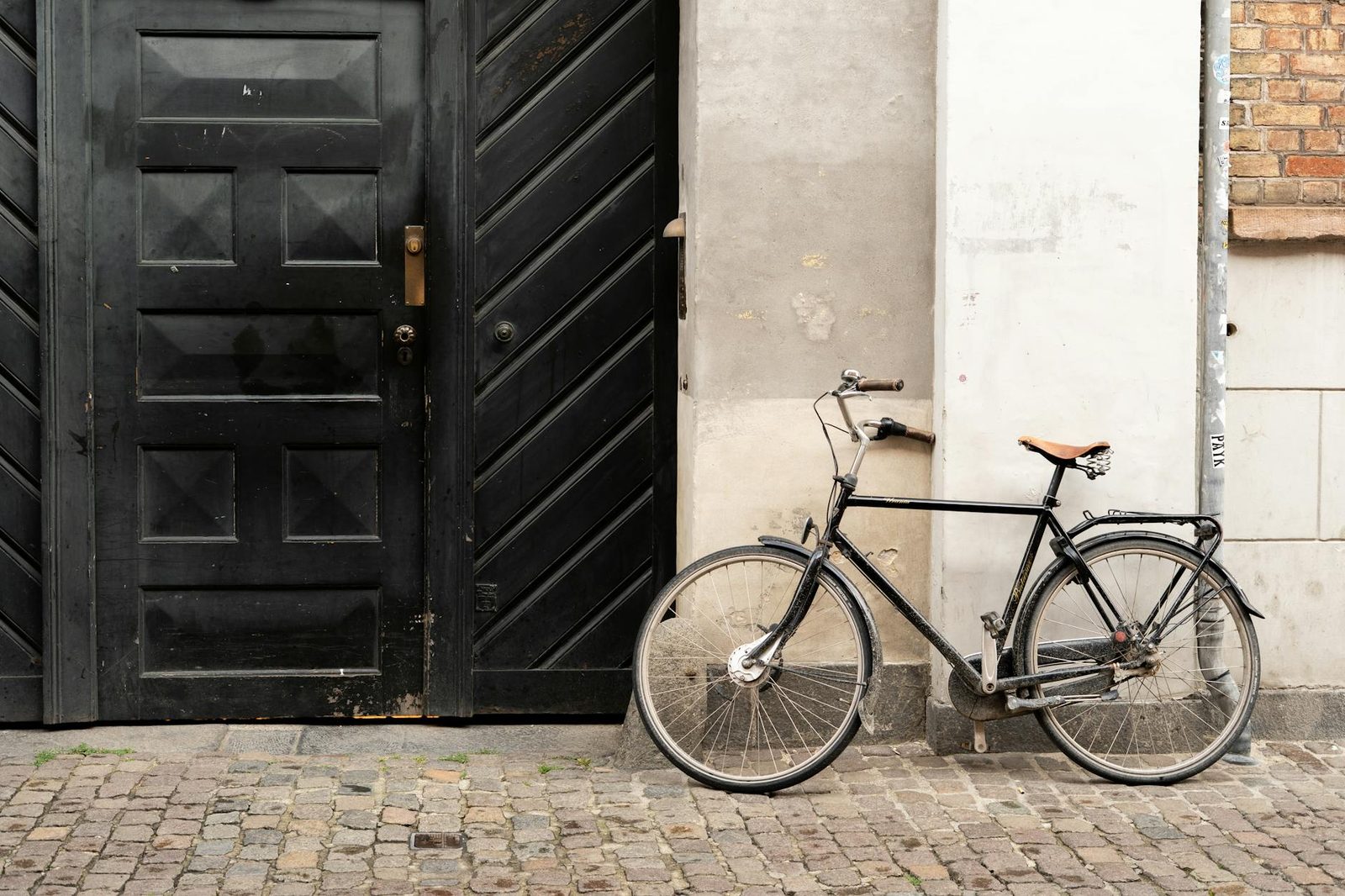
This is the single most common visitor mistake in Copenhagen, and the only one that will get you shouted at. The raised strip between the pavement and the road is a carriageway carrying commuter traffic at 20 km/h in a solid stream from 07:30. Standing in it to check a map, stepping into it to hail a taxi, or letting a suitcase drift into it is not a minor lapse. Cyclists here are travelling at speed with no expectation that anyone will be in their way, and there is no cultural tradition of slowing down for tourists.
Look left before crossing one, every single time, including when crossing to a bus. Danish cyclists do not ring bells much; a bell here means genuine danger, not a polite request. If you hear one, freeze rather than jumping, because they have already picked a line around you.
2. If You Are Cycling, Learn the Hand Signals
Riding a bike in Copenhagen is the best way to see the city and comes with an actual rulebook. Signal right or left with an outstretched arm, and signal that you are stopping with a raised flat hand — that second one is not optional and its absence causes most of the low-speed collisions involving visitors. Overtake on the left only. Do not ride two abreast when the lane is busy. Keep right if you are slow, because someone on a racing bike is coming through.
Lights front and rear are legally required after dark and the police do enforce it, including on rental bikes. Phones in hands are prohibited while riding. And when you stop at a junction, pull forward into the marked bike box rather than sitting behind the cars. Our bike rental guide covers where to hire, and getting around Copenhagen explains how the lanes connect.
3. Nobody Crosses on Red
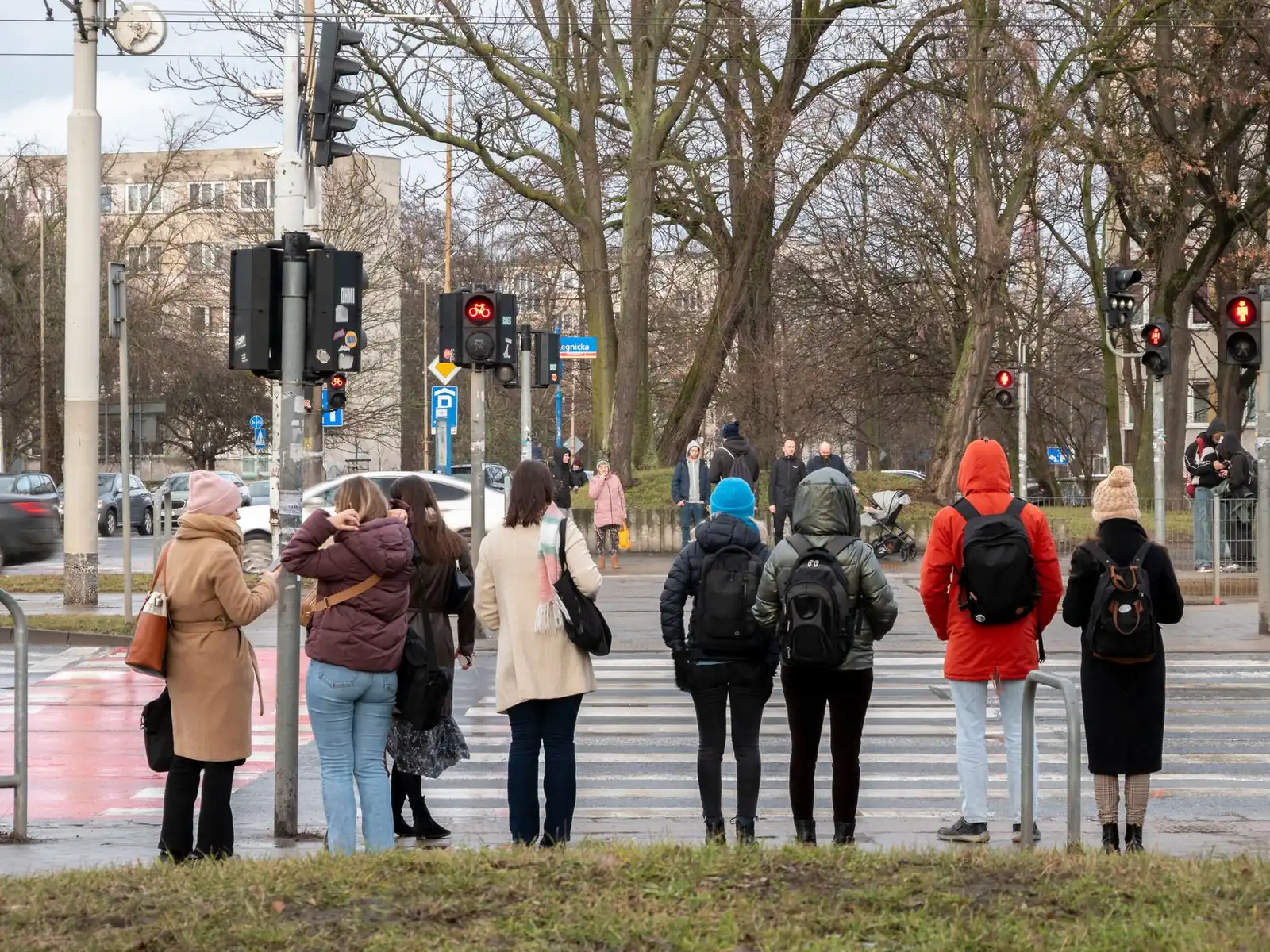
Jaywalking is an offence in Denmark and, more to the point, it is socially conspicuous. You will stand at a crossing with fifteen other people, the road will be visibly empty, and nobody will move. Crossing anyway does not get you arrested but it does get you looked at, and if there are children present you will feel it.
The logic is not obedience for its own sake. In a city where half the population cycles and children ride to school alone from the age of about eight, the shared reliability of the signals is what makes the system safe. A pedestrian who runs a red light is defecting from something that works. Wait the forty seconds.
4. Punctuality Means the Actual Minute
If a Dane says seven, they mean seven. Not seven-fifteen, not “around seven”. Arriving fifteen minutes late to a dinner requires an apology; arriving half an hour late without a message is genuinely rude. Restaurant bookings are held with less flexibility than in southern Europe, and a table booked for 19:00 may be given away by 19:20.
There is a counterintuitive corollary: do not arrive early to someone’s home either. Turning up ten minutes before the stated time puts the host in an awkward position. Danes will genuinely stand around the corner watching the clock rather than ring the doorbell at 18:52. If you find yourself early, walk a block.
The Language Traps
5. There Is No Danish Word for Please
This is the one that most changes how visitors interpret Danish behaviour. Danish has no direct equivalent of “please”. The politeness that English carries in that one word is distributed elsewhere in Danish — into the verb form, the intonation, and a very generous use of tak, which means thank you and does an enormous amount of work.
The consequence is that Danes speaking English often sound abrupt to English ears. “Give me a coffee” from a Dane is not rudeness; it is a direct translation of a perfectly polite Danish sentence with no available “please” to insert. Once you know this, an entire category of imagined coldness disappears. Say tak often and you will sound entirely normal here.
6. Everyone Speaks English, and You Should Still Try
Denmark has among the highest English proficiency in the world and Copenhagen operates in English by default in shops, bars and restaurants. You will not be stranded. But the reflexive Danish assumption is that a foreigner cannot speak Danish, so any attempt at all — tak, undskyld, hej — is received warmly precisely because it is unexpected.
Do not push it past your ability, though. Danes will switch to English the moment your Danish falters, and that is not a rebuke; it is efficiency, which is the higher value here. See our page on English in Copenhagen for how far it gets you.
If you want to go a step further than tak, we have picked the forty words that actually earn their place — from the push-and-pull pair on every shop door to the exchange that ends every Danish meal — with pronunciations written for English speakers. See our guide to Danish phrases for travellers.
7. Danish Directness Is Not Rudeness
Danes say what they mean with very little softening. There is no elaborate apparatus of “I wonder whether we might possibly”. A Danish colleague will tell you your idea is bad, in those words, and then buy you a beer. British and American visitors frequently read this as hostility and it is not: indirect speech is regarded here as slightly dishonest, a way of making the listener do the work of decoding.
The flip side is that Danish praise, when it arrives, is worth something. And Danish humour runs to deadpan irony delivered with an absolutely straight face, which means you will occasionally not know whether you are being teased. You usually are.
8. Janteloven, and Why Nobody Brags
The Law of Jante comes from a 1933 novel by Aksel Sandemose and sets out ten rules of a fictional small town, all variations on “you are not to think you are anything special”. Danes will tell you it is outdated and then live by it anyway.
In practice: do not lead with your job title, your salary, or what you paid for anything. Do not describe your own achievements in the first person superlative. If someone compliments a Dane, watch them deflect it. This is why a wealthy country looks so unshowy — the cars are modest, the clothes are dark and plain, and the millionaire on the cargo bike is dressed exactly like everyone else. A visitor who arrives performing success reads, here, as slightly embarrassing rather than impressive.
Food, Drink and the Table
9. Skål Requires Eye Contact

When someone says skål, you raise your glass, make eye contact with each person at the table individually, drink, and then make eye contact again before putting the glass down. The eye contact is not decorative. Skipping it is the equivalent of a limp handshake, and at a small table people notice.
At a formal Danish dinner, nobody drinks before the host has made the first toast. Wait for it. At an informal one, the first skål comes within about ninety seconds of everyone sitting down, so you will not wait long.
10. Værsgo Starts the Meal, Tak for Mad Ends It
Do not start eating until the host says værsgo — roughly “here you are, help yourself” — which functions as the starting gun. At the end, every guest says tak for mad, thanks for the food, to whoever cooked, and the host answers velbekomme. Children say it too, and are taught to. It is a small ritual and skipping it is one of the few things a Danish host will actually register.
If you are invited to a home, bring something: wine, flowers, or good chocolate. Not a bottle of spirits unless you know them well. And expect to be there a long time — a Danish dinner party runs to five hours and the coffee stage is not the end.
11. Smørrebrød Has an Order and It Is Not Optional

Open sandwiches are eaten with a knife and fork, never picked up, and never stacked. There is also a sequence: herring first, then other fish, then meat, then cheese. Ordering three at once and eating them in whatever order you fancy is the visible mark of a tourist, and at a proper lunch restaurant the kitchen will send them out in the right sequence whether you asked for it or not.
One piece is a starter, three is lunch. And the herring is not optional if you want the real version — it goes with a shot of akvavit and a beer, in that combination, at midday. Our smørrebrød guide covers where to do this properly, and the New Nordic explainer covers the other end of the Danish food spectrum.
12. Tipping Is Genuinely Optional
Service is included by law and Danish hospitality staff are paid a proper wage. Nobody is relying on your tip and nobody will chase you down the street. Rounding up, or leaving five to ten per cent for something genuinely good, is appreciated and entirely voluntary. Tipping twenty per cent marks you out as American rather than generous.
Do not tip in bars for a poured beer, do not tip taxi drivers beyond rounding up, and do not feel awkward about the card terminal that offers you a tip prompt — those are increasingly common and Danes routinely decline them. The full picture is in our guide to tipping in Copenhagen.
13. Split the Bill Exactly, With MobilePay
Danes split bills to the krone, calculated on what each person actually had, and they do it without embarrassment. There is no culture of one person grandly picking up the tab, and offering to do so can read as a Jante violation rather than generosity. The settlement happens on MobilePay, which is on every Danish phone and which you probably cannot use as a visitor — so carry a card and be ready to say what you owe.
Cash is close to extinct here. Some venues no longer accept it at all. Our money and currency guide covers what actually works.
Social Life, Silence and Space
14. Small Talk Is Not a Virtue
Danes do not fill silence. A lull in conversation is not a failure to be repaired; it is a lull. Strangers on public transport do not talk to each other, the person next to you in a queue will not comment on the weather, and none of this indicates dislike.
A related rule that catches Americans and Southern Europeans hardest: do not sit next to a stranger on a half-empty bus or train. Spread out. Take the empty double seat. Sitting down beside someone when other seats exist is read as an approach, and it makes people uncomfortable. On a full carriage this obviously does not apply.
15. Danish Friendship Is Slow, and Then It Is Permanent
Denmark ranks near the top of every happiness index and near the bottom of every “easy for foreigners to make friends” index, which sounds contradictory and is not. Danish social circles are formed early — school, gymnasium, sports club — and stay closed, not out of hostility but because they are already full.
The practical consequence for a visitor: friendliness in a bar does not mean what it means at home, and neither does its absence. Nobody is being cold at you. If you want conversation with Danes, the reliable route is a shared activity rather than a shared room — a sauna, a running club, a bar with communal tables. Our solo travel guide goes into this properly.
16. Hygge Is Not a Product

The international hygge industry — the cushions, the coffee-table books, the scented candles marketed at forty pounds — is a mild source of Danish embarrassment. Hygge is not an aesthetic and cannot be bought. It is closer to a social contract: while we are being hyggeligt, nobody raises anything difficult, nobody checks their phone, and nobody leaves early.
The physical infrastructure is genuinely just candles. Denmark burns more household candles per head than any other country in Europe, and you will see them lit at eleven in the morning in a café in June. Do not blow one out to make a point about daylight. Our guide to hygge unpacks what it actually means in practice.
Small Things That Mark You Out
17. Take a Number, and Take Your Shoes Off
Two unrelated rules that catch the same visitors. First: many Danish shops, bakeries, pharmacies and public offices run a ticket system rather than a physical queue. Look for the small dispenser near the door before you join what appears to be a scrum. Standing at the counter without a number is how you get quietly overtaken by everyone in the room.
Second: shoes come off inside private homes, always, unless the host actively tells you otherwise. Danish floors are wooden and Danish weather is wet. Wear decent socks.
18. Bottles Go Beside the Bin, Not In It
Every can and bottle carries a refundable deposit, pant, and there is an informal economy of people who collect them. If you finish a drink in a park, stand the empty next to the bin rather than dropping it in. Somebody will take it within the hour, and this is not littering — it is the accepted, mildly dignified version of the transaction, and you will see Danes doing it constantly.
Waste sorting at home and in flats is taken seriously and the categories are more granular than most countries. If you are in an apartment rental, read the labels on the bins rather than guessing.
Quick Reference
| Situation | What Danes do |
|---|---|
| Approaching a bike lane | Look left, cross briskly, never stand in it |
| Empty road, red light | Wait |
| Invited for 19:00 | Ring the bell at 19:00, not 18:50 |
| Entering a home | Shoes off, gift in hand |
| First drink at dinner | Wait for the host’s skål, then eye contact |
| Starting to eat | Wait for the host to say værsgo |
| End of the meal | Say tak for mad |
| Paying | Split exactly, card not cash, tip optional |
| Bakery or pharmacy | Take a numbered ticket |
| Half-empty bus | Sit away from strangers |
| Finished can in a park | Stand it beside the bin |
| Someone compliments you | Deflect it |
What You Do Not Need to Worry About
A fair amount of etiquette advice about Denmark is inherited from more formal cultures and does not apply. There is no dress code anywhere you are likely to go, including good restaurants — Danes dress plainly and darkly but not formally. Titles are not used; everyone is on first-name terms immediately, including with people forty years older and the Prime Minister. There is no formal “you” in everyday Danish. Business cards carry no ritual.
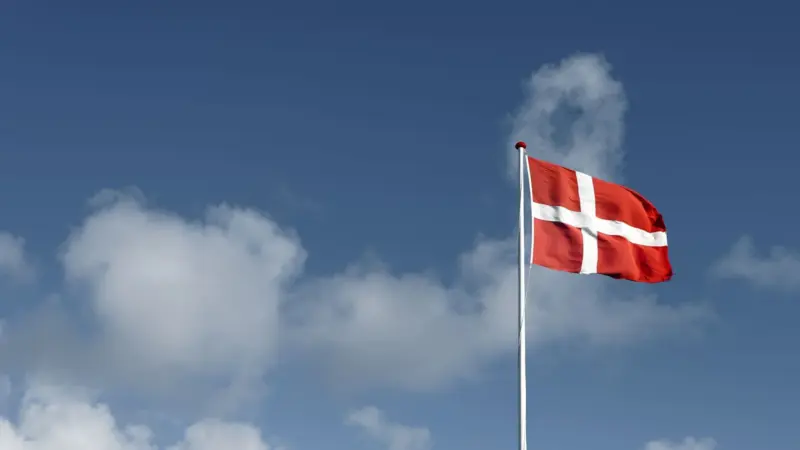
Nudity in changing rooms and saunas is normal and non-sexual, and showering before entering a public swimming pool is compulsory and enforced by an attendant. Same-sex couples hold hands in the street without anyone noticing. And the Dannebrog, the red-and-white flag you will see everywhere — on buses, on birthday cakes, stuck into presents — is a celebration marker rather than a nationalist statement. A Danish child’s birthday table is covered in flags and it means nothing more than “there is a party here”.
The flags come out in force on 5 June, Constitution Day, which is not a public holiday but closes the big shops by law all the same. Our guide to public holidays in Denmark explains that one, Christmas Eve and the other days that catch visitors out.
Copenhagen is also, by any measure, an extremely safe city, which shapes the social texture more than most visitors realise — see our safety page for the detail. Prams are left outside cafes with babies in them. That is not neglect; it is a country where that has always been fine.
Frequently Asked Questions
What is considered rude in Denmark?
Standing in a bike lane, crossing on a red light, arriving late without a message, boasting about money or status, and skipping eye contact during a toast. Loudness in public also registers, particularly on trains.
Why do Danes seem cold?
Mostly they are not. Danish has no word for “please”, so Danes speaking English sound blunter than they mean to, and there is no cultural obligation to make small talk with strangers. Social circles form early and stay closed, which reads as coldness but is not aimed at you.
Do I need to tip in Denmark?
No. Service is included and staff are paid a proper wage. Rounding up or leaving five to ten per cent for something excellent is appreciated and entirely voluntary.
Is it rude to speak English in Copenhagen?
Not at all — English proficiency here is among the highest in the world and the city runs in English by default. Learning a few Danish words is received warmly precisely because nobody expects it.
What is Janteloven?
The Law of Jante, from a 1933 Aksel Sandemose novel: a set of rules amounting to “do not think you are anything special”. Danes will tell you it is outdated, and then quietly live by it. In practice it means nobody advertises wealth, status or achievement.
What should I bring to a Danish dinner party?
Wine, flowers or good chocolate. Arrive at the stated time, not early. Take your shoes off, wait for the host’s toast before drinking, wait for værsgo before eating, and say tak for mad at the end.
Can you jaywalk in Copenhagen?
It is an offence and, more importantly, nobody does it. You will stand with a crowd of people at an empty crossing waiting for a green light. Crossing anyway attracts genuine disapproval, especially with children around.
Related Reading
- What hygge actually means the candles, the social contract, and why the books get it wrong.
- Tipping in Copenhagen how much, when, and why the card terminal asks.
- English in Copenhagen how far it gets you, which is very far.
- Copenhagen travel tips the practical layer underneath the social one.
- Is Copenhagen safe? the safety picture that shapes how the city behaves.
Final Thoughts
The pattern underneath all eighteen of these is trust. Danish society runs on a very high baseline assumption that other people will do the sensible thing — stop at the light, keep to the right, pay their share, turn up at seven. The rules feel fussy from outside and frictionless from inside, and the reason the bike lane matters so much is that it is the place where the assumption is most exposed.
You will not offend anyone here by getting a fork wrong. You will not be judged for your accent, your clothes or your Danish. What Danes notice is whether you are paying attention to the system everyone else is holding up. Look left, wait for green, arrive at seven, and make eye contact when you drink. The rest is detail.