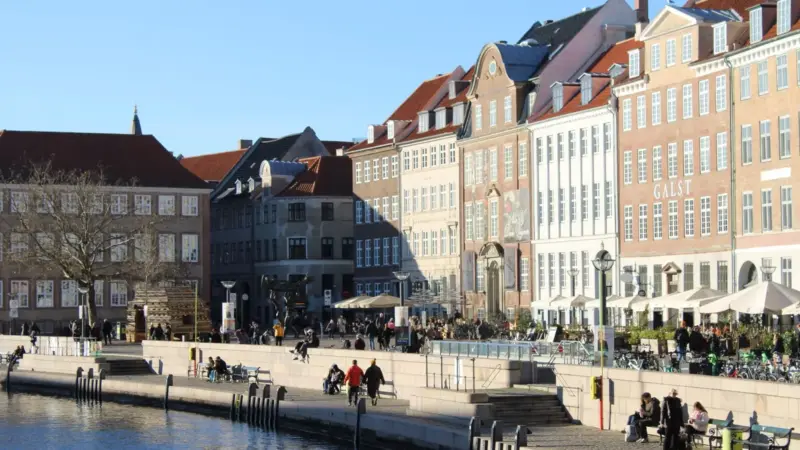
February is the cheapest month of the year to visit Copenhagen and, unusually, one of the busiest for festivals. Vinterjazz runs the whole month and the Light Festival covers the first three weeks. Fastelavn falls on Sunday 7 February 2027. And the city gains nearly two hours of daylight between the 1st and the 28th. The one thing to know before you book: Tivoli is almost certainly shut.
It sits between the two halves of the Copenhagen winter in our month-by-month planner.
Copenhagen in February at a Glance
| Fact | Detail |
|---|---|
| Average high | 3°C / 37°F |
| Average low | -1°C / 30°F |
| Monthly mean | 2.5°C |
| Rainfall | 23–25 mm across about 11 wet days |
| Sunshine | About 2.3 hours a day |
| Daylight | 8h 44m on 1 February, 10h 41m on 28 February |
| Wind | ~6.5 m/s, predominantly westerly |
| Cloud | Overcast or mostly cloudy 63–68% of the time |
| Vinterjazz | 29 January – 28 February 2027 |
| Light Festival | 29 January – 21 February 2027 |
| Fastelavn | Sunday 7 February 2027 |
| School holiday | Vinterferie, 15–19 February 2027 (week 7) |
| Hotel prices | The cheapest month of the year |
Is Tivoli Open in February? The Honest Answer
Almost every article about Copenhagen in February states that Tivoli opens for a short winter season. We could not find any support for that in 2027.
Tivoli’s own seasons page lists four seasons and none of them is a February one: summer 7 April to 20 September, Halloween 2 October to 1 November, Christmas 13 November to 3 January, and Easter with dates unpublished. There is no Vinter i Tivoli entry at all. Tivoli’s own winter-break page says the rides are taking a winter pause and then promotes its restaurants, its hotels and, genuinely, a colouring page you can print at home. That is not the copy of an open amusement park.
Tivoli has run a short February season in some past years, so it is not impossible that one is announced. But as things stand the published calendar goes Christmas straight through to Easter. Do not build a February trip around Tivoli without checking tivoli.dk first. Every competing guide telling you otherwise is citing nothing.
Two Festivals Cover Almost the Whole Month

Vinterjazz, 29 January to 28 February
Denmark’s winter jazz festival is run by the same foundation as the July Copenhagen Jazz Festival, and it describes itself as first and foremost a club festival. It exists to kick-start the season for the country’s year-round jazz clubs, which means small rooms, wine bars and basements rather than concert halls. Roughly 600 concerts across more than 120 venues and organisers, spread from Skagen to Svaneke, with Copenhagen as the historic centre.
Some of it is free. The programme uses three Danish labels: fri entré for free entry, køb billet for advance tickets, dørsalg for tickets on the door. Filter the programme at jazz.dk and book through the individual concert page, because there is no festival-wide ticket and no festival-wide price.
Copenhagen Light Festival, 29 January to 21 February
More than fifty light works across the city, mostly free to walk between, with guided options by boat, kayak, segway and on foot. Note the dates: it ends on the 21st, so a trip in the final week of February misses it entirely.
The scheduling quirk worth exploiting is that in early February darkness falls around 16:45. You can walk a light trail at five in the afternoon and be at dinner by seven. Later in the month you are waiting until six for the same experience. Early February is the better light-festival trip even though it is the darker one.
Both festivals open on the same day, Friday 29 January 2027. A visitor in the first three weeks of February gets both at once.
Fastelavn: Sunday 7 February 2027
Fastelavn is the Danish carnival, and it moves. It falls on the Sunday seven weeks before Easter, which can be anywhere between 1 February and 7 March. Easter Sunday 2027 is 28 March, which puts Fastelavn on 7 February 2027, the earliest it has been in years. It was 15 February in 2026 and 2 March in 2025. If you arrive after about the 9th, you have missed it.
The centrepiece is slå katten af tønden, knocking the cat out of the barrel. Costumed children beat a suspended decorated barrel with sticks until it breaks and the sweets fall out. Whoever knocks the bottom out and whoever strikes down the last piece are crowned kattekonge and kattedronning, cat king and cat queen. Traditionally the king was the one who freed the cat and then chose his queen; today both titles go by strike.
The barrel originally contained a live cat. Cats were folk-associated with evil, and driving one out symbolically banished misfortune from the community. It was replaced by a cloth cat during the 1800s and by sweets since. The custom is attested in Danish records from the early 1500s, and on Amager the kattekonge was once granted a year’s exemption from tax.
Being honest about the practicalities: Fastelavn is overwhelmingly a private and institutional event held in schools, workplaces, daycares and residents’ associations. There is no reliable public listing this far ahead. Your realistic options are local kulturhuse, parish halls and museums running family programmes, and you should check kk.dk and the visitor service listings in late January rather than trusting anyone who promises you a venue now.
The fastelavnsboller are easier. These cream-filled buns are sold through the whole month, not just on the day, and Copenhagen’s bakeries compete hard on them. A bakery crawl is a legitimate, entirely weatherproof February afternoon. Our bakery guide covers where to start.
Week 7 Is the Exception to the Empty Month
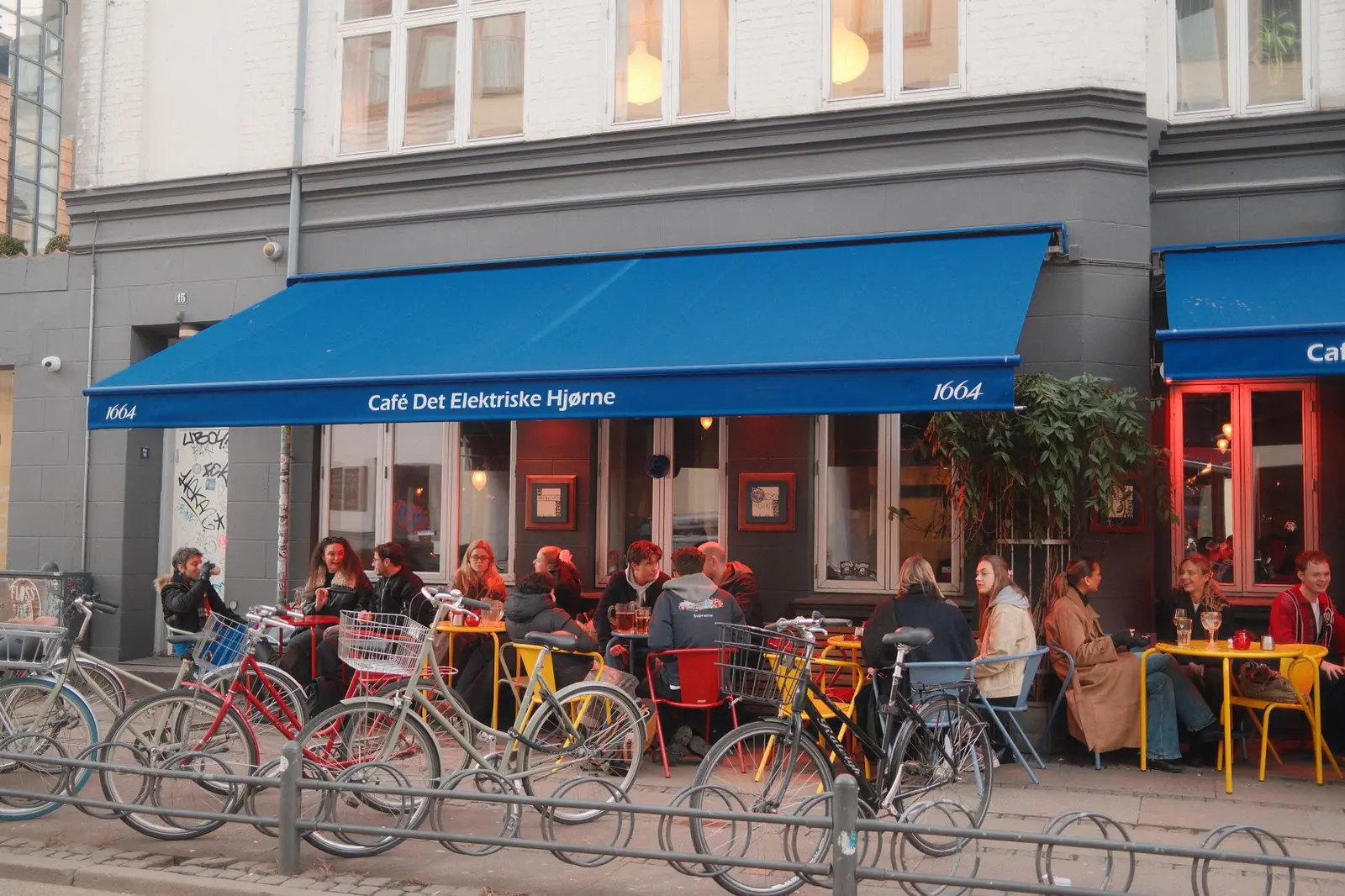
Copenhagen’s school winter holiday, vinterferie, runs 15 to 19 February 2027, which is week 7. Denmark splits roughly half and half between weeks 7 and 8, so the wider country is off across 15 to 26 February.
What that means in practice: museums, the aquarium, the Planetarium and family attractions run special programming and fill up with Danish families. Hotel rates and domestic transport blip upward. And the weekends either side, 12 to 14 February and 26 to 28 February, are busier than the midweeks around them because many parents take them too.
The corollary is the useful bit. 1 to 12 February and 27 to 28 February are the genuinely empty, genuinely cheap window, and Fastelavn on the 7th falls inside it. No other guide makes this point, and it is the single most actionable thing on this page.
Museums Stay Open Late
Short days matter less than they sound because Copenhagen runs a serious late-opening culture. From the city’s own visitor service listings:
- Monday is normally a museum dead zone, but the Danish Architecture Center runs to 21:00 and Den Blå Planet to 21:00.
- Wednesday is SMK to 20:00, the David Collection to 21:00 and the Natural History Museum to 21:00.
- Thursday is the Glyptotek to 21:00, Copenhagen Contemporary to 21:00 and ARKEN to 21:00.
- Tuesday to Friday, Louisiana in Humlebaek stays open to 22:00, which is the strongest dark-evening option in the region at about 35 minutes by train.
- Christiansborg Tower is free to climb, 44 metres up with a lift, and closed Mondays.
The Glyptotek is free on the last Wednesday of every month, which in February 2027 is the 24th. Note it is the last Wednesday only, not every Wednesday, which is a change several guides have not caught up with.
February Weather: Grey Rather Than Cold
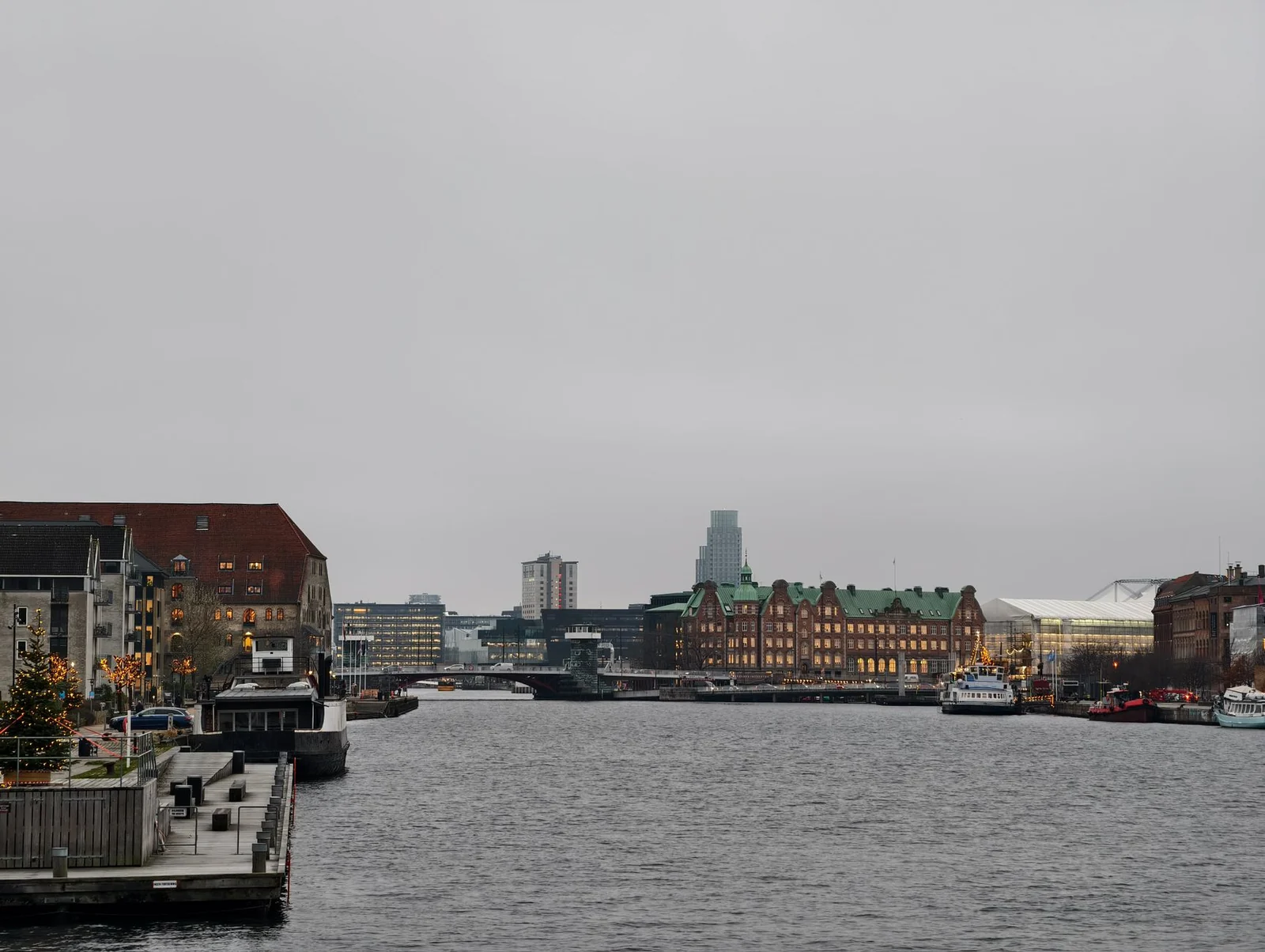
Highs of 3°C and lows of -1°C, near enough flat across the month. The coldest stretch is around 8 February. None of that is difficult in itself.
What is difficult is the sky. Copenhagen is overcast or mostly cloudy 63 to 68 per cent of the time in February and gets about 2.3 hours of sunshine a day. It is grey more than it is cold, and days of flat white sky are what visitors actually find hard. The wind compounds it: roughly 6.5 m/s of westerly across a flat, water-ringed city turns 3°C into something meaningfully worse, particularly on the harbour and on a bike.
Snow is possible but not reliable. Expect about eleven wet days and 23 to 25 mm of precipitation, arriving mostly as rain or sleet. A dusting at some point is likely; a snow-covered city is a lucky break; slush is the realistic outcome.
Daylight is returning fast
| Date | Sunrise | Sunset | Daylight |
|---|---|---|---|
| 1 February | 08:01 | 16:45 | 8h 44m |
| 28 February | 07:01 | 17:43 | 10h 41m |
Nearly two hours gained across the month, about four minutes a day. Early February and late February are genuinely different trips. The trade-off is clean: early February is darker but gets you Fastelavn, emptier streets, lower prices and better light-festival hours. Late February gives you two extra hours of daylight but brings vinterferie crowds and the Light Festival has already finished.
Valentine’s Day, and a Correction Worth Making
Valentinsdag is observed on 14 February but it is a recent, imported and largely youth-driven occasion in Denmark, taking hold only through the 1980s and 90s via American advertising. Survey data suggests roughly a quarter of 18 to 34-year-olds mark it, falling to a small minority among over-55s. In 2027 the 14th falls on a Sunday immediately before vinterferie, so restaurants will be busy. Book.
Several travel sites claim that gækkebreve, the cut-paper anonymous rhyme letters signed with a dot for each letter of the sender’s name, are a Danish Valentine’s tradition. They are not. They are an Easter tradition, sent in the weeks before påske and answered with a chocolate egg if the recipient guesses who sent it. With Easter on 28 March in 2027, gækkebrev season starts just after the February window closes.
How February Compares With January
| January | February | |
|---|---|---|
| Daylight, 1st of month | 7h 14m | 8h 44m |
| Daylight, end of month | 8h 40m | 10h 41m |
| Temperature | Marginally colder | About the same, but trending up |
| Tivoli | Closes 3 January | Shut, no 2027 season announced |
| Festivals | Almost nothing until 29 January | Light Festival and Vinterjazz all month |
| Crowds | Consistently dead | Dead except weeks 7 and 8 |
| Prices | Very cheap | The cheapest of the year |
| Cultural anchor | None | Fastelavn, 7 February |
The short version: January is Copenhagen at its emptiest; February is Copenhagen at its cheapest with things actually happening. February takes January’s prices and adds two hours of daylight, two festivals and a genuine Danish tradition.
What to Pack
Drive it from the wind and the wet, not the thermometer.
- A windproof and waterproof outer layer. A fashionable wool coat is the classic mistake in this city.
- Waterproof boots with grip, because you will be walking on slush and refreeze rather than snow.
- Hat, gloves and scarf. The wind is the entire argument.
- Layers you can shed, since Danish interiors are heated hard and you will be indoors half the day.
- A hood rather than an umbrella. An umbrella is close to useless in a 6.5 m/s westerly.
- Swimwear and a towel if you plan to try winter bathing, which is at its most authentic now.
Frequently Asked Questions
Is February a good time to visit Copenhagen?
It is the cheapest month and, outside weeks 7 and 8, the quietest. Two city-wide festivals run through most of it. The catch is that Tivoli is shut and the sky is grey most days.
Is Tivoli open in February?
Tivoli’s published calendar for 2026/27 runs Christmas to 3 January and does not resume until the Easter season. No February 2027 opening has been announced. Check tivoli.dk before planning around it.
What is the weather like in Copenhagen in February?
Highs around 3°C, lows around -1°C, about eleven wet days and 23 to 25 mm of precipitation. It is overcast roughly two-thirds of the time, and the westerly wind makes it feel colder than the numbers.
When is Fastelavn in 2027?
Sunday 7 February 2027. It moves with Easter, falling on the Sunday seven weeks before Easter Sunday, so it can land anywhere between 1 February and 7 March.
Does it snow in Copenhagen in February?
Occasionally, but it rarely settles for long. Sleet and cold rain are more common than snow, and slush is the usual result.
Is Copenhagen cheaper in February?
Yes. February is consistently the cheapest month of the year for Copenhagen hotels. The exception is the school holiday in weeks 7 and 8, when rates rise.
Do Danes celebrate Valentine’s Day?
Some do, mostly younger people, and it only arrived in Denmark in the 1980s and 90s. It is a much smaller occasion than in the US or UK, though restaurants will still be busy on the night.
If February looks too dark, the month after it is a genuinely different proposition: sunshine roughly doubles, daylight gains more than two hours across the thirty-one days, and CPH:DOX arrives. Our guide to Copenhagen in March covers what opens, what stays shut, and the 2027 Easter weekend that lands inside the month.
Related Reading
- Weather across the whole year helps if you are still choosing between months.
- Indoor options worth the trip matters when the sky stays grey for a week.
- The summer jazz festival is the July counterpart to Vinterjazz, and a very different animal.
- A season-by-season packing list covers the windproofing that February actually demands.
Final Thoughts
February is an underrated month here, and the reason is arithmetic rather than atmosphere. You get the lowest hotel rates of the year, two festivals running across almost the entire month, a real Danish tradition on the 7th, museums that stay open until nine several nights a week, and nearly two extra hours of daylight by the time you leave. What you do not get is Tivoli, sunshine, or anything happening outdoors. Come in the first twelve days, bring a windproof coat, and book something you could never get into in June.
Last verified: September 2026. Tivoli had announced no February 2027 season at the time of writing, and the Light Festival’s own site had not published its 2027 programme.