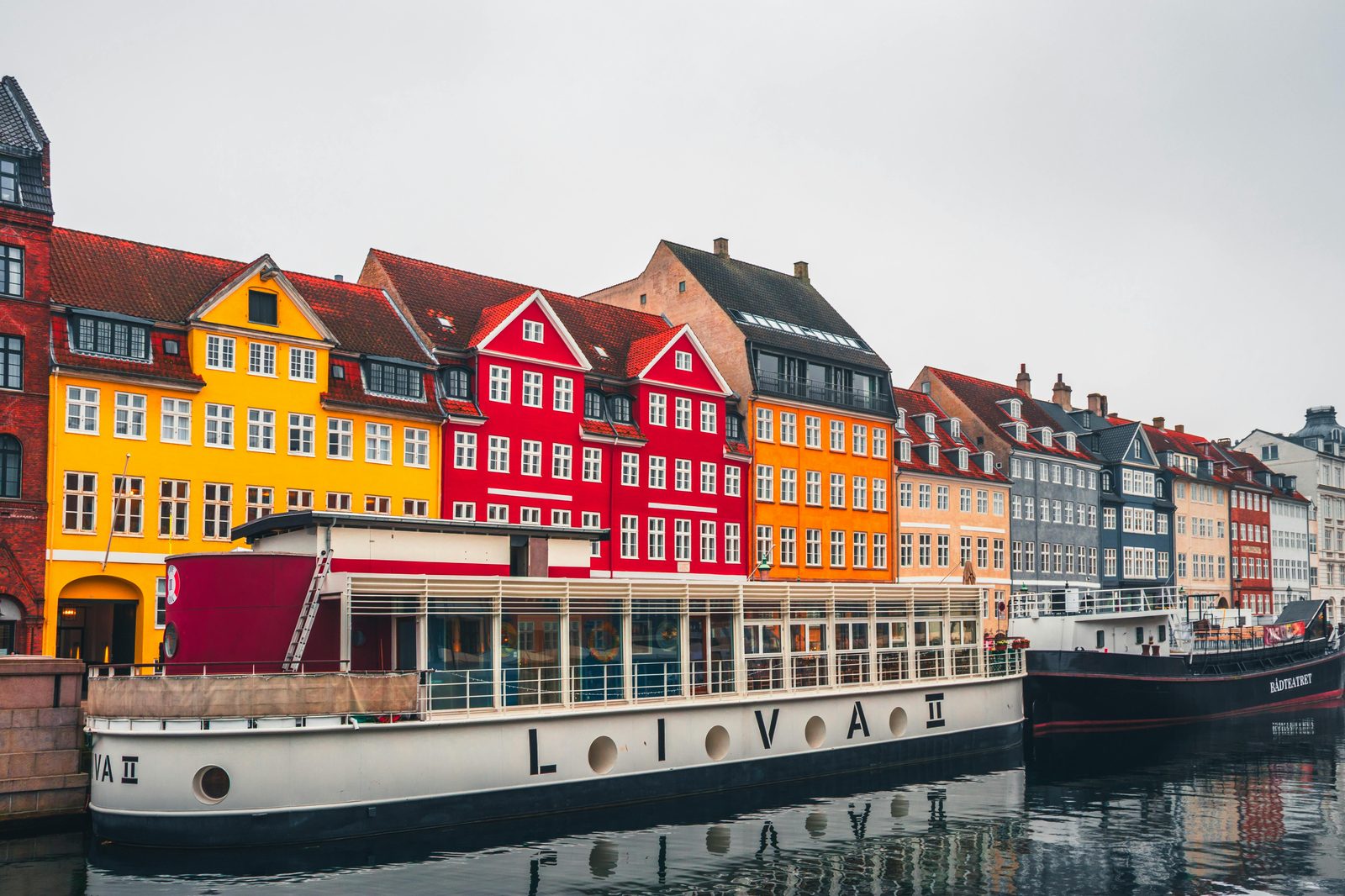
When the forecast turns grey — which, in Copenhagen, it will — this is where families go. Den Bla Planet (The Blue Planet) is Northern Europe’s largest aquarium: 53 themed tanks, 7 million litres of water, and a glass tunnel that puts you right under the sharks. It sits on the water’s edge at Kastrup, a 30-minute metro hop from the centre, and it’s the one indoor attraction that reliably holds toddlers and teenagers for a full morning. Here’s how to do it well.
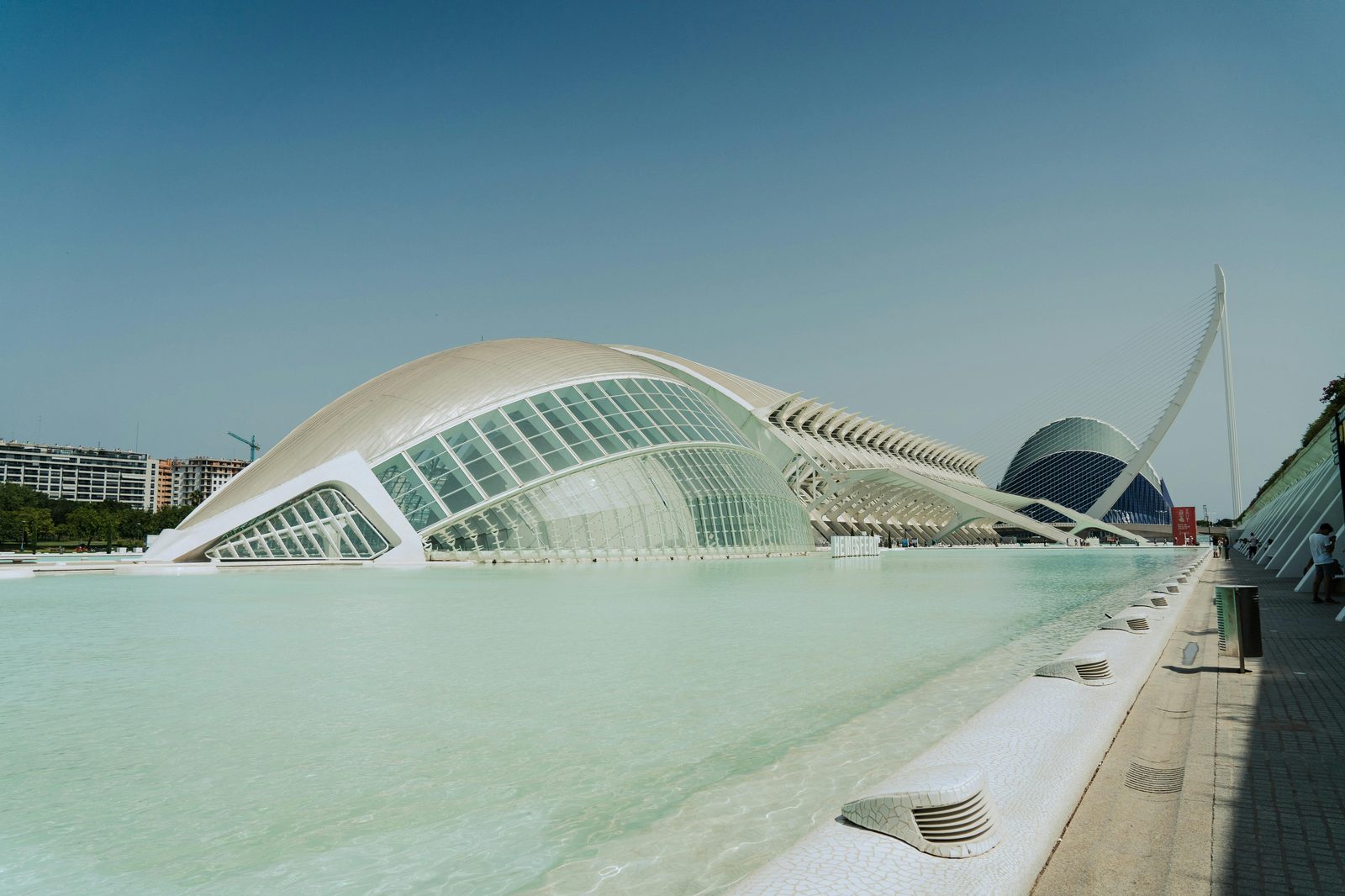
The building itself — a swirling silver whirlpool by Danish architects 3XN, opened in 2013 — is worth the trip alone. Inside, plan on three to four hours, time your visit around a feeding or two, and don’t rush the jellyfish. For the wider family trip, our Copenhagen with kids guide ties it all together, and it’s a natural pairing with our Copenhagen rainy-day activities guide.
Den Blå Planet at a Glance
| Fact | Detail |
|---|---|
| Address | Jacob Fortlingsvej 1, 2770 Kastrup |
| Opened | 2013 (designed by 3XN architects) |
| Aquariums | 53 themed exhibits |
| Total water | 7 million litres |
| Marine animals | 20,000+ |
| Adult ticket | Around 215 DKK |
| Child 3–11 | Around 115 DKK |
| Under 3 | Free |
| Family ticket (2+2) | Around 595 DKK |
| Free with | Copenhagen Card |
| Best season | Year-round and indoors; ideal for rainy days |
| Visit duration | 3–4 hours typical |
| Transport from city | M2 metro to Kastrup, then a 10-min walk; about 30 min total |
Prices creep up a little each year, so treat these as a guide and confirm on the day. If you’re doing several paid sights, the Copenhagen Card includes entry here and pays off fast.
The Exhibits Worth Your Time
The Ocean tank and its sharks
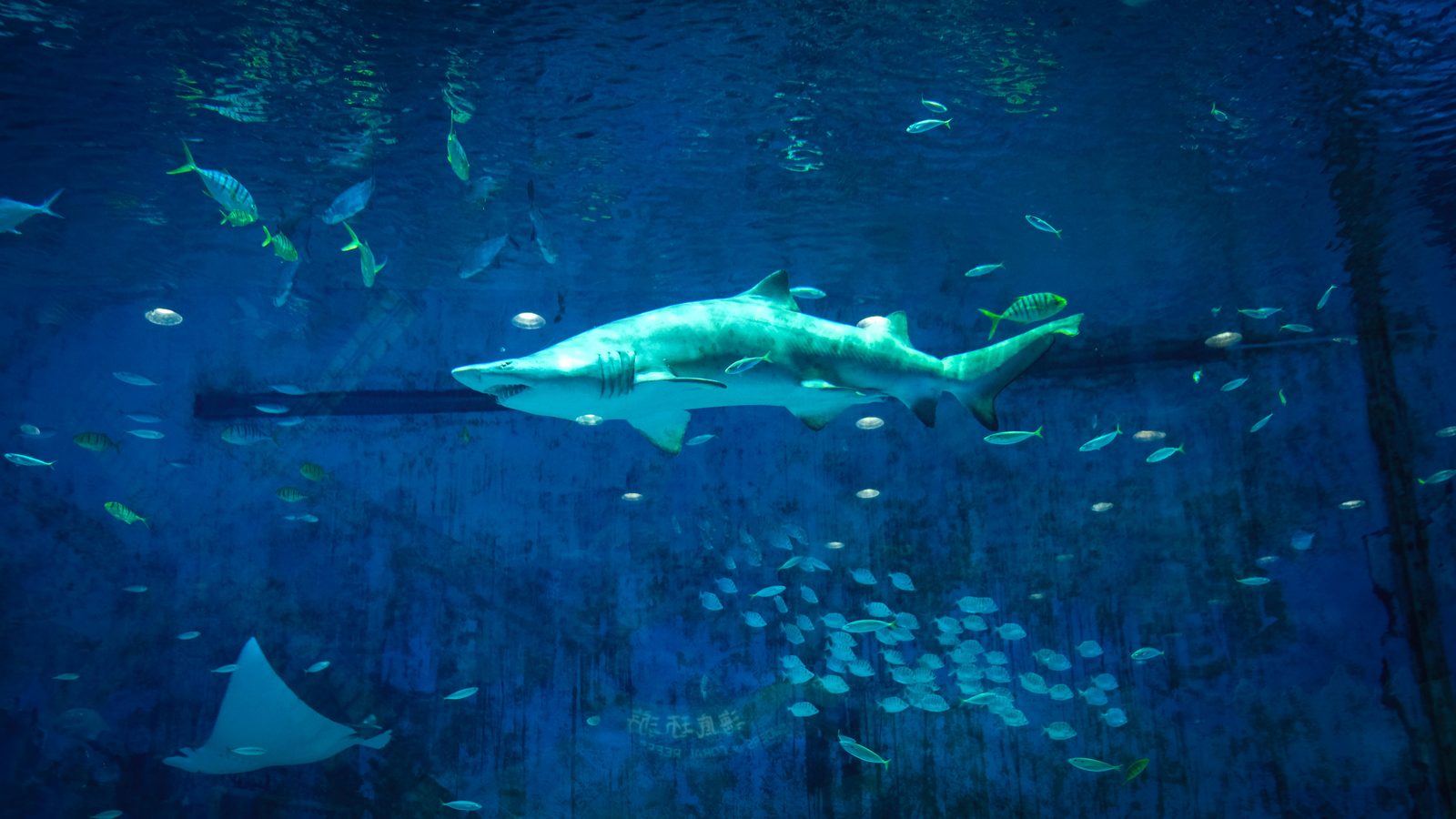
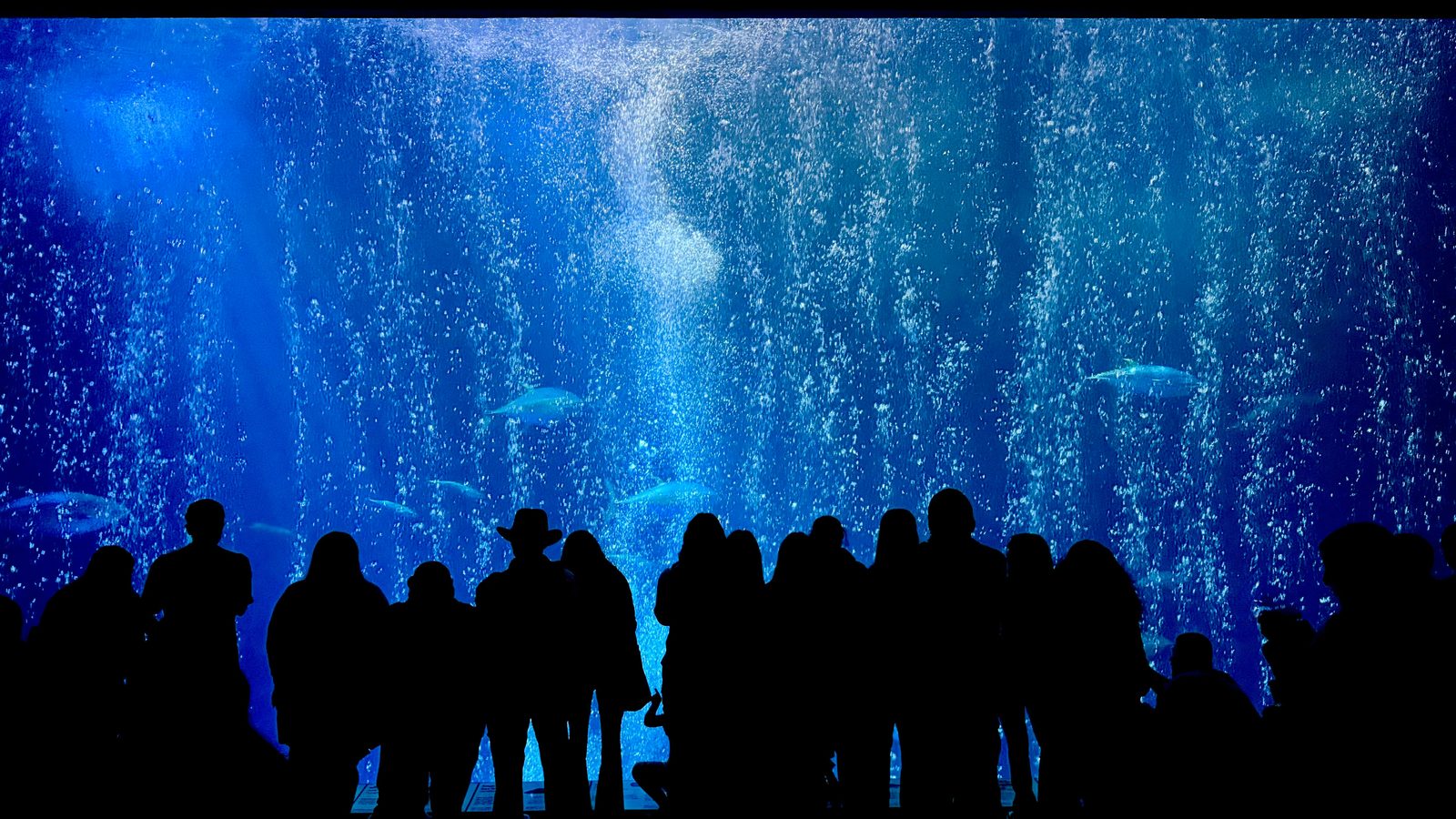
The four-million-litre Ocean tank is the headline act — hammerhead sharks, reef sharks, big rays and dense schooling fish. It’s genuinely mesmerising, and the glass tunnel below means you get views from every angle, including straight up. This is the photo everyone takes home.
The underwater tunnel
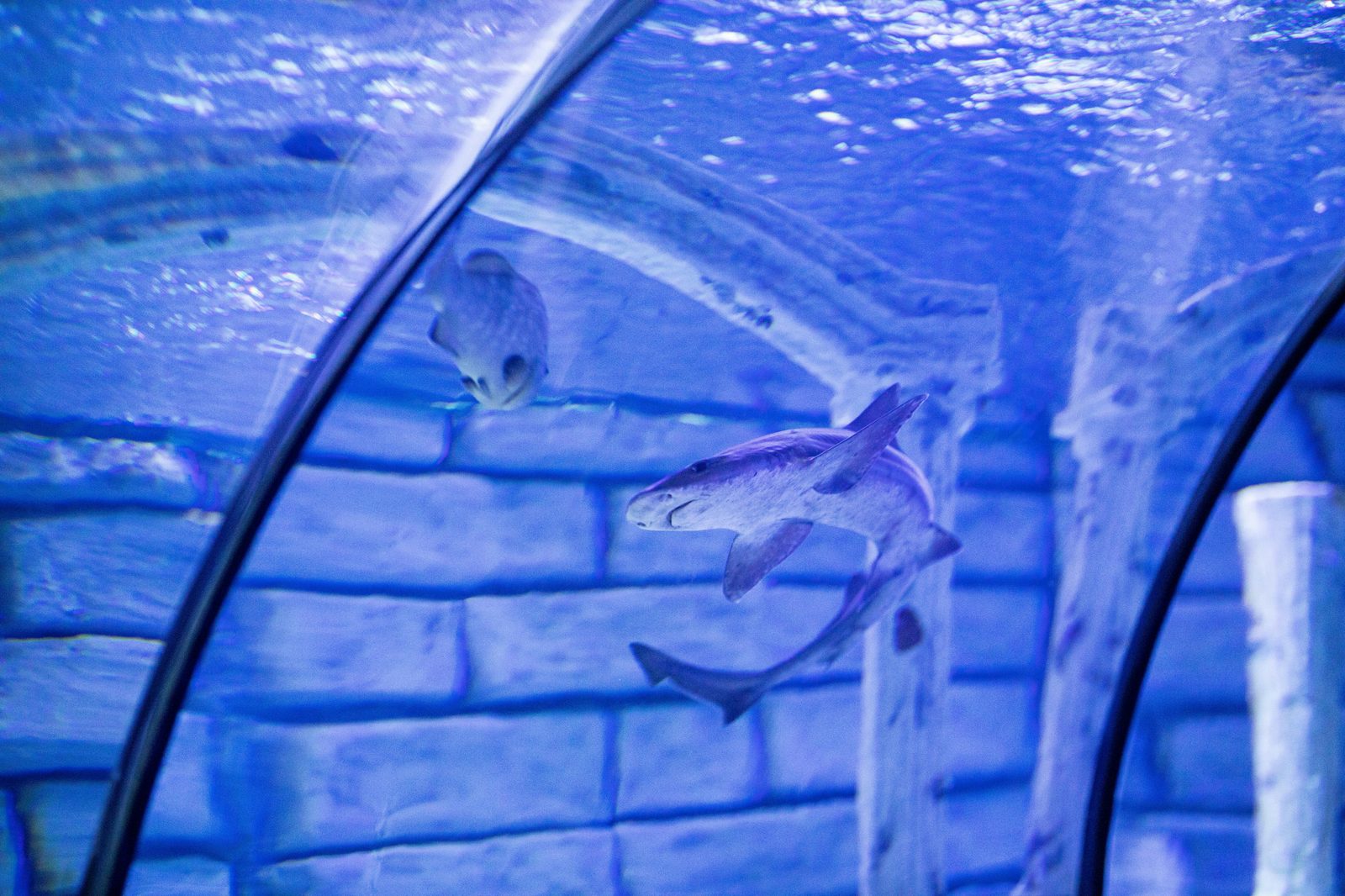
The 16-metre glass tunnel is the bit small children fixate on. Sharks, rays and shoals drift overhead, and it’s not unusual to lose fifteen or twenty minutes here as they insist on walking it “one more time.” Let them — it’s the highlight.
The African Great Lakes
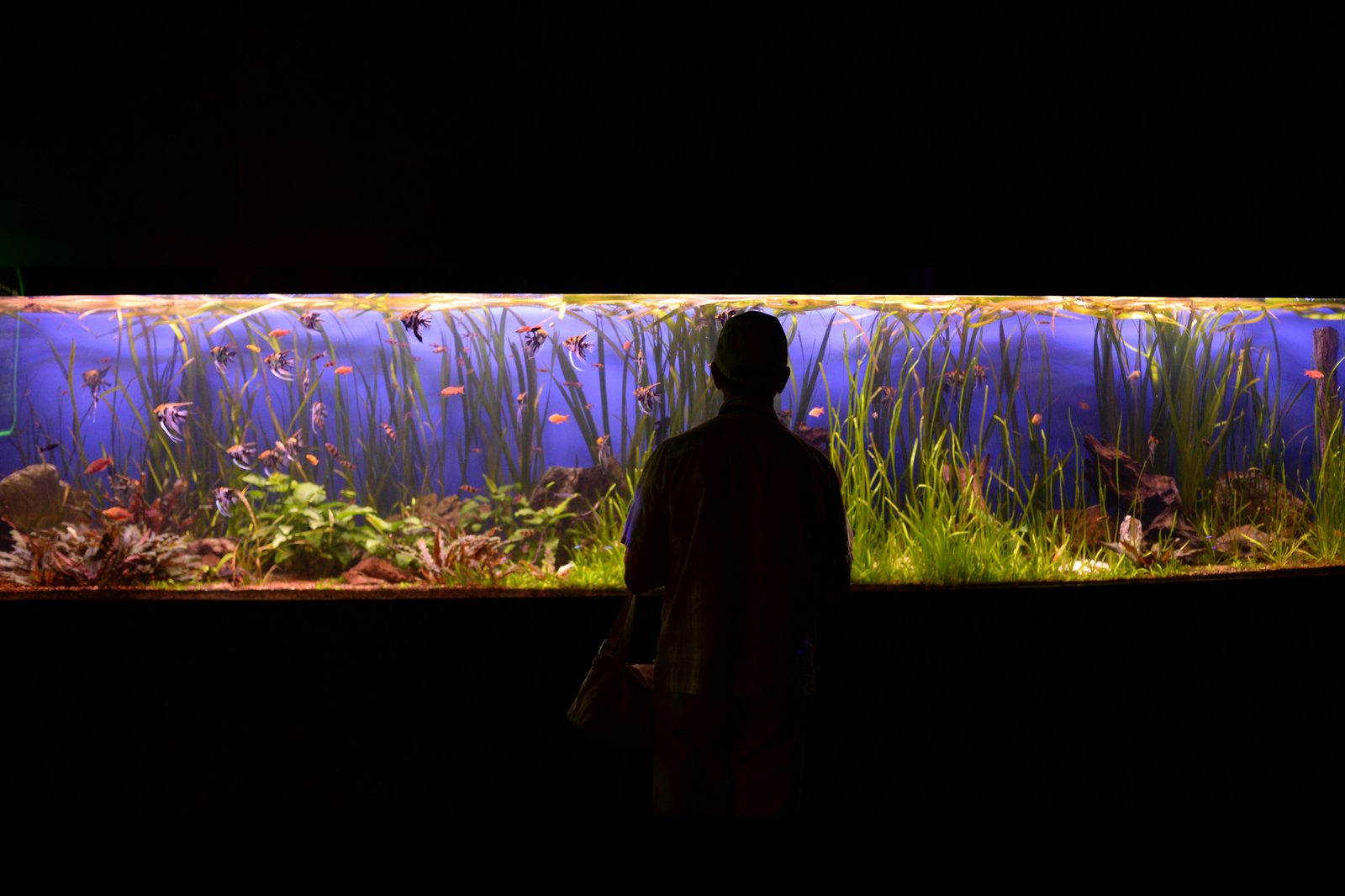
This section recreates Lake Malawi and Lake Tanganyika, home to cichlids so vividly coloured they could pass for coral-reef fish. It’s a quieter corner and a good reminder that freshwater can be every bit as dazzling as the ocean.
The tropical coral reef
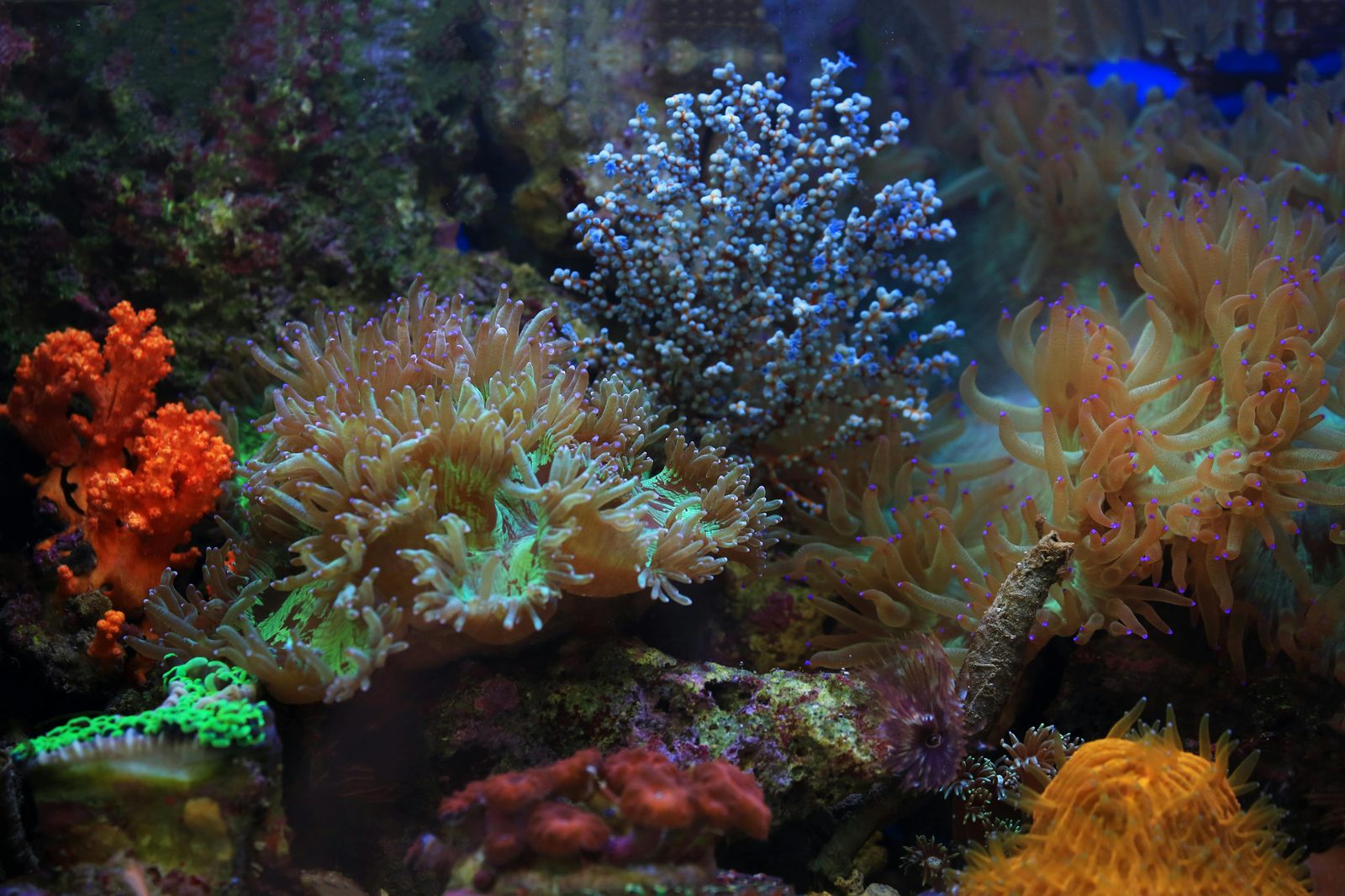
Clownfish (yes, everyone shouts “Nemo!”), butterfly fish, parrotfish, lionfish, seahorses and living coral fill the Indo-Pacific reef. There’s a touch pool here too, where kids can gently feel sea cucumbers and starfish — usually the sensory highlight for the under-fives.
Rays you can touch
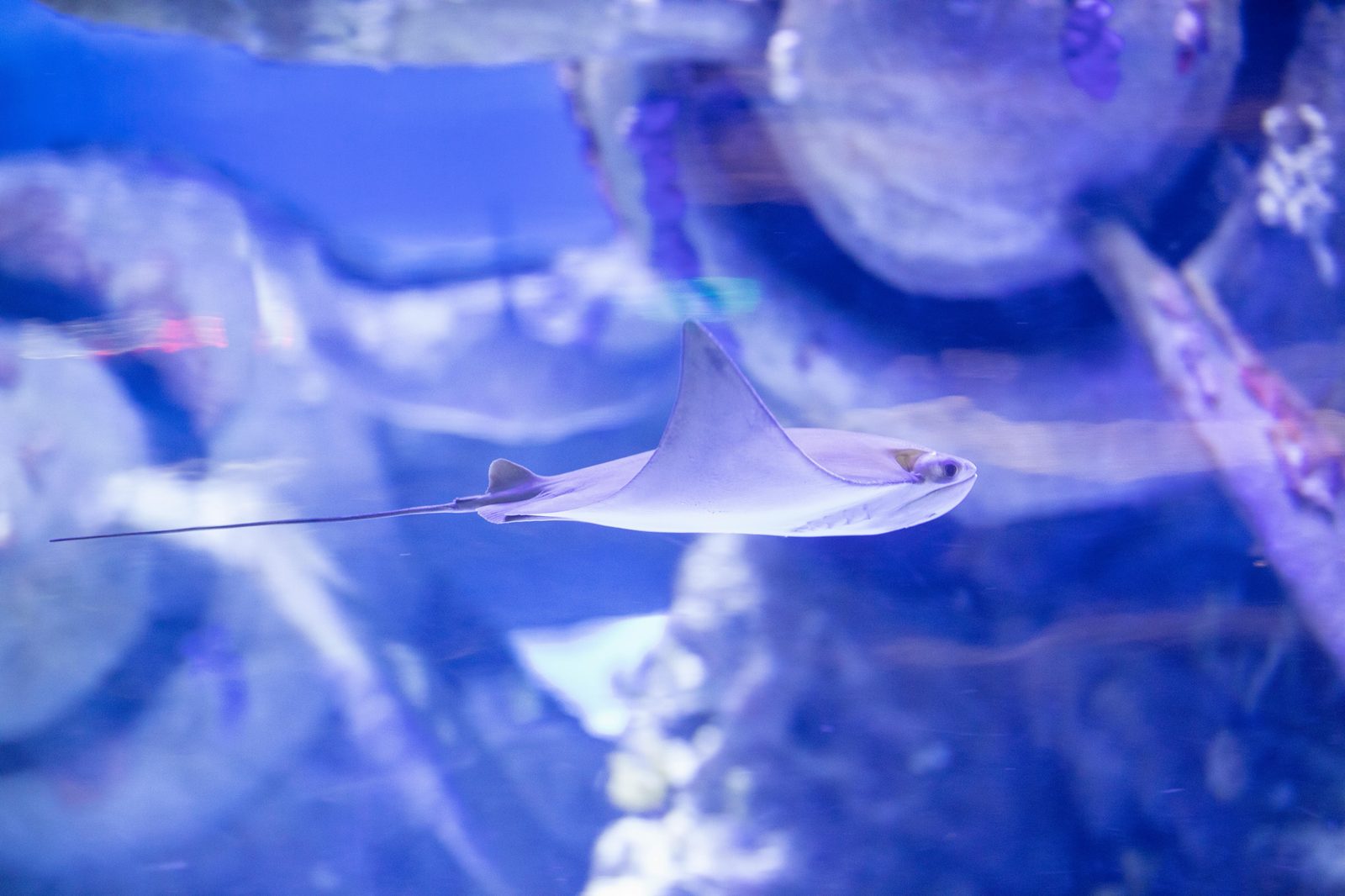
Several ray species glide through the main tank, but the winner is the cownose-ray touch pool, where kids can run a hand along the rays as they swim by. Aquarist talks run through the day and are worth catching for the “did you know” moments.
The sea lions

The California sea lions in the cold-water Pacific section are the crowd-pleaser. Daily training and feeding sessions turn into an impromptu show — turn up five minutes early and get the kids up against the glass.
The jellyfish corridor
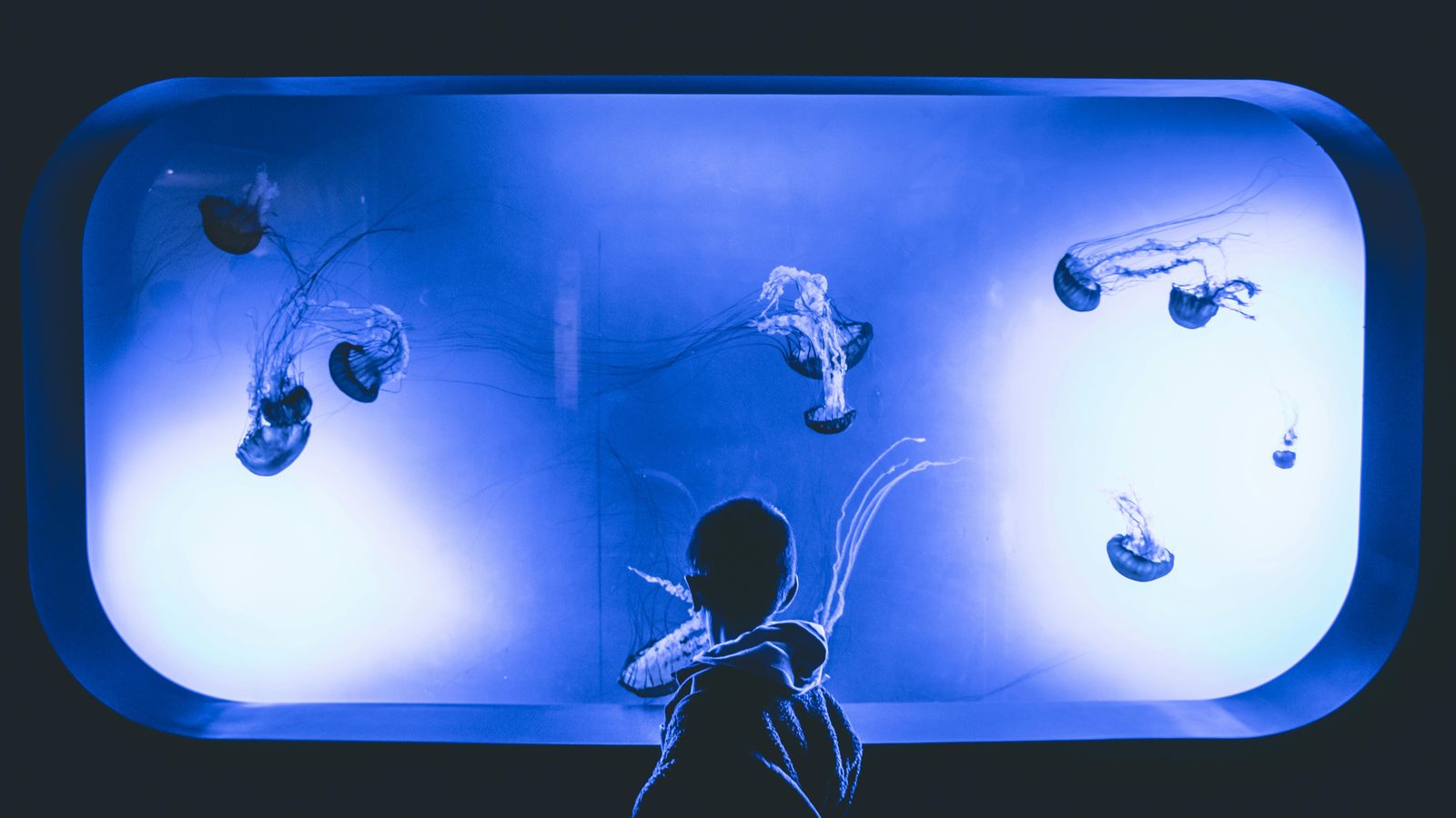
The illuminated jellyfish tanks are the most photogenic corner of the whole place — and, handily, the calmest. It’s a dark, hushed corridor, which makes it the perfect reset when a small child is starting to fray at the edges.
The Amazon rainforest
Piranhas, giant otters, Amazon catfish and electric eels fill the rainforest zone, alongside displays on conservation. It’s less Instagram-famous than the Ocean tank, but it’s a good change of pace — and the otters are wildly entertaining if you catch them awake.
Feeding Times and Daily Schedule
Timing your visit around a couple of feeds makes a real difference. A typical day looks like this:
- 10:30 — sea lion training session
- 11:30 — shark and ray feeding (Ocean tank)
- 12:00 — aquarist talk, coral reef
- 13:00 — sea lion feeding (the interactive show)
- 14:00 — tropical reef feeding
- 15:00 — aquarist talk, Ocean tank
- 16:00 — final sea lion training
The schedule shifts, so check denblaaplanet.dk the morning of your visit. Building your route around one or two feeds is the single best way to keep kids engaged.
Which Ages Get the Most Out of It
It works across the board, but here’s the honest breakdown:
- Ages 0–3 — a sensory hit; jellyfish, colour and the quiet zones win. See our Copenhagen with toddlers guide for pacing tips.
- Ages 3–7 — the sweet spot: touch tanks, finding Nemo, the sea lion show.
- Ages 8–12 — the aquarist talks and displays land at this age; they’ll actually read the panels.
- Teenagers — less obviously wowed, but the sharks and the architecture usually reel them in.
- Adults — the 3XN building and the jellyfish alone justify the ticket.
It’s fully stroller-accessible, with baby-changing stations and a café with a kids’ menu — so the practical side takes care of itself.
Tickets and Prices
| Ticket type | Price | Notes |
|---|---|---|
| Adult | Around 215 DKK | Single entry |
| Child 3–11 | Around 115 DKK | Single entry |
| Under 3 | Free | With a paying adult |
| Student / senior | Around 180 DKK | ID required |
| Family ticket (2+2) | Around 595 DKK | 2 adults + 2 kids 3–11 |
| Annual pass | Variable | From around 600 DKK |
| Copenhagen Card | Entry included | Best value across 3+ paid attractions |
Book online to skip the entry queue. The family ticket shaves about 50 DKK off buying separately — and if you already hold a Copenhagen Card, entry’s covered.
Getting There
Den Blå Planet sits in Kastrup, on Amager island:
- M2 metro from Copenhagen Central to Kastrup — around 18 minutes, roughly 40 DKK
- From Kastrup station — a 10-minute walk to the aquarium
- Total from the centre — about 30 minutes
- By car — 15–20 minutes; parking around 30 DKK/hour
- Bus 35 — a slower alternative to the metro
- By bike — 30–45 minutes across Amager
Because it’s a five-minute drive from the airport, it’s also a brilliant place to kill a long layover — see our Copenhagen airport to city centre guide for the connections.
Making a Full Day of It

The aquarium slots neatly into a bigger day:
- Amager Strand beach — a 15-minute walk; sand, a picnic and a summer swim
- Airport layover — five minutes from CPH, ideal for a long stopover
- Christianshavn — climb Vor Frelsers Kirke, then loop out here by metro
- Refshaleøen — grab street food at Reffen, then ride the metro across
For that eastern-harbour combo, our Refshaleøen guide maps out the food and the ferry.
How It Compares to Other Family Days
| Attraction | Best for | Visit time | Family cost (2+2) |
|---|---|---|---|
| Den Blå Planet | Marine life, rainy days | 3–4 hours | Around 595 DKK |
| Tivoli Gardens | Amusement park lovers | Full day | 1,400–4,000 DKK |
| Copenhagen Zoo | Animal lovers | 4–5 hours | Around 770 DKK |
| Experimentarium | Science fans, ages 5–15 | 3–4 hours | Around 525 DKK |
| National Museum | History lovers (free) | 3 hours | Free |
If your kids are more hands-on than fish-obsessed, the Experimentarium is the better rainy-day call; for a big splurge, our full Tivoli family guide has the full rundown.
Insider Tips
- Come on a weekday morning — it’s a different, calmer place than a Saturday afternoon.
- Buy tickets online — skip the entry queue entirely.
- Plan around feeding times — check the schedule the morning of.
- The sea lion show is the highlight — arrive a few minutes early for a spot.
- Give it 3–4 hours — anything under three feels rushed with kids.
- Bring a camera — the tunnel and jellyfish are made for photos.
- It’s fully stroller-accessible — no stairs to wrestle.
- Eat at the café or pack a picnic — the outdoor terrace overlooks the Øresund.
- Pair with Amager Strand in summer — turns half a day into a full one.
- Free with the Copenhagen Card — worth it across three or more paid sights.
- Leave time for the gift shop — sustainable toys and the obligatory Nemo plush.
- Note the closures — shut on 1 January and 24–25 December.
Den Blå Planet: FAQs
Is Den Bla Planet worth it?
For families, marine-life fans and anyone caught out by the weather, yes. The collection is huge (53 tanks), the underwater tunnel is genuinely special, and the 3XN architecture makes it a destination in its own right. Adults enjoy it just as much as kids.
How long does a visit take?
Three to four hours is typical, with 2.5 the rushed minimum. Kids who linger at every tank will happily fill longer, especially if you time your route around a couple of feeds.
How much does it cost?
Around 215 DKK per adult, 115 DKK for children 3–11, and free for under-3s. The family ticket (2+2) is roughly 595 DKK, and entry is included with the Copenhagen Card.
How do we get there?
Take the M2 metro from Copenhagen Central to Kastrup (about 18 minutes, roughly 40 DKK), then it’s a 10-minute walk — around 30 minutes door to door from the city centre.
What ages is it best for?
Ages 3–12 get the most out of it. Toddlers love the jellyfish and colour, school-age kids love the sharks and sea lions, and teenagers come round to the architecture. Nobody in the family is bored.
Is it stroller-friendly?
Completely — wide pathways, no stairs to fight, rentals available, and several baby-changing stations. The café takes strollers too.
Can we eat there?
Yes, there’s a café with a kids’ menu, or you can bring a picnic and eat on the terrace over the Øresund. Outside food is generally fine in the picnic areas.
How does it rank against other aquariums?
It’s Northern Europe’s largest and sits comfortably among the continent’s top few for both collection size and design. The building alone puts it a cut above most.
If the aquarium goes well and you want a bigger day out, our family day trips from Copenhagen ranks the best excursions by age and cost.
Related reading
Final Thoughts
If we had to pick one indoor day out with kids in Copenhagen, this is it. Den Blå Planet handles a grey afternoon better than anywhere else in the city — sharks overhead, sea lions showing off, jellyfish glowing in the dark, and a building that’s a marvel in its own right. Go on a weekday, time it around a feed or two, and pair it with the beach if the sun’s out. When you’re mapping the rest of the trip, start with our family guide to Copenhagen and the wider things to do in Copenhagen guide.
Last updated: July 2026. Photo credits: Copenhagen Tourism image library.