Order a rød pølse at a Copenhagen hot dog stand and there is a fair chance you will be handed a sausage the colour of a fire engine on a little paper tray, with a squirt of ketchup and mustard beside it and a plain white bun lying next to it rather than wrapped around it. Nobody has made a mistake. That is how the oldest version of the Danish hot dog is served, and it is the first of several small surprises in a street food that Danes take far more seriously than its price would suggest.
This guide covers the two sausages you need to tell apart, what med det hele actually puts on top, the rest of the menu board, how to order without pointing, a short history of the pølsevogn or hot dog wagon, and where in Copenhagen to eat one. Prices were checked in October 2026 and vary from stand to stand, so treat them as the right order of magnitude rather than a menu.
Danish Hot Dogs at a Glance
| Detail | |
|---|---|
| Order this first | En ristet hotdog med det hele: a grilled sausage in a bun with everything |
| The original | Rød pølse med brød: boiled red sausage, bun on the side |
| Typical price | 35–50 DKK for a classic at a stand |
| Organic option | DØP, by the Round Tower and on Amagertorv |
| Traditional drink | Cocio chocolate milk, from the little glass bottle |
| Paying | Cards almost everywhere; no tip expected |
| How to eat it | Standing at the counter that runs round the wagon |
Rød Pølse or Ristet: The Two Sausages to Tell Apart
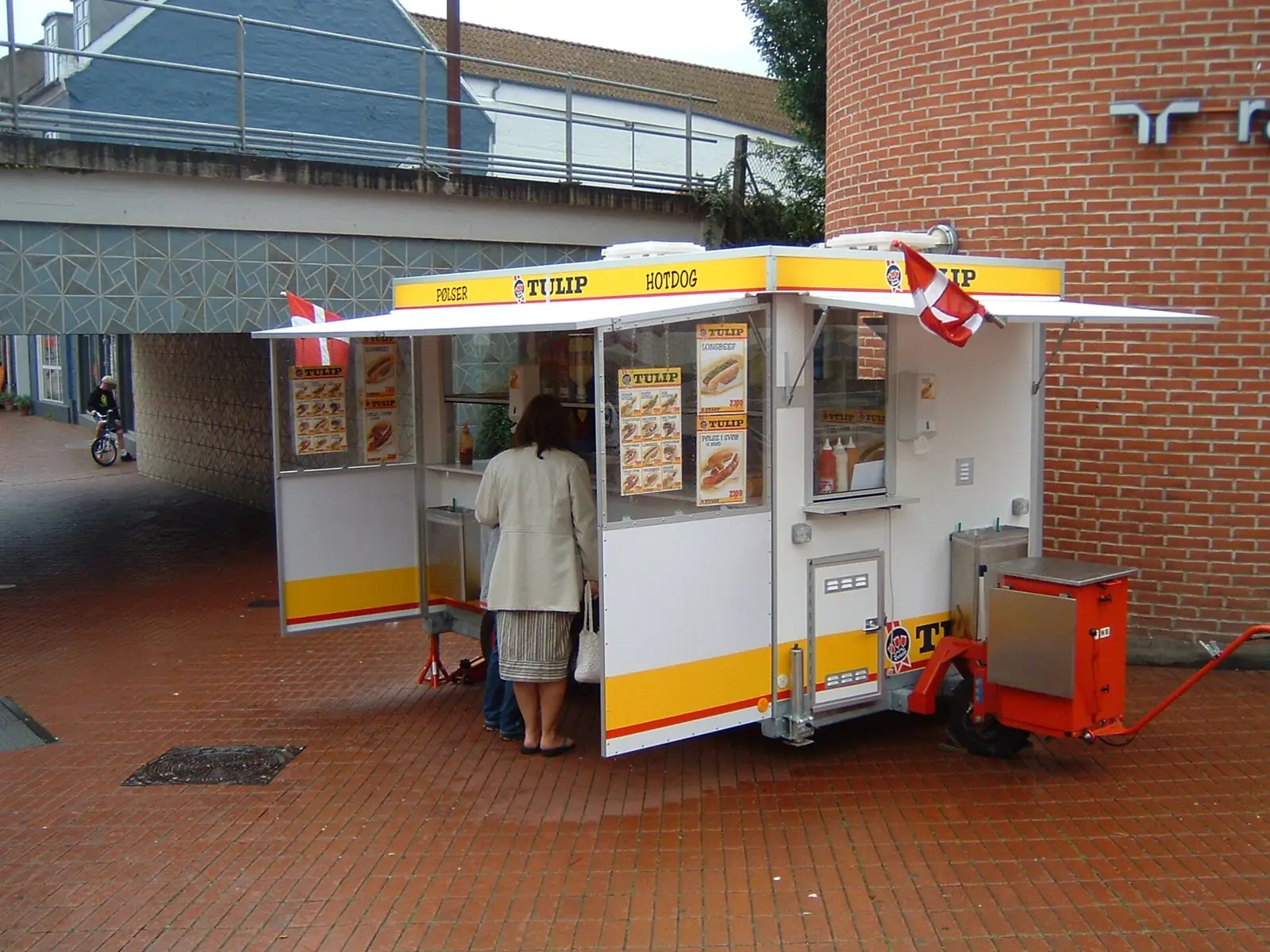
Almost every stand sells two different sausages, and the difference is the key to the whole menu.
The rød pølse is boiled. It is a long, thin, finely ground pork sausage in a casing dyed an improbable scarlet, and it should snap when you bite it. Ordered med brød, with bread, it comes as described above: sausage on the tray, bun alongside, and you dip and bite in turns. It is the plainer and older of the two, and people of a certain age are loyal to it.
The ristet pølse is the grilled one. It is a paler pork sausage, cooked on the hot plate until the skin blisters, and it is the one that goes inside a split bun with the toppings to make what a Dane calls a hotdog. That word matters: in Danish, a hotdog means a sausage in a bun with sauces on it. A pølse med brød is a sausage with bread. Same stand, different meal.
As for the red, nobody quite agrees why. The story you will hear most often is that butchers once had to dye their older stock so it could be sold off cheaply. It is a good story and people tell it with great confidence, but nobody ever seems to produce the rule that supposedly required it, so treat it as folklore. What is certainly true is that the colour is only skin-deep. The dye is in the casing, and the meat inside is an ordinary pink.
What “Med Det Hele” Actually Gets You
Med det hele means “with the lot”, and on a Danish hot dog the lot is specific:
- Ketchup, the usual.
- Sennep, a mild and slightly sweet mustard, nothing like English or Dijon.
- Remoulade, which is not the French sauce. Danish remoulade is yellow, sweet and sharp, a mayonnaise loaded with chopped pickle and coloured with a little curry or turmeric.
- Rå løg, finely chopped raw onion.
- Ristede løg, crisp fried onions, scattered on top for the crunch.
- Syltede agurker, thin slices of sweet pickled cucumber laid along the length of it.
The reason a Danish hot dog tastes different from any other is that last half of the list. Raw onion, fried onion and soft sweet pickle against a salty sausage is the whole trick, and it is why the dog in the bun has overtaken the plain red sausage in popularity. The crispy onions are sold in tubs in every Danish supermarket, and plenty of visitors take one home.
Our verdict, if you only eat one: a ristet hotdog med det hele. The red sausage with bread on the side is the purer, older experience, but it is essentially a sausage and a roll. The grilled one with everything is the one that explains why Copenhageners queue. If you have a meeting or a date afterwards, the raw onion is negotiable: say uden rå løg.
The Rest of the Menu Board
Most stands run to a dozen items, and a few are worth knowing:
- Fransk hotdog. The French hot dog: the end of a baguette with a hole bored through it, sauce squirted in and the sausage pushed down after it. It is tidy, it is designed for walking, and it loses everything good about the onions.
- Pølse i svøb. A sausage baked inside a wrap of bread dough, sometimes with bacon. More of a bakery and convenience-store item, and good cold.
- Ostepølse. A sausage with cheese running through it, on the menu at plenty of stands and best ordered grilled.
- Vegetarian. Not universal, but DØP has meat-free sausages and a growing number of stands carry one. Ask for a vegetarpølse.
Then there is the drink. A hot dog and a Cocio, the Danish chocolate milk in a small glass bottle, is the traditional pairing, and it is less odd than it sounds: cold, sweet and creamy against hot, salty and sharp. Try it once. Our page on traditional Danish food covers the rest of what Danes eat when they are not standing at a wagon.
How to Order at a Pølsevogn
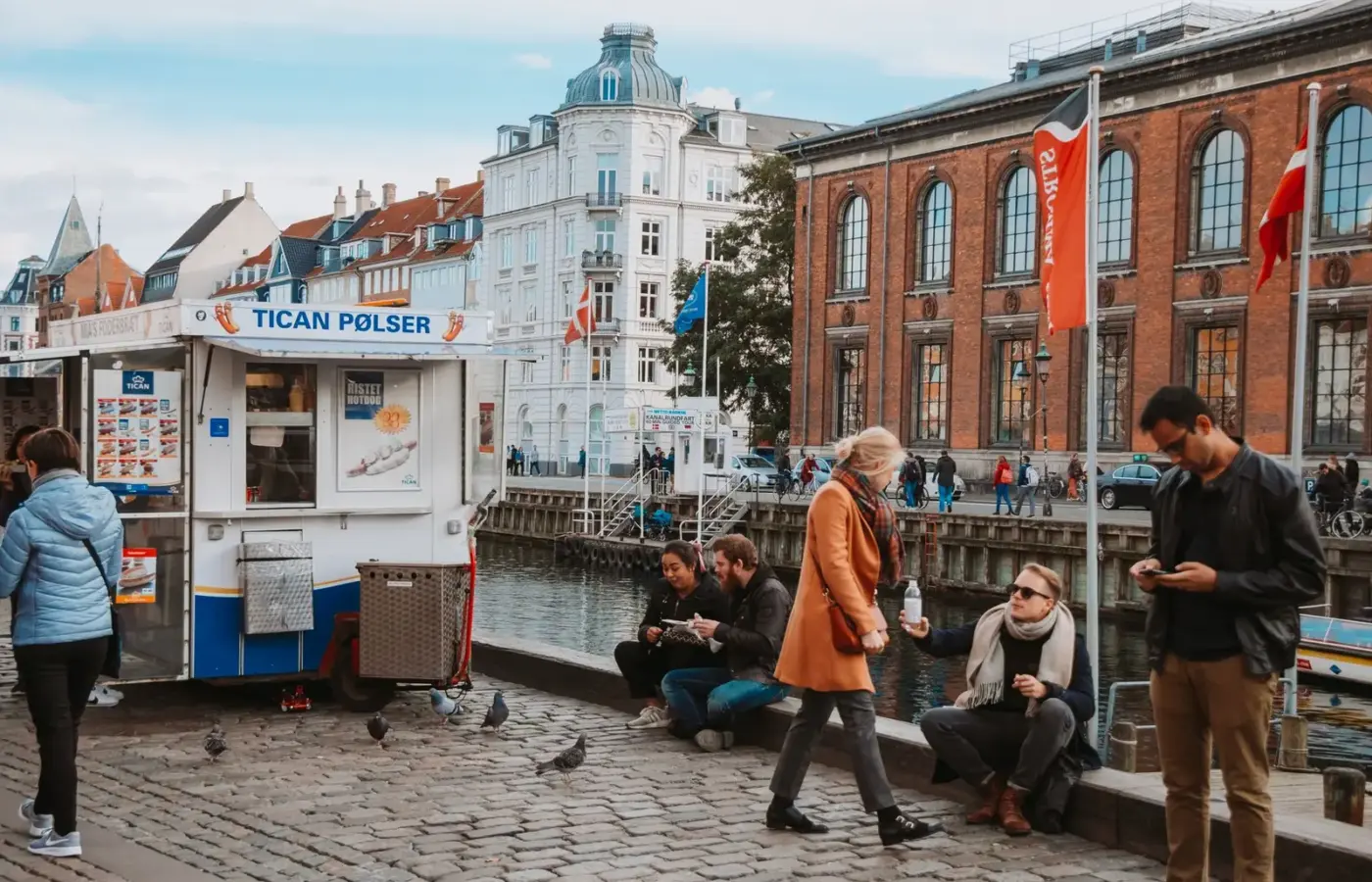
Stands are run by one or two people through a hatch, there is no table service and the system takes about ten seconds to learn. Wait your turn at the window, order, pay, and step to the side to eat at the shelf that runs round the outside of the wagon. That shelf is the table. Nobody expects you to walk off with your food, and the people eating next to you will be a cross-section of the city.
The four phrases that cover almost every order:
- En ristet hotdog med det hele, tak. One grilled hot dog with everything, please.
- En rød pølse med brød. A red sausage with bread on the side.
- Uden løg. Without onions.
- Og en Cocio. And a chocolate milk.
Staff switch to English the moment you hesitate, but a few words of Danish land especially well at a wagon. Our Danish phrases for travellers has the pronunciation. Cards are taken almost everywhere, and there is no expectation of a tip; the tipping guide explains why rounding up is a kindness rather than a rule.
A Short History of the Pølsevogn
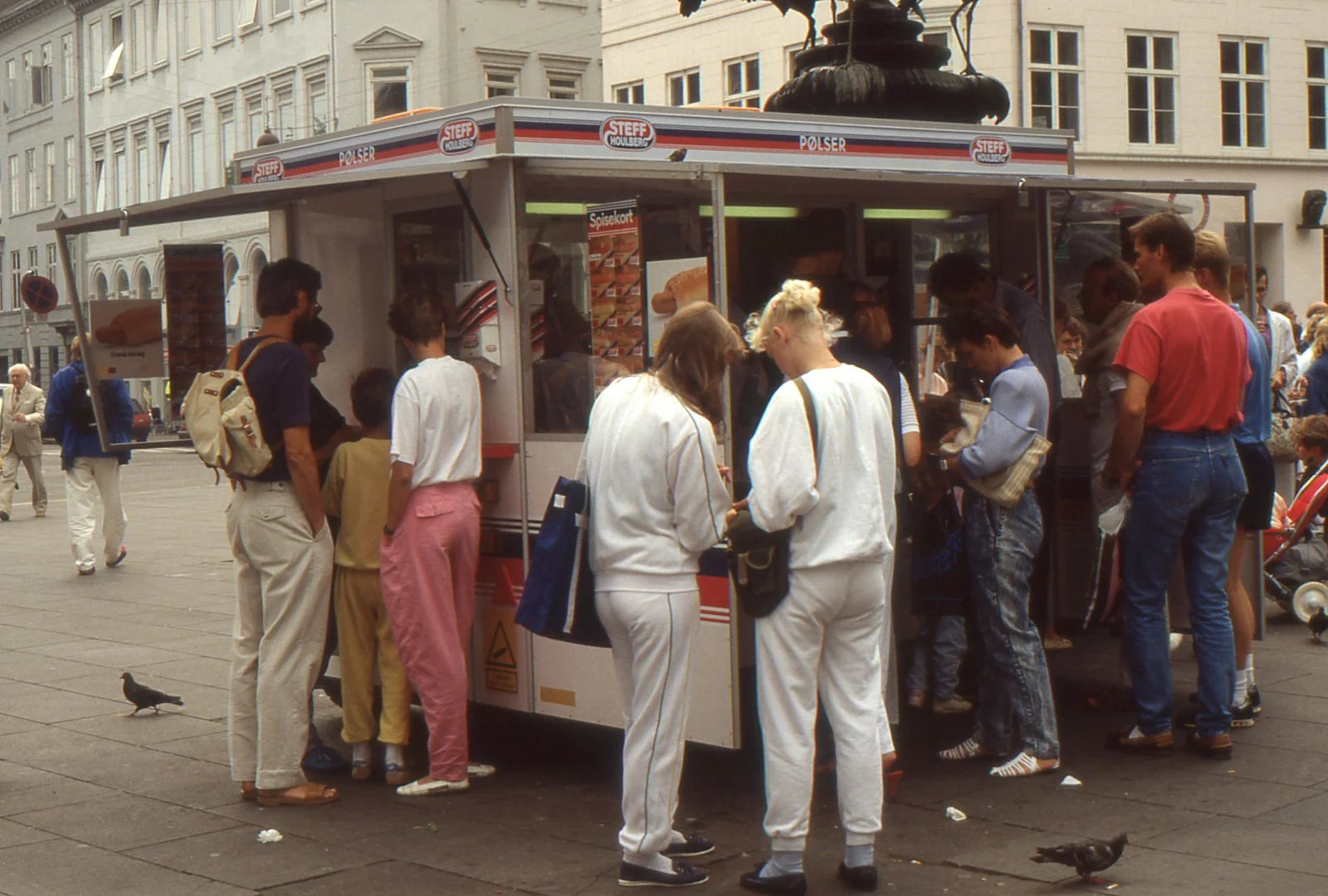
The first six hot dog wagons rolled onto Copenhagen’s streets on 18 January 1921. The idea was borrowed from Germany, where sausage stands had been a fixture in Berlin and other cities before the First World War, and the permission to run them in Copenhagen was obtained by a man named Charles Svendsen Stevns. The format they settled on, a wheeled wagon with a hatch and a counter, has barely changed in a century.
The golden age came in the 1960s and 1970s, when Denmark had more than 700 wagons and a pølsemand, a sausage man, on what felt like every corner. Since then the burger chains, the kebab shops and, above all, the convenience stores have eaten into their trade, and the numbers have collapsed. Copenhagen’s own planning papers counted just 34 licences for traditional hot dog stands on municipal land in 2018. That is the real reason to seek one out rather than wait to stumble on one: there are far fewer than the postcards suggest.
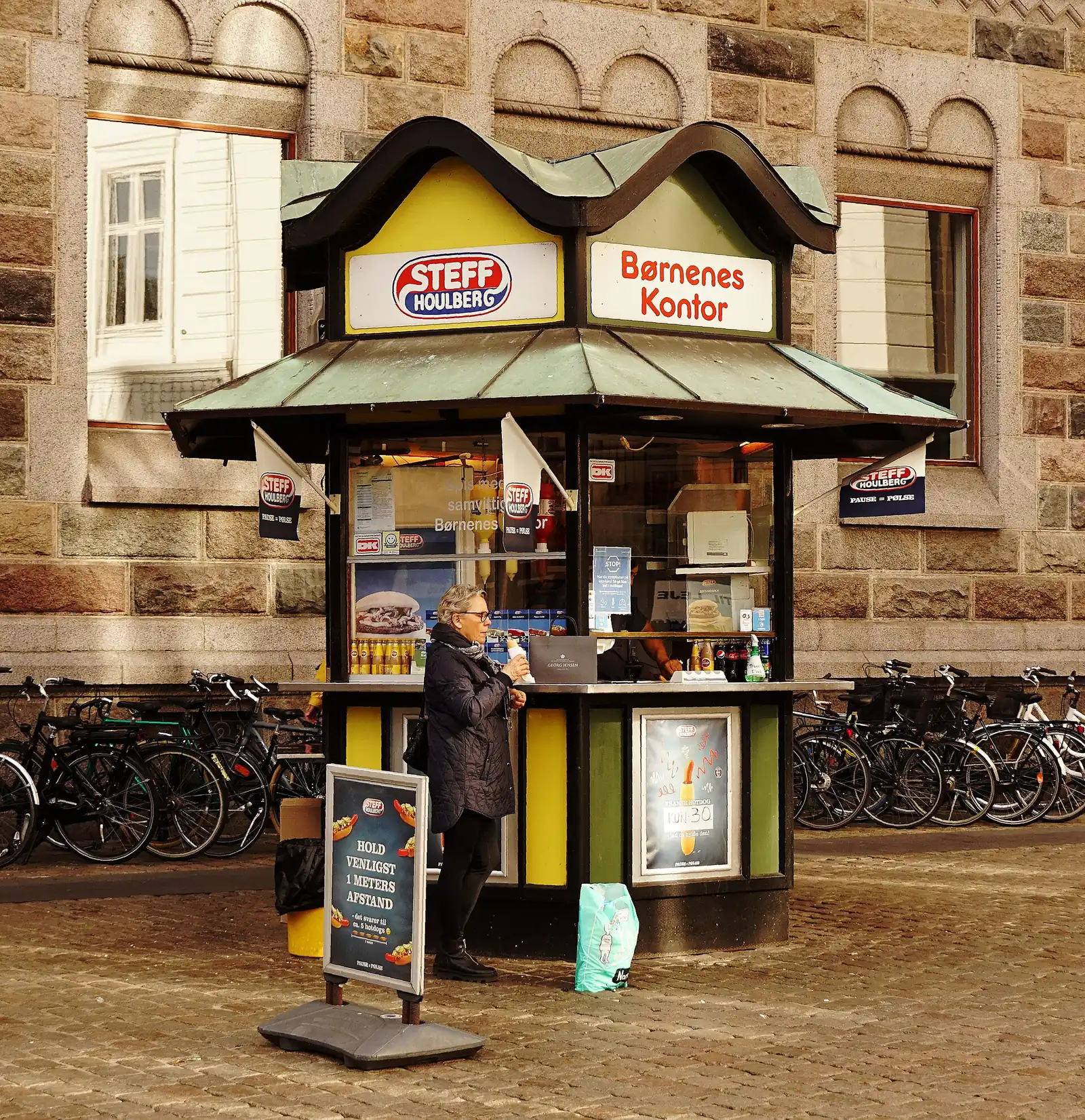
The trade has a good sense of itself, though. The slogan on the flags of Steff Houlberg’s kiosks puts the whole philosophy in three words: Pause = Pølse. A break means a sausage.
Where to Eat a Hot Dog in Copenhagen
DØP, by the Round Tower
Den Økologiske Pølsemand, the organic sausage man, has run its stand at Købmagergade 52 since 2009, wedged between Rundetårn and the student house, with a second stand on Amagertorv on Strøget. Everything is organic, the bun is wholegrain and there are meat-free sausages for vegetarians. It costs a little more than an ordinary wagon. It is worth it, and it is the single most convenient good hot dog in the city, since you will walk past it on the way to the tower anyway. It keeps daytime hours rather than late ones, so do not count on it for a midnight craving.
John’s Hotdog Deli, Kødbyen

Out in the old Meatpacking District in Vesterbro, on Flæsketorvet, John’s takes the hot dog upmarket: sausages made to the owner’s own recipe, a toppings bar, and a signature dog with bacon and ramsløg, wild garlic. It is very good, and it is a different meal. With fries and a beer the bill heads towards 140 DKK, which makes it the right stop before a night out in Kødbyen and the wrong one if you are after the classic standing-up experience. Our guide to Copenhagen at night covers what else is around it.
Harry’s Place
Ask a Copenhagener where to find a proper old-school stand and this is the name you are likely to hear, with regulars rating its flæskestegssandwich, the roast pork sandwich, as highly as the sausages. It is not on the usual tourist circuit, so look up the current address and opening hours before you make the trip.
The ordinary wagons, and 7-Eleven
Beyond the names, the stands cluster where the foot traffic is: the squares along Strøget, the big stations and the busier shopping streets. Most sell the same branded sausages, and quality depends more on how busy the stand is than on the brand. A queue is a good sign. The honest fallback is 7-Eleven, which sells hot dogs late into the night and does a perfectly decent one at two in the morning. At lunchtime, with a real wagon a few minutes away, it is a poor substitute.
Is a Copenhagen Hot Dog Worth It?
On price alone it is the best deal in the city. A classic at a wagon costs 35 to 50 DKK, in a city where a half-litre of draught beer runs to 60 DKK and a single piece of smørrebrød at a sit-down restaurant can cost more than two hot dogs. If you are travelling on a budget, it is the cheapest hot meal you can get without going into a supermarket, and our cheap eats guide has the other contenders. For the bigger picture, see whether Copenhagen is really that expensive.
It is also worth it on its own terms, which matters more. The Danish hot dog is not a compromise you make to save money for dinner; it is one of the few genuinely everyday Danish foods a visitor can eat exactly as locals do, at the same counter, at the same price. What is not worth it is paying a premium for the setting. Pay extra for organic meat at DØP or a house-made sausage at John’s by all means. Do not pay extra for a canal view.
Frequently Asked Questions
What is a Danish hot dog?
Either a rød pølse, a boiled red pork sausage usually served with the bun on the side, or a ristet hotdog, a grilled sausage in a split bun with ketchup, mustard, remoulade, raw onion, crispy fried onion and pickled cucumber. Both are sold from street wagons called pølsevogne.
What does “med det hele” mean?
“With everything”. On a hot dog that means ketchup, mild mustard, Danish remoulade, raw onions, crispy fried onions and thin slices of sweet pickled cucumber.
Why are Danish hot dogs red?
The red is a dye in the casing; the meat inside is ordinary pink. The popular story that butchers once dyed old sausages to sell them off cheaply is widely repeated but has never been convincingly documented.
How much does a hot dog cost in Copenhagen?
Roughly 35 to 50 DKK for a classic from a street wagon in 2026. Organic and gourmet versions cost more, and a sit-down hot dog with fries and a drink can approach 140 DKK.
Where is the best hot dog in Copenhagen?
DØP, the organic stand by the Round Tower, is the best combination of quality and convenience. John’s Hotdog Deli in Kødbyen is the best gourmet version, and Harry’s Place is the old-school favourite among locals.
What do Danes drink with a hot dog?
Traditionally Cocio, a Danish chocolate milk sold in small glass bottles. It sounds odd and works surprisingly well.
Can vegetarians eat a Danish hot dog?
At some stands. DØP sells meat-free sausages; elsewhere, ask for a vegetarpølse.
Related Reading
- Copenhagen’s street food markets for when you want a seat and more choice than a wagon offers.
- The best smørrebrød in Copenhagen for the other great Danish lunch.
- Copenhagen on a budget with the rest of the ways to stretch your kroner.
- The Copenhagen food guide from hot dog stands to the city’s Michelin kitchens.
Photo Credits
- A traditional Danish hot dog wagon with its hatch open, awnings out and menu boards in the windows: photo by Blacknight, Danish Hot dog stand.jpg, Public domain
- Customers queueing at a Steff Houlberg hot dog stand beside the Stork Fountain in Copenhagen in 1988: photo by Ian Watson, Pølsevogn (hot dog stand) in Copenhagen, 1988.jpg, CC0
- A green and yellow Steff Houlberg hot dog kiosk run for the Bornenes Kontor children’s charity: photo by Jens Cederskjold from København S, Danmark, Hot-dog stand (50510144541).jpg, CC BY-SA 2.0
Final Thoughts
There is a reason Danes get sentimental about a sausage in a bun. The wagon is one of the last places in an expensive, design-conscious city where nothing is curated: a builder, a banker and a pair of students eating the same thing at the same counter, in all weathers, for the price of a coffee somewhere else.
Eat one with everything on it, and eat one plain with the bread on the side, so you understand what the fuss is about. Then have the chocolate milk. You will not regret it nearly as much as you expect.
Last verified: October 2026. Prices vary from stand to stand and rise most years; opening hours at individual wagons change with the seasons.