The honest headline on Copenhagen weather: it’s mild, it’s changeable, and it’s rarely extreme. The city sits at 55°N — the same latitude as Moscow — but the sea keeps it gentle. Expect cold, dark winters a few degrees above freezing, mild springs (4–13°C), warm-not-hot summers (15–22°C) and crisp autumns. Daylight swings hard, from about seven hours in December to 17½ at the June solstice, and rain can show up in any month. Pack layers and a small umbrella whenever you come, and you’re most of the way there.
That’s the short version. Below is the full month-by-month picture — temperatures, daylight, rainfall and what each month actually feels like on the ground — so you can plan properly. For the bigger decision of which season suits your trip, start with our best time to visit Copenhagen guide; this page is the weather detail that sits underneath it.
Copenhagen weather by month at a glance
| Month | High °C | Low °C | Daylight | Rainfall |
|---|---|---|---|---|
| January | 3°C / 37°F | 1°C / 34°F | 7-8 hrs | 53 mm |
| February | 4°C / 39°F | 1°C / 34°F | 9-10 hrs | 37 mm |
| March | 7°C / 45°F | 2°C / 36°F | 11-13 hrs | 42 mm |
| April | 12°C / 54°F | 4°C / 39°F | 13-15 hrs | 36 mm |
| May | 17°C / 63°F | 9°C / 48°F | 15-17 hrs | 47 mm |
| June | 20°C / 68°F | 12°C / 54°F | 17-17.5 hrs | 64 mm |
| July | 22°C / 72°F | 14°C / 57°F | 16-17 hrs | 61 mm |
| August | 22°C / 72°F | 14°C / 57°F | 14-16 hrs | 68 mm |
| September | 17°C / 63°F | 11°C / 52°F | 12-14 hrs | 61 mm |
| October | 13°C / 55°F | 7°C / 45°F | 10-12 hrs | 63 mm |
| November | 8°C / 46°F | 3°C / 37°F | 7.5-9.5 hrs | 56 mm |
| December | 4°C / 39°F | 2°C / 36°F | 7 hrs | 57 mm |
A quick read of that table tells you most of what matters: July and August are the warmest, August is the wettest, February through April are the driest, and the daylight column is where the drama really lives. Now let’s walk through the year month by month.
Month by month, in detail
January

This is the coldest month and one of the darkest — around 2°C on average, with lows near 1°C and the odd cold snap below -10°C. You get barely seven to eight hours of daylight, and it’s often grey. Snow shows up occasionally but rarely settles for long. The upside? It’s one of the cheapest times to visit and the city leans hard into cosy: candlelit cafés, warm museums, and proper hygge in Copenhagen. Come for the indoor life, not the sightseeing. Our winter guide has the full playbook.
February

February feels a lot like January on the thermometer (still around 2°C), but the light is quietly coming back — you’ll have nine to ten hours by the end of the month, and February is also the second-driest month of the year, with about 37 mm of rain. It’s one of the cheaper stretches for hotels, and the Copenhagen Light Festival brightens the dark evenings. Good for museums, coffee and design shopping; not for anything that needs to happen outdoors.
March

March is when the thaw begins — averages around 4°C, and daylight jumps to 12–13 hours by the end of the month once the clocks change. The first crocuses appear in the parks, but don’t be fooled: it’s still genuinely cold, wind off the harbour bites, and you’ll want winter layers. Prices stay in shoulder-season territory. It’s a fine month for a cheap city break if you don’t mind grey. For the full spring arc, see Copenhagen in spring.
April

April is when spring properly lands — around 8°C on average, 14–15 hours of daylight, and the cherry blossoms peaking around mid-April, a little earlier at Bispebjerg Cemetery than in Langelinie Park, depending on the weather. Tivoli Gardens is open for its summer season. It’s also the driest month of the year (36 mm), though a passing shower is always on the cards, so keep packing layers. Great for blossom photography and a first taste of terrace weather without the summer prices.
May

May might be the sweet spot of the whole calendar. Averages around 13°C, daylight stretches to 15–17 hours, the city is in full bloom, and café terraces are open everywhere. Crowds haven’t really arrived yet and prices sit below the summer peak. The Distortion street festival takes over Nørrebro and Vesterbro toward the end of the month. If you want near-summer weather without the July squeeze, this is your month — great for cycling, parks and long, slow afternoons.
June

June brings the longest days of the year — around 16°C on average and a staggering 17 to 17.5 hours of daylight at the solstice, when the sky barely goes fully dark. Sankthansaften (midsummer) bonfires light up the beaches on June 23, and Roskilde Festival kicks off at the end of the month. Harbour swimming season is underway. It’s warm, bright and not yet as packed as July — for most first-timers this is the pick of the summer.
July

July is the warmest month, peaking around 22°C, with 16–17 hours of daylight and the harbour baths at full capacity. It also sits in the wetter half of the year (about 61 mm), so those long sunny days come with the occasional sharp shower. The Copenhagen Jazz Festival and Tivoli’s Friday Rocks concerts fill the calendar, and this is peak tourist season — book accommodation two-plus months ahead. Our July guide covers how to make the most of high summer without the queues.
August
August is July’s twin, a shade cooler — a 22°C peak, still warm enough for the last of the harbour swimming, and a touch wetter-feeling as the summer starts to turn. Locals drift back from their holidays mid-month, and the Copenhagen Cooking food festival lands late summer. The second half quietens noticeably as school holidays end, which makes late August a smart window: summer warmth, thinning crowds. Read more in our summer guide.
September
September is the shoulder season locals quietly love — around 17°C, 12–14 hours of daylight, mild and settled, with far fewer crowds than the peak. The first two weeks often still feel like summer. If you want the best balance of decent weather and breathing room, this is arguably the single best month of the year for it, edging out even May. See how autumn unfolds in our fall guide.
October

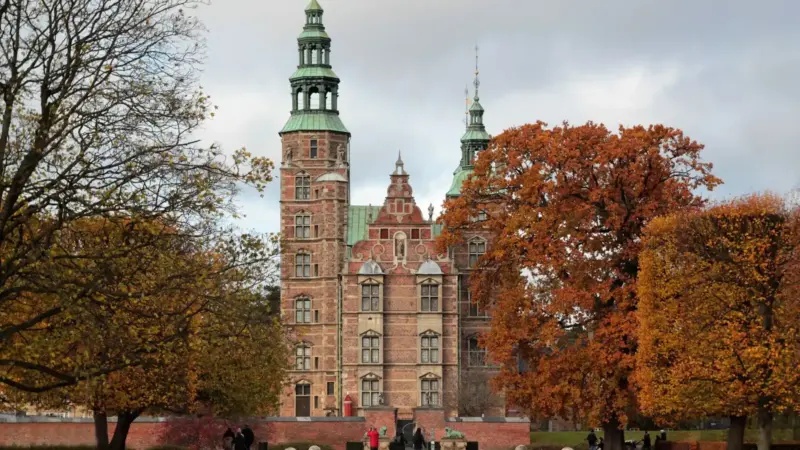
October is peak autumn — highs around 13°C, shortening days, and the foliage turning gold in Frederiksberg Have and the Lakes. Cosy café season begins in earnest, and Halloween takes over Tivoli all month. Rain is frequent (63 mm) and the wind can make it feel colder than the thermometer says, so pack proper layers and a waterproof. Lovely for photography and hygge; less so if you need blue skies.
November
November is the toughest month for weather — around 7°C, only about 7.5 hours of daylight by month’s end, and a lot of grey. It’s the darkest stretch before Christmas, and honestly, many locals just grit their teeth through it. The saving grace: Tivoli’s Christmas season opens on 13 November, with the other Christmas markets following, which flips the mood entirely. If you can time your visit to that opening weekend, do — otherwise it’s a month for museums and early hygge.
December
December is dark but magical — around 3°C and just seven hours of daylight, the shortest days of the year. But this is when Copenhagen turns on the charm: Tivoli’s Christmas season, markets at Kongens Nytorv, Tivoli and Hans Christian Andersen Square, gløgg on every corner and lights everywhere. The short days become part of the appeal. New Year’s Eve is genuinely wild. Everything you need is in the December guide and our roundup of the Copenhagen Christmas markets.
Rainfall patterns

With rain falling on around 160 days a year, a shower is possible in any month — but it’s usually light and passing rather than an all-day soaking. Here’s the pattern worth knowing:
- Wettest months: June to October (61–68 mm), with August the wettest of all.
- Driest months: February, March and April (36–42 mm).
- Quick changes: the weather can flip within hours — sun then shower then sun is typical.
- Maritime moderation: the Baltic keeps extremes uncommon.
- Snow: about 20 days a year, mostly December to March, and it rarely sticks for long.
- The golden rule: pack an umbrella and waterproof shoes, every single trip.
Daylight by month
At 55°N, daylight is the real story of the Copenhagen year — it changes the whole feel of a trip far more than a few degrees on the thermometer:
- December solstice (Dec 21): about 7 hours; roughly 8:38–15:38.
- March equinox (Mar 20): about 12 hours; roughly 6:15–18:20.
- June solstice (Jun 21): about 17.5 hours; roughly 4:25–21:55.
- September equinox (Sep 22): about 12 hours; roughly 6:55–19:10.
- Daylight saving: the clocks change on the last Sunday of March and the last Sunday of October.
- Twilight bonus: long northern twilight adds an hour-plus of usable light beyond sunrise and sunset — late June evenings barely get dark at all.
The best-weather months, ranked
If you’re choosing purely on weather (and a bit on crowds), here’s how the months stack up:
- July — warmest and sunniest, peak summer everything (but busy, and far from cheap).
- June — long days, midsummer magic, a touch cooler and calmer than July.
- May — full bloom, mild, and blessedly crowd-free.
- August — warm, still swimmable, quieter in its second half.
- September — mild shoulder season with fewer people, at summer-level hotel prices.
- April — cherry blossoms and lengthening days, if you don’t mind the chill.
What to pack for the weather
Some things go in the bag no matter which month you pick:
- A compact umbrella — rain is never far away.
- Waterproof, comfortable shoes — wet cobblestones plus a lot of walking.
- Layers — the temperature can shift a lot between morning and afternoon.
- A light scarf — useful even on summer evenings by the water.
- Sunglasses — for long summer days and bright winter glare off snow.
- A Type C/E plug adapter — standard European sockets.
Then add the season-specific extras:
- December–February: a heavy coat, thermal layers, a warm hat, gloves and boots with grip.
- March–May: a medium jacket, layers and comfortable walking shoes.
- June–August: light layers and t-shirts, a light sweater for evenings, and swimwear.
- September–November: a medium jacket, a scarf and water-resistant footwear.
For the full checklist and how Danes layer, see our full packing guide.
Copenhagen weather FAQs
What’s the weather like in Copenhagen by month?
The city runs four real seasons. Winter (Dec–Feb) is roughly 1 to 4°C with 7–10 hours of daylight. Spring (Mar–May) climbs from 4 to 13°C with 11–17 hours. Summer (Jun–Aug) sits at 15–22°C with 14–17.5 hours. Autumn (Sep–Nov) sees highs fall from 17 down to 8°C with 7.5–14 hours. Rain is possible in any of them.
What is the warmest month in Copenhagen?
July, peaking around 22°C, with overnight lows still near 14°C. August is a whisker behind at about 22°C, and June peaks around 20°C. Real heatwaves are uncommon.
What is the coldest month in Copenhagen?
January and February are close to tied at about 2°C on average, with January a fraction colder. Cold snaps below -10°C happen in some winters, though typical lows sit around 1°C. Snow falls on about 20 days a year and usually melts quickly.
Does it rain a lot in Copenhagen?
Yes — rain falls on around 160 days a year, spread fairly evenly, with the wetter months running June to October and the driest February to April. The good news is it’s usually light and passing rather than relentless. Carry an umbrella and you’ll barely notice most of it.
How long are Copenhagen days in summer?
Daylight peaks at about 17.5 hours around June 21. The sun rises near 4:25 am and sets near 9:55 pm, and northern twilight adds another hour-plus on each side — so late June evenings barely get properly dark. It’s one of the real joys of a midsummer visit.
How dark are Copenhagen winters?
Deep winter bottoms out at about seven hours around December 21, with the sun up roughly 8:38 am to 3:38 pm. Add twilight and you get maybe nine usable hours. Plenty of locals find it hard going — which is exactly why hygge, candles and Christmas lights matter so much here.
When is the best weather to visit Copenhagen?
July and August are warmest but busiest. May and June give the best balance of warmth, long days and manageable crowds. September is the pick for a milder, quieter shoulder trip. For the full trade-off by traveller type — crowds, prices and events — check the season-by-season overview linked below.
Does Copenhagen get snow?
Yes, on about 20 days a year, mostly between December and March. It rarely piles up more than a few centimetres and seldom lasts, thanks to the mild maritime climate. Most winter days are cold rain or freezing fog rather than a picture-postcard snowfall.
Final thoughts
The weather here is changeable but almost never extreme, which is oddly freeing — you don’t need to obsess over the forecast, you just need to pack for a bit of everything. July and August bring the warmth and the crowds; May, June and September give you the best balance of good conditions and elbow room; December trades daylight for pure Christmas magic; and January and February are cheap but hard. Bring an umbrella, comfortable waterproof shoes and a couple of layers whatever month you choose, and Copenhagen will treat you well.
March is the month the numbers turn. Sunshine climbs from 2.3 hours a day to about four, daylight runs from just under eleven hours to a little over thirteen, and the clocks go forward at the end of it. The detail is in our guide to Copenhagen in March.
Keep planning
- Best time to visit Copenhagen — the season-by-season overview.
- Springtime in Copenhagen and summer.
- Copenhagen in fall and winter.
- Packing for Copenhagen.
- Sample itineraries for Copenhagen for day-by-day plans.
Last updated: July 2026. Temperature, rainfall and daylight figures are long-term climate averages — treat them as a planning guide, and check the forecast close to your trip.