The first time I took the train to Malmö, I’d barely finished my morning coffee at Copenhagen Central before the carriage was gliding out over the Øresund and I could see Sweden sitting there across the water, close enough to feel slightly absurd. Thirty-odd minutes later I stepped off the train in a different country, under a different flag, paying in a different currency — and I was back in Copenhagen in time for dinner. That’s the magic of a Malmö day trip from Copenhagen: it’s the easiest international border hop in Europe, and one of the most rewarding ways to add a second country to your Copenhagen trip without losing a day to travel.
I’ve done this crossing more times than I can count now — for the falafel, for the waterfront, for a change of pace from Copenhagen’s prices. This guide is everything I wish someone had told me the first time, fully updated for 2026: the trains, the ticket traps, the border check that confuses everyone, and a self-guided walking route that lets you see the best of Malmö in a single afternoon.
Malmö day trip at a glance
- Travel time: ~35 minutes by direct train from Copenhagen Central
- Cost: roughly 110–160 DKK each way (cheaper with a Rejsekort/app ticket)
- Currency: Swedish krona (SEK) — not euros, not Danish kroner
- Time difference: none (same time zone as Copenhagen)
- What you need: a valid passport or EU national ID card
- How long to spend: one full day; budget 5–7 hours on the ground
- Best for: architecture lovers, foodies, anyone who wants to tick off a second country
How to get from Copenhagen to Malmö
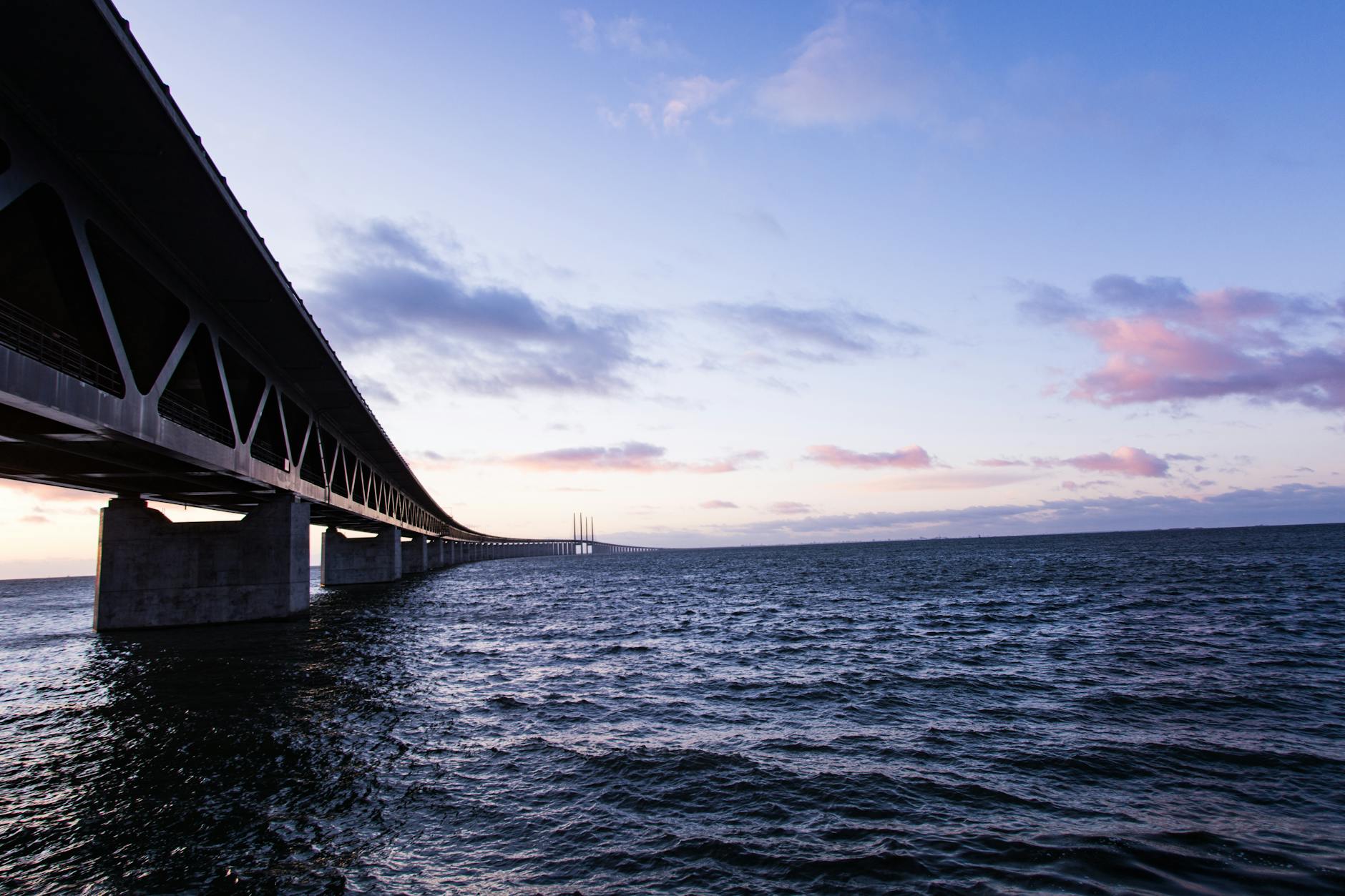
The honest answer is that getting there is almost embarrassingly simple, which is exactly why a Malmö day trip from Copenhagen is so popular. The Øresundståg regional train runs directly from København H (Copenhagen Central) to Malmö C, no changes, crossing the spectacular Øresund Bridge on the way. The journey takes about 35 minutes (some are a touch slower at ~41), and trains leave roughly every 20 minutes through the day — close to 80 departures daily. Crucially, the train also stops at Copenhagen Airport, so if you’re staying near Kastrup you can hop on there.
Tickets: what to buy and where
A standard single fare runs around 161 SEK / ~109 DKK / about €15. You can shave that down with a Rejsekort travel card or a mobile ticket (often closer to 90 DKK). Buy at the DSB ticket machines or the 7-Eleven inside Copenhagen Central, at the Øresundståg machines at the airport, or through an app like Omio before you go.
Two things people get wrong, so let me be blunt about them. First: you cannot buy a ticket on board. Inspections are frequent and the fines are real — have a valid ticket in hand before you step on. Second: since June 2024 you can no longer reserve seats on the Øresundståg, so don’t go hunting for a seat number. Just board any open seat and relax.
The border check (don’t panic)
Here’s the thing that throws first-timers. Denmark and Sweden are both in the Schengen Area, but Sweden has run ID checks at the border since 2015. In practice, this usually means a quick look at your passport or ID, often while the train is stopped at Hyllie (the first station on the Swedish side). The checks are random and light, but they are mandatory in the sense that you must be able to produce ID. So carry your passport or EU national ID card — a driver’s licence won’t cut it. Coming back into Denmark, checks are occasional and usually painless.
Other ways across
A FlixBus is the cheapest option (~€8) but slower and far less frequent — not worth it for a day trip. Driving over the bridge means paying a hefty toll plus parking in Malmö, so skip the car. If you’d rather not plan anything, organized full-day tours from Copenhagen exist, often combining Malmö with the nearby university town of Lund. They’re convenient, but honestly, the train is so easy that doing it yourself is half the fun. For the full nuts-and-bolts on the crossing itself — bridge, fares, alternatives — see my dedicated guide to getting from Copenhagen to Malmö.
A self-guided walking day in Malmö
Malmö is wonderfully compact — most of what you’ll want to see sits within a 20-minute walk of the next thing — which makes it perfect for a slow, unhurried wander. Here’s the loop I’d do, starting right from Malmö C.
Gamla Staden: Lilla Torg and Stortorget
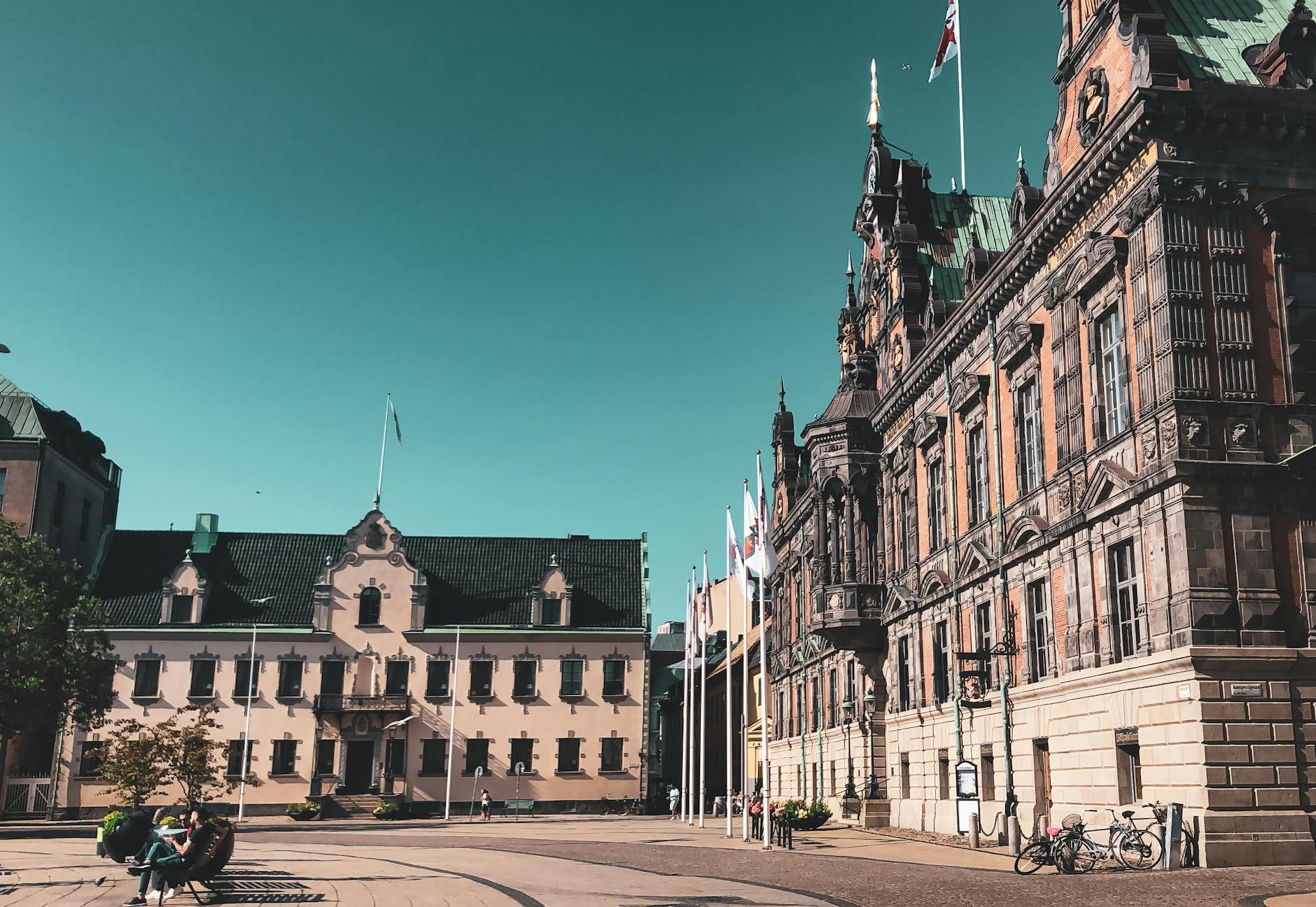
Walk south from the station into Gamla Staden, the old town, and head straight for Lilla Torg (Little Square). If you see one thing in Malmö, make it this: a cobbled square ringed by half-timbered 16th-century houses, café tables spilling out under the eaves, the kind of place where you order a coffee and accidentally lose an hour. A block away is the grand Stortorget (Big Square), all stately facades and a statue of King Karl X Gustav on horseback. Nearby, St Petri Kyrka — Malmö’s oldest building, a soaring 14th-century Gothic brick church — is free to step into and worth five quiet minutes.
Malmöhus Castle and the parks
From the old town, stroll west through the green belt of Kungsparken to Malmöhus Slott, the oldest preserved Renaissance castle in the Nordic region. It now houses the Malmö Museum (around 100 SEK to go in), but even if you don’t, the moat path and the surrounding parks make a lovely walk — locals jogging, prams, ducks, the works.
Western Harbour and the Turning Torso
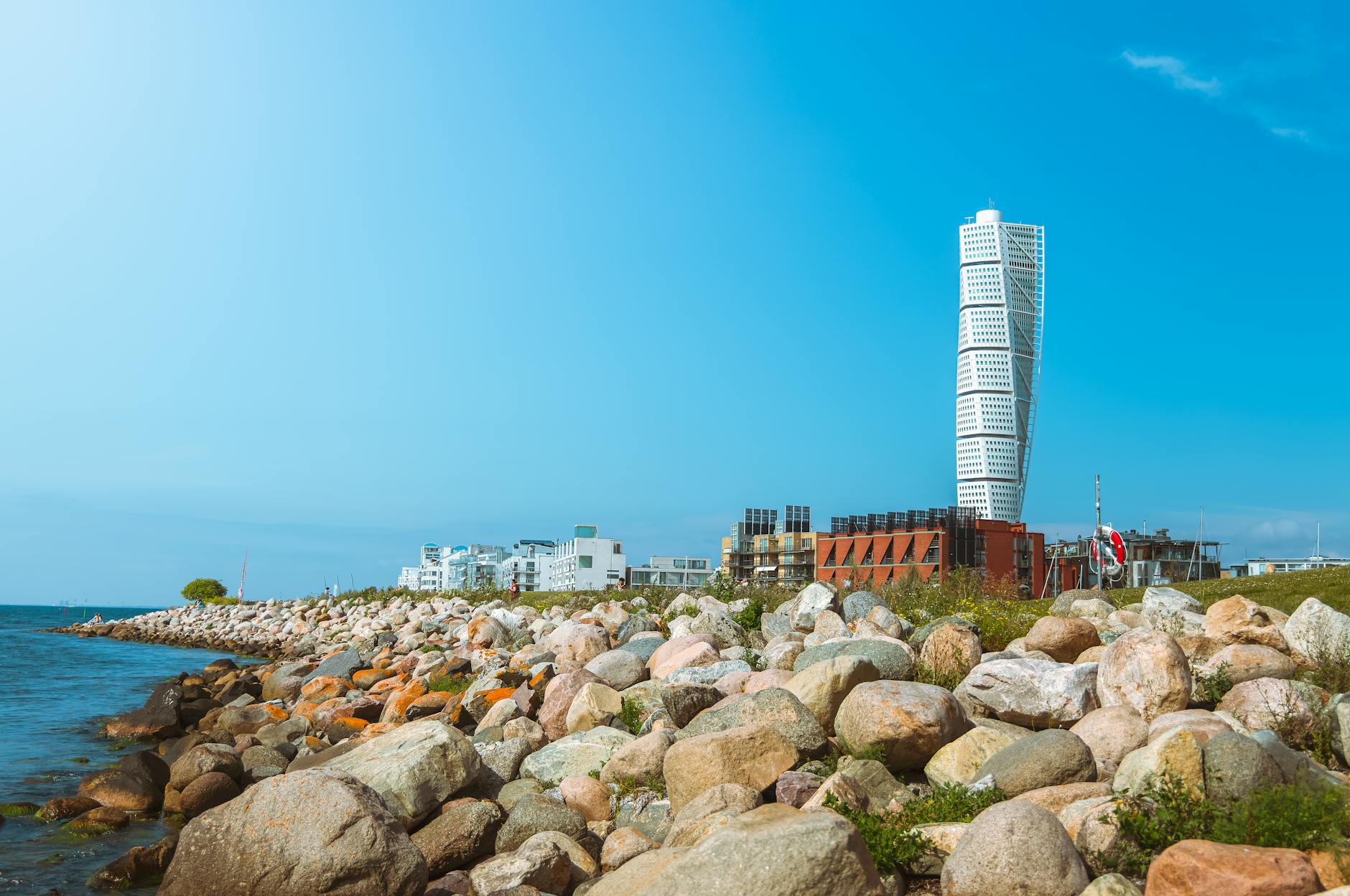
Now for the modern contrast. Head to Västra Hamnen (the Western Harbour), a regenerated waterfront of sleek apartments, boardwalks and swimming spots. Towering over it is the Turning Torso, Santiago Calatrava’s 190-metre twisting tower — the tallest building in Scandinavia and Malmö’s signature silhouette. You can’t go up it, but you’ll want photos. Walk out along the seafront and you’ll reach Ribersborg beach, with its open-air sea baths and views back across the water toward Copenhagen. On a clear day it’s genuinely beautiful.
Möllevången, for a different Malmö
If you’ve got energy left, walk south to Möllevången (“Möllan”), Malmö’s buzzing, multicultural district. The market square here is the city’s beating heart — produce stalls, falafel joints, cheap eats and a nightlife scene if you were ever to stay later. It’s the antidote to the polished waterfront and one of my favourite corners of the city. Nearby, Folkets Park is Sweden’s oldest public park, good for a breather.
Optional: the Disgusting Food Museum
For something completely different, the Disgusting Food Museum displays 80 of the world’s “most disgusting” foods — your ticket is literally a vomit bag, and there’s a tasting bar where you can try fermented shark, surströmming and assorted insects. It’s about 250 SEK and takes an hour or so. Gimmicky? Absolutely. Memorable? Also yes.
A perfect one-day Malmö itinerary
If you’d like a ready-made plan, here’s the day I’d hand a friend visiting for the first time. It’s relaxed, mostly easy walking, and ends with you back in Copenhagen for dinner.
- 9:30 am — Catch the Øresundståg from Copenhagen Central. Grab a window seat for the bridge crossing.
- 10:10 am — Arrive Malmö C and walk five minutes into Gamla Staden.
- 10:20 am — Coffee and a cinnamon bun at Lilla Torg — your first, essential fika.
- 11:00 am — Wander Stortorget and pop into St Petri Kyrka.
- 11:45 am — Stroll through Kungsparken to Malmöhus Castle and its moat.
- 1:00 pm — Lunch: falafel in Möllevången, or graze at Malmö Saluhall.
- 2:30 pm — Head to Västra Hamnen for the Turning Torso and a seafront walk to Ribersborg beach.
- 4:30 pm — Optional: the Disgusting Food Museum, or simply more coffee by the water.
- 6:00 pm — Train back to Copenhagen, home in time for dinner.
Where and what to eat in Malmö
Let me save you the trouble of overthinking lunch. Malmö is famous for falafel — widely considered the best and cheapest in Sweden — and the epicentre is around Möllevångstorget. Spots like Värnhems Falafel (they bake their own flatbread), Jalla Jalla and Falafel Baghdad will feed you generously for pocket change.
If you’d rather graze, head to Malmö Saluhall, a food hall set inside an 1898 former freight warehouse near the station, packed with stalls doing everything from Swedish classics to ramen. And you cannot visit Sweden without observing the sacred ritual of fika — coffee and a kanelbulle (cinnamon bun) — at any café that catches your eye. It’s not a snack; it’s a way of life.
What does a Malmö day trip cost?
One of the quiet joys of this trip is how affordable it is. Here’s a rough per-person budget so you can plan: the return train runs about 200–320 DKK, lunch (falafel or a food-hall plate) is 60–120 DKK, coffee and a bun around 50 DKK, and the optional Disgusting Food Museum about 250 SEK. If you stick to the free sights — the squares, the castle grounds, the waterfront and the beach — you can have a wonderful day for the price of the train and a couple of meals. Everything’s payable by card, so you never need to think about exchanging currency.
Money, time and other practical notes
The single most common rookie mistake: assuming euros or Danish kroner work in Sweden. They don’t — Sweden uses the Swedish krona (SEK). The good news is that Sweden is one of the most cashless countries on earth, so just tap your card everywhere; you don’t need to withdraw any cash at all. There’s no time difference with Copenhagen, so you won’t accidentally miss your return train over a clock mix-up. As for how long to stay, one full day is plenty: arrive mid-morning and you’ll have a relaxed 5–7 hours before heading back.
One more Swedish difference worth knowing before you shop: supermarkets sell beer only up to 3.5 per cent, and anything stronger comes from the state-run Systembolaget. If a day in Malmö has you wondering whether Sweden deserves a longer trip, I’ve compared Copenhagen vs Stockholm category by category.
Add Lund to your day
If you’re an efficient traveller and fancy a second Swedish town, Lund is only 10–15 minutes further by train. It’s one of Scandinavia’s oldest university cities, with a magnificent Romanesque cathedral and a famous astronomical clock, plus the cobbled, bicycle-filled streets of a classic student town. Doing Malmö in the morning and Lund in the late afternoon is a popular combination, and it’s exactly the pairing many organized tours use. I’d only attempt both if you’re happy with a faster pace — otherwise Malmö alone fills a day nicely. If you’d rather stay on the Danish side, the Louisiana Museum and Roskilde both make relaxed alternatives.
Visiting Malmö with kids
Malmö is an easy city with children. The short, scenic train ride is an adventure in itself, the old-town squares have room to roam, and Ribersborg beach and the playgrounds around Folkets Park (which has a small free amusement area and a petting zoo) keep little ones happy. The flat, pram-friendly streets and the abundance of cafés for snack stops make it far less stressful than a big-city day. Just keep an eye on the return train time so an afternoon meltdown doesn’t cost you the connection.
Best time to visit Malmö
Malmö shines from late spring through summer (May to September), when the Western Harbour and Ribersborg beach come alive and you can sit out at Lilla Torg until late. December brings cosy Christmas markets, while the shoulder months are quieter and cheaper. For a broader view of when to plan your trip, my guide to the guide to timing your trip applies just as well to Malmö across the water.
Mistakes to avoid
- Forgetting your ID. The border check is real — carry a passport or EU national ID card, not just a phone photo.
- Trying to buy a ticket onboard. Buy before you board, every time.
- Bringing only euros or DKK. Use a card; Sweden runs on SEK and prefers plastic anyway.
- Hunting for a reserved seat. Seat reservations were scrapped in 2024 — just sit down.
- Under-budgeting time. The walking adds up; don’t cram it into two hours.
Is a Malmö day trip from Copenhagen worth it?
Yes — and I’d push back on anyone who tells you Malmö is “skippable.” It won’t dazzle you the way Copenhagen does, and that’s rather the point. It’s relaxed, walkable, a little grittier, and it gives you the genuine novelty of standing in a second country before lunch. For the price of a nice meal and 35 minutes on a train, you get a whole new city. If you’re putting together a longer trip, slot it in alongside the other excursions from the capital — Malmö pairs especially well with a castle day up the coast.
The Øresund Bridge and a slice of Nordic noir
The crossing itself deserves a moment of appreciation. The Øresund Bridge is an engineering marvel — a combined bridge and tunnel nearly 16 kilometres long that dives into an artificial island called Peberholm partway across, so ships and aircraft can pass freely. Opened in 2000, it stitched two countries and two cities into a single region almost overnight, and your train glides over the top deck while cars run below. Fans of Scandinavian crime drama will recognise it instantly: it’s the bridge of The Bridge (Bron/Broen), the cult Danish-Swedish series that opens with a body left exactly on the border line. Keep an eye out the window as you cross — the views back toward Copenhagen and ahead to Malmö are genuinely cinematic, and on a bright day the sea below turns silver.
Should you stay overnight in Malmö?
A day trip is what most people do, and it’s plenty. But if Malmö grabs you — and it grabs more people than expect it to — an overnight lets you experience the city after the day-trippers have caught their trains home. Evenings around Lilla Torg and in Möllevången have a relaxed, distinctly Swedish buzz, the Western Harbour is lovely at sunset, and hotel prices are often gentler than Copenhagen’s. It also opens up easy add-ons like Lund or the beaches further down the coast. For a first visit, though, I’d keep it simple: a single well-planned day gives you the city’s greatest hits and the satisfying novelty of a second country, all without unpacking a bag.
Frequently asked questions
How do I get from Copenhagen to Malmö?
Take the direct Øresundståg train from Copenhagen Central (or the airport) to Malmö C. It crosses the Øresund Bridge and takes about 35 minutes, with departures roughly every 20 minutes.
Do I need my passport to go to Malmö?
Yes. Although both countries are in Schengen, Sweden runs ID checks at the border, so carry a valid passport or EU national ID card.
How much does the train to Malmö cost?
Around 109 DKK / 161 SEK for a standard single, and cheaper with a Rejsekort or app ticket. Buy before boarding — you can’t pay on the train.
What currency is used in Malmö?
The Swedish krona (SEK). Sweden is largely cashless, so paying by card is easiest — you don’t need euros or Danish kroner.
How many hours do I need in Malmö?
One full day, or about 5–7 hours on the ground, is ideal to see the old town, the Western Harbour and grab a meal without rushing.
Is there a time difference between Copenhagen and Malmö?
No. Malmö is in the same time zone as Copenhagen, so your return train times line up exactly.
Planning more excursions? A Copenhagen Card can cover a lot of the city before you cross to Sweden, and the Kronborg Castle day trip up the coast makes a great companion to your Malmö adventure.
Last updated: July 2026. Photos via copenhagentourism.org.


