A ticket costs 215 kroner and comes with one 40cl draught of Carlsberg. In a REMA 1000 supermarket, the same company’s Tuborg costs 15.50 a half-litre. So the beer is not what you are paying for. What you are paying for is the story of a brewery that isolated the yeast behind modern lager and then gave it away, whose laboratory invented the pH scale, and whose founder’s son paid for one of the best art museums in Europe, told inside the red-brick brewery where it all happened. Home of Carlsberg is worth the money if that story interests you. If all you wanted was a beer, it is an expensive way to get one.
This guide covers what the ticket includes and what changed when the old Carlsberg Visitor Center became Home of Carlsberg, the history worth knowing before you go, the parts you can see for nothing, who should skip it, and how to fit it into a day. Prices and hours were checked in September 2026; the brewery publishes its opening hours season by season, so check before you go.
Home of Carlsberg at a Glance
| Detail | |
|---|---|
| Where | The old Carlsberg brewery in Carlsberg Byen, west of Vesterbro |
| Nearest station | Carlsberg, on the S-train, about ten minutes’ walk |
| Adult ticket | 215 DKK (2026) |
| Included | One 40cl draught Carlsberg, or a soft drink or water |
| Hours, September 2026 | 10:00–18:00; Friday and Saturday to 20:00 |
| Hours, 1–11 October 2026 | Daily 10:00–18:00 |
| Last entry | Two hours before closing |
| Time needed | About two hours |
| Extras | Paid beer tasting and a tour of the cellars |
| Copenhagen Card | Listed as a card attraction; check the current terms |
What 215 DKK Actually Buys
The core of the ticket is a self-guided walk through the history and science of Carlsberg, laid out in the old brewery buildings, with a sculpture garden and one genuinely eccentric highlight: a collection of more than 22,000 unopened beer bottles from around the world, shelf after shelf of them, billed as the largest of its kind. Even people who do not care about beer tend to stop and stare.
Then there is the drink. The ticket includes one 40cl draught Carlsberg, or a soft drink or water if you would rather. That is a change from the old Carlsberg Visitor Center, which used to include two beers, and plenty of guides still say it does. It does not. If you want a proper tasting, the beer tasting experience and the cellar tour are sold as paid add-ons.
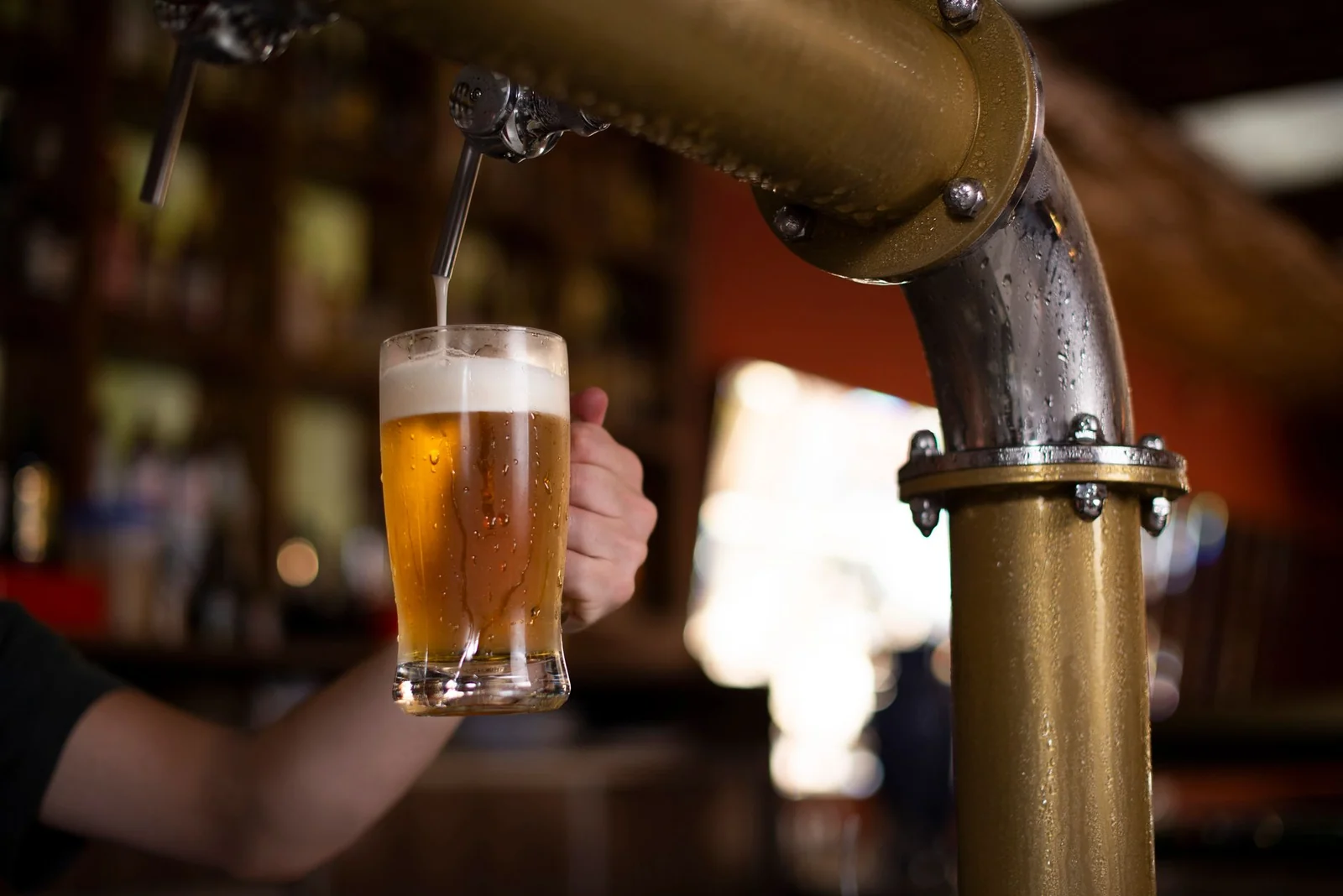
Do the sums and a 40cl beer is worth roughly 60 kroner in an ordinary Copenhagen bar, which leaves about 155 for the exhibition itself. That is what the National Museum charges for a building full of Vikings. Home of Carlsberg is priced like a major museum, and it is not one. It is a well-told company story in a remarkable setting, and it should be judged as that.
The Story Worth Knowing Before You Go
The history is the best reason to come, and it is far stranger than a brand museum has any right to be.
- 1847: J.C. Jacobsen founds a brewery on a hill in Valby and names it after his five-year-old son, Carl. Carlsberg means Carl’s hill.
- 1875–76: Jacobsen sets up the Carlsberg Laboratory to do pure science, and then the Carlsberg Foundation, which would go on to own the brewery and fund research for the next century and a half.
- 1883: Emil Christian Hansen, working at the laboratory, isolates a single pure strain of lager yeast. Jacobsen refuses to patent it and hands it to any brewer who asks, and brewing from a pure yeast culture, which Hansen’s method made possible, becomes the industry standard worldwide.
- 1909: the laboratory’s chemist S.P.L. Sørensen invents the pH scale, to measure acidity in his experiments. Every school chemistry lesson on acids owes him something.
- 1901 onwards: Carl, grown up and running his own rival brewery next door, builds the Elephant Gate, founds the Ny Carlsberg Glyptotek and gives the city the Little Mermaid.
- 1970: Carlsberg merges with Tuborg, its great rival from Hellerup.
- 2008: Carlsberg moves its main Danish brewing to Fredericia in Jutland, and the Valby site begins its second life as a new city district.
The Carlsberg Foundation still controls the company and still gives away much of its income to Danish science, museums and the arts. That is the part of the story most visitors leave knowing, and it is a good one: every Carlsberg you drink in Copenhagen helps pay for a laboratory, a research grant or a painting.
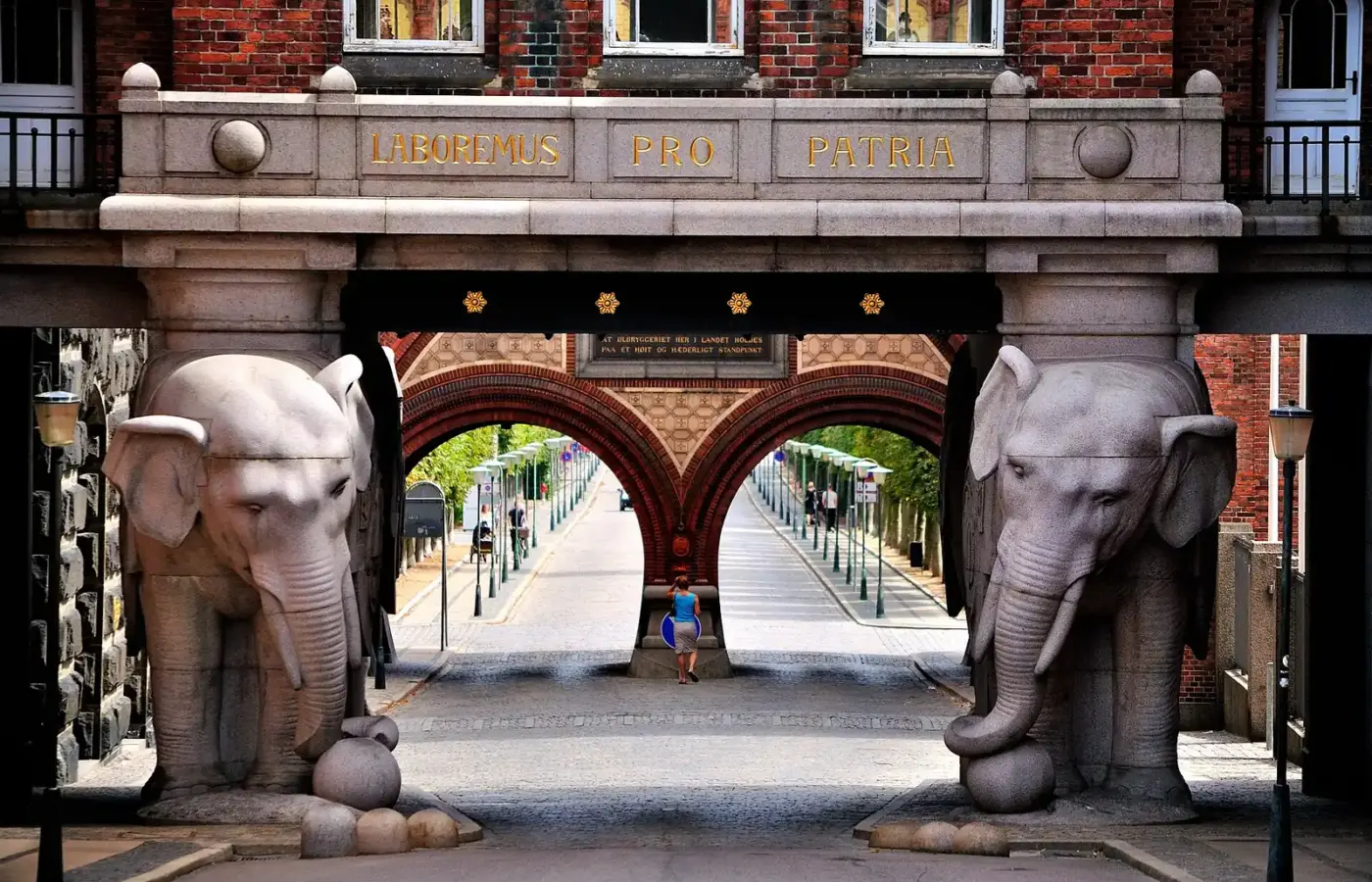
There is a family row buried in the names, too. Father and son fell out badly over how the brewery should be run, and in the early 1880s Carl left to build his own brewery on the neighbouring plot, which he called New Carlsberg, Ny Carlsberg. His father renamed the original Old Carlsberg, Gamle Carlsberg, and for years the two ran as rivals side by side. They were only brought back together in 1906, after J.C. had died and both breweries had passed to the Foundation. That is why the art museum Carl founded is the Ny Carlsberg Glyptotek, and why the most flamboyant gate on the site, the one with the elephants, was built by the son.
The Parts That Cost Nothing
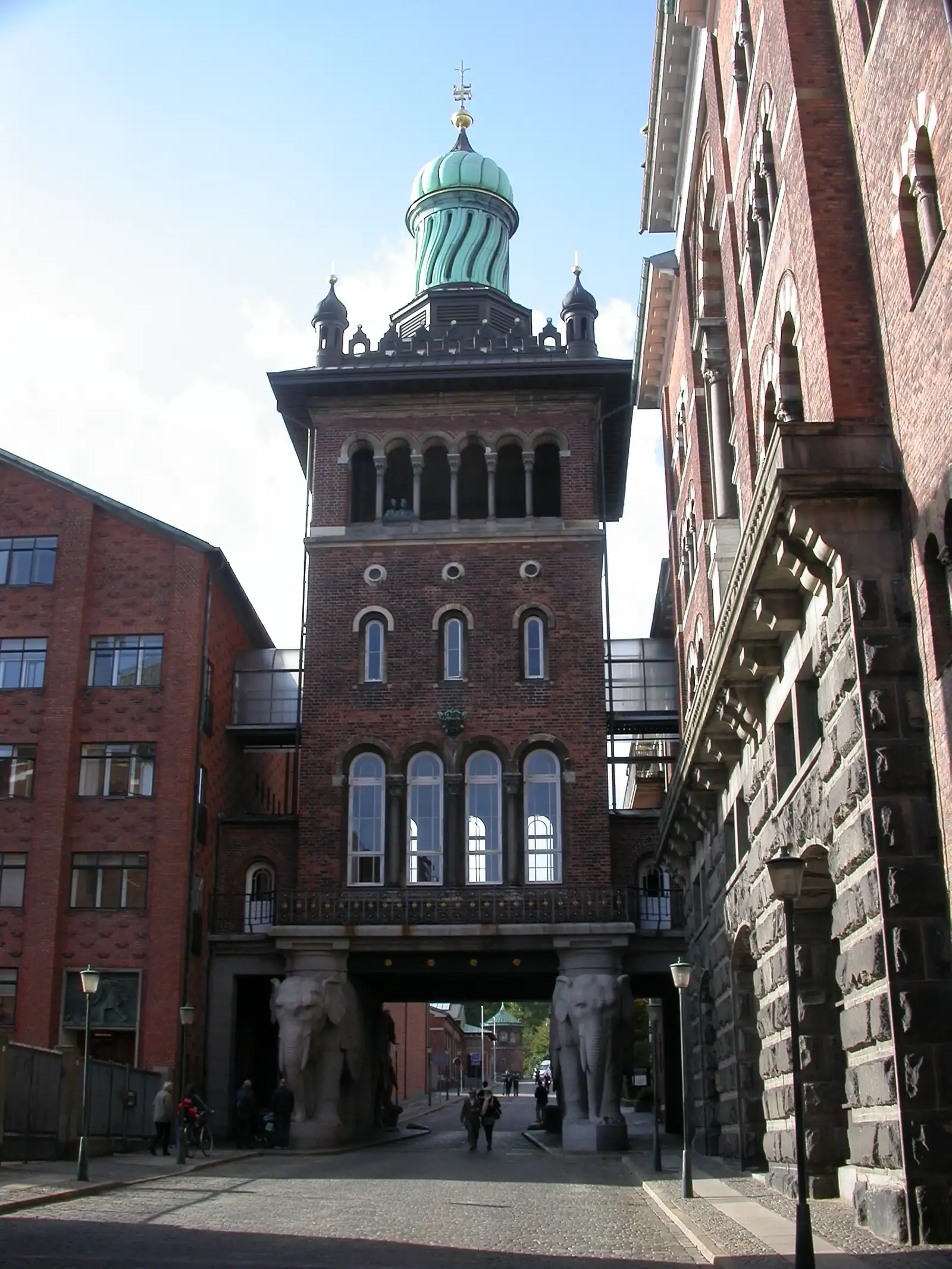
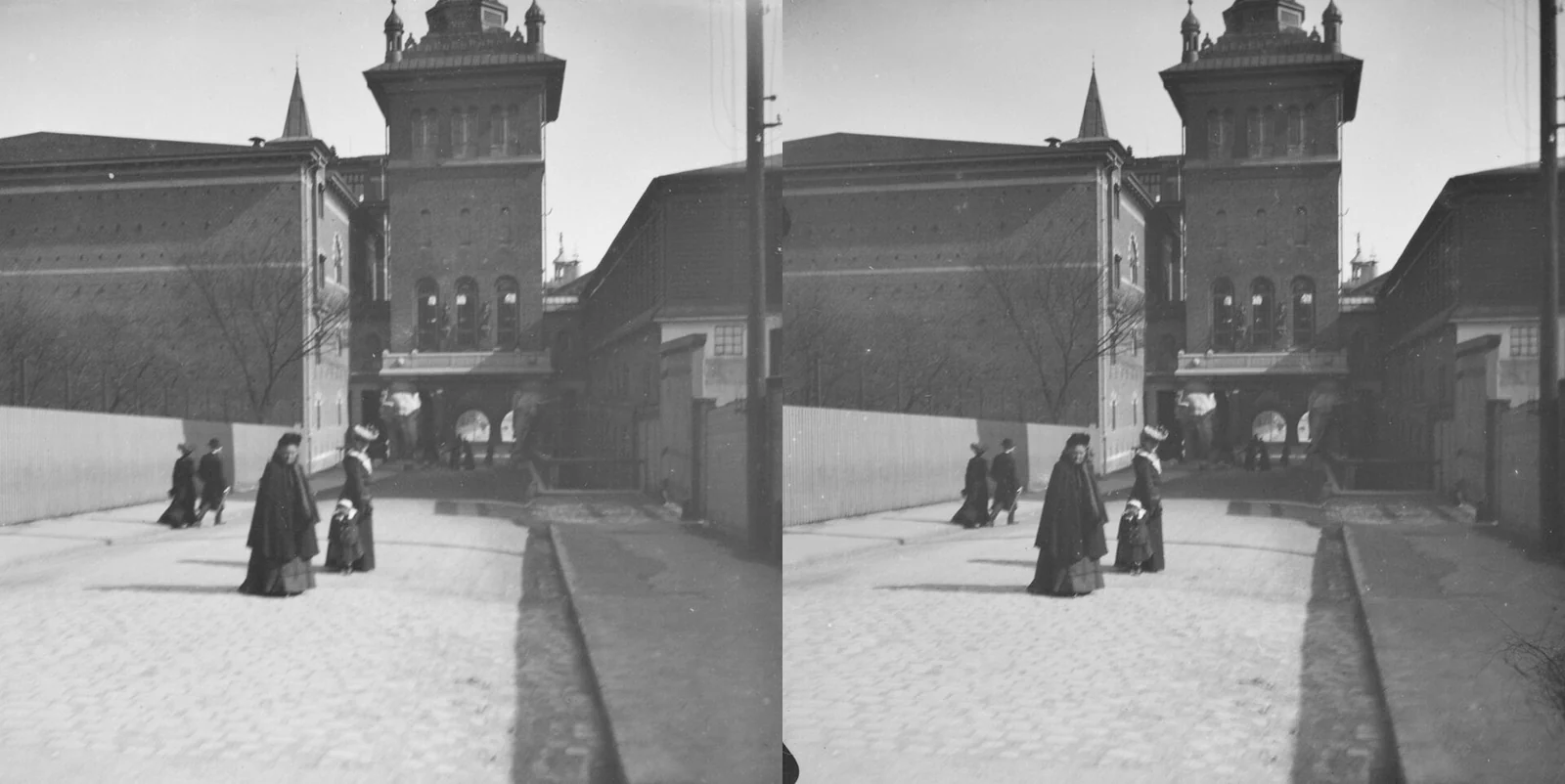
You do not need a ticket to see the best-known thing at Carlsberg. The Elephant Gate, built in 1901 to designs by Vilhelm Dahlerup, is a public street: four granite elephants carrying a brick tower with a twisted copper dome, and above the arch Carl Jacobsen’s motto, Laboremus pro patria, let us work for the fatherland. Walk through it, walk round it, take your photographs. It is one of the most extraordinary pieces of industrial architecture in northern Europe, and it is free.
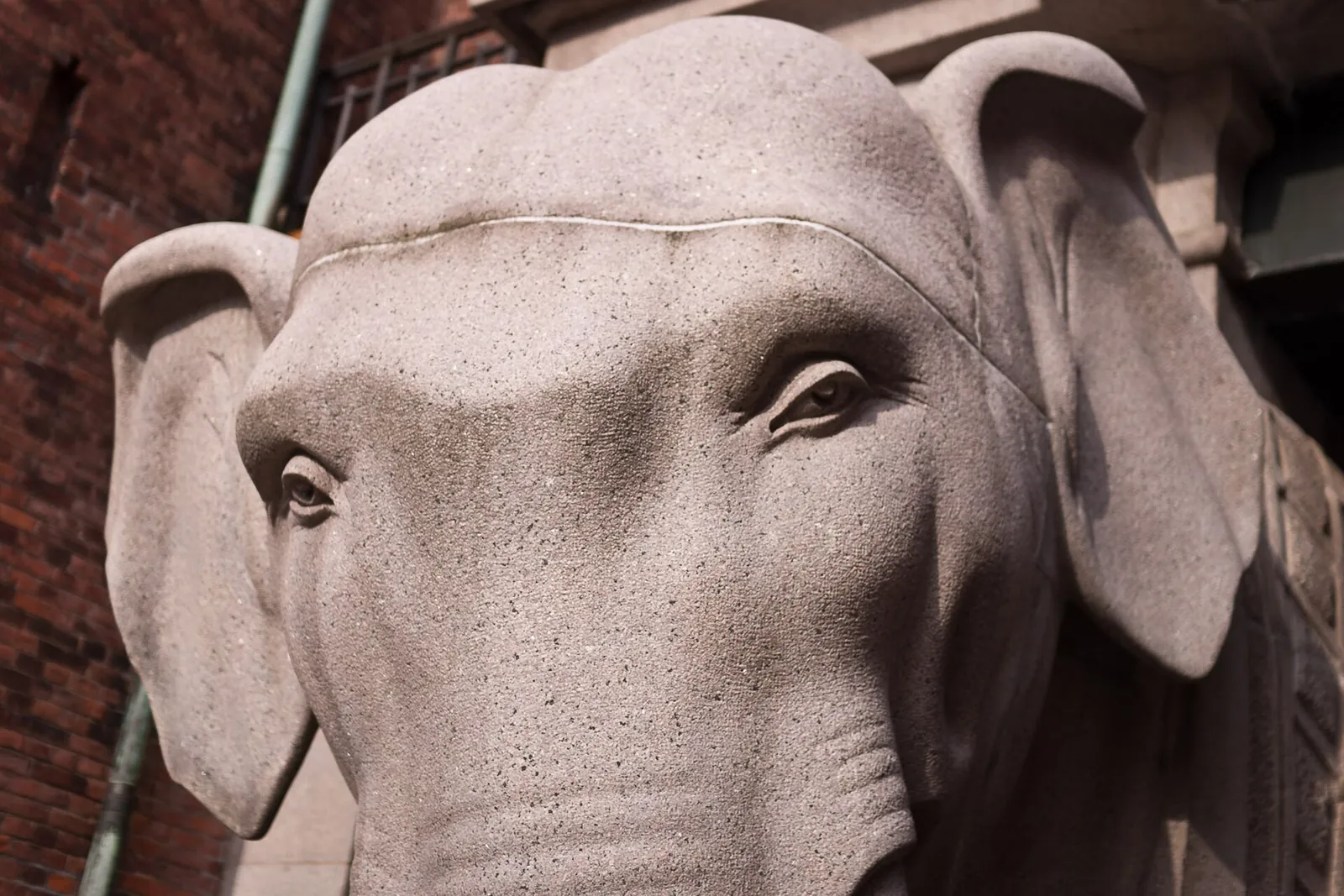
Look closely at the elephants and at the weather vane on the dome and you will find swastikas. They are not what they look like: the swastika was an ancient Indian good-luck symbol, Carlsberg used it as a trademark from 1881, decades before the Nazis took it, and dropped it in the 1940s. The carvings stayed because they are part of the listed building, and it is worth knowing the story before a companion asks you.
Around the gate, the old brewery has become Carlsberg Byen, a district of converted brewery buildings, new towers and courtyards that is pleasant to wander at any time. Our guide to Carlsberg City covers the neighbourhood, and the parks of Søndermarken and Frederiksberg Have are a few minutes’ walk away; see our Frederiksberg guide.
Is It Worth It? Who Should Go and Who Should Skip
Go if you like industrial heritage, the history of science or the story of how a company shaped a city. Go if you have teenagers who will enjoy the bottle wall and a soft drink, if it is raining and you have already done the big museums, or if you are staying in Vesterbro or Frederiksberg and it is on your doorstep. It fills a wet afternoon well, and our rainy day guide has more in the same spirit.
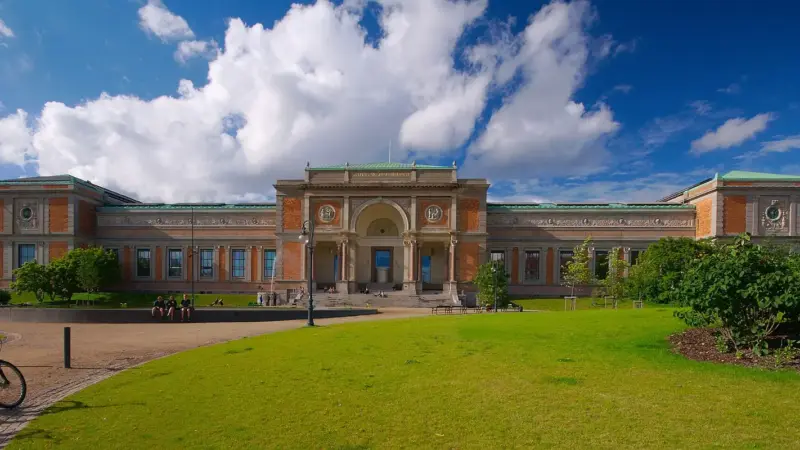
Skip it if you are in Copenhagen for three days or fewer and have not yet seen the Glyptotek, the National Museum or SMK, all of which are better museums for similar money. Skip it, above all, if what you actually want is good beer. Carlsberg makes a clean, consistent lager; it is not what brings beer lovers to Copenhagen. For that, walk through the Elephant Gate for free and then spend the 215 kroner on two rounds at WarPigs or Fermentoren, a short hop away in Kødbyen. Our guide to Copenhagen craft beer has the addresses.
The honest middle ground: if the story in the section above made you want to know more, you will enjoy Home of Carlsberg. If you skimmed it, you have your answer.
How to Visit
- Getting there: take the S-train to Carlsberg station, one stop from Central Station, and walk about ten minutes. From Vesterbro it is a pleasant walk. Our guide to public transport tickets covers fares.
- Timing: last entry is two hours before closing, so on a day that closes at 18:00, arrive by 16:00 at the latest. In September 2026 Fridays and Saturdays run to 20:00; from 1 to 11 October it is 10:00 to 18:00 every day.
- Tickets: buying online saves time at busy periods. If you have a Copenhagen Card, check whether it covers entry or gives a discount before you pay.
- Make a day of it: the Elephant Gate and Carlsberg Byen, lunch, then Søndermarken and Frederiksberg Have in the afternoon. Or go late in the day and head into Vesterbro for dinner afterwards.
Frequently Asked Questions
How much does Home of Carlsberg cost?
An adult ticket is 215 DKK in 2026. It includes one 40cl draught Carlsberg, or a soft drink or water. Beer tastings and the cellar tour cost extra.
How many beers do you get at Home of Carlsberg?
One 40cl draught. The old Carlsberg Visitor Center included two, and many guides still say so, but the current ticket includes a single beer. Extra tastings are sold separately.
How long does Home of Carlsberg take?
Allow about two hours. Last entry is two hours before closing time, so arrive in good time.
Is Home of Carlsberg the same as the Carlsberg Visitor Center?
It is its successor, on the same historic brewery site. The name and the ticket have changed, so older reviews and prices are out of date.
Is the Elephant Gate free to visit?
Yes. The Elephant Gate is a public street in Carlsberg Byen, so you can walk through it and photograph it without a ticket.
Is Home of Carlsberg included in the Copenhagen Card?
It is listed as a Copenhagen Card attraction. Check the card’s current terms to see whether it covers full entry or a discount.
Is Home of Carlsberg worth it?
For anyone interested in industrial history, science or the story behind the brand, yes. If you mainly want to drink good beer, spend the money at a Copenhagen craft beer bar and see the Elephant Gate for free.
Related Reading
- Carlsberg City the neighbourhood the old brewery has become.
- Ny Carlsberg Glyptotek Carl Jacobsen’s museum, and the best thing Carlsberg money ever bought.
- Copenhagen craft beer for the city’s best beer, which is not brewed by Carlsberg.
- What a beer costs in Copenhagen from the supermarket shelf to the Nyhavn terrace.
- The best museums in Copenhagen for the museums that should come first on a short trip.
Photo Credits
- The Elephant Gate at Carlsberg: granite elephants carrying an arch inscribed Laboremus pro patria: photo by Troels Dejgaard Hansen from Copenhagen, Denmark, Elefantporten (Carlsberg).jpg, CC BY-SA 2.0
- The brick tower with a twisted copper dome standing over the Elephant Gate at the old Carlsberg brewery: photo by discosour from New York, NY, Elephant Gate and Tower.jpg, CC BY-SA 2.0
- Close-up of the head of one of the granite elephants on Carlsberg’s Elephant Gate: photo by Knud Winckelmann, Detail from Elefantporten Carlsberg Valby Denmark.jpg, CC BY-SA 3.0
- A stereoscopic photograph of the Elephant Gate and brewery tower taken in the early twentieth century: photo by Hjalmar Christian Louis Alstrup, Elefantporten, Carlsberg, 1901-1922.jpg, Public domain
Final Thoughts
Home of Carlsberg sells itself as a beer experience, and that undersells it and oversells it at the same time. The beer is one glass of an ordinary lager. The story is extraordinary: a brewer who gave away his most valuable discovery, a laboratory that changed chemistry, a son who spent the family fortune on art and a mermaid, and a foundation that still turns lager into research grants.
Walk through the Elephant Gate whatever you decide; it costs nothing and it is one of the great sights of the city. Then go in if the history has hooked you, and drink your 40cl slowly in the courtyard. If it has not, keep your 215 kroner for a better beer somewhere else.
Last verified: September 2026. Price and inclusions from Home of Carlsberg’s own visitor information; opening hours change by season, so check the brewery’s website before you travel.