The last 150 steps of the Church of Our Saviour Copenhagen tower are on the outside of the building. Not behind glass, not in a stairwell — outside, on copper treads that wind anticlockwise around the spire with a gilded handrail on one side and 86 metres of air on the other, narrowing as they go until the top step is barely wide enough for one person. It is the most exhilarating twenty minutes in the city and it is not for everyone, which is the honest starting point for this page.
Below: what it costs, when it is open, when it closes without warning, whether you need to book, how bad the climb really is, and what you can see from the top. Prices and hours are taken from the church’s own site and were checked in September 2026.
Tickets and Hours
| Detail | |
|---|---|
| Adult | 70 DKK |
| Student or senior 65+ | 53 DKK |
| Child | 20 DKK |
| Group of 12 or more | 53 DKK per person |
| Season pass | 100 DKK |
| Copenhagen Card | Free |
| Tower hours | Daily 09:00–20:00, last entry 19:30 |
| Closed | All of January, and 24–25 December |
| Height of the viewing point | 86 metres |
| Steps | 400 in total, the last 150 outside |
Seventy kroner is genuinely cheap for what it is — less than a beer and a half in a decent bar. If you are carrying a Copenhagen Card the tower is included, and it is one of the attractions that makes the card look reasonable in a way the canal boats do not.
The church itself, at ground level, is free to enter and worth ten minutes for the Baroque interior and the extraordinary carved organ front held up by two elephants. Most visitors climb straight past it.
The Thing Nobody Tells You: It Closes for Weather
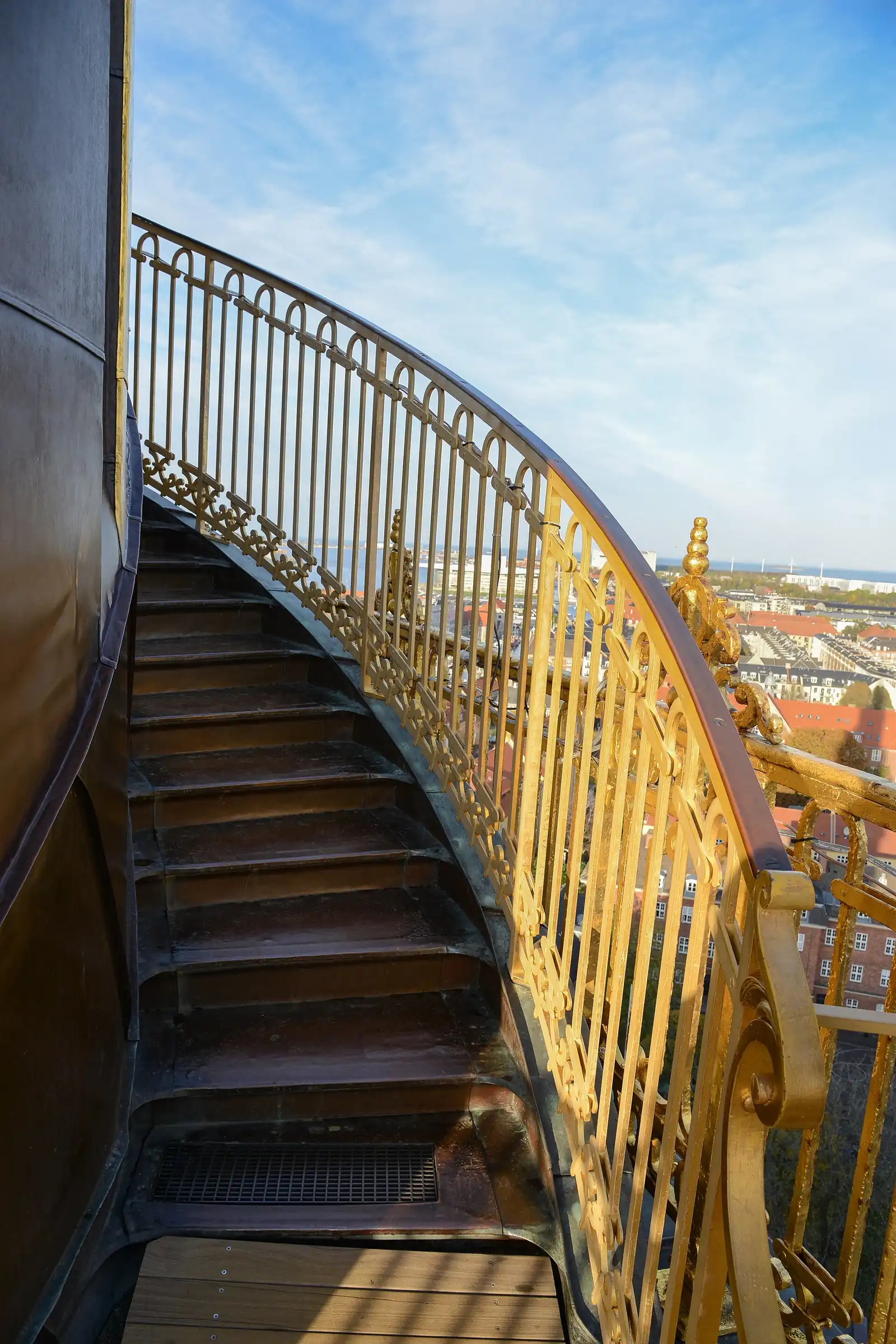
The tower closes during rain and strong wind, at no notice, and it stays closed until the steps dry. This is the single most important sentence on this page and it appears on almost no other guide. The outer stairs are copper, they become dangerously slick when wet, and the church will not open them until they have dried out — which, in a city where it rains on roughly half the days of the year and the wind comes straight off the water, happens rather a lot.
The practical consequences are worth thinking through. It means the tower is an opportunistic attraction rather than a bookable one: check the weather, and go on the first clear morning of your trip rather than saving it for the last day. It means a booked ticket is not a guarantee. And it means that between roughly November and March, when Copenhagen is at its wettest and windiest, your odds on any given day are noticeably worse — on top of which the tower is shut for the whole of January anyway.
If you are here in winter, treat a successful climb as a bonus. If you are here in summer, go early: the steps dry faster and the queue is shorter.
Booking, and When to Turn Up
Advance booking is strongly recommended because capacity on the stairs is limited — the outer stairs are too narrow for two-way traffic to flow easily, so the church limits how many people are on the spire at once. The busiest window is Friday to Monday between 10:00 and 17:00, which is exactly when most visitors instinctively go.
The better slot is a weekday, first thing. The tower opens at 09:00, the light over the harbour is at its best in the morning, and you will not spend the outside section stuck behind someone who has just discovered they are afraid of heights. Which brings us to the next question.
How Hard Is the Climb, Really?
Four hundred steps, but the number understates it and overstates it at the same time.
The first 250 are indoors, through the body of the tower: wooden stairs, wide at first, then narrowing, past the bell chamber and the timber frame that holds it. This section is a normal historic tower climb — steep, dusty, warm, and slightly claustrophobic near the top where the roof beams close in and you duck through a low opening onto the outside.
Then the character changes completely. The outer stairs are 150 steps wrapped around the spire in a tightening spiral, and the top few turns are genuinely narrow — the treads shrink as the spire tapers, so the last stretch is a single file of people shuffling round a golden ball. The handrail is solid and the whole thing is safe. It does not feel safe, and that is the point.
- Vertigo: if you have it, do not do this. The outside section has open views straight down and there is no way to avoid looking.
- Claustrophobia: the indoor section is the harder half. It is tight, dark and busy.
- Children: plenty of Danish families do it, but the outer stairs need a hand held the whole way and the narrow top is not for small children.
- Fitness: moderate. 400 steps at a steady pace is fifteen minutes; there is nowhere to properly rest on the outside section, so pause before you go out.
- Bags: travel light. There is no room to pass anyone carrying much.
What You Can See From the Top
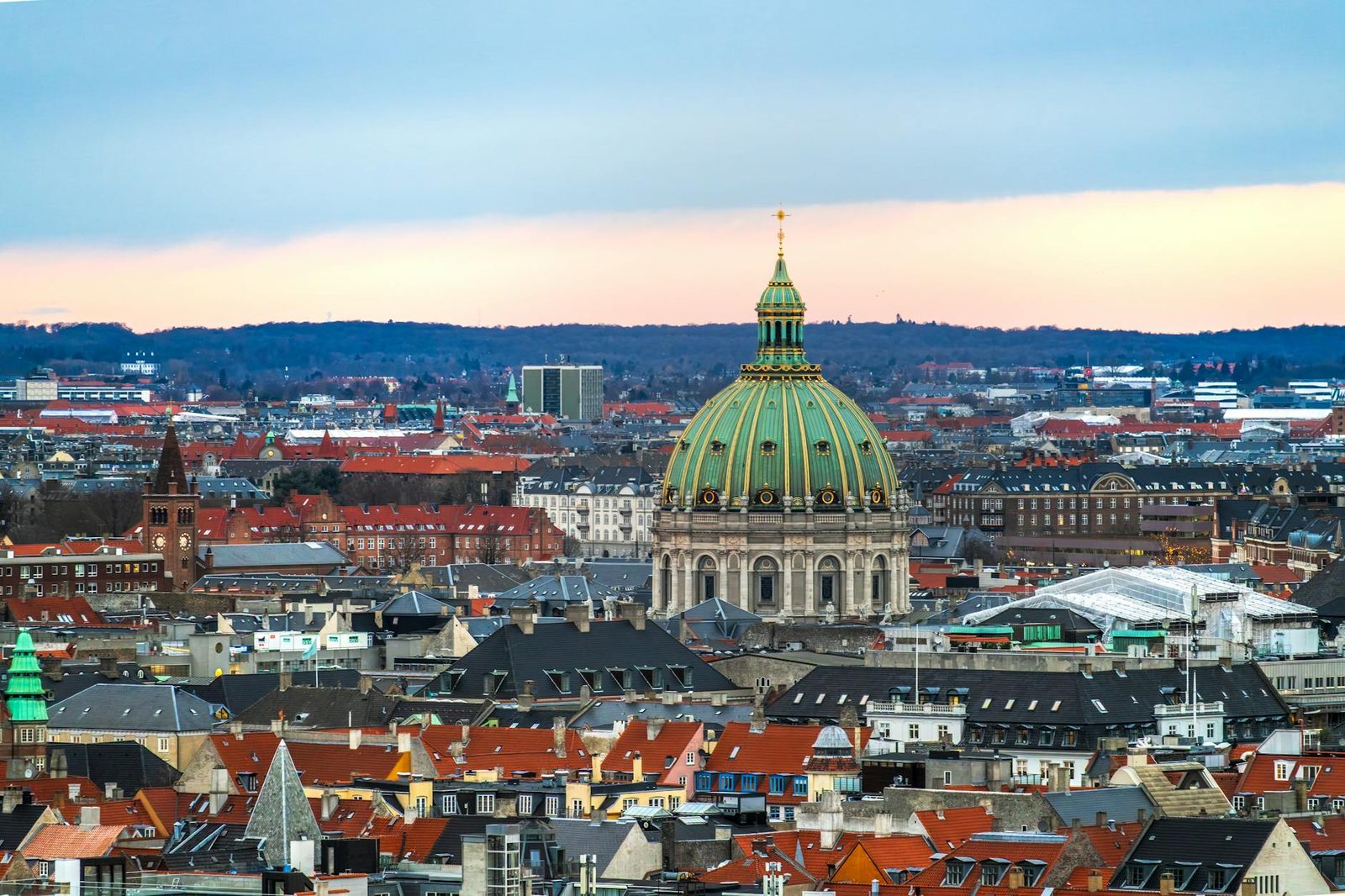
This is the best paid view in Copenhagen and the argument is straightforward: it is the only one that is outdoors, at height, in the middle of the harbour. From 86 metres you get the whole of Christianshavn below you in its seventeenth-century grid, the harbour running north to Nordhavn and south to Sydhavn, the flat green sprawl of Amager, and the medieval city across the water with Christiansborg’s tower, Rundetårn and the Marble Church picked out in the roofline.
On a clear day you can see the Øresund Bridge and, beyond it, Sweden. You can also see straight down into Christiania, which is directly adjacent and looks, from up here, exactly like the self-built village it is.
Compared with the alternatives: Christiansborg’s tower is taller and free but enclosed and in the middle of the old city; Rundetårn is lower, older and far easier, with a ramp instead of stairs; and the rooftop bars are barely above the roofline at all. Vor Frelsers wins on drama and on the harbour angle. It loses on accessibility, comprehensively.
The Building Itself
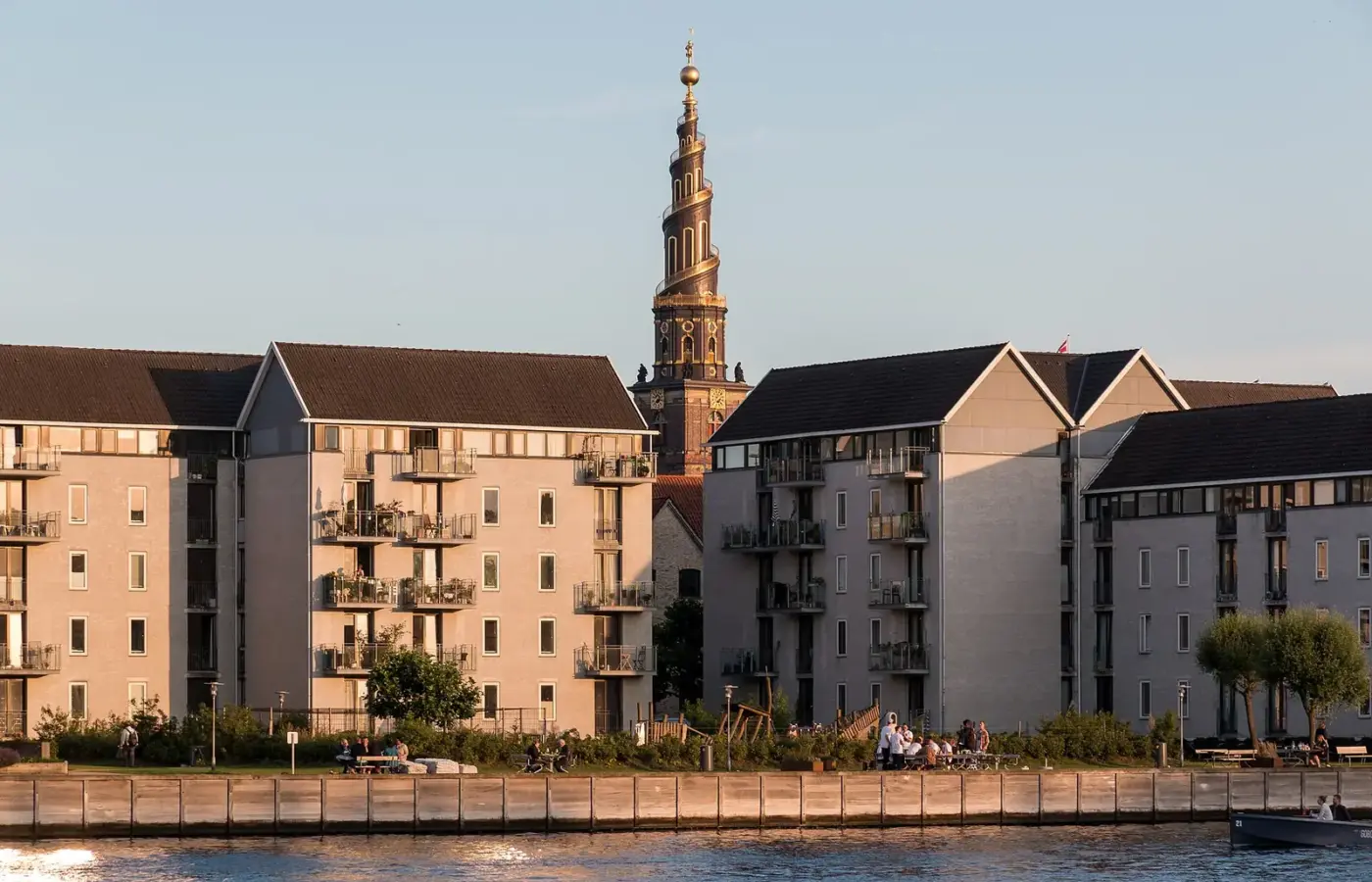
The church was consecrated in 1696 and the spire came later, completed in 1752 to a design by Lauritz de Thurah after an earlier version was rejected. The corkscrew turns anticlockwise, which is unusual and has generated a persistent Copenhagen legend that the architect got the direction wrong, realised it from the ground and threw himself from the top. He did not. De Thurah died in his bed some seven years later, and the story survives because it is a better story.
The other thing to look at is inside, and most people miss it. The organ front, from 1698, is supported by two carved elephants, and the altarpiece is a full Baroque theatre of gilded figures. The tower also houses a carillon of 48 bells, and if you are on the stairs when it plays you will feel it through the structure.
The setting matters too. This is Christianshavn, built on reclaimed ground in the 1600s to a Dutch plan, and the spire is its landmark from every direction. It is one of the four spires that define the Copenhagen skyline and by some distance the strangest.
Getting There, and What to Do Around It
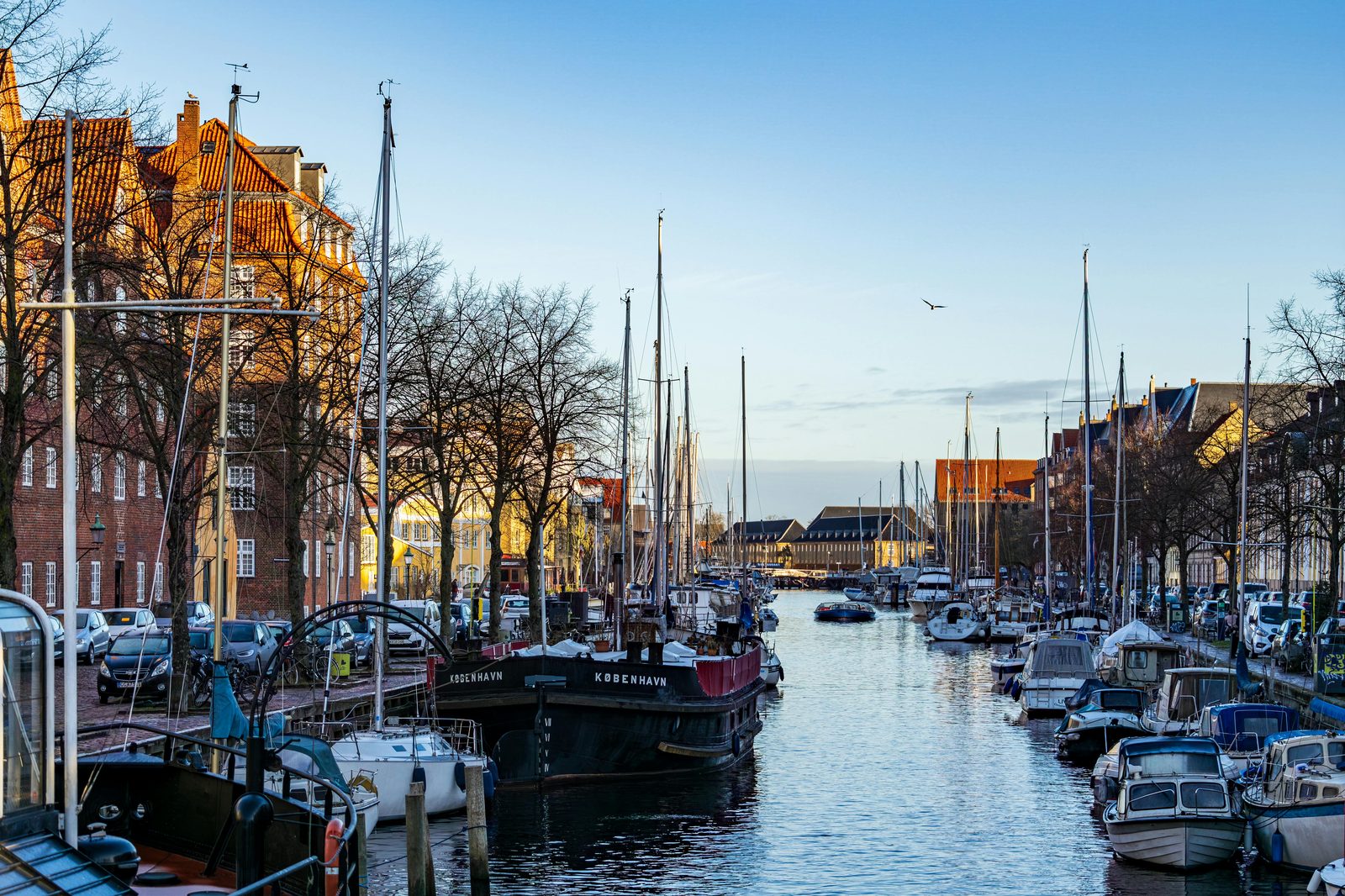
Sankt Annæ Gade 29, Christianshavn. Christianshavn metro station on the M1 and M2 is a four-minute walk, and from Kongens Nytorv it is one stop or a fifteen-minute walk across Inderhavnsbroen and through the neighbourhood, which is a better approach on foot. The metro guide has the lines, and getting around Copenhagen covers the harbour bus, which stops nearby and is a far better boat trip than a canal tour.
Around it: Christiania is a few minutes’ walk, the canal-side cafes on Overgaden are a hundred metres, and Papirøen and Refshaleøen are a walk or a short bus ride north for street food. Doing the tower first and eating afterwards is the right order, because you will not enjoy 400 steps on a full stomach.
Is It Worth It?
Yes, with two caveats and one strong recommendation.
The caveats: do not attempt it with vertigo, and do not build a day around it in bad weather. The recommendation: do it on the first clear morning you get, before nine-thirty, on a weekday. Seventy kroner for the most memorable fifteen minutes in Copenhagen is one of the few genuinely good-value tickets in an expensive city, and it is the rare attraction that people talk about afterwards rather than photograph and forget.
Frequently Asked Questions
How much does it cost to climb the Church of Our Saviour tower?
70 DKK for adults, 53 for students and over-65s, 20 for children, and free with the Copenhagen Card. A season pass is 100 DKK.
How many steps are there in the Church of Our Saviour spire?
400 in total. The first 250 are inside the tower and the final 150 are on the outside of the spire, winding anticlockwise to a viewing point at 86 metres.
Do I need to book the Church of Our Saviour tower?
Booking is strongly recommended because capacity on the stairs is limited. The busiest period is Friday to Monday between 10:00 and 17:00; a weekday morning is much easier.
What are the opening hours?
The tower is open daily 09:00 to 20:00 with last entry at 19:30. It is closed for the whole of January and on 24 and 25 December.
Does the tower close in bad weather?
Yes, and this catches a lot of people out. The outer copper steps become slippery in rain and the tower closes during rain or strong wind, reopening only once the steps have dried. Go on a clear morning rather than saving it for your last day.
Is the Church of Our Saviour tower scary?
The outside section is genuinely exposed — open views straight down, treads that narrow as the spire tapers, and a single-file squeeze at the top. The handrail is solid and it is safe, but anyone with vertigo should skip it.
Is the church itself free?
Yes. Entry to the church at ground level costs nothing, and the Baroque interior with its elephant-supported organ front is worth ten minutes before or after the climb.
For a quieter climb on the other side of the harbour, the Marble Church dome offers a completely different view — straight down the royal axis to Amalienborg and the Opera House — but only on weekend afternoons, for fifteen people, first come first served. See our guide to the Marble Church.
Related Reading
- Christianshavn the Dutch-planned neighbourhood the spire stands over.
- Rundetårn the easy climb, with a ramp instead of stairs.
- Christiansborg Palace the taller tower, and it is free.
- Copenhagen’s best museums what to do with the rest of a wet day.
- Is the Copenhagen Card worth it? the tower is one of the inclusions that helps it add up.
Photo Credits
- The golden spiral spire of the Church of Our Saviour rising above Christianshavn at sunset: photo by Dietmar Rabich, Kopenhagen (DK), Vor Frelsers Kirk — 2017 — 1640.jpg, CC BY-SA 4.0
- The external copper steps and gilded handrail spiralling around the spire, with Copenhagen below: photo by Jorge Láscar from Melbourne, Australia, Climbing the 90m high Vor Frelsers Kirke spire (Church of Our Saviour) (37188404854).jpg, CC BY 2.0
Final Thoughts
Copenhagen is a low, flat, carefully polite city, and then there is this: a gilded corkscrew over Christianshavn with a staircase on the outside of it, built in 1752, still open to anyone with 70 kroner and a head for heights. Nothing else here is quite so unreasonable.
Watch the forecast, go early on a clear day, leave the bag at the hotel, and stop at the elephants on the organ front on your way in. If the weather beats you, the tower will still be there — and Rundetårn is fifteen minutes away with a ramp.