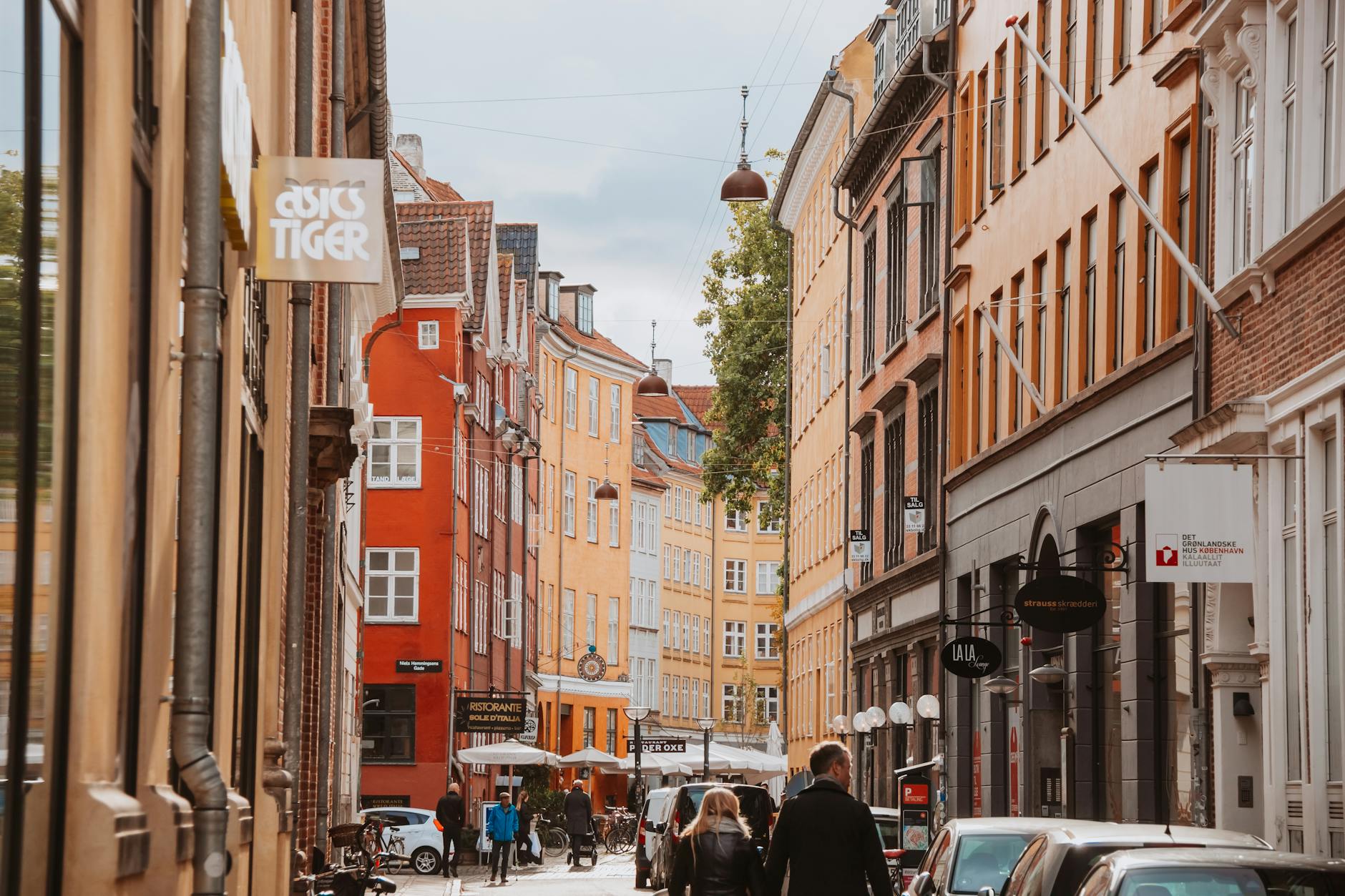
Almost every visitor to Copenhagen ends up on Strøget at some point — it’s the long, car-free spine of shops that runs through the old city, one of the longest pedestrian shopping streets in Europe, and the obvious first stop for anyone who wants to shop, stroll or just people-watch. But here’s what most guides won’t tell you: Strøget is best understood as a gradient, running from cheap-and-cheerful high street at one end to hushed luxury at the other — and some of the best shopping is actually on the little streets running alongside it. Let me walk you down it properly.
This is a complete guide to Strøget in Copenhagen: what it actually is, how to walk it by price tier, the landmark stores, where the locals slip off to, and how to do it without getting fleeced or pickpocketed. It’s the natural first chapter of the wider Copenhagen shopping scene.

Strøget at a glance
- What: a ~1.1 km car-free shopping street (actually a chain of connected streets)
- Where: runs from Rådhuspladsen (City Hall Square) to Kongens Nytorv
- Cost: free to walk, open 24/7; shops typically 10:00–18:00 (shorter Saturdays, varies Sundays)
- The gradient: budget high-street at the City Hall end → luxury toward Kongens Nytorv
- Don’t miss: the LEGO flagship, Illum, Royal Copenhagen and the Stork Fountain at Amagertorv
- Watch for: pickpockets in the crowds
What exactly is Strøget?
First, a useful clarification: “Strøget” isn’t a single street. It’s a nickname for a continuous run of connected pedestrian streets — Frederiksberggade, Nygade, Vimmelskaftet, Amagertorv and Østergade — that together form one ~1.1-kilometre shopping promenade through the heart of the old town. It links two of the city’s great squares: Rådhuspladsen (City Hall Square) at the western end and Kongens Nytorv at the east. You’ll often hear it called the world’s longest pedestrian shopping street; it’s one of the longest in Europe, though not quite the world’s longest, so take that particular boast with a pinch of salt.
It became pedestrianised in 1962 — a then-radical experiment that drew fierce opposition before becoming a model copied by cities worldwide (the Danish urbanist Jan Gehl built much of his career studying it). Today it’s a buzzing, traffic-free river of shoppers, street performers and tourists, threaded through the medieval city centre and easily reached by metro at either end.
Walk it by price tier
Here’s the framing that makes Strøget click. The street has a clear price gradient, so where you start depends on your budget and mood.
The City Hall end: high street and budget
Starting at Rådhuspladsen, the first stretch (Frederiksberggade) is the cheap-and-cheerful end — international high-street chains like H&M, Zara, Vero Moda and UNIQLO, fast-food spots and the cheapest souvenir shops. It’s the busiest, most crowded part, and frankly the least distinctive, so don’t linger unless you need a high-street fix.
The middle: the design heart at Amagertorv
Push on and the street gets more interesting. Around Amagertorv — the square with the lovely Stork Fountain — you hit the design heart of Strøget: the Royal Copenhagen porcelain flagship, the multi-floor design store Illums Bolighus, and Georg Jensen silver, all clustered together. The LEGO flagship store and the Illum department store are right here too. This is where Strøget earns its reputation.
The Kongens Nytorv end: luxury
By the time you reach Østergade, near Kongens Nytorv, you’re in luxury territory — Hermès, Louis Vuitton, Gucci, Prada and the like, plus the grand Magasin du Nord department store just off the square. Even if you’re only window-shopping, it’s a pleasant, elegant way to end the walk.
The landmark stores
A few stops are worth building your walk around — and any of them makes a good hunting ground for Copenhagen souvenirs:
- The LEGO flagship (Vimmelskaftet 37) — free to enter, decorated with hundreds of thousands of bricks and Copenhagen-themed models; a must with kids. See my LEGO Store Copenhagen guide.
- Illum — the slick luxury department store with a hidden (and free) rooftop; details in my Illum guide.
- Royal Copenhagen — the porcelain flagship in its castle-like building at Amagertorv.
- Illums Bolighus — the grand Danish-design department store (not to be confused with Illum); a highlight of my Danish design shops guide.
- Magasin du Nord — the historic department store at Kongens Nytorv; see the Magasin du Nord guide.
Where the locals actually shop: just off Strøget
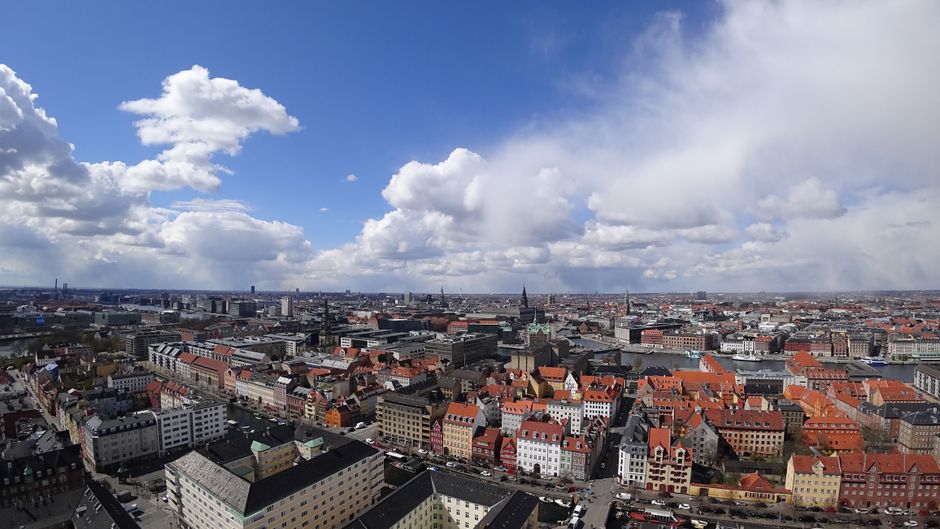
Now the insider bit. Strøget itself is touristy and chain-heavy, and many Copenhageners will tell you the better, more characterful shopping is on the streets beside it. Run parallel and you’ll find Strædet (officially Læderstræde and Kompagnistræde) — full of boutiques, antiques and cafés — and toward Kongens Nytorv, Grønnegade with its small exclusive shops. West of the Latin Quarter, the gritty-cool Pisserenden quarter hides vintage stores, record shops and independent designers. If you want to shop like a local rather than a tourist, treat Strøget as the spine and these side streets as the good bits — many of them lead straight to the city’s best vintage shops.
Practical tips
- Getting there: Metro to Kongens Nytorv (east end), Rådhuspladsen (west end) or Gammel Strand (middle). See my getting around Copenhagen guide.
- Best time: weekday mornings are calmest; Saturday afternoons are heaving.
- How long: 30 minutes to walk straight through, or 2–4 hours with shopping and a coffee.
- Watch your bag. The crowds attract pickpockets, especially near the City Hall end — keep valuables zipped and to the front (see is Copenhagen safe).
- Tax-free shopping: non-EU visitors can reclaim VAT on larger purchases — details in my Copenhagen money guide.
A self-guided Strøget walk, west to east
If you’d like a ready-made route, here’s the walk I’d hand a first-timer, starting at City Hall Square and finishing at Kongens Nytorv — going with the price gradient. Begin at Rådhuspladsen, glance at the high-street chains if you must, then duck into the LEGO flagship on Vimmelskaftet (free, fun, brilliant with kids). Continue to Amagertorv, the design heart, for Royal Copenhagen, Illums Bolighus, Georg Jensen and a photo at the Stork Fountain, with Illum right there if you want a department-store browse (and its free rooftop for a view). From Amagertorv, detour one block to Strædet for boutiques and antiques, then rejoin Strøget and stroll the luxury stretch of Østergade to Kongens Nytorv, finishing at Magasin du Nord. That’s a satisfying half-day, and you can dip into the side streets whenever the chains get repetitive. Cap it with a coffee on a square and you’ve done Strøget properly.
Beyond shopping: what else is on Strøget
Strøget isn’t only about buying things — it’s a sightseeing route in its own right. Along and just off it you’ll pass the city’s oldest square pair, Gammeltorv and Nytorv; the historic Helligåndskirken (Church of the Holy Ghost), one of Copenhagen’s oldest buildings, near Amagertorv; and the artist-designed granite paving of Amagertorv itself. The street is also Copenhagen’s stage for buskers and street performers — musicians, mimes and acrobats gather especially at Amagertorv on warm weekends. And it’s a natural connector to the rest of the centre: from the middle of Strøget you can branch up Købmagergade to the Round Tower and other sights, or head down toward Christiansborg and the canals. Treat it as the main artery of the old town and you’ll find it threads together half your sightseeing.
Eating and resting along the way
Shopping is thirsty work, and Strøget is well supplied. The squares — especially Gråbrødretorv just off the street and Amagertorv — are dotted with cafés and restaurants with outdoor seating in the warmer months, ideal for a coffee-and-people-watching break. The department stores are useful pit stops too: Illum’s rooftop and Magasin’s food hall both make good refuelling points (and Magasin’s basement food hall is a smart spot to assemble a cheap picnic in an otherwise pricey area). Public toilets are scarce on the street itself, so the department stores and cafés double as convenient stops. Wear comfortable shoes — the cobbles and the length add up — and you can happily make a leisurely half-day of it.
Is Strøget worth your time?
Honestly, yes — but with realistic expectations. As a shopping destination it’s convenient and has the landmark stores, but it’s touristy, crowded and heavy on the same chains you’ll find at home. Where it really earns its place is as the beating heart of the old city: a free, lively, walkable promenade that connects the squares, the design flagships, the street performers and half the sights of central Copenhagen. Walk it once for the experience and the big stores, then use the side streets for the shopping that’s actually worth your kroner. Combine it with the wider Copenhagen shopping scene and a wander through the Indre By old town, and you’ve got the centre of Copenhagen mapped.
The history of Strøget
Strøget’s story is more interesting than its chain stores suggest, and it’s worth a moment because it shaped cities far beyond Copenhagen. For centuries these were ordinary trading streets clogged with traffic, but in November 1962 the city did something then considered reckless: it banned cars and turned the whole run into a pedestrian promenade as a temporary experiment. Shopkeepers protested furiously, convinced that “Danes would never walk” and that removing cars would kill business. The opposite happened — footfall soared, the street thrived, and the trial was made permanent. The Danish architect Jan Gehl studied the transformation closely, using it to build his hugely influential theories about designing cities for people rather than cars. Today, pedestrianised city centres are normal worldwide, but Strøget was one of the bold early proofs that it works. So as you stroll it, you’re walking a small piece of urban-planning history — the street that helped teach the world to take the car out of the city centre.
Strøget through the seasons
The street changes character through the year, and timing your visit shapes the experience. In summer, Strøget and its squares are at their liveliest — café tables spill outdoors, buskers and street performers gather at Amagertorv, and the long Nordic evenings keep the promenade buzzing late. December is magical but mobbed: the street dresses up in lights, the squares host Christmas stalls, and the last Sunday before Christmas sees enormous crowds — beautiful, but not for the crowd-averse. Spring and autumn are the sweet spots for a relaxed wander, with thinner crowds and pleasant light. Whatever the season, the street is free and open around the clock, so an early-morning stroll before the shops open — when it’s quiet and you have the cobbles and squares almost to yourself — is a lovely, underrated way to experience it. For seasonal planning, my best time to visit guide helps.
How Strøget fits Copenhagen’s wider shopping scene
It helps to see Strøget in context. It’s the main artery, but Copenhagen’s shopping is much richer than this one street. The parallel Strædet and the boutiques of Grønnegade offer more independent, characterful browsing just steps away. Nørrebro (Jægersborggade, Ravnsborggade) is the place for vintage, design and indie makers; Vesterbro for cool concept stores and second-hand; and the department stores Illum and Magasin du Nord bookend the street for one-stop variety. Think of Strøget as the spine you walk to orient yourself and tick off the flagships, then branch off for the shopping with more soul. Used that way — landmarks on Strøget, treasure on the side streets — you get the best of both, and you’ll shop more like a local and less like a tour group. The full picture is in my complete guide to shopping in Copenhagen.
The final verdict on Strøget
So, should Strøget be on your list? Yes — but for the right reasons and with the right expectations. As pure shopping it’s convenient and has the big landmark stores, but it’s busy, touristy and heavy on the same international chains you’ll find anywhere. Where it genuinely shines is as the free, lively heart of the old city: a car-free promenade that strings together the squares, the design flagships, the street performers, the department stores and half of central Copenhagen’s sights into one easy walk. Stroll it once for the experience and the big stores, photograph the Stork Fountain at Amagertorv, ride Illum’s free rooftop for the view, then peel off to the side streets for the shopping that’s actually worth your kroner. Do that and Strøget earns its place — not as the only thing you do, but as the spine that holds a great Copenhagen day together. Pair it with the design shops and the city’s flea markets for a complete shopping trip.
A note on opening hours and Sundays
One last practical thing that catches visitors out: while the street itself is open around the clock, the shops keep Danish hours. Most stores on Strøget open roughly 10:00 to 18:00 or 19:00 on weekdays, close earlier (around 16:00–17:00) on Saturdays, and have variable, often shorter Sunday hours — some shops open, some don’t, and the big department stores tend to keep longer hours than the small boutiques. If you’re shopping with a specific store in mind, it’s worth checking its hours, especially for a Sunday or evening visit. The flip side is lovely: because the street never closes, an early-morning or evening stroll down a near-empty Strøget — before the shops open or after they shut — is one of the most peaceful, photogenic ways to experience it, with the squares, fountains and historic facades all to yourself. So plan your shopping around opening hours, but feel free to walk the street whenever suits you. It’s the rare attraction that’s both a shopping destination and a free, always-open promenade through the heart of the old city.
Last updated: July 2026. Photo credits: Pixabay, Magda Ehlers / Pexels.
Frequently asked questions
What is Strøget and why is it famous?
Strøget is Copenhagen’s main pedestrian shopping street — actually a chain of connected car-free streets about 1.1 km long, running from City Hall Square to Kongens Nytorv. It’s one of Europe’s longest pedestrian shopping streets and has been car-free since 1962.
How long is Strøget and how long does it take to walk?
It’s roughly 1.1 km. Walking straight through takes about 30 minutes; with shopping and stops, budget 2–4 hours.
Is Strøget worth visiting or is it overrated?
It’s worth seeing for the landmark stores and atmosphere, but it’s touristy and chain-heavy. For more characterful, local shopping, explore the side streets like Strædet, Grønnegade and Pisserenden.
What can you buy on Strøget?
Everything from high-street fashion (H&M, Zara) at the City Hall end to Danish design (Royal Copenhagen, Illums Bolighus), LEGO, department stores and luxury brands toward Kongens Nytorv.
How do I get to Strøget?
Take the metro to Kongens Nytorv, Rådhuspladsen or Gammel Strand — all sit right on or beside the street.
Are there pickpockets on Strøget?
Yes, it’s the city’s main pickpocketing hotspot due to the crowds. Keep your bag zipped and in front of you, especially near City Hall Square.
Plan the rest of your spree with the full Copenhagen shopping guide, and don’t miss the best Danish design shops or the city’s flea markets.


