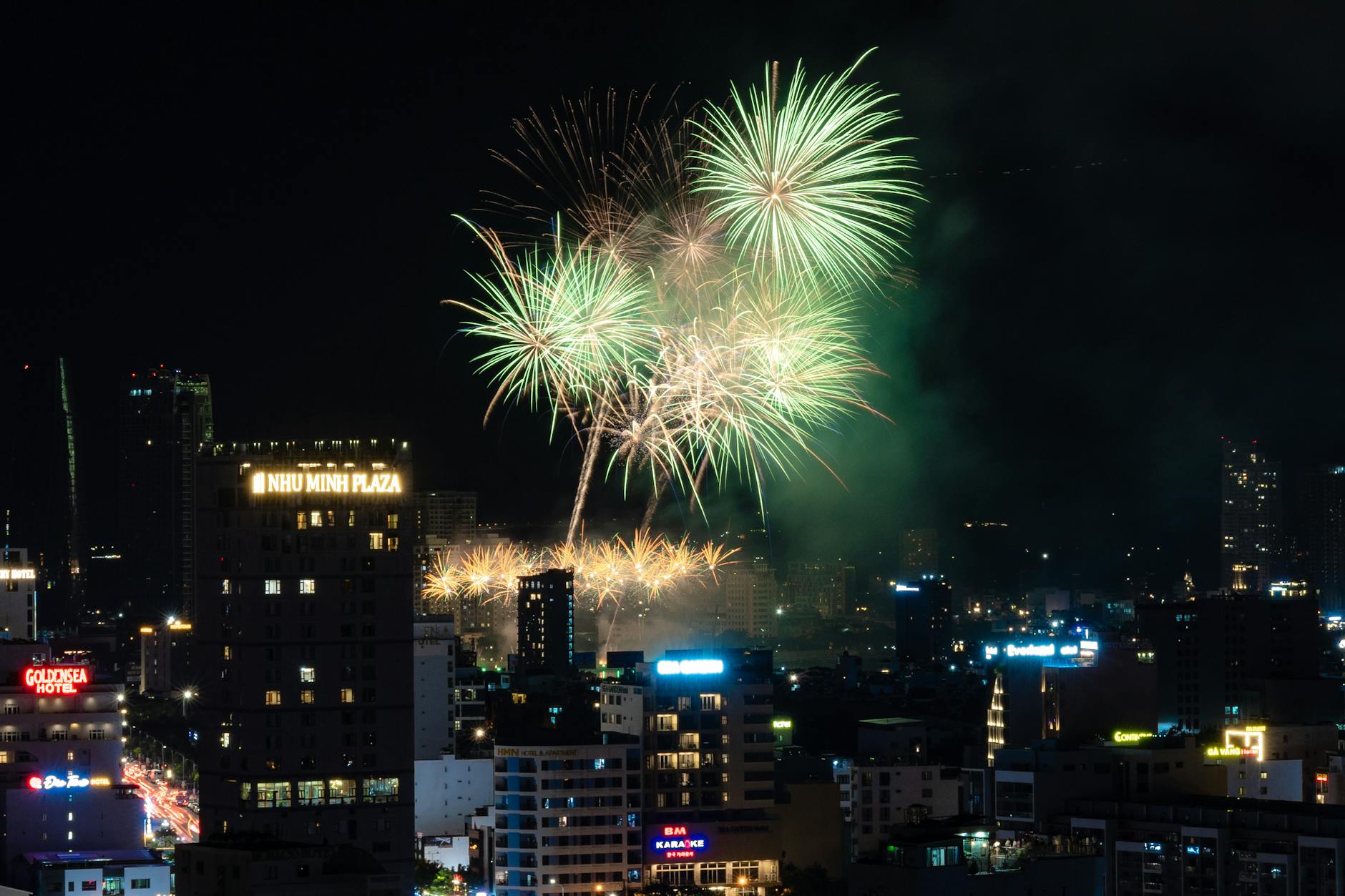
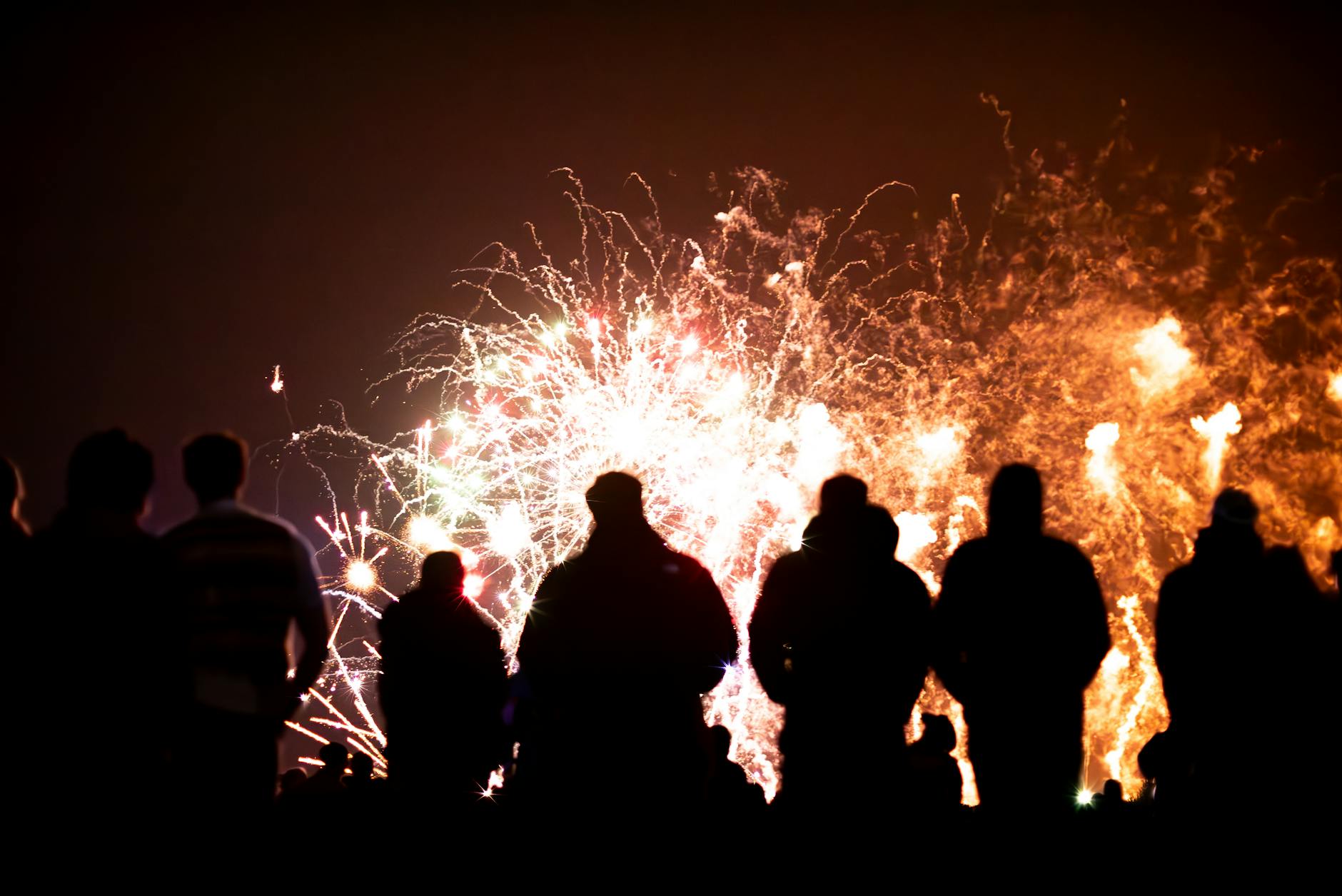
There’s no official ball drop in Copenhagen, no single municipal fireworks show, no organised countdown run by the city. Instead, on the stroke of midnight, the whole place erupts — because in Copenhagen, you are the fireworks show. Tens of thousands of locals set off their own pyrotechnics from squares, bridges, rooftops and back gardens, turning the entire sky over the city into a chaotic, glorious, slightly anarchic spectacle. Spending New Year in Copenhagen is unlike NYE anywhere else, and once you’ve done it the Danish way, it’s hard to go back.
This guide covers the best places to watch, the lovely Danish traditions to join in with, the important safety and fireworks rules, and how to do New Year’s Eve like a local rather than a lost tourist.
New Year in Copenhagen at a glance
- The spectacle: no single official display — thousands of public fireworks everywhere at midnight
- Top viewing spots: Rådhuspladsen (City Hall Square), the Lakes, Tivoli, the harbour
- The King’s speech: 6pm on 31 December (King Frederik X)
- Midnight ritual: “jump” off a chair into the new year
- Eat & drink: kransekage (marzipan ring cake) and champagne
- Getting home: the metro runs 24/7
Where to watch the fireworks
Because the show is decentralised, where you stand shapes your whole night:
- Rådhuspladsen (City Hall Square) — the iconic gathering point. Crowds watch the City Hall tower clock, the bells ring at midnight, and amateur fireworks go off all around. Loud, busy, electric — arrive an hour early.
- The Lakes (Dronning Louises Bro & the søerne) — fireworks reflecting on the water, with a lively Nørrebro crowd. One of the most atmospheric (and rowdiest) spots.
- Tivoli Gardens — for a safer, organised, family-friendly option, with its own show around 11pm amid the winter lights (you can even glimpse it from outside near Axel Towers). More on Tivoli Gardens.
- The harbour, Nyhavn and the Opera House — quieter waterfront views.
- Refshaleøen and rooftops — local-favourite displays and the safest vantage points above the street-level chaos.
The gloriously DIY fireworks culture
This is the thing to understand: Copenhagen has no single city-run fireworks display. The spectacle is entirely created by the public, who buy and set off astonishing quantities of consumer fireworks. By midnight the streets are hazy with smoke and alive with bangs from every direction — it’s thrilling, but also genuinely a bit wild. Treat it with respect: keep your distance from amateur launchers, and consider the protective eyewear that Danish supermarkets sell for exactly this reason (firework injuries spike every New Year, often among young people).
Know the fireworks rules
The law tightened in 2024, so here’s the current picture: fireworks are sold to the public only from 15–31 December, and may legally be set off only on 31 December and 1 January. Setting them off earlier now risks a fine. They must be CE-marked with Danish instructions. As a visitor you don’t need to buy any — the locals more than provide the show — but it’s good to understand the rules and the safety context so you can enjoy it sensibly.
The King’s New Year speech
One fixed point in every Danish New Year’s Eve: at 6pm on 31 December, the monarch delivers the national New Year address, broadcast live, traditionally closing with “Gud bevare Danmark” (God protect Denmark). Note the change that trips up older guides: following Queen Margrethe II’s abdication in January 2024, this is now the King’s speech, delivered by King Frederik X — so if you read anywhere that “the Queen” gives the address, that’s out of date. Danes pause their evening to watch it; tuning in (even without the language) is a lovely way to feel the rhythm of the local night.
Danish New Year traditions to join in
Half the fun is the customs, which are charmingly specific:
- Jumping into the new year: at midnight, Danes literally leap off a chair, sofa or table to “jump into” the new year — don’t step in, jump in. It’s the country’s most beloved NYE ritual.
- Kransekage and champagne: the signature dessert is a towering ring cake of marzipan, often topped with little Danish flags, eaten with champagne or cava at midnight. Bakeries sell them to take away.
- The City Hall clock and bells: the Rådhus tower clock striking midnight, broadcast nationally, is the Danish equivalent of the ball drop.
- “Dinner for One”: around 11:40pm, much of the nation watches the same vintage comedy sketch — a quirky shared ritual.
- Smashing plates (historically): an old tradition of throwing saved-up crockery at friends’ doors for luck — increasingly rare now, but charming folklore.
Where to celebrate: dinners and parties
Beyond the streets, the city offers plenty for the night itself. Many restaurants put on special multi-course New Year’s Eve menus (book weeks ahead — they fill up and prices are elevated), and there are ticketed rooftop and club parties for those who want to dance into the new year. Tivoli runs festive New Year concerts and stays open late amid its winter lights. A local hack worth knowing: “Festen og Gæsten” Facebook groups sometimes let visitors join Danish house parties. For where to base yourself, see where to stay.

A local NYE timeline
To live it like a Dane, your evening might run: 6pm — watch the King’s speech; 7–10pm — a long festive dinner with kransekage ready for later; 11:40pm — “Dinner for One” on TV; just before midnight — head out to your chosen spot (or a balcony), chair at the ready; midnight — jump into the new year, pop the champagne, and watch the whole city light up the sky. It’s a wonderful arc from cosy to euphoric.
Practical tips
- Dress very warmly. It’s cold and damp (around 0–4°C), often with rain; heavy coat, gloves, scarf and waterproof shoes. See Copenhagen in winter.
- Mind the amateur fireworks. Keep your distance, consider protective glasses, and don’t leave bikes where they might catch a stray rocket.
- Use the metro. It runs 24/7 over New Year, so you can get home easily; stay near a station and avoid relying on taxis.
- Book early. Restaurant NYE menus and party tickets sell out weeks to months ahead.
- Most shops close on 31 December afternoon and 1 January (a public holiday), so plan food and essentials.
Is Copenhagen worth visiting for New Year?
If you want a New Year’s Eve that feels genuinely different — communal, slightly chaotic, full of local ritual rather than corporate spectacle — Copenhagen is fantastic. Standing on a bridge as the entire city ignites the sky at once is something you won’t forget. Just come prepared for cold and crowds, embrace the traditions, and you’ll have a brilliant night. For more on the season, see Copenhagen in December, and time the rest of your trip with the events & festivals calendar. Prefer summer? The July Jazz Festival and August Pride are the city’s other headline moments.
The legal cut-off is 15:00 on the 31st, and 1 January is a full public holiday. The exceptions are bakeries, small grocers and the shops at Central Station and the airport, which is where to head if you forgot the champagne. Our guide to public holidays in Denmark covers the rest of the year’s closures.
Danish New Year traditions, in depth
Half the joy of a Copenhagen New Year is the cluster of charming, specific customs — joining in makes you feel part of the night rather than just watching it. The biggest is “jumping into the new year”: as the clock strikes twelve, Danes literally leap off a chair, sofa or table, so as to land in the new year rather than step into it. It’s done with total sincerity and a fair bit of laughter. Then there’s kransekage, the towering ring cake built from chewy marzipan rings, often decked with little Danish flags and sparklers, eaten with champagne or cava at midnight. Earlier in the night, much of the nation watches the same vintage comedy sketch, “Dinner for One,” at around 11:40pm — a shared ritual that’s baffling and beloved in equal measure. An older, fading tradition saw people smash saved-up crockery against friends’ doors for luck (a big pile meant many friends); you’ll rarely see it now, but it’s lovely folklore. And throughout, there’s noise — horns, poppers, firecrackers — a tradition rooted in scaring off evil spirits for the year ahead.
A neighbourhood guide to fireworks viewing
Where you stand defines your New Year, so choose your spot to match your mood. For big-crowd energy, head to Rådhuspladsen (City Hall Square) — the focal countdown, the tower clock, the bells, and amateur fireworks erupting all around; arrive an hour early and expect chaos in the best sense. For atmosphere and reflections, the Lakes around Dronning Louises Bro are spectacular, with fireworks mirrored in the water and a lively Nørrebro crowd (also one of the rowdiest spots). For family-friendly and organised, Tivoli runs its own show around 11pm amid the winter lights. For calm and views, the harbour, Nyhavn and the Opera House offer waterfront vantage points, while Refshaleøen draws a local crowd and creative displays. And for the safest perch of all, a rooftop bar or hotel balcony lets you watch the whole city ignite from above the street-level mayhem. Mix and match: many locals do dinner somewhere cosy, then head to a bridge or rooftop for midnight.
Where to book: restaurants and parties
If you’d rather celebrate indoors before the fireworks, Copenhagen delivers. Many restaurants put on lavish multi-course New Year’s Eve menus — from cosy bistros to the city’s famous fine-dining rooms — but these book up weeks to months ahead and command premium prices, so reserve early. For dancing, there are ticketed rooftop and club parties across the city that sell out in advance. Tivoli itself hosts festive New Year concerts (including classic Strauss-and-Lumbye programmes) and stays open late with its winter illuminations. Wherever you choose, the golden rule is to book ahead — New Year is one night where turning up and hoping rarely works. See where to stay to base yourself near the action.
Fireworks safety and the law, in depth
Because Copenhagen’s New Year is so gloriously DIY, a little safety awareness genuinely matters. The law (tightened in 2024) allows fireworks to be sold to the public only from 15–31 December and set off legally only on 31 December and 1 January, with fines for breaking the rules. With so many amateurs launching fireworks at street level, injuries spike every year — often among young people — so the authorities urge spectators and igniters alike to wear protective eyewear (sold cheaply in supermarkets). Practical advice for visitors: keep a respectful distance from anyone setting off fireworks, don’t pick up “dud” fireworks, watch where rockets are pointed, and steer clear of the densest, drunkest crowds if you have young children. Enjoy the spectacle — just treat it with the same caution you would any pyrotechnic free-for-all.
New Year’s Day and recovery
Plan for a quiet morning after. 1 January is a public holiday in Denmark, and most shops and many attractions are closed (Tivoli and some sights being exceptions), so stock up on food and essentials on the 30th, since shops also close early or fully on the 31st. The city wakes slowly and a little hazy (and a little littered with spent fireworks). It’s a lovely day for a gentle walk along the harbour, a long brunch if you can find one open, or simply a cosy recovery indoors with the hygge the Danes do so well. The metro runs throughout, so getting around remains easy even on the holiday.
Bringing kids to a Copenhagen New Year
New Year can absolutely work with children, with a few adjustments. The street-level amateur fireworks make the busiest spots (Rådhuspladsen, the Lakes) loud and unpredictable for little ones, so families often prefer Tivoli’s organised show around 11pm, a rooftop or harbour-side vantage point, or an earlier “kids’ countdown” celebration before an early night. Ear protection for young children is a smart idea given the constant bangs. Dress everyone very warmly, keep a firm hold in crowds, and you can give kids a magical, safer taste of the Danish New Year. For more family planning, see our Copenhagen with kids guide, and if you’re here earlier in autumn, Halloween at Tivoli is the other big family event.
A calmer alternative celebration
Not everyone wants to be in the thick of a smoky, firework-filled square at midnight, and Copenhagen happily caters to a quieter New Year too. For a gentler night, consider a long festive dinner at a cosy restaurant followed by watching the fireworks from a rooftop bar, a hotel with a view, or a calm stretch of harbour away from the densest crowds. Tivoli’s organised celebration offers the spectacle in a controlled, family-friendly setting with its winter lights and concerts. Or you can lean fully into Danish hygge: a candlelit dinner with friends, kransekage and champagne at midnight, and the fireworks watched from a window or balcony. Copenhagen’s New Year is famous for its DIY street chaos, but it’s entirely possible to enjoy a warm, low-key version — the city’s compact size means a peaceful vantage point is never far from the action.
Photographing Copenhagen’s New Year
The decentralised fireworks make for spectacular, if challenging, photography. For the best shots, seek elevation — a rooftop, a bridge, or a spot by the Lakes where the bursts reflect on the water doubles the drama. A tripod and a longer exposure capture the trails beautifully, though midnight crowds make that tricky in the busiest squares, so a slightly removed vantage point helps. The all-directions nature of the display means you don’t need to face a single stage — frame a skyline or a landmark like City Hall’s tower and let the fireworks erupt around it. And do put the camera down for a while too: the visceral, surround-sound experience of standing inside a city-wide fireworks free-for-all is something best lived rather than filmed. A power bank for your phone is wise, given the cold drains batteries fast.
Why Copenhageners love their DIY New Year
It’s worth reflecting on why the city embraces such a gloriously unmanaged celebration, because it tells you something about Denmark. There’s no single official display partly because the joy here is participatory — everyone contributes to the spectacle, turning the whole city into a shared, democratic show rather than a passive audience watching one municipal event. It chimes with the Danish sense of community and the slightly mischievous delight in a night when the usual orderliness is suspended. Standing on a bridge as thousands of people light up the sky together, you feel part of something collective rather than corporate. That said, the recent tightening of fireworks rules reflects a society also weighing safety and consideration for veterans, refugees and pets — so the celebration is evolving. For now, the DIY spectacle endures, and experiencing it is one of the most distinctive things you can do in Copenhagen. Round out your winter trip with my guides to Copenhagen in winter and the Christmas markets.
Frequently asked questions
Is there an official fireworks display in Copenhagen on New Year’s Eve?
Not a single municipal one. The spectacle is created by the public setting off their own fireworks across the city, with City Hall Square as the focal countdown point and Tivoli running an organised show around 11pm.
Where is the best place to watch fireworks?
Rådhuspladsen (City Hall Square), the Lakes around Dronning Louises Bro, the harbour, and Tivoli for a family-friendly option. Rooftops are safest.
Does the King of Denmark give a New Year speech?
Yes — King Frederik X delivers the national New Year address at 6pm on 31 December. (It used to be Queen Margrethe II, who abdicated in January 2024.)
What are the main Danish New Year traditions?
Jumping off a chair into the new year at midnight, eating kransekage with champagne, watching the City Hall clock, and the TV sketch “Dinner for One.”
Is the Copenhagen metro running on New Year’s Eve?
Yes — the metro runs 24/7, including over New Year, making it the easiest way to get home.
Can you buy and use fireworks in Denmark?
Fireworks are sold to the public only from 15–31 December and may legally be set off only on 31 December and 1 January.
Visiting in the festive season? See Copenhagen in December and the Christmas markets, plus the full events & festivals calendar.
Last updated: July 2026. Traditions and the 6pm royal address recur each year, but firework rules can change and restaurant New Year menus book out months ahead – reserve early and check the latest before you travel.