Matisse’s portrait of his wife with a green stripe down her nose is one of the most famous paintings of the twentieth century, and it is about 40 centimetres tall. You could walk past it. People do. That is the thing about SMK Copenhagen, Denmark’s national gallery: its greatest works are often its smallest, hung without fanfare in a building big enough to lose an afternoon in, and the visitors who get the most from it are the ones who arrive knowing what to look for.
This guide covers what a ticket costs and who gets in free, which rumours about free entry are out of date, the paintings worth hunting down, how long to allow, and what to pair it with nearby. Prices and hours are from SMK and were checked in September 2026; exhibitions change through the year, so check smk.dk for what is on when you visit.
SMK at a Glance
| Detail | |
|---|---|
| Full name | Statens Museum for Kunst, the National Gallery of Denmark |
| Address | Sølvgade 48, on the edge of Østre Anlæg park |
| Opening hours | Tuesday to Sunday 10:00–18:00, Wednesday to 20:00 |
| Closed | Mondays |
| Adults | 140 DKK |
| Under 27 | 95 DKK |
| Under 18 | Free, and no ticket needed |
| What the ticket covers | The whole museum, collections and special exhibitions |
| Booking | Not needed; buy on the day |
| Nearest station | Nørreport, about ten minutes on foot |
| Time to allow | Two to three hours; half a day for everything |
Tickets and the Free Entry Rules
The rules are simple once you ignore what you may have read elsewhere. One ticket covers everything in the building: the permanent collections and whatever special exhibitions are running. Adults pay 140 DKK. Anyone under 27 pays 95. Anyone under 18 gets in free and does not need a ticket at all, which makes SMK one of the best-value family afternoons in the city: two parents and two teenagers pay 280 DKK between them.
Two claims still circulate that are no longer true. The first is that the permanent collection is free and only special exhibitions charge. It is not; the single ticket covers the lot. The second is that SMK is free on Wednesdays, or free for everyone under 27. Neither appears in SMK’s own pricing today. If a guide promises you a free day, check smk.dk before you plan around it.
What is free is the setting. The museum backs onto Østre Anlæg, a hilly park laid out on the old city ramparts, and a walk round its lake before or after your visit costs nothing. If you plan several paid museums in a day or two, run the numbers in our Copenhagen Card guide before you buy a pass, and check SMK is on the current list.
When to Go
Wednesday evening is the best slot in the week. SMK stays open until 20:00, and an evening visit is the easiest way to fit a serious museum into a short trip without giving up daylight for it. Weekday mornings are calm too. Weekend afternoons are the busiest time, especially when a big special exhibition has just opened, and a wet Saturday fills the place.
Mondays are the trap. SMK is closed, as are most of the city’s art museums; our guide to the best museums in Copenhagen lists the few that open. On a grey day SMK is one of the strongest rainy-day options in the city, so expect company.
The Building: Two Museums Joined by a Street
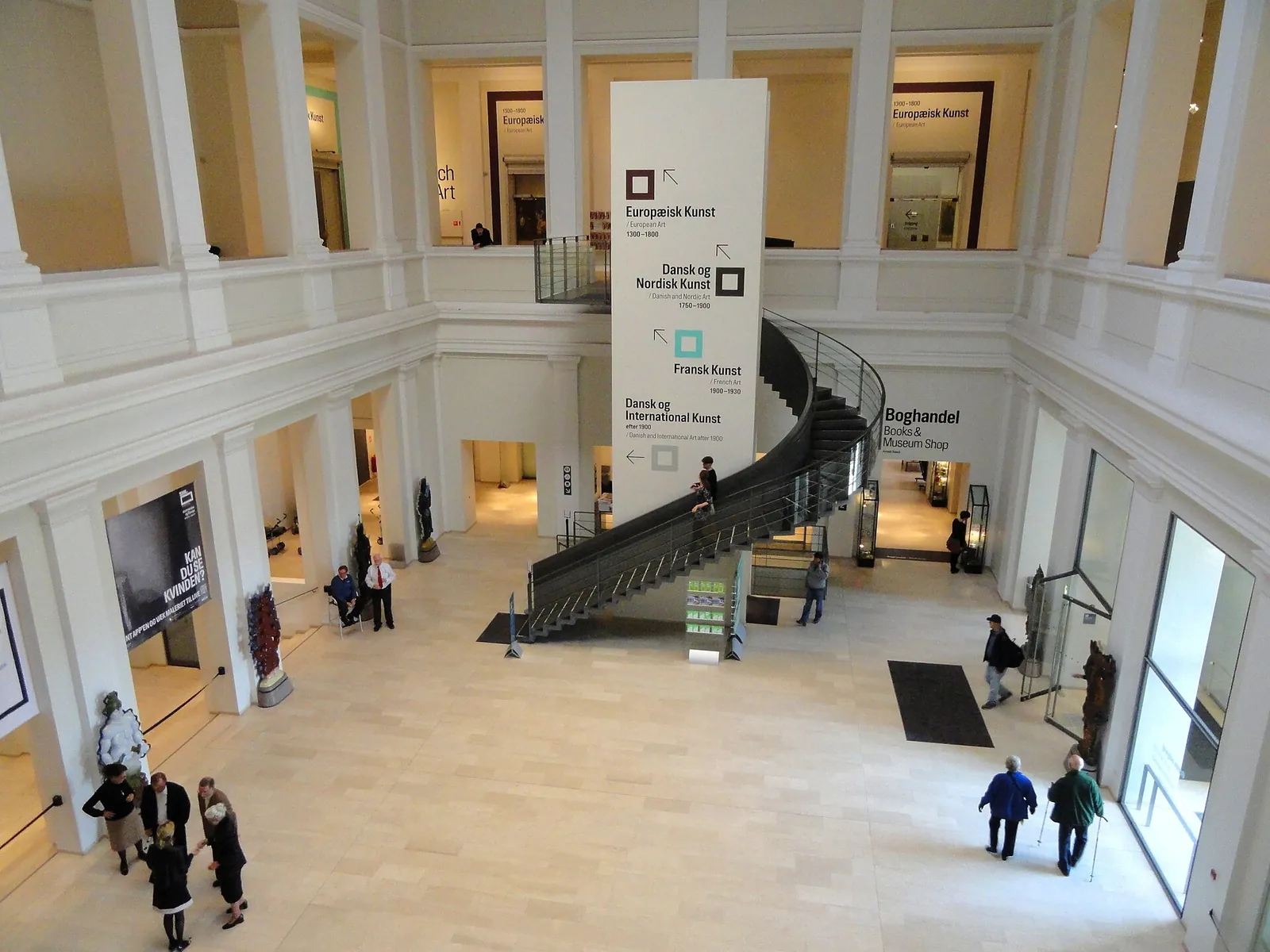
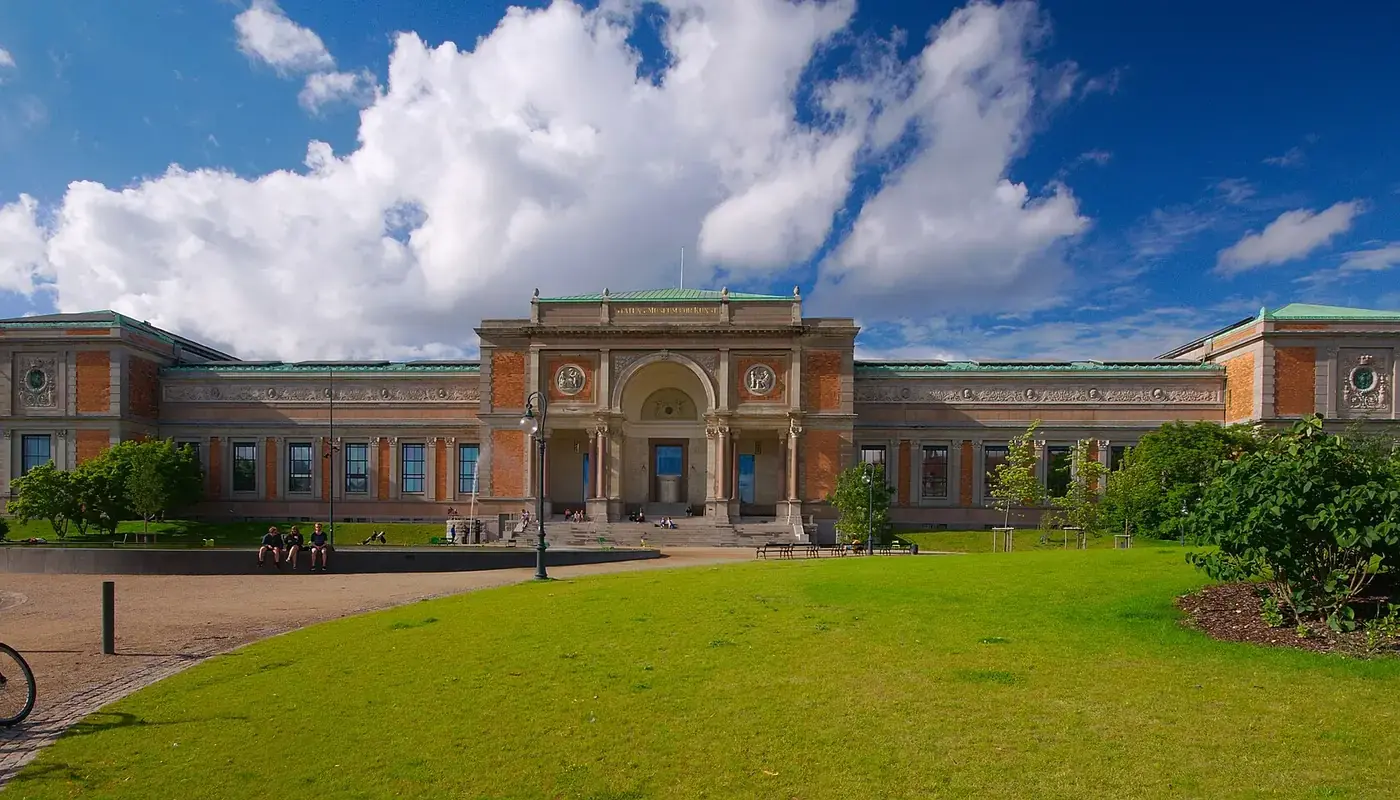
SMK is really two buildings. The original, finished in 1896 to designs by Vilhelm Dahlerup, is a grand brick-and-stone palace for art facing Sølvgade, with a double-height main hall and a staircase that seems to hang in the air. Behind it, a white modern extension opened in 1998 facing the park, and the two are joined by a long, glass-roofed hall known as the Sculpture Street. Stand at one end and you can see straight out into the trees of Østre Anlæg.
The collection itself is far older than either. It began in the seventeenth century as the Danish kings’ Kunstkammer, the royal cabinet of art and curiosities, and it is still strongest where the crown was buying: Northern European painting, and then Denmark itself.
The Highlights Worth Hunting Down
SMK is large enough that a first-time visitor can spend two hours in the wrong rooms. These are the works to find first.
The Danish Golden Age
The first half of the nineteenth century, when Denmark was broke and defeated and its painters were extraordinary, is the reason to come to SMK rather than to any other big gallery. Find C.W. Eckersberg’s view through three arches of the Colosseum, painted in Rome in 1815: about 32 by 50 centimetres, and the picture that taught a generation of Danish painters how to look. Find Christen Købke’s view of Lake Sortedam, a Copenhagen scene you can still stand in today, twenty minutes’ walk away. And find Constantin Hansen’s group portrait of Danish artists in Rome, the Golden Age painters painting themselves, lounging around a Roman apartment in 1837.
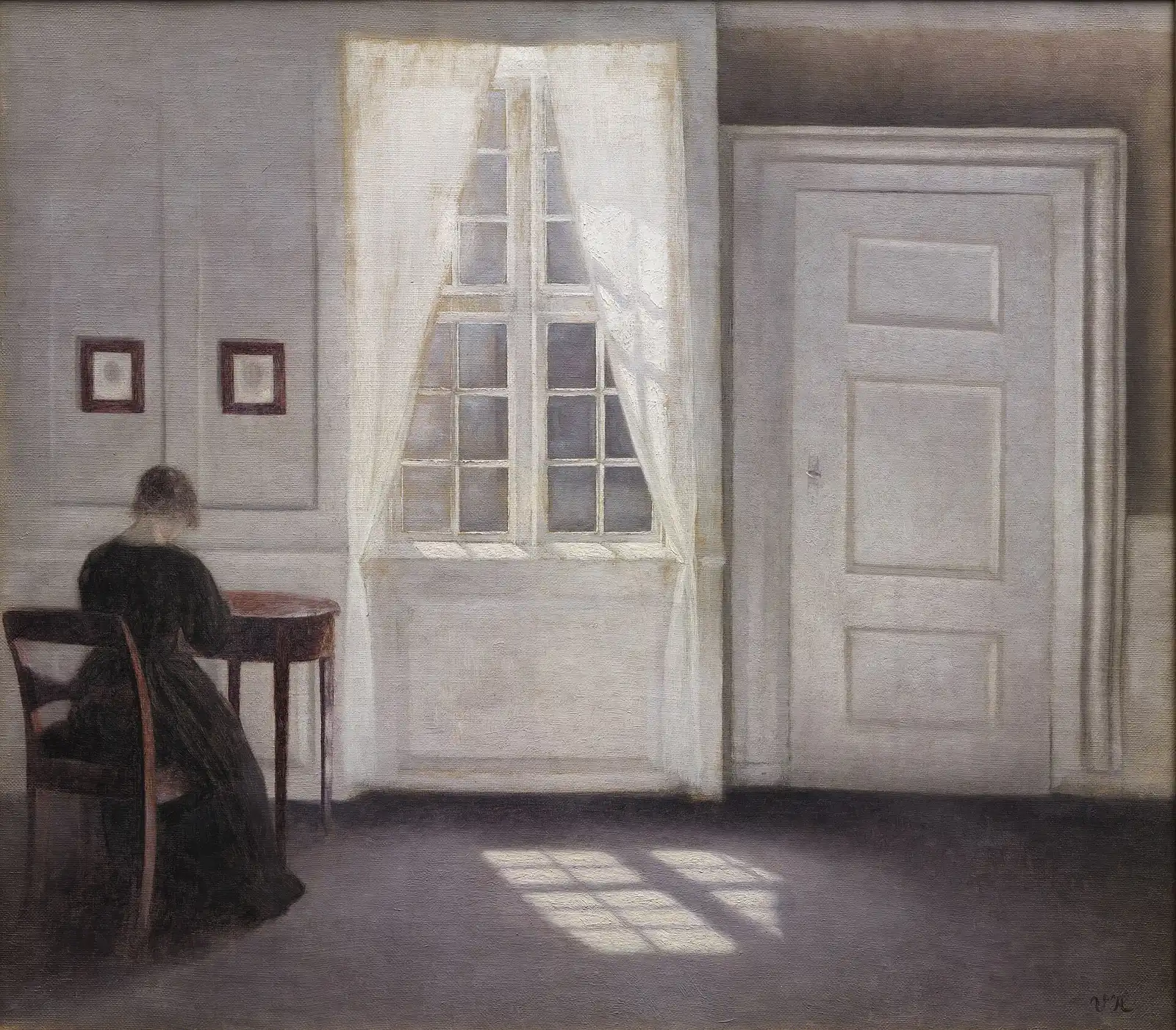
Then Vilhelm Hammershøi, the Danish painter everyone outside Denmark has discovered in the last twenty years. His grey interiors of the flat at Strandgade 30 in Christianshavn, a woman with her back to you, a door, a patch of sun on the floor, have a stillness that photographs do not catch. Stand in front of one for a full minute. It is the best minute you will spend in the building.
Matisse and the French rooms
SMK owns one of the finest Matisse collections in Europe, most of it thanks to a single Danish engineer and collector, Johannes Rump, who gave his collection to the museum in 1928. The star is Portrait of Madame Matisse (The Green Line), 1905: the face split by a stripe of green, a landmark of Fauvism, the movement a critic named after “wild beasts” that same year. It is roughly 40 by 32 centimetres. Take your time with it; almost nobody else does.
The old masters
The European collection runs from the fourteenth to the eighteenth century, and the painting to seek out is Andrea Mantegna’s Christ as the Suffering Redeemer, a late fifteenth-century image of Christ held up by angels that is startling in its physical directness. Lucas Cranach’s strange, sinister Melancholy of 1532 is another. Beyond those, the Dutch and Flemish rooms are good rather than great, and if time is short they are the ones to skim.
Modern Danish art
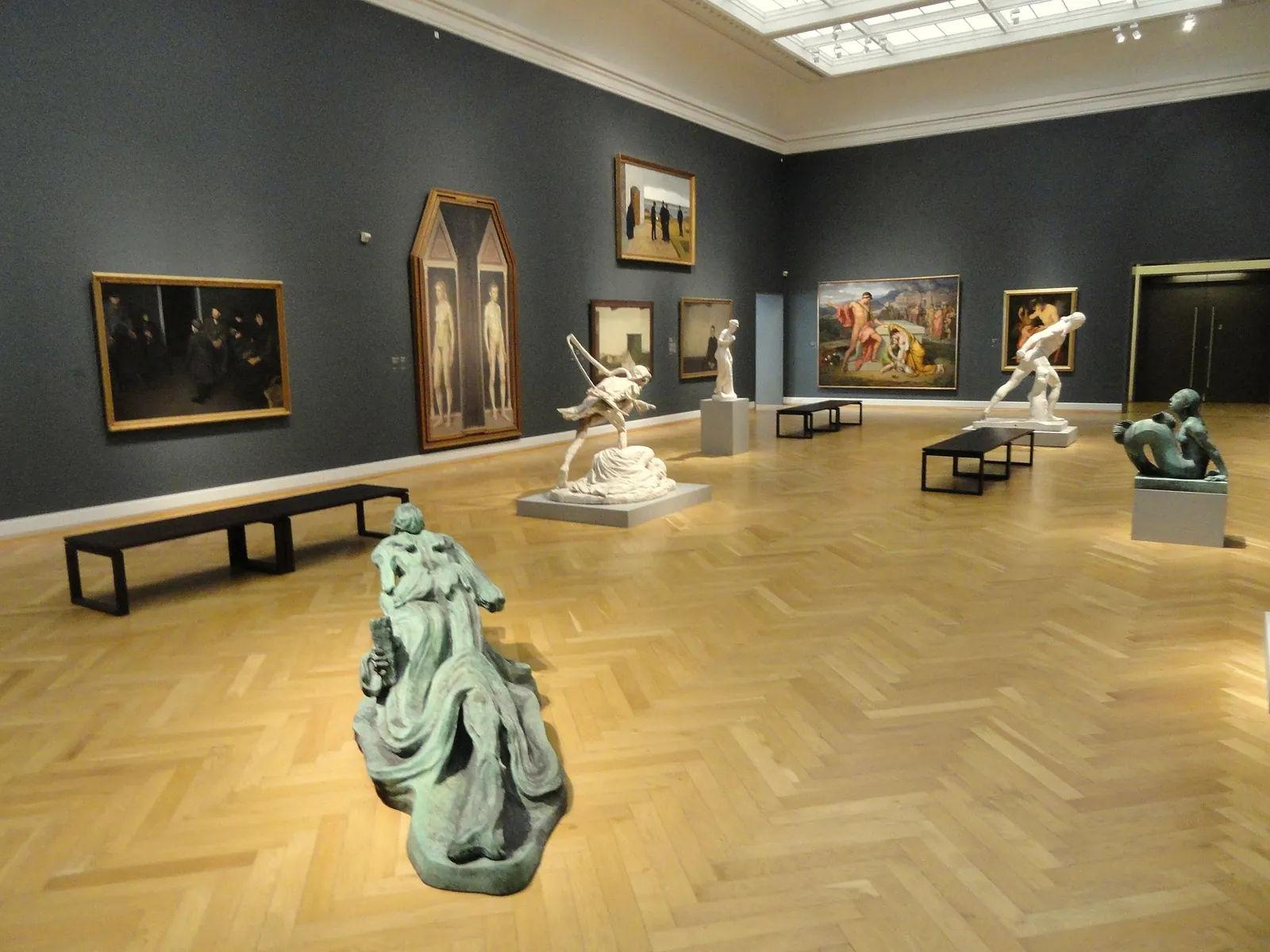
The twentieth-century collection is where SMK stops being a European museum and becomes a Danish one, with Asger Jorn and the CoBrA painters, Per Kirkeby and the generations after. It is patchier for an international visitor, but it is the part of the museum you cannot see anywhere else, and the extension’s white galleries show it well.
How Long You Need
Allow two to three hours for the highlights above plus one special exhibition, and half a day if you want everything. A realistic plan for a first visit:
- First hour: the Danish Golden Age and Hammershøi, while you are fresh. This is the part of SMK no other museum can give you.
- Second hour: Matisse and the French rooms, then Mantegna and Cranach in the European collection.
- Third hour: whichever special exhibition is on, or the modern Danish rooms, finishing along the Sculpture Street.
If you only have an hour, do the first two and leave. Museum fatigue sets in faster than you think, and a big building rewards a clear plan more than a long visit.
What to Pair It With
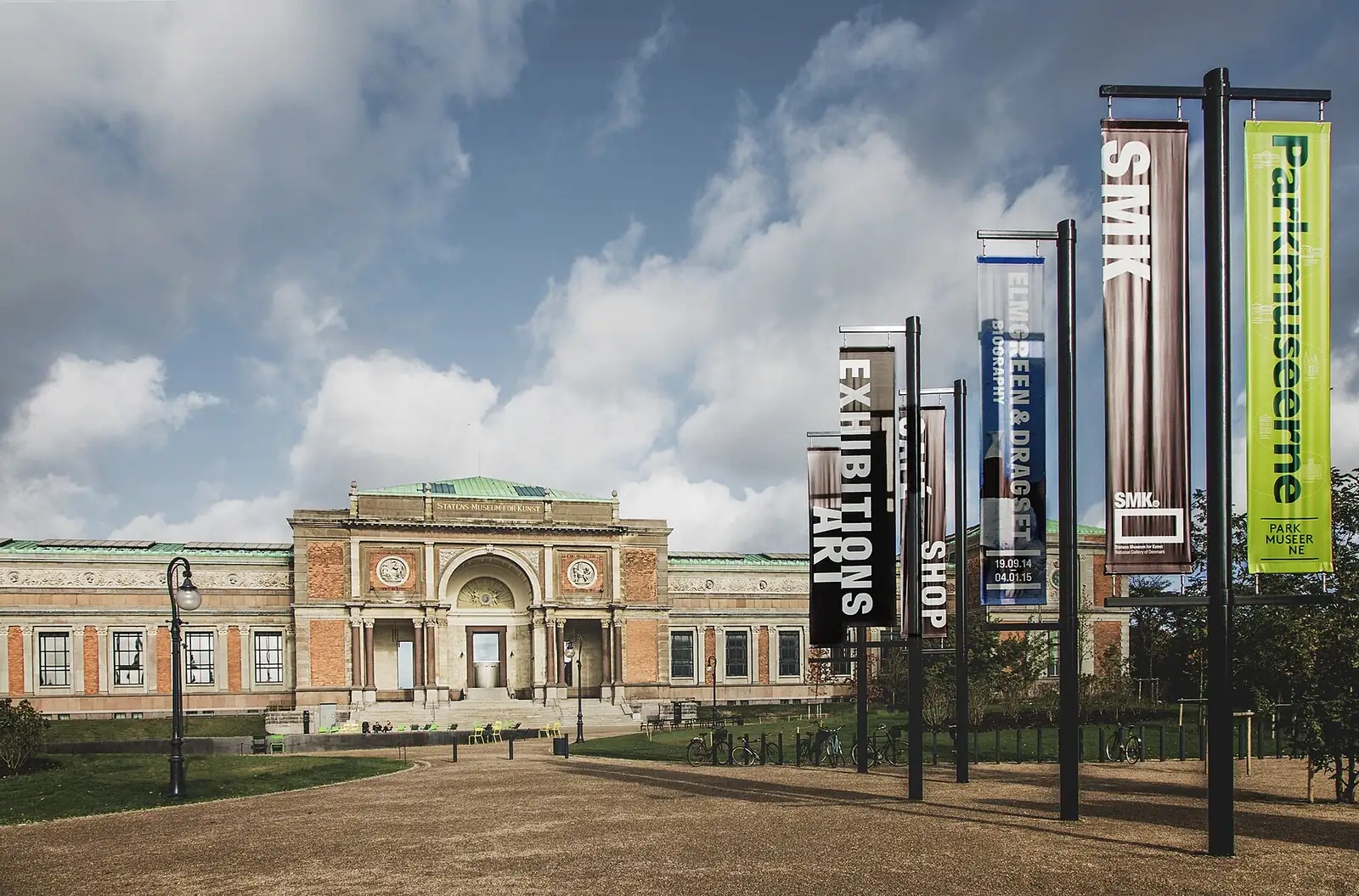
SMK sits in the middle of Copenhagen’s park museums, and several of the best things in the city are within a ten-minute walk:
- The Hirschsprung Collection, in Østre Anlæg directly behind SMK. A small, intimate museum of Danish painting from the Golden Age to the Skagen painters, and the perfect second act if SMK’s Golden Age rooms left you wanting more. Closed Mondays.
- Rosenborg Castle and the King’s Garden, about ten minutes’ walk, with the crown jewels in the basement. Book a slot at weekends.
- The David Collection on Kronprinsessegade, free, with one of the best collections of Islamic art in northern Europe. Open on Wednesday evenings too, which makes a Wednesday double bill possible.
- The Botanical Garden and its Victorian Palm House, next to Nørreport, for when you need green rather than paintings.
If your trip has room for only one great art museum, it is worth knowing the competition. The Glyptotek is the more beautiful building and has the better sculpture and French Impressionists. Louisiana, 35 minutes up the coast, is the better modern art experience. SMK wins on Danish art and on breadth, and it is the one to choose if you want to understand what Danish painting actually is.
Frequently Asked Questions
How much does SMK cost?
Adults pay 140 DKK and anyone under 27 pays 95 DKK. Under-18s get in free without a ticket. One ticket covers the whole museum, including special exhibitions.
Is SMK free on Wednesdays?
No. SMK stays open until 20:00 on Wednesdays, but there is no free day in its current pricing. The only free admission is for under-18s.
Is the permanent collection at SMK free?
No. That was once widely reported, but today a single ticket covers both the permanent collections and the special exhibitions.
What are SMK’s opening hours?
Tuesday to Sunday 10:00 to 18:00, with late opening to 20:00 on Wednesdays. SMK is closed on Mondays.
How long do you need at SMK?
Two to three hours for the highlights and one special exhibition; half a day to see everything.
What is the most famous painting at SMK?
Probably Matisse’s Portrait of Madame Matisse (The Green Line) from 1905. For Danish art, Hammershøi’s Strandgade interiors and Eckersberg’s views of Rome are the ones to find.
Do I need to book SMK tickets in advance?
No. You can buy on the day; SMK is not one of the Copenhagen museums that sells out.
Related Reading
- The best museums in Copenhagen ranks SMK against the Glyptotek, the National Museum and the rest.
- Ny Carlsberg Glyptotek is the other great art museum in the centre, free on the last Wednesday of the month.
- The National Museum of Denmark tells the history that SMK’s paintings illustrate.
- Copenhagen with teenagers because under-18s get into SMK for nothing.
- Indre By the old town on SMK’s doorstep.
Photo Credits
- The 1896 main building of SMK, the National Gallery of Denmark, seen across the lawn on a sunny day: photo by Jiří Komárek, Statens Museum for Kunst, København.jpg, CC BY-SA 4.0
- The entrance hall of SMK with its suspended staircase and signs pointing to the collections: photo by Daderot, Statens Museum for Kunst, interior – Copenhagen – DSC08291.JPG, CC0
- A gallery at SMK with paintings on grey walls and sculptures on a herringbone parquet floor: photo by Daderot, Interior – Statens Museum for Kunst – DSC08266.JPG, CC0
- Vilhelm Hammershøi’s Interior in Strandgade, Sunlight on the Floor: a woman seated by a window in a pale grey room: painting by Vilhelm Hammershøi, Stue i Strandgade med solskin på gulvet.jpg, 1901, public domain
- Exhibition banners on poles in front of the SMK main entrance: photo by Ida Tietgen Høyrup, SMK Entrance.jpg, CC BY 2.0
Final Thoughts
SMK does not shout. It has no single blockbuster that people queue round the block for, and the building is big enough that it rarely feels crowded even when it is busy. What it has is the best collection of Danish painting in the world, a Matisse that changed art history, and a handful of Hammershøi interiors that will stay with you longer than anything you photograph at the Little Mermaid.
Go on a Wednesday evening, head straight for the Golden Age, and give the small pictures the time the big ones usually get. If you are under 27, it is 95 DKK well spent. If you are under 18, you have no excuse at all.
Last verified: September 2026. Prices from SMK’s own ticket pages; hours as published for 2026. Special exhibitions and SMK Fridays events change through the year — check smk.dk before you go.