Copenhagen’s royal gardens open at seven in the morning, and Frederiksberg Have at six, which makes them the best thing in the city for anyone awake too early with jet lag. By eight, the joggers and the dog walkers have them; by noon, half of Copenhagen is eating lunch on the grass. The best parks in Copenhagen are not grand set pieces you visit once. They are where the city actually spends its free time, and each one does a different job: a Renaissance garden for a picnic by a castle, a romantic landscape for a slow walk, a big sports park, a striped urban park that looks like nowhere else.
This guide ranks the parks and gardens worth your time, from the obvious central ones to the cemetery the locals sunbathe in and the deer park up the coast. For each, you get what it is good for, its opening hours (several close earlier in winter, which catches people out) and an honest verdict. Hours and prices were checked in October 2026 against the operators’ own pages.
Copenhagen’s Best Parks at a Glance
| Park | Area | Best for | Entry |
|---|---|---|---|
| Kongens Have | Indre By, by Rosenborg | A picnic with a castle view | Free |
| Frederiksberg Have | Frederiksberg | A long, romantic walk | Free |
| Botanical Garden | Indre By, by Nørreport | Glasshouses and a quiet bench | Garden free; Palm House 70 DKK |
| Fælledparken | Østerbro | Sport, space and a skate park | Free |
| Superkilen | Nørrebro | Design and photographs | Free |
| Assistens Kirkegård | Nørrebro | Graves of the famous, and calm | Free |
| Kastellet | By Langelinie | A walk on the ramparts | Free |
| Søndermarken | Frederiksberg | The Cisterns underground | Park free |
| Østre Anlæg | By SMK | A museum break | Free |
| Dyrehaven | Klampenborg, north of the city | Deer, oaks and a day out | Free |
1. Kongens Have: the King’s Garden

If you only visit one park in Copenhagen, make it this one. Kongens Have was begun by Christian IV in 1606 as the garden of Rosenborg Castle, and it has been open to the public since the 1770s. Today it covers 12 hectares in the middle of the old town and, according to the Danish Agency for Culture and Palaces, which runs it, draws around three million visitors a year.
It earns them. The castle’s towers rise straight out of the trees, the lawns are made for lying on, and there is a playground and a puppet theatre for children. Look out for the long perennial border, 250 metres of it, which the agency describes as one of the longest in Europe, and for August Saabye’s seated statue of Hans Christian Andersen, usually with a child in its lap for a photograph.
Opening hours follow the seasons: 07:00 to 22:00 from May to August, 07:00 to 21:00 in April and September, 07:00 to 19:00 in March and October (the hours change when the clocks do), and 07:00 to 17:00 from November to February. You can walk in from Gothersgade, Sølvgade, Kronprinsessegade or Øster Voldgade.
Verdict: the best all-rounder in the city. Go early on a summer morning, or at lunchtime with a sandwich from the Torvehallerne food halls nearby.
2. Frederiksberg Have: the Romantic Garden
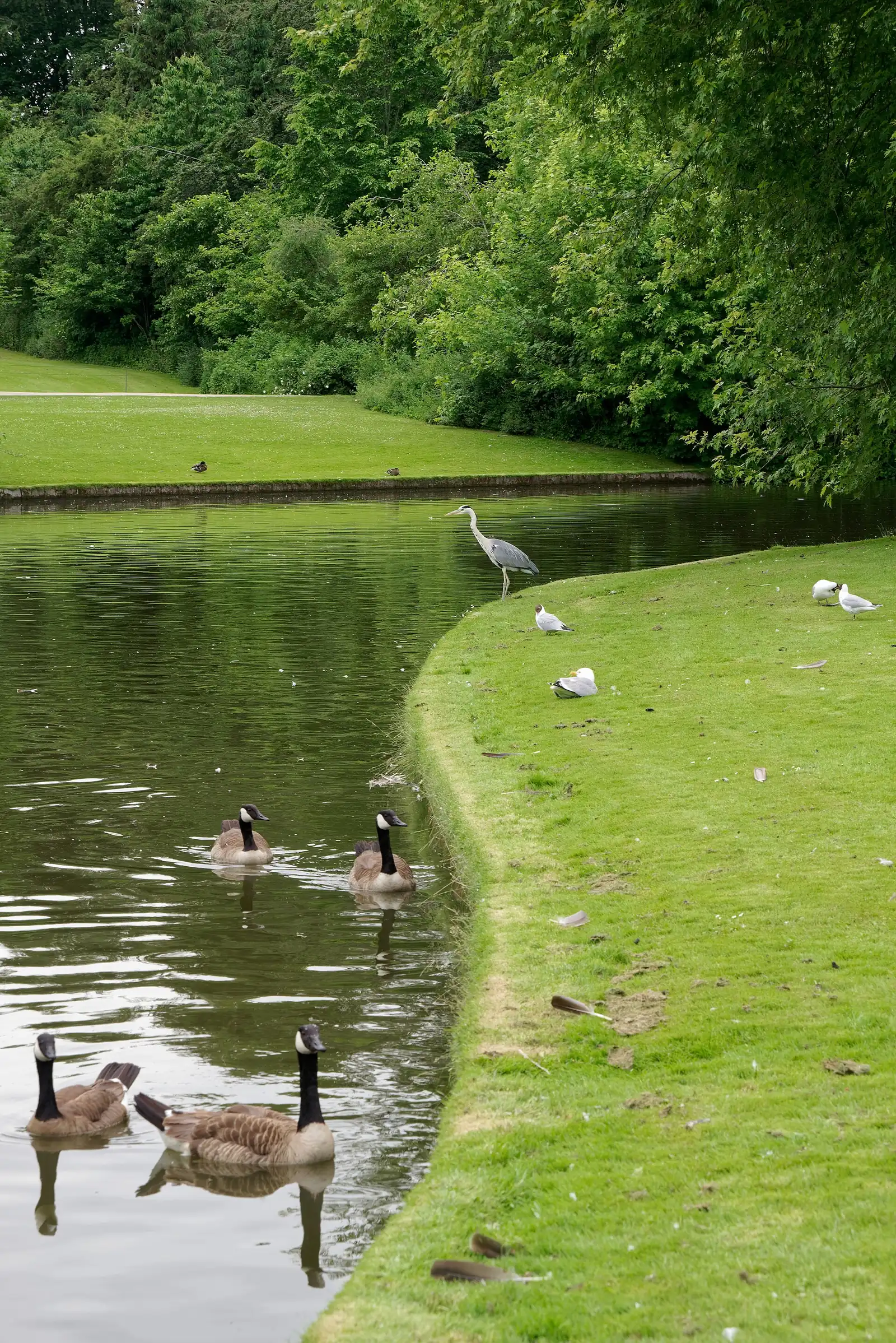
Frederiksberg Have is everything Kongens Have is not: bigger, wilder and laid out to look as if nobody planned it. It is a romantic landscape garden of 32 hectares, with lakes and canals, islands, a waterfall, the Chinese Pavilion, a small temple to Apis and a heronry on one of the islands. It has been a public outing spot since 1749.
The yellow palace on the hill, Frederiksberg Slot, dates from 1703 and now houses the Army’s officer school, so it is not generally open. The exception is a guided tour on the last Saturday of the month at 11:00 and 13:00, except in July and December. It is worth planning around if you like that sort of thing.
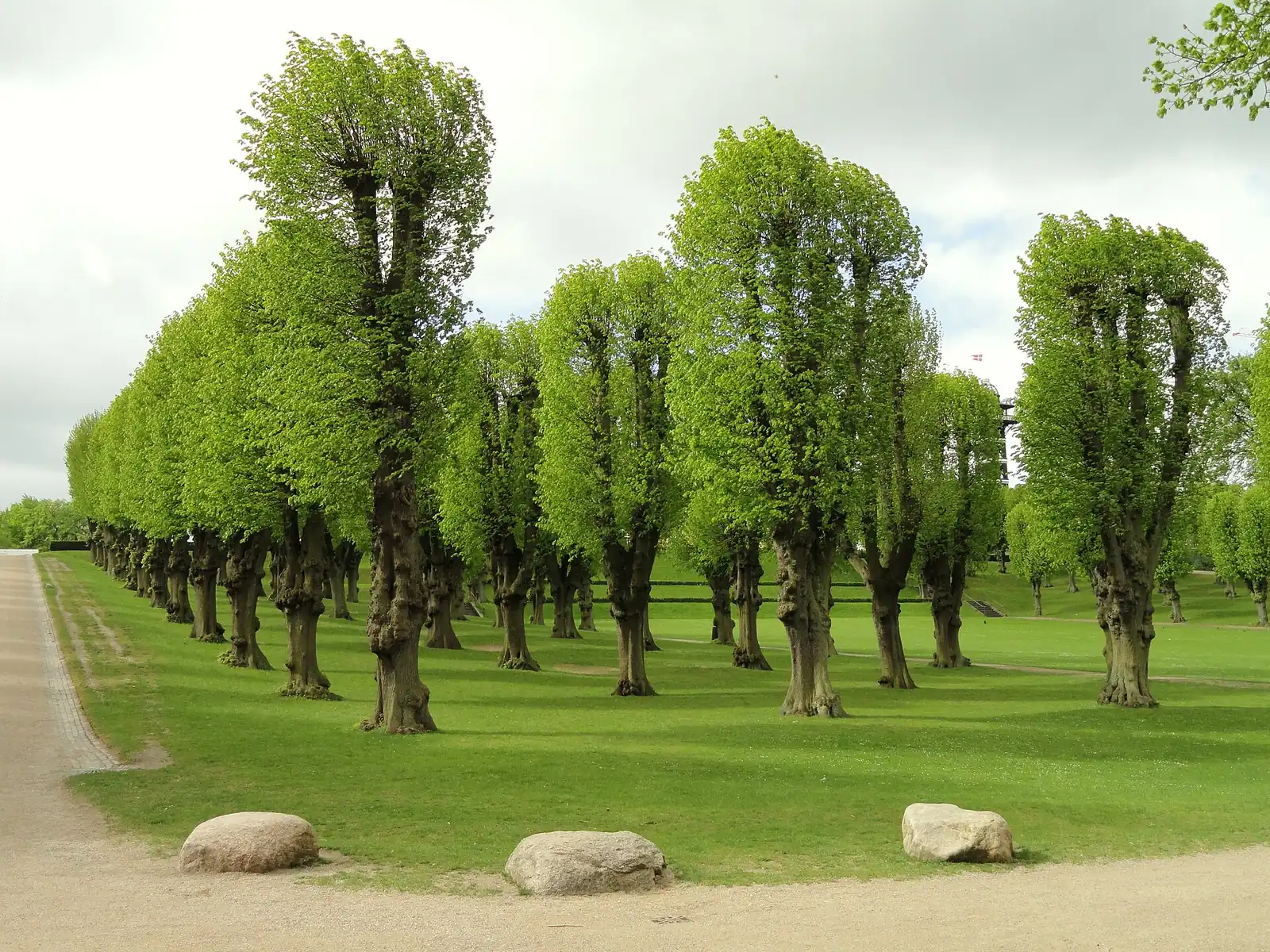
The garden opens at 06:00 all year and closes at 22:00 from May to August, 21:00 in April and September, 19:00 in March and October (changing with the clocks), and 17:00 from November to February. Combine it with lunch in Frederiksberg itself, which is quieter and more residential than central Copenhagen.
Verdict: one of the most beautiful parks in the city for a long walk, and at its best in autumn colour or on a still summer evening.
Across the road: Søndermarken and the Cisterns
Directly south of Frederiksberg Have, across Roskildevej, Søndermarken is another 32 hectares of older woodland, open at all hours, with a Norwegian log cabin and a grotto. Under the lawn in front of the palace lies its real surprise. Cisternerne, the underground reservoir built in the mid-1800s for Copenhagen’s water supply, is now a dark, dripping exhibition space for contemporary art. It is open from 11:00 Tuesday to Sunday, until 20:00 on Wednesday and Thursday and until 18:00 on the other days, and closed on Monday. Exhibitions change, so check frederiksbergmuseerne.dk for what is on and for current ticket prices.
3. The Botanical Garden: Glasshouses in the City Centre

The Botanical Garden, at Gothersgade 128 by Nørreport, belongs to the Natural History Museum of Denmark, part of the University of Copenhagen. It moved to its present site in 1871–74, and the park museums group describes it as Denmark’s largest collection of living plants. The garden is free. The star is the Palm House, a domed Victorian glasshouse modelled on London’s Crystal Palace, and on a cold, wet day its humid tropical air is one of the city’s small pleasures.
Here is the timing detail most visitors miss. The garden switches to winter hours on 25 October: from then until the end of February it is open 08:30 to 16:00, against 08:30 to 18:00 from March. The Palm House keeps shorter hours still in winter, 10:00 to 15:30 Tuesday to Sunday with last entry at 15:15, and it is closed on Mondays except during school holidays. A Palm House ticket costs 70 DKK for adults and 40 DKK for children aged 3 to 17. The butterfly house is a summer attraction, so don’t count on it in winter.
Verdict: the best rainy-day park in the city. Pair it with SMK, a short walk away, for a full afternoon under cover. More wet-weather ideas are in our rainy day guide.
4. Fælledparken: Where Copenhagen Plays
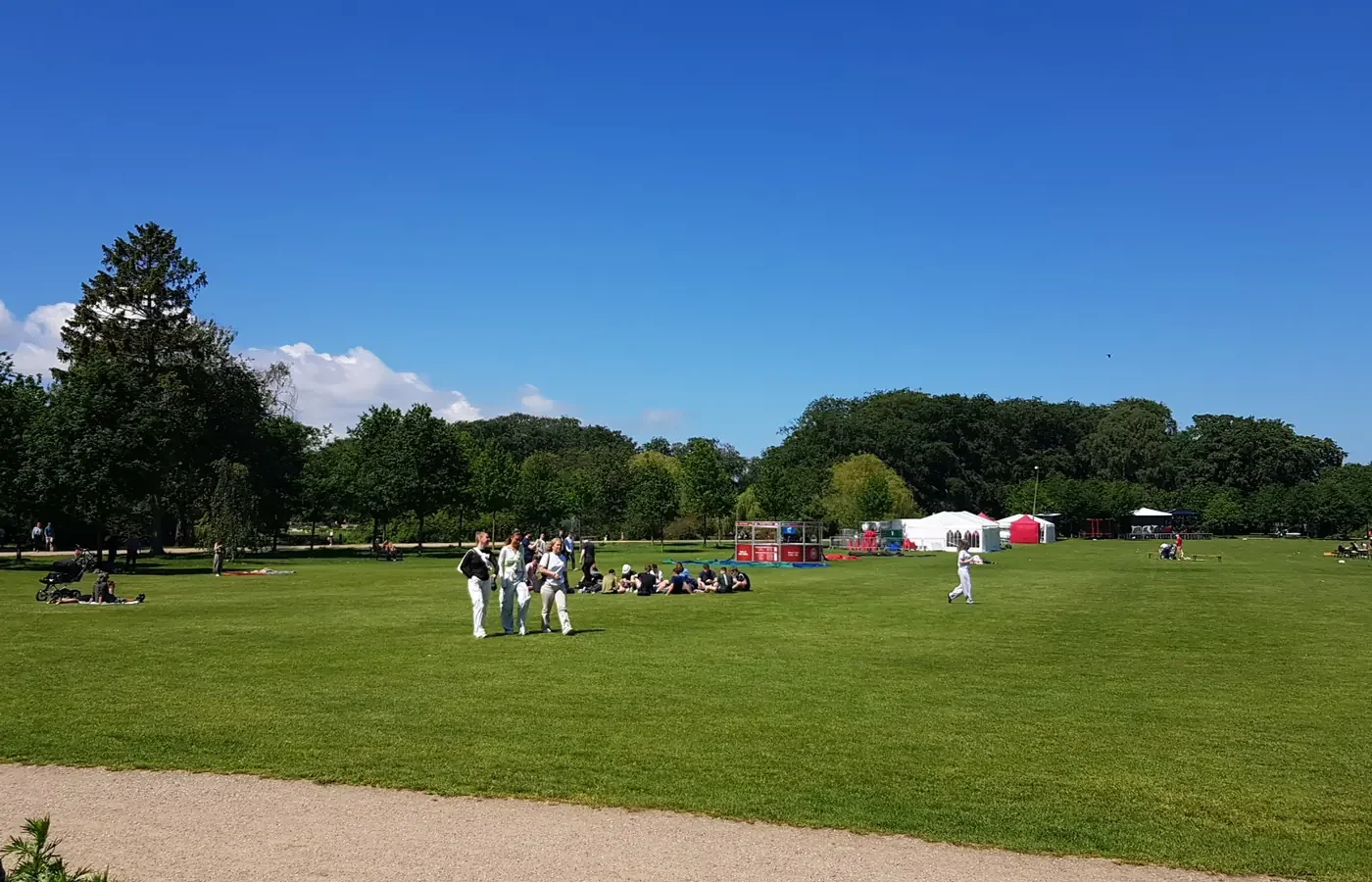
Fælledparken in Østerbro is not pretty in the way the royal gardens are. It is a big, open, municipal park built for using: football pitches, basketball courts, an athletics track, playgrounds, a dance stage, two dog runs and a skate park that the city council calls the largest in Northern Europe. The council also calls it Copenhagen’s most visited park, with around 11 million visits a year.
Its scale is the point. On a warm Saturday the lawns fill with picnics, birthday parties and games of every kind, and the national stadium, Parken, looms over one corner. Less obviously, the old trees shelter a large bat colony, so a summer dusk walk here can be livelier than you expect.
Verdict: go for the atmosphere on a sunny weekend afternoon, or with children who need to run. Skip it if you want quiet.
5. Superkilen: the Park That Looks Like Nowhere Else
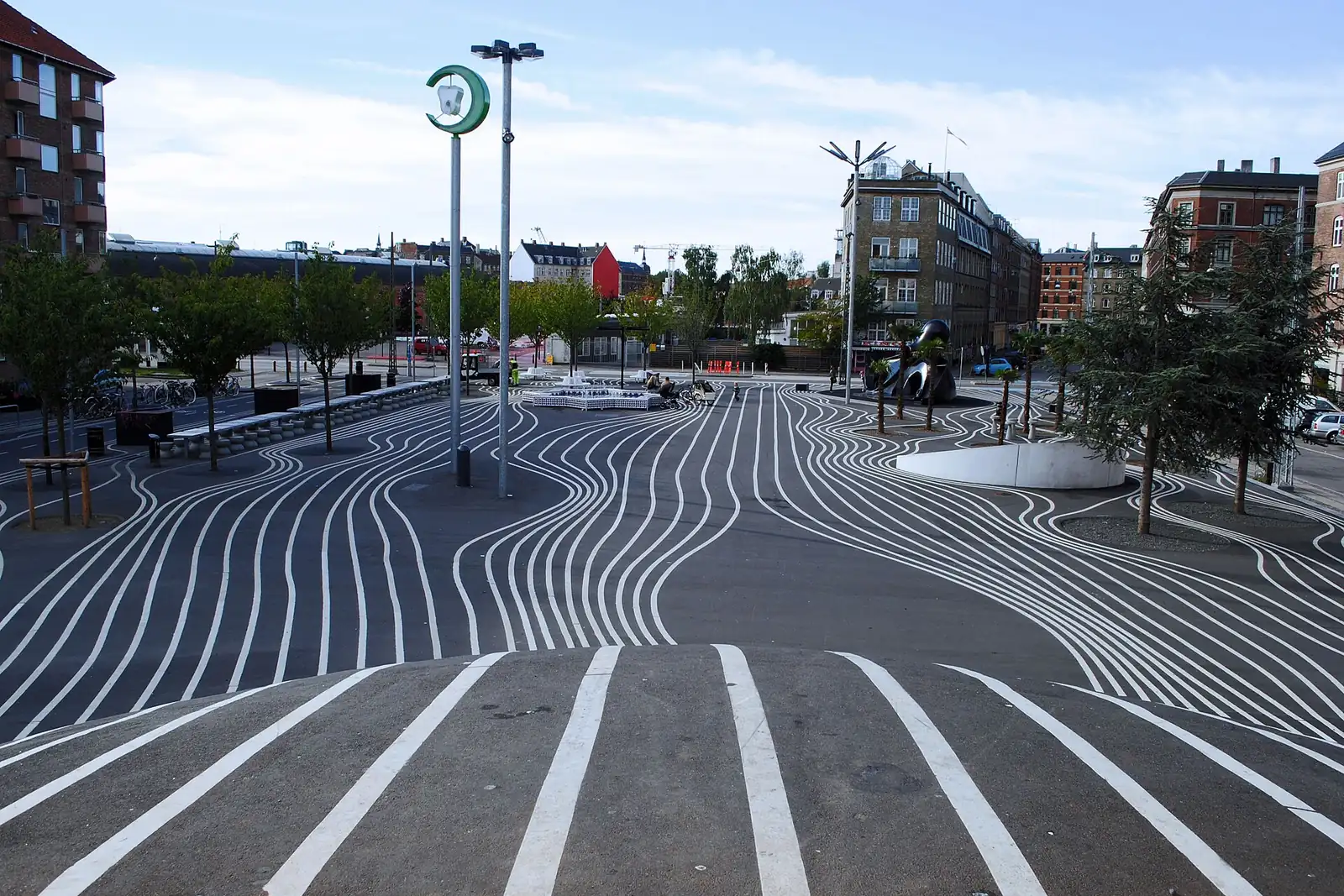
Superkilen, on Nørrebrogade in Nørrebro, is the park you have seen on Instagram. Designed by the art group Superflex with the architects BIG and the landscape firm Topotek 1, and completed in 2012, it is a strip of about 30,000 square metres and 750 metres long, divided into a Red Square, a Black Square and a green park.
It was made to reflect the more than 50 nationalities living around it, and it is furnished with objects from across the world: benches, lamps, fountains, swings and signs, 108 plants and objects in all by the city’s count. Some are delightful, some are odd, and spotting where they came from is half the fun.
Be realistic about it. Superkilen is a busy urban space, not a green refuge. It is at its best for an hour of wandering and photographs, especially on the black square’s white stripes, before you move on to Assistens Kirkegård, a short walk away.
Verdict: unmissable for anyone interested in design or urban planning, and a short stop for everyone else.
6. Assistens Kirkegård: the Cemetery That Doubles as a Park
Assistens Kirkegård, inaugurated in 1760, is a working cemetery in Nørrebro, and also one of the best-loved green spaces in the city. Hans Christian Andersen, Søren Kierkegaard and Niels Bohr are buried here. The avenues of old trees are glorious in autumn, and on a summer day you will see locals reading, cycling through and sitting on the grass in the park sections.
Do respect the line between the two. The city allows sitting and relaxing in the park areas but not in the burial sections, and a little discretion goes a long way. The cemetery is open 07:00 to 22:00 from April to September and 07:00 to 19:00 from October to March, and the main entrance is at Kapelvej 2. The city also offers a free audio walk.
Verdict: one of the most atmospheric places in Copenhagen, and the obvious partner to Superkilen and Jægersborggade on a Nørrebro afternoon.
7. Kastellet: a Walk Round the Ramparts
The star-shaped citadel of Kastellet is still an active barracks, but its grassy ramparts, about ten metres high, are open to walkers and make one of the best short loops in the city, with water on both sides and the windmill on the King’s Bastion. The city calls it one of Northern Europe’s finest and best-preserved fortresses. The gates open at 06:00 and close at 20:00 in the winter half-year and 22:00 in the summer half-year.
Verdict: combine it with the Little Mermaid and the waterfront; on its own it is a lovely half-hour.
8. Østre Anlæg and Ørstedsparken: the Rampart Parks
The old city ramparts left a chain of green spaces around the centre, and two of them are worth knowing. Østre Anlæg, built on the old fortifications, has rose and rhododendron gardens, a birch grove, playgrounds and a sledging hill, with SMK and the Hirschsprung Collection inside the park. Its northern end runs towards Østerport station.
Ørstedsparken, close to Nørreport station, is a small park of about six and a half hectares, opened in 1879. It is a good place to sit with a coffee between sights, and it is easy to combine with the Botanical Garden on the other side of Nørreport.
If you want a longer walk, the Lakes, Søerne, form a chain of lakes along the western edge of the centre. A walk or run round them makes an easy loop on a sunny evening.
9. Dyrehaven: the Deer Park
For a proper day in nature, head north to Jægersborg Dyrehave, the former royal hunting forest at Klampenborg. It is part of the par force hunting landscape in North Zealand, listed by UNESCO as a World Heritage Site in 2015. Ancient oaks and open grassland are grazed by free-roaming herds of red, fallow and sika deer, and the old hunting lodge, the Eremitage, stands on the plain in the middle.
Dyrehaven is open round the clock. Take the C-line S-train to Klampenborg and walk in through Klampenborgporten, the best-known of its gates. Next to the entrance is Bakken, the old amusement park, and the beach at Bellevue is a short walk the other way; our guide to the best beaches near Copenhagen covers it. Note that fires and barbecues are not allowed in the deer park.
Verdict: the best half-day out of the city if you like walking. Come in autumn for the colours and the deer.
Further Out: Amager’s Commons
South of the centre, Amager Fælled and Kalvebod Fælled are big, flat, semi-wild commons of meadow, scrub and wetland, with grazing animals and birdlife. They are not parks in the manicured sense, and they bring a taste of open countryside to the edge of the city. The M1 metro line ends at Vestamager, on the edge of Kalvebod Fælled. More ideas for green space beyond the city centre are in our guide to outdoor Copenhagen.
Practical Tips for Copenhagen’s Parks
- Check the closing time in winter. The royal gardens close at 17:00 from November to February, and the Botanical Garden at 16:00 from 25 October. Arrive mid-afternoon in December and you will be walked out.
- Bring your own picnic. Supermarkets and food halls make a cheap lunch, and the lawns in Kongens Have and Frederiksberg Have are made for it. Our guide to Copenhagen on a budget has more.
- Use the parks as connectors. Kongens Have links Rosenborg and the Botanical Garden; Assistens links Superkilen and Jægersborggade; Kastellet links the Little Mermaid and Amalienborg.
- With children, Fælledparken and Kongens Have have the best playgrounds of the parks here. Our list of Copenhagen playgrounds covers the city’s standouts.
Every park here is free to enter, which makes them one of the best answers to Copenhagen’s prices; our list of free things to do in Copenhagen has the rest.
Frequently Asked Questions
What is the best park in Copenhagen?
Kongens Have, the King’s Garden around Rosenborg Castle, is the best all-rounder: central, free, beautiful and open from 07:00. Frederiksberg Have is the best for a long romantic walk, and the Botanical Garden is best on a rainy day.
Which is the most visited park in Copenhagen?
Fælledparken in Østerbro, which Copenhagen Municipality calls the city’s most visited park, with around 11 million visits a year. Kongens Have, the royal garden by Rosenborg, draws around three million.
Are Copenhagen’s parks free?
Yes. All the parks and gardens in this guide are free to enter. The Palm House in the Botanical Garden costs 70 DKK for adults, and the Cisterns under Søndermarken charge for exhibitions.
What time do Copenhagen’s parks close?
It depends on the season. Kongens Have closes at 22:00 in summer and 17:00 in winter, Frederiksberg Have the same, and the Botanical Garden at 16:00 from 25 October to the end of February. Dyrehaven and Søndermarken have no set hours.
Is Superkilen worth visiting?
Yes, for an hour, especially if you like design or photography. It is an urban park rather than a green one, so pair it with Assistens Kirkegård and Jægersborggade nearby.
Where is Hans Christian Andersen buried?
In Assistens Kirkegård in Nørrebro, which is open to visitors daily from 07:00. Søren Kierkegaard and Niels Bohr are buried there too.
Related Reading
- Copenhagen in October for when the parks are at their most colourful.
- Copenhagen with kids for the playgrounds and family days out.
- Day trips from Copenhagen for gardens and forests further afield.
- The Copenhagen harbour baths for the city’s other favourite summer outdoor habit.
Photo Credits
- People relaxing on the open lawns of Fælledparken on a sunny day: photo by Elgaard, Fælledparken ved pavillion 2022.jpg, CC BY-SA 4.0
- The black square of Superkilen with its curving white stripes in Nørrebro: photo by Emily, Superkilen hill-top view.jpg, CC BY 2.0
- Geese and a heron along a curving canal in Frederiksberg Have: photo by Jakub Hałun, Birds, Frederiksberg Have, Denmark, 20220617 1648 6959.jpg, CC BY-SA 4.0
- An avenue of pollarded trees in Frederiksberg Have in spring: photo by Daderot, Trees – Frederiksberg Have – Copenhagen – DSC08925.JPG, CC0
Final Thoughts
The pattern across all of these is that Copenhagen treats its parks as living rooms rather than monuments. The royal gardens are formal enough to feel special and relaxed enough to lie down in; the municipal parks are built for sport and noise; the cemetery is a place for a quiet read. Pick by mood rather than by rank.
And keep an eye on the clock between October and February, when the gates shut early and the light goes even earlier. A park visit in Copenhagen in winter is a morning activity.
Opening hours and prices checked October 2026 against the Danish Agency for Culture and Palaces, Copenhagen Municipality, the Natural History Museum of Denmark, Frederiksberg Museums, Naturstyrelsen and Forsvaret; check the operator’s page before you go.